
The Ultimate Guide to Nail Dust Collectors: Top Picks for Pros and DIY Users
How to choose the right nail dust collector for your table, your workload, and your budget, with top picks for tabletop, built in, and podo setups

Enjoying this article?Add FoodNourish as a preferred source on Google and see our research-backed guides more often in your search results.
Nail dust is generated in every service – filing, e-filing, removing gel, shaping extensions. The finest particles are invisible to the naked eye but remain airborne for extended periods and accumulate in the respiratory system over time.
According to occupational health research, repeated inhalation of nail dust particles is associated with respiratory irritation, occupational asthma, and allergic reactions to product chemicals carried in dust.
A dust collector captures these particles directly at the source, before they reach the air. This guide covers everything you need to know to choose the right model for your setup.

How a Nail Dust Collector Works
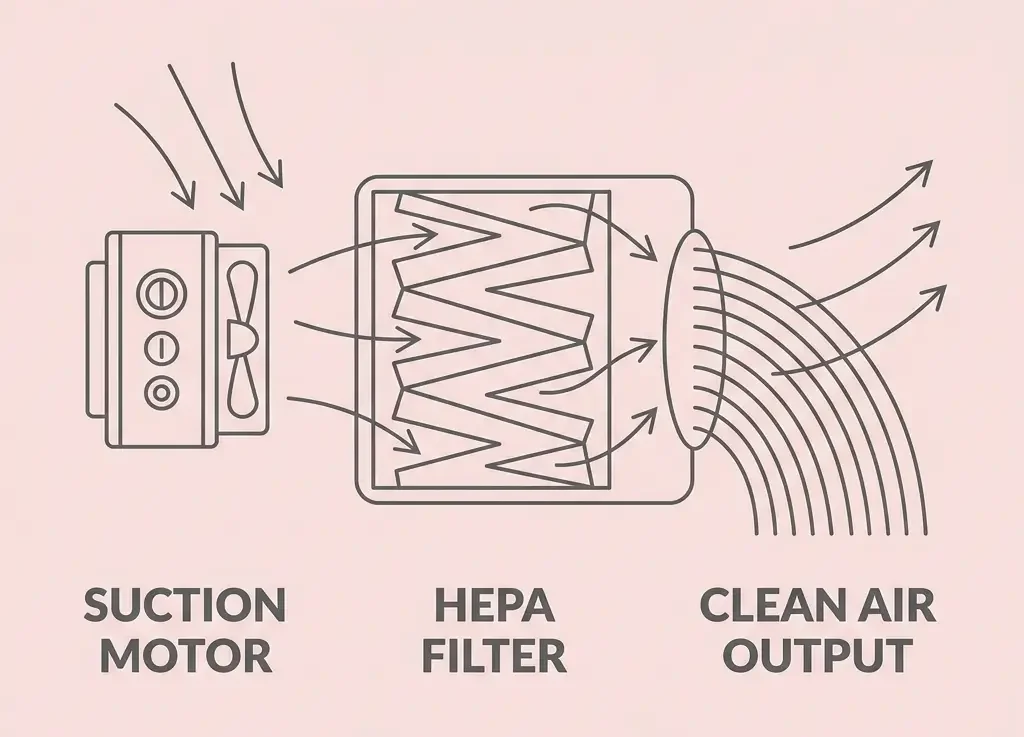
A nail dust collector draws air from the work area through a motor-powered suction system, passes it through one or more filters, and releases clean air back into the room. The effectiveness of any unit depends on three factors working together:
- Suction force — measured in airflow speed (m/s) or volume (CFM); determines how much dust is captured and from what distance
- Filter type — HEPA filters capture particles as small as 0.3 microns; standard foam or paper filters catch larger debris only
- Housing design — affects whether dust is directed into the filter or allowed to escape around the sides
Professional brands engineer all three elements together. Budget units often sacrifice filter quality or housing design to reduce cost.
What Type of Dust Collector Do You Need?
Three form factors cover different workspace setups:
- Tabletop (desktop) — sits on the nail table surface; easiest to set up and move; best for home studios, single stations, and mobile techs
- Built-in — installs flush into a custom nail table; removes dust directly from the work surface level; best for permanent salon stations
- Podo (floor-stand) — mounts on a floor rack and positions the suction intake at foot level; designed for pedicure work
Within each category, suction power and filter class determine the quality of air protection.
Best Tabletop Dust Collectors
For desktop use, the choice comes down to budget and suction output.
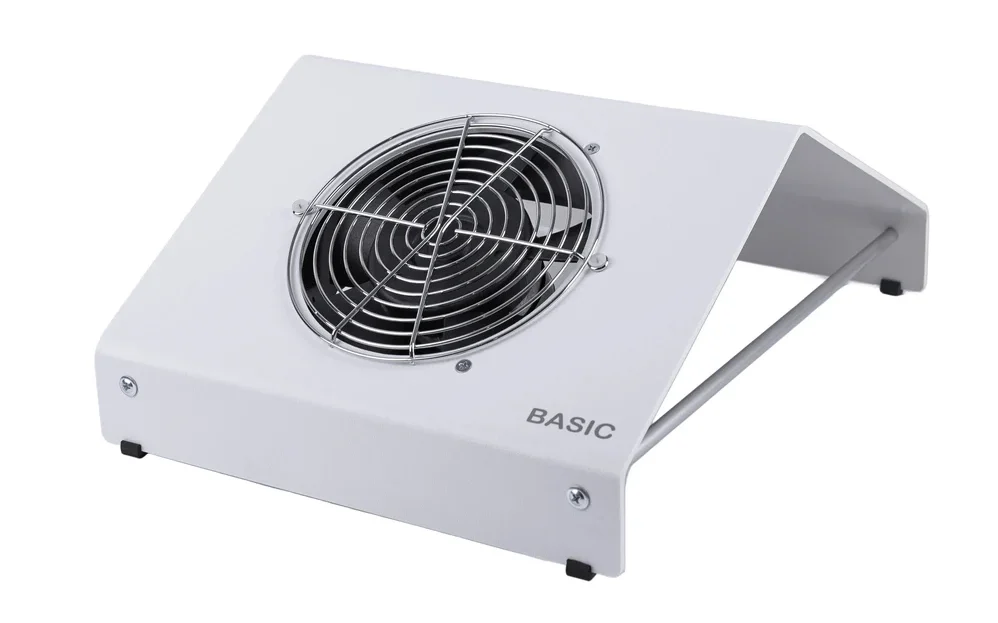
The ULKA X2 Basic ($169.99) is the most accessible professional option – reliable, compact, and easy to maintain. For higher suction output and HEPA filtration, the SHEMAX Style Pro White ($398.99) and ULKA Premium Desktop ($395) represent the best performance in the tabletop category.
Best Built-In Dust Collectors
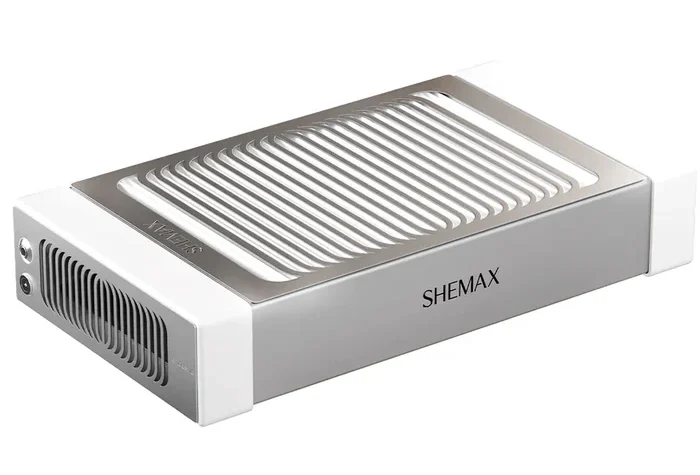
Built-in models work at the table surface level, which is where dust is actually generated. This makes them more efficient per watt of motor power than tabletop units placed to the side of the hand.
The ULKA Tornado Built-In ($489.99) uses a cyclone-style airflow for heavy daily workloads. The SHEMAX Style V-PRO Built-In ($619) achieves 4.4 m/s suction at only 60W – a standout result for built-in efficiency.
Best Podo Dust Collectors for Pedicure
Pedicure work generates significant dust from callus removal, dry pedicure procedures, and pododisc use. The ULKA X2P for Pedicure ($282) is purpose-built for this role, with a floor-standing rack and an adjustable suction intake positioned close to the foot.
For the highest pedicure workload, the ULKA Premium X2F with Rack ($531) adds HEPA-grade filtration to the podo format.
Key Factors to Check Before Buying
- Suction speed: minimum 2.0 m/s for standard manicure; 3.5 m/s or above for heavy gel and acrylic work
- Filter class: HEPA (H10 or above) for genuine fine particle capture
- Noise level: below 45 dB for comfortable client interaction
- Filter replacement cost: ongoing cost that adds up over a year of use
- Warranty: professional brands offer 12+ months; some motor warranties extend to 6 years
Summary
The right dust collector depends on your table setup, daily workload, and the products you use most. For a home station or beginner setup, a tabletop model in the $170–$250 range gives solid protection.
For full-time professional salon use, invest in a HEPA-filtered desktop or built-in unit from SHEMAX or ULKA.
For pedicure work, choose a podo model with a floor stand. Browse the complete dust collector range at Kvadro across all categories to find the right fit.
