
Cognibiotics Review: I Read the Label, Priced the Real Dose, and Checked the Research
What BiOptimizers does not put on the sales page, and whether the bottle is worth your money.
Enjoying this article?Add FoodNourish as a preferred source on Google and see our research-backed guides more often in your search results.
Our verdict
Cognibiotics by BiOptimizers
Cognibiotics is a synbiotic built around 30 billion CFU across 10 bacterial species, 260 mg of prebiotic fiber and a 280 mg blend of 17 Chinese herbs. Reading the label changed my opinion twice. The herb blend is two complete classical formulas stacked together, which takes real knowledge to build. The panel also carries a vegan badge directly above a freshwater mussel shell. Worth one bottle as a test. Skip it if you eat vegan or avoid shellfish.
What I like
Two intact classical formulas, correctly built
Traditional processing methods on the label
30 billion CFU, competitive count
Prebiotic fiber included, not decorative
Shelf-stable, no refrigeration
Clear serving size, no dosing games
What I don’t
Proprietary blend, no per-strain CFU
No strain IDs, studied strains unverifiable
Vegan badge conflicts with mussel shell
No mollusk allergen declaration
Extract ratio not stated, potency unknowable
No clinical trial on the finished formula
Foodnourish.net earns a commission on purchases made through this link at no extra cost to you.
Why this Cognibiotics review exists
You saw the ad. Maybe a podcast read, maybe an Instagram reel, maybe a BiOptimizers email asking whether Netflix stopped working for you.
Then you searched for a second opinion and found a wall of pages that read like sales letters, including one crediting this probiotic with weight loss, clearer skin, and better eyesight.
We did something less exciting.
- We read the supplement facts panel line by line and matched all 17 herbs against their classical sources.
- We priced the product across multiple retailers in three countries during the first week of August 2026.
- We cross-checked the 10 bacterial species against published human research, then read the return terms.
Cognibiotics key takeaways
Overall score 6.0/10One serving equals 2 capsules and delivers 30 billion CFU across 10 probiotic species, 260 mg of prebiotic fiber, and 280 mg of botanicals. Each bottle holds 60 capsules, so you get 30 servings.
All 17 herbs form two complete classical formulas. Herbs 1 to 10 build An Shen Bu Xin Wan and herbs 11 to 17 build Chaihu-Shugan-San, and both share the same 280 mg.
The label names species, never strains. You cannot confirm whether the bottle contains the mood strains used in trials, such as L. helveticus R0052, B. longum R0175, or L. plantarum PS128.
The vegan badge contradicts the first botanical. Cristaria plicata is a freshwater mussel shell, and the panel carries no mollusk allergen declaration.
The herb dose sits far below trial levels. Human studies used gram-level decoctions near 30 g, while Cognibiotics supplies roughly 0.4 percent to 4 percent of that amount depending on the undisclosed extract ratio.
Pricing swings by bundle. A single bottle runs about $87, discounted checkouts land near $75, three bottles drop to $64 each, and five bottles drop to $60 each. That equals $2.00 to $2.90 per day at the label dose.
The 365-day guarantee has limits. Returns require sealed, unused product, refunds process in 5 to 7 working days, and shipping costs stay with you. Check the box for subscription enrollment before you pay.
What’s in Cognibiotics: An Shen Bu Xin Wan, Chaihu-Shugan-San, and 10 probiotic strains
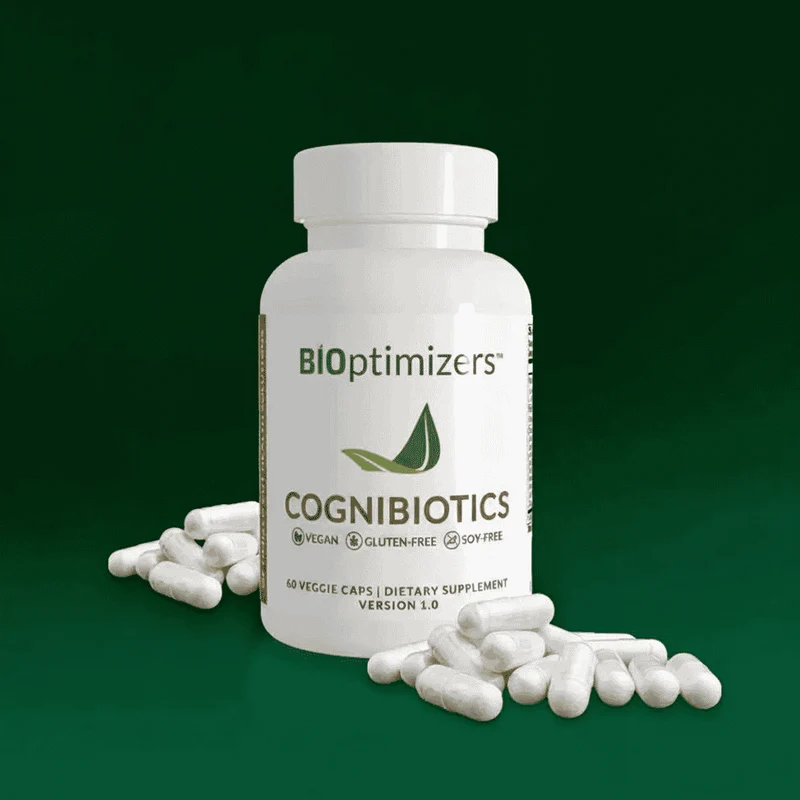
Cognibiotics is a psychobiotic supplement, meaning a probiotic marketed for mood and thinking rather than digestion alone [10].
Three ingredient groups sit inside each two-capsule serving, and the botanical group is the one worth reading closely.
The probiotic blend delivers 30 billion CFU across L. casei, L. rhamnosus, B. animalis, B. breve, B. longum, L. reuteri, L. helveticus, L. plantarum, B. infantis and L. fermentum [11].
The prebiotic complex supplies 260 mg of organic inulin and xylooligosaccharides, fibers that feed those bacteria after they arrive [11].
The botanical blend supplies 280 mg across 17 herbs. Read the order on the panel and something becomes obvious.
These are not 17 herbs a marketer picked off a list. They are two complete classical formulas placed end to end.
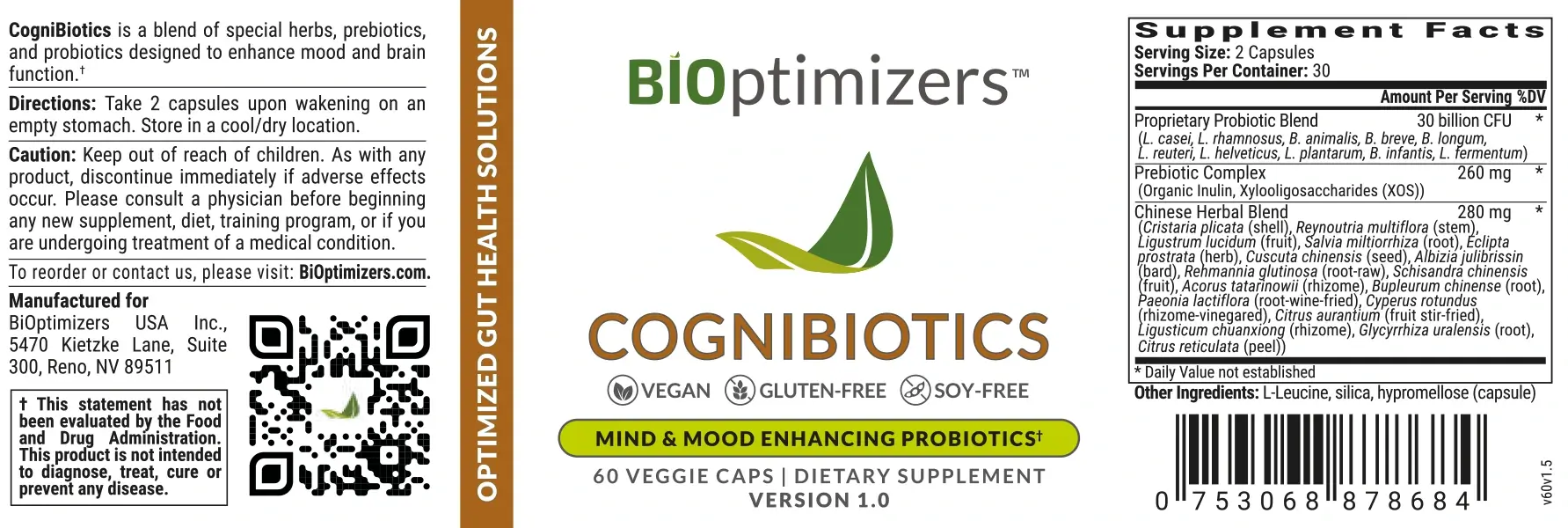
The An Shen Bu Xin Wan half, herbs 1 through 10
An Shen Bu Xin Wan translates roughly as “calm the spirit and supplement the heart,” and Chinese medicine practitioners use it for restless sleep, agitation and palpitations.
The panel reproduces it in conventional order: Cristaria plicata, Reynoutria multiflora stem, Ligustrum lucidum, Salvia miltiorrhiza, Eclipta prostrata, Cuscuta chinensis, Albizia julibrissin, Rehmannia glutinosa, Schisandra chinensis and Acorus tatarinowii.
Zhen zhu mu (Cristaria plicata) and ye jiao teng (Reynoutria multiflora stem) lead the formula, which matches how the classical preparation is built. That ordering is not an accident.
The Chaihu-Shugan-San half, herbs 11 through 17
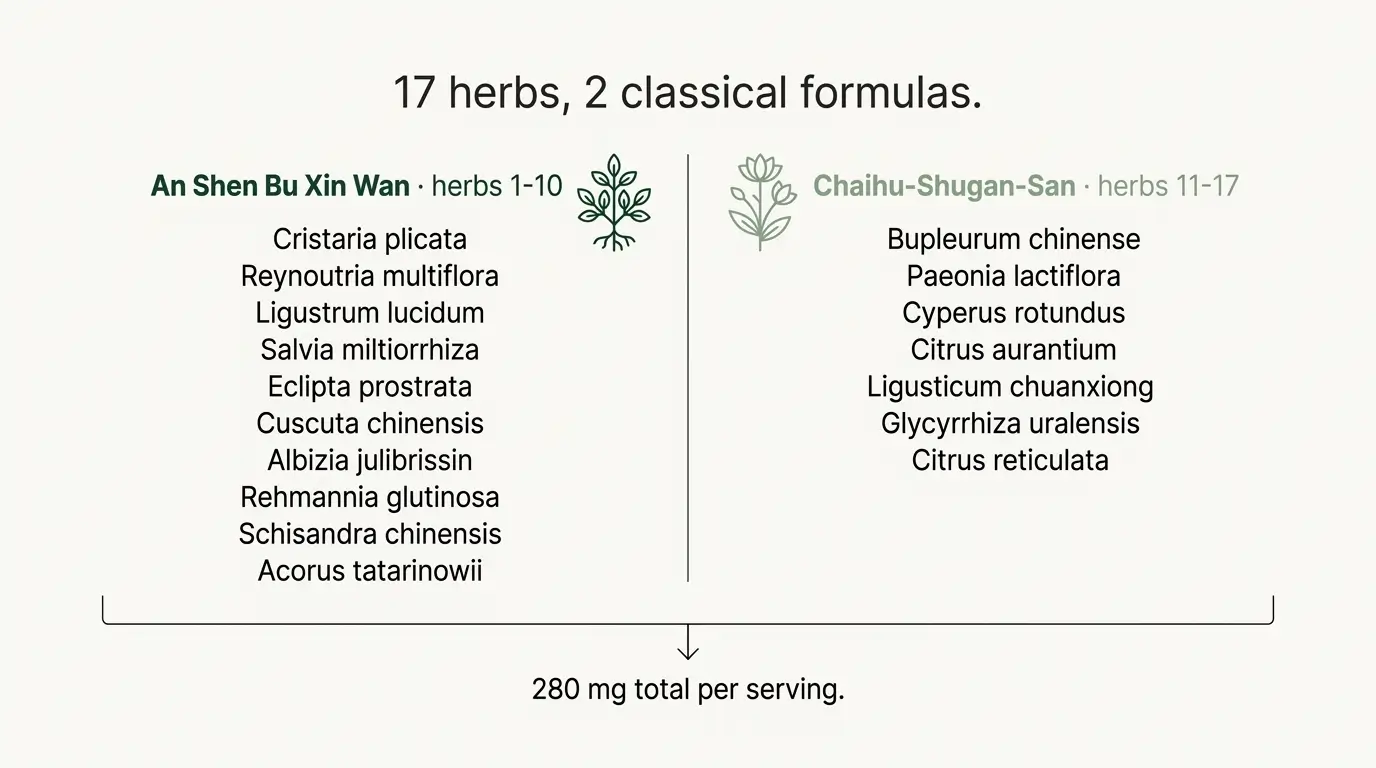
Chaihu-Shugan-San appears complete and unmodified. Bupleurum chinense, Paeonia lactiflora, Cyperus rotundus, Citrus aurantium, Ligusticum chuanxiong, Glycyrrhiza uralensis and Citrus reticulata [19].
Seven herbs, all seven present, correct order.
This is the half with the human trial literature behind it [4][5]. It is also the half BiOptimizers markets hardest, and the reason its sales page talks about a 2,200-year-old formula.
The processing notations most brands leave off
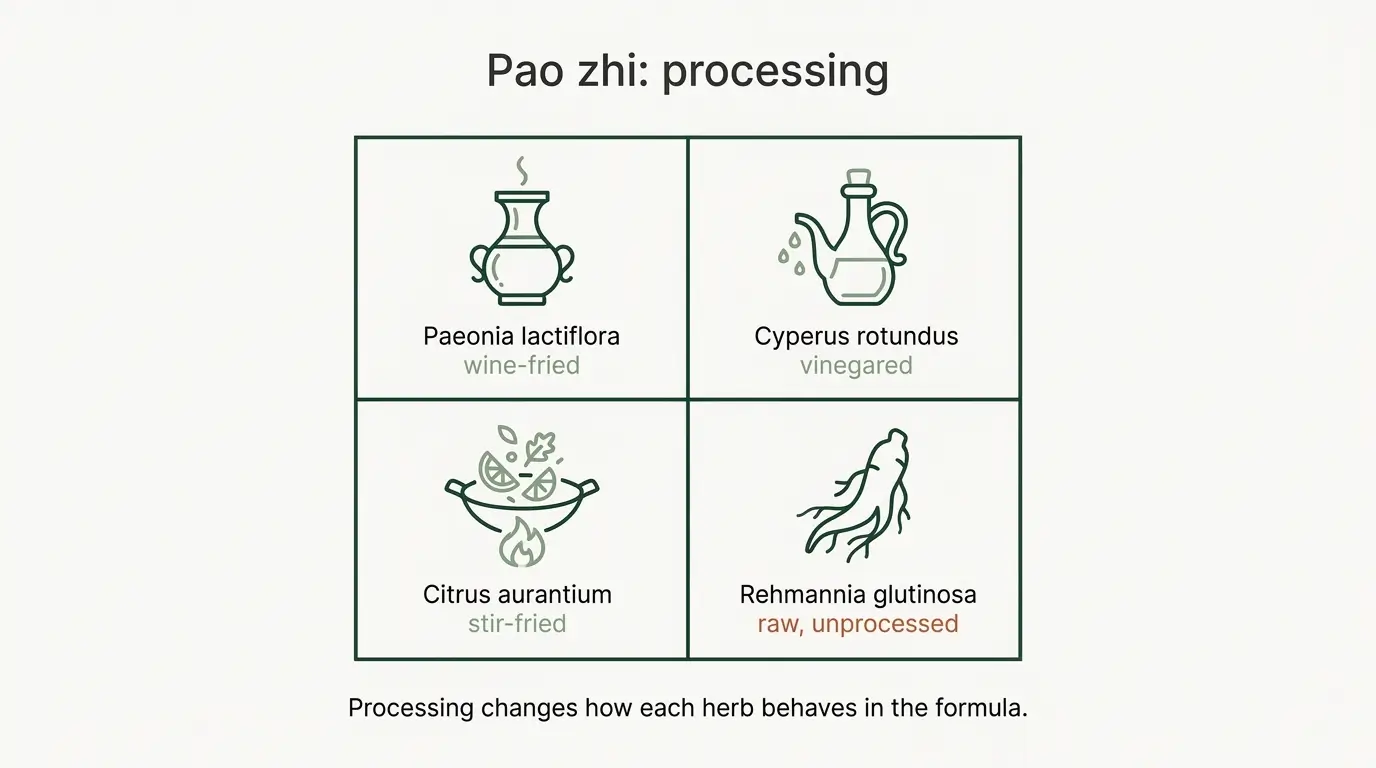
The panel specifies preparation methods for four herbs.
- Paeonia lactiflora is wine-fried,
- Cyperus rotundus is vinegared,
- Citrus aurantium is stir-fried,
- Rehmannia glutinosa is marked raw.
Those notations describe pao zhi, the traditional processing steps that change how a herb behaves inside a formula.
Printing them costs label space and means nothing to a customer who does not read Chinese medicine. Somebody who understood the tradition insisted on including them.
I did not expect that, and it is the strongest point in this product’s favor.
| Specification | Detail |
|---|---|
| Format | Vegetable cellulose (hypromellose) capsules |
| Capsules per bottle | 60 |
| Serving size | 2 capsules |
| Servings per bottle | 30 |
| Total CFU | 30 billion across 10 species |
| Prebiotics | Inulin, xylooligosaccharides, 260 mg |
| Botanical blend | 17 herbs, 280 mg, two classical formulas |
| Other ingredients | L-leucine, silica, hypromellose |
| Storage | Cool, dry place, no refrigeration |
| Panel badges | Vegan, gluten free, soy free |
That list explains what you swallow. Whether any of it reaches your brain depends on mechanisms worth grading one at a time.
How it is supposed to work, and how strong that evidence really is
Your gut and brain talk constantly. Gut bacteria produce and modulate neurotransmitters, signal upward through the vagus nerve, and ferment fiber into short-chain fatty acids like butyrate, which affects the gut lining and inflammation [10][15].
BDNF (brain-derived neurotrophic factor = a protein involved in growing and repairing neurons) appears throughout this literature.
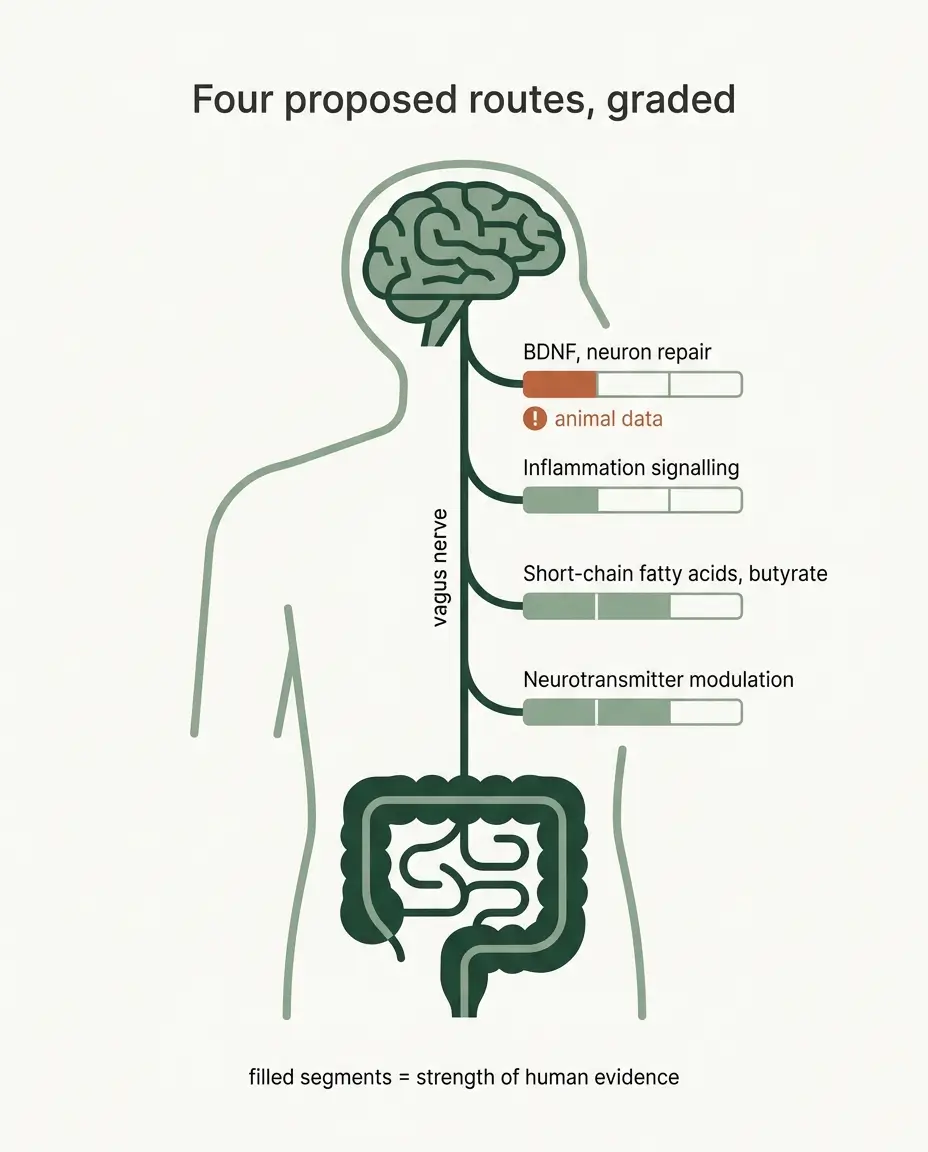
All real biology. The question is whether swallowing this specific capsule moves those dials in a person.
A 2025 meta-analysis of probiotic supplementation and cognitive function found measurable improvement, mainly in trials running 12 weeks or longer, measured using the MoCA cognitive screening test [3].
That is the honest ceiling of the probiotic side. Modest effects, slow onset, mixed results across studies.
The herb side reads better. A 2024 systematic review found Chaihu-Shugan-San combined with antidepressants performed more effectively and more safely than antidepressants alone [4].
A 2012 meta-analysis in the Journal of Ethnopharmacology concluded the formula was effective and safe for depressed patients, while calling for larger randomized clinical trials [5].
A randomized clinical trial assigns people to treatment or control by chance, which is the strongest design for testing whether something works. A 2024 review in Frontiers in Pharmacology covers the mechanistic work behind those results [6].
One catch stops that evidence from transferring cleanly. Those trials used decoctions, meaning herbs boiled into a liquid and dosed in grams.
A published analysis of the Chaihu Shugan formula used 16 g of Bupleurum root alone [19], and commonly cited daily preparations total roughly 30 g of raw herb across the seven ingredients.
Cognibiotics gives you 280 mg total, split across two formulas.
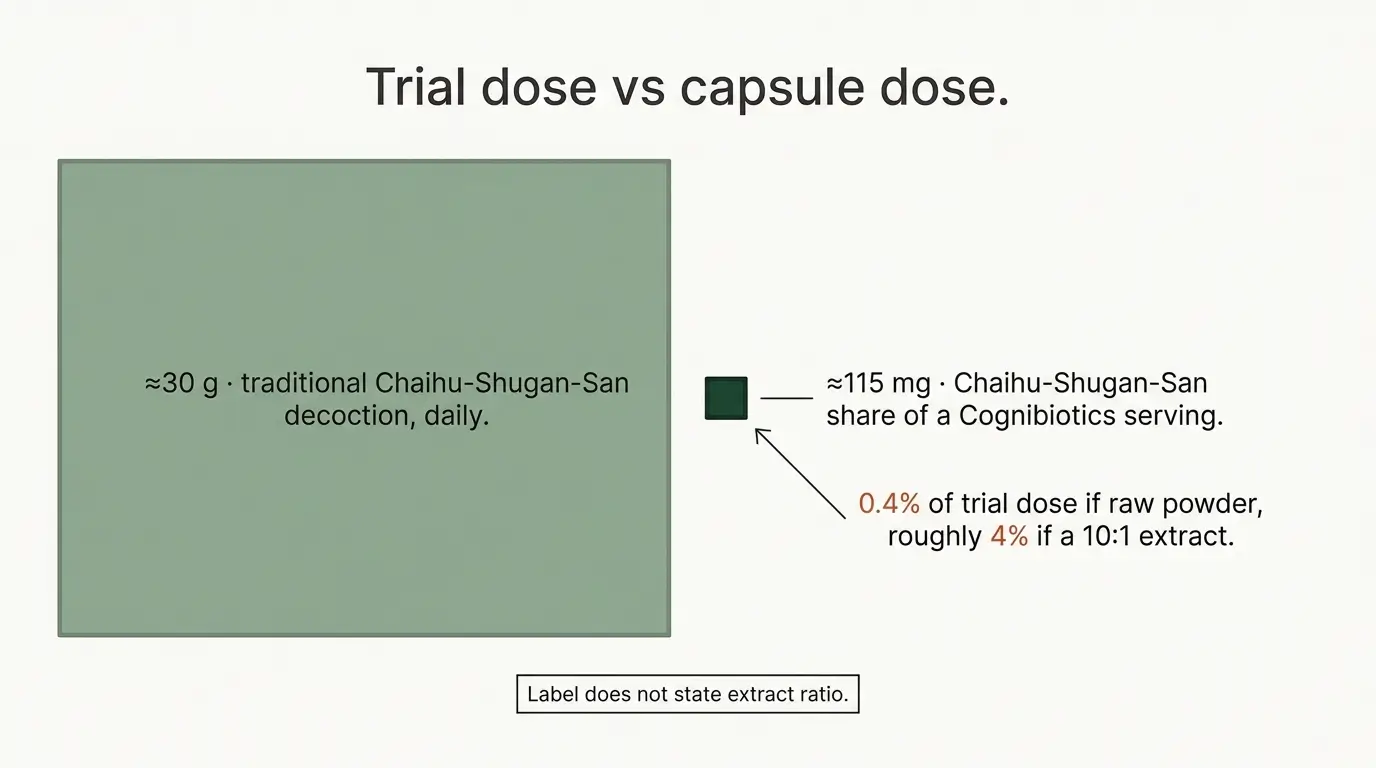
Chaihu-Shugan-San accounts for seven of the seventeen herbs, so call its share roughly 115 mg. Against a 30 g traditional daily dose, that is about 0.4% if the material is raw powder.
If it is a 10:1 concentrated extract, it reaches about 4%. The label does not say which, and that single omission decides whether this ingredient is meaningfully dosed or decorative.
I want to be fair about the uncertainty. Concentrated extracts genuinely do more per milligram than raw powder. Even the generous reading leaves you at a small fraction of what the trials used, and BiOptimizers cites those trials.
| Marketing claim | Evidence type | Strength |
|---|---|---|
| Probiotics support cognition | Human meta-analysis, 12+ weeks [3] | Moderate |
| Chaihu-Shugan-San supports mood | Human RCTs, meta-analyzed [4][5] | Moderate, at gram doses |
| Named strains reduce stress | Human RCT on specific strains [1][2] | Strong, for those strains only |
| Raises BDNF | Animal and mechanistic work [6][15] | Mechanistic only |
| Cognibiotics as a finished product works | No published trial | None |
Nobody has tested this finished formula in a clinical trial. Almost no supplement on the shelf has been, so that is not a scandal by itself. It does mean every efficacy claim around this product comes from ingredient research rather than product research.
Which brings up the label detail that costs this product the most points.
The strain problem nobody else mentions
Probiotic effects are strain-specific. Not species-specific. STRAIN-specific.
Lactobacillus plantarum is a species. L. plantarum PS128 is a strain. They relate the way “dog” relates to “border collie.” Only one of those herds sheep.
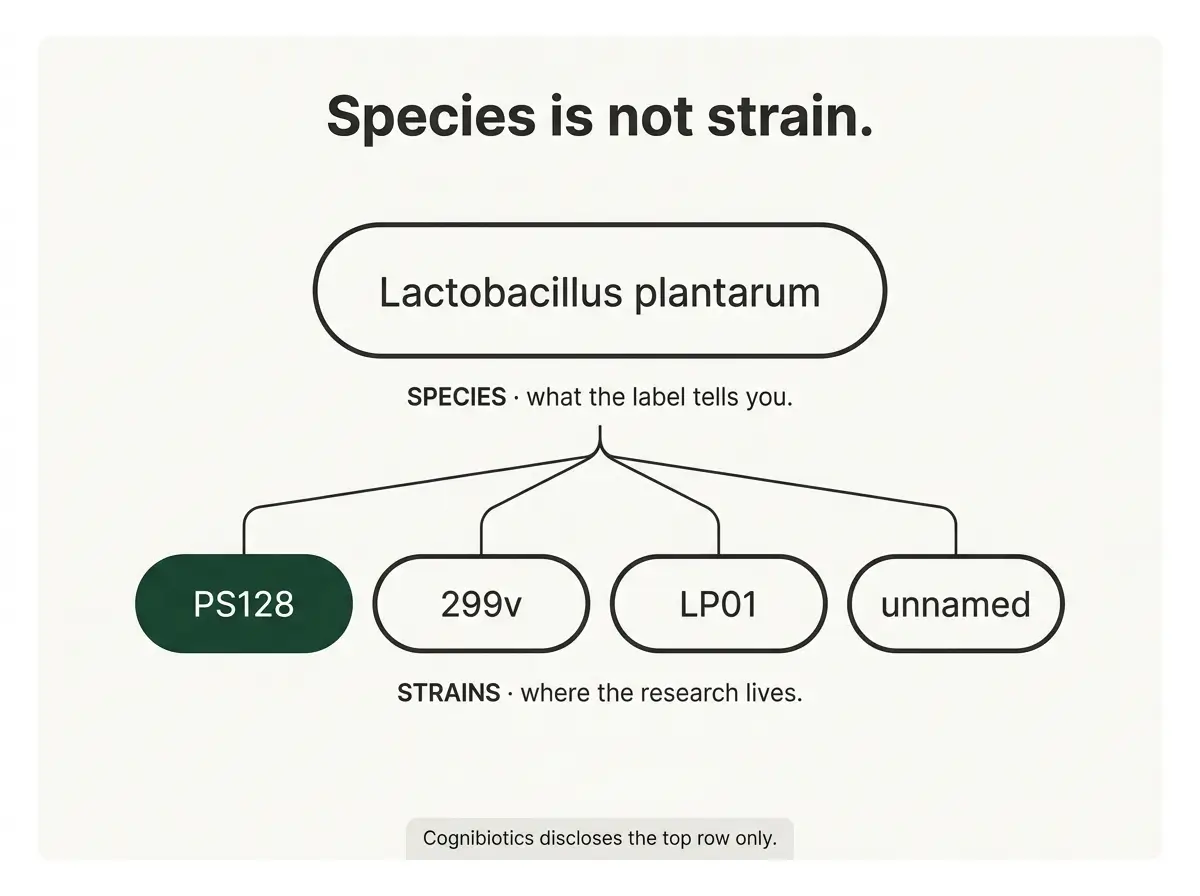
This matters because the well-known gut-brain research runs on named strains at named doses. Messaoudi and colleagues tested L. helveticus R0052 combined with B. longum R0175 at 3 billion CFU daily for 30 days and reported reduced psychological distress in healthy volunteers [1][2].
A 2021 trial in Nutrients gave adults L. plantarum PS128 at 30 billion CFU daily and recorded lower depressive symptom and fatigue scores [9].
Now look at the panel. It lists L. helveticus, B. longum and L. plantarum. It does not say which strains. It also does not say how much of each you get, because all 10 species sit inside one proprietary blend under a single 30 billion CFU total [11].
“So what does that mean in practice?”
It means the 30 billion could be 29 billion of one cheap, easy-to-manufacture strain and a rounding error of the interesting ones. You cannot know. Neither can I.
Strain transparency: 10 species, 0 disclosed strain IDs
| Species on label | Named strain with human data | Dose in that research | Strain disclosed? |
|---|---|---|---|
| SpeciesL. helveticus | Named strainR0052, with B. longum R0175 | Dose3 billion CFU daily | DisclosedNo |
| SpeciesB. longum | Named strainR0175, 1714 | Dose3 billion CFU daily | DisclosedNo |
| SpeciesL. plantarum | Named strainPS128 | Dose30 billion CFU daily | DisclosedNo |
| SpeciesL. casei | Named strainShirota | DoseStrain dependent | DisclosedNo |
| SpeciesL. rhamnosus | Named strainJB-1, GG | DoseStrain dependent | DisclosedNo |
| SpeciesB. breve | Named strainA1, CCFM1025 | DoseStrain dependent | DisclosedNo |
| SpeciesB. infantis | Named strain35624 | DoseStrain dependent | DisclosedNo |
| SpeciesL. reuteri | Named strainDSM 17938 | DoseStrain dependent | DisclosedNo |
| SpeciesL. fermentum | Named strainMultiple | DoseStrain dependent | DisclosedNo |
| SpeciesB. animalis | Named strainBB-12 | DoseStrain dependent | DisclosedNo |
Ten species listed. Zero strain designations disclosed on the panel.
Ten species. Zero disclosed strain IDs. The practice is legal and extremely common across the probiotic industry, and BiOptimizers is nowhere near the worst offender. It still means the marketing leans on strain-level research while the label gives you species-level information.
(Ed. note: I would raise this score a full point tomorrow if BiOptimizers published a strain table with per-strain counts. That is a formatting decision, not a trade secret.)
The herb side has a different labelling problem, and this one sits right on the front of the panel.
The vegan badge and the mussel shell
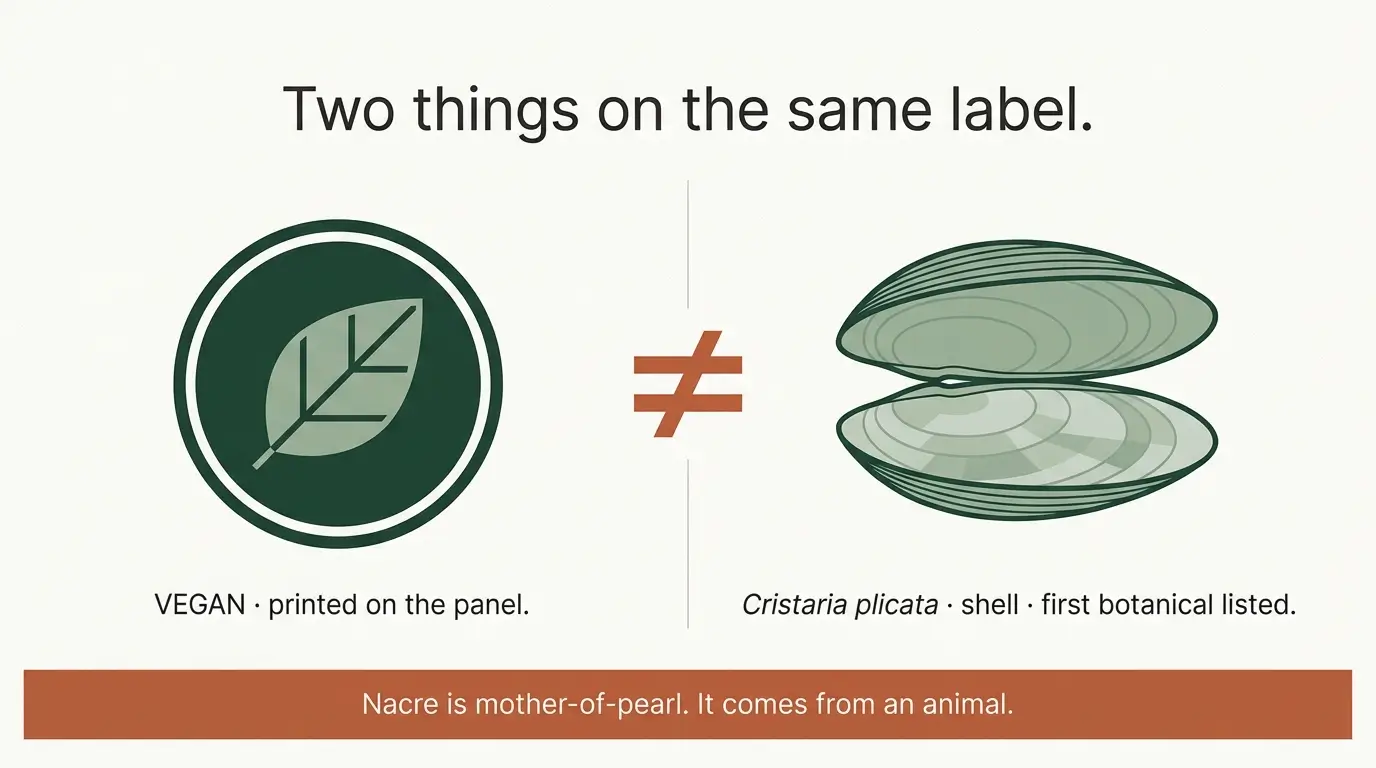
The supplement facts panel carries three badges. Vegan, gluten free, soy free. The first ingredient in the herbal blend is Cristaria plicata, listed as shell.
Cristaria plicata is a freshwater mussel. The shell material used in Chinese medicine is nacre, the iridescent inner layer also called mother-of-pearl [18].
Nacre is mostly calcium carbonate held in a protein matrix, and it comes out of an animal.
A brand could argue the shell counts as a mineral by-product rather than animal tissue. No vegan certification standard I am aware of accepts that reasoning. If you avoid animal products, this bottle does not qualify, and the badge on the panel will mislead you.
The allergen question is separate. The panel declares gluten free and soy free. It says nothing about mollusks. Under Regulation (EU) No 1169/2011, mollusks belong to the EU’s declarable allergen list. US federal allergen rules cover crustacean shellfish rather than mollusks, so the omission may well be legal in the United States. Legal and adequate are different standards.
“Does this actually affect me?”
If you have a diagnosed shellfish allergy, ask your allergist before taking it. Mollusk allergy differs from crustacean allergy, and reactions to processed nacre are not well documented, so I will not tell you the risk is zero or that it is serious. I will tell you the label does not give you enough information to decide on your own.
Labelling aside, the price question has its own confusion to sort out.
What Cognibiotics actually costs
Here is what we recorded in early August 2026. The official BiOptimizers page anchors a $200 list price and discounts heavily, showing a single bottle at $87 and multi-bottle pricing near $136 during the promotion running when we checked [11].
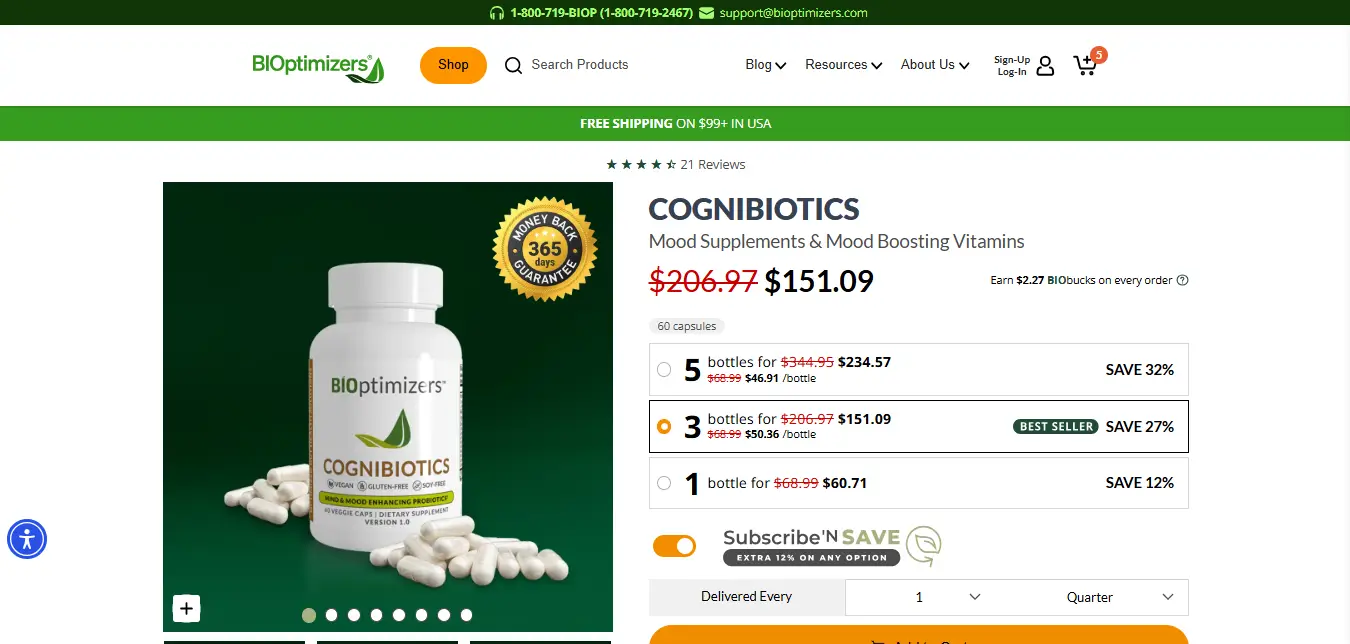
Prices recorded first week of August 2026 and they rotate weekly.Affiliate pages quoted $75 for one bottle, $64 per bottle for three, and $60 per bottle for five.
OptimOZ in Australia listed AU$72, marked down from AU$79.95 [14]. Amazon listings varied by capsule count and seller.
That spread exists because capsule counts differ between listings, promotions rotate weekly, and marketplace sellers price independently. Do not assume the first number you see is the real one, and do not assume the highest price buys a different product.
The label settles a dispute I could not resolve before seeing it. Serving size is 2 capsules, servings per container is 30. Some buyers report being told to take six capsules daily. No such instruction appears on the panel. At the label serving, one bottle covers 30 days and the math stays simple.
| Purchase | Price per bottle | Cost per day | Cost per 90 days |
|---|---|---|---|
| 1 bottle at $87 | $87.00 | $2.90 | $261 |
| 1 bottle at $75 | $75.00 | $2.50 | $225 |
| 3 bottles at $64 each | $64.00 | $2.13 | $192 |
| 5 bottles at $60 each | $60.00 | $2.00 | $180 |
Take the label serving and judge the result at that dose. If anyone tells you the product needs three times its stated serving to work, that points to a formulation problem, not a customer problem.
Pricing connects to the return question, because bundle discounts only pay off when you can send back what you do not use.
The guarantee fine print
Affiliate pages repeat the same line about a 365-day money-back guarantee, usually without qualification. BiOptimizers does advertise a 365-day guarantee on its product pages [11][13].
The published terms attach a condition worth understanding. The company’s terms and conditions state returned product must arrive in sealed and unused condition, with refunds processed within 5 to 7 working days [12].
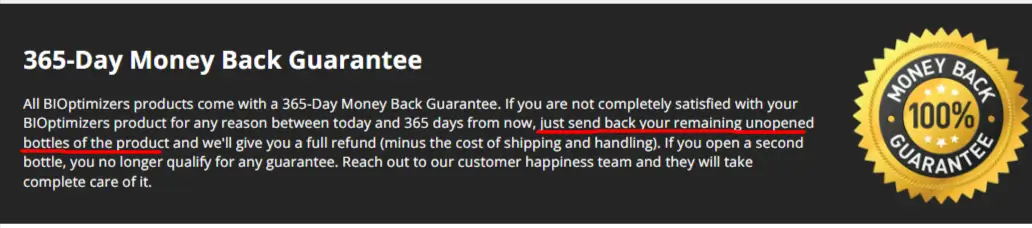
Terms also vary by region, so the policy covering a purchase from the US site may not match the EU site or a third-party retailer.
Read that condition against how you would actually use this product. Probiotic and cognition research reads out at around 12 weeks [3].
Three months of use means opening three bottles. Whatever your regional policy says, the bottles you have already started are the ones you cannot return, so a five-bottle order concentrates your risk in exactly the bottles you plan to open.
Two practical notes. Refunds generally exclude shipping and handling in both directions. BiOptimizers also puts a subscription option at checkout, so confirm whether that box is ticked before paying.
Trustpilot reviews across the brand’s catalog include a recurring cluster of complaints about unexpected recurring charges and delivery delays, alongside a large volume of positive service feedback.
Money aside, some readers should not take this product at all.
Side effects, interactions, and who should skip it
Most people tolerate Cognibiotics without trouble. Expect gas, mild bloating, or a change in stool frequency during the first one to two weeks while your gut bacteria adjust. That normally settles.
The specific risks come from ingredients other reviews never name.
Salvia miltiorrhiza, known as danshen, interacts with the blood thinner warfarin through two routes. It changes how the body processes the drug and it adds to the drug’s own blood-thinning effect. A published review of case reports concluded patients taking warfarin should avoid danshen [7].
If you take any anticoagulant or antiplatelet medication, speak to your prescriber before opening this bottle.
Schisandra chinensis affects CYP3A4, a liver enzyme that breaks down many common medications including some statins, sedatives and transplant drugs. A 2022 review documented Schisandra raising blood levels of tacrolimus in transplant patients [8].
Glycyrrhiza uralensis is licorice root, which can raise blood pressure and lower potassium with sustained use. Citrus aurantium contains synephrine, a mild stimulant.
One correction worth stating plainly. Reynoutria multiflora has a documented association with liver injury, but that literature concerns the root, sold as he shou wu [20].
This label specifies the stem, ye jiao teng, which carries a different and considerably lower risk profile. The label deserves credit for making that distinction explicit.
The inulin and xylooligosaccharides create a problem for one group. If you have SIBO (small intestinal bacterial overgrowth, meaning too many bacteria in the small intestine), feeding fermentable fiber into that environment reliably worsens bloating and pain. Several Lactobacillus strains also produce histamine, which matters if you have histamine intolerance or mast cell issues.
Do not take Cognibiotics without medical clearance if you take warfarin or any blood thinner, take medications processed by CYP3A4, are immunocompromised or on immunosuppressants, are pregnant or breastfeeding, have SIBO or histamine intolerance, have a shellfish or mollusk allergy, or have uncontrolled high blood pressure.
A pharmacist will run a full interaction check for you in five minutes at no charge. Cheapest safety step available.
So what do people who actually took it say?
What real users report, including the complaints
The positive feedback shares one specific quality, and that quality tells you more than the star rating does. A verified buyer on the OptimOZ listing wrote that Cognibiotics “helps me to be more clear and switched on mentally, better mood,” and said they cannot go without it [14].
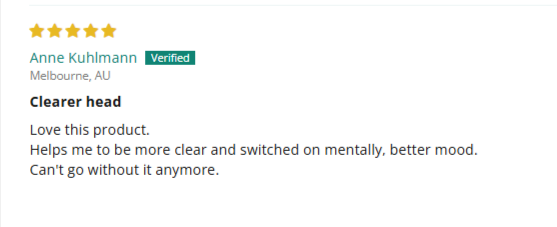
Amazon ratings sat around 4.6 stars when we checked, though marketplace ratings shift constantly and often pool across listing variants. Across the brand’s review page, retailer listings and social comments, the recurring word is calm rather than energized. Timelines cluster around weeks two to four.
That pattern matches what the mechanism predicts. A product acting on serotonin pathways and the stress response should feel like a lowered floor, not a raised ceiling. If you want a nootropic jolt, this will disappoint you even when it works as designed.
The quieter feedback deserves the same weight. A meaningful share of users report no noticeable change after several weeks. Some describe digestive discomfort in the first days. Several say the ongoing cost is hard to justify past the first bottle. Delivery problems and billing surprises appear in Trustpilot reviews across the BiOptimizers catalog, and the company does reply to those publicly.
Two caveats sit on all of it. Most glowing testimony lives on pages owned by the seller. And several top-ranking “reviews” of this product claim weight loss, skin clearing, improved eyesight and FDA approval, none of which hold up, which should lower your trust in the entire affiliate layer around this product.
Worth knowing too, Reddit carries no substantial dedicated Cognibiotics thread. For something advertised this heavily, that absence of organic discussion tells you how thin the independent experience really is.
Read the current verified reviews yourself, then weigh them against the alternatives.
Cognibiotics versus the alternatives
Specifications come from each brand’s own listings and prices reflect early August 2026, so both will drift.
| Product | Strain transparency | CFU per serving | Botanicals | Monthly cost | Best for |
|---|---|---|---|---|---|
| Cognibiotics | Species only, no strain IDs | 30 billion | 17 herbs, two classical formulas | $60 to $87 | Herbal mood support with probiotics |
| Neuralli MP | Single named strain, PS128 | 60 billion | None | $70 to $80 | Strongest strain-level mood evidence [9] |
| Seed DS-01 | Full strain IDs published | 53.6 billion AFU | None | ~$50 | Digestive and whole-body gut health |
| Generic R0052 + R0175 | Exact strains from the trials | 3 billion | None | $20 to $30 | Replicating the published stress research [1] |
AFU means active fluorescent units, a live-cell counting method some brands use instead of CFU. The two numbers are not directly comparable, which is its own small annoyance when shopping this category.
Cognibiotics is the only product here combining psychobiotics with traditional Chinese herbal formulas. It is also the least transparent of the four. If strain-level proof is what you care about, Neuralli or a plain R0052 plus R0175 product answers that better and costs less. If the herb blend drew you in, nothing else on this table replicates it.
Whichever you pick, how you test it decides whether you learn anything.
How to test Cognibiotics properly in 30 days
Most people waste the first bottle by changing four things at once, then guessing.
Score four things from 1 to 10 for three days before you start. Afternoon energy at 3pm. Mood stability. Focus during your hardest work block. Bloating. Write the numbers down and average them.
Then change nothing else for 30 days. No new supplement, no new sleep schedule, no caffeine overhaul. Change two variables and you learn nothing about either.
Take 2 capsules on waking, on an empty stomach. If that causes discomfort, move them to breakfast. Keep them at least an hour away from any antibiotic dose.
Treat weeks one and two as noise. The cognition research reads out at 8 to 12 weeks, not 8 to 12 days [3]. Score the same four metrics again on days 28, 29 and 30, then compare averages.
Your decision rule. A 2-point or better improvement in at least two categories justifies a second bottle. Anything smaller falls inside normal week-to-week variation.
Your 30-day Cognibiotics test
Score each metric 1 to 10. Fill baseline before you start, then return at week 2 and week 4. Your entries save to this browser only.
Enter your baseline scores to begin.
Who should buy it and who should skip it
Buy one bottle if you have already handled the free variables, meaning sleep, fiber and alcohol, and the fog persists anyway.
The other good reason is a pattern where mental fog tracks alongside digestive symptoms, since that overlap is what this formula targets. Only buy it if $75 for a 30-day experiment does not annoy you.
Skip it if you eat vegan, because Cristaria plicata is an animal product regardless of the badge [18].
Anyone with a shellfish or mollusk allergy should also skip it until an allergist says otherwise.
Want stimulant-style focus? Calm is what users actually describe, so look elsewhere. Strain-level transparency as a buying criterion rules this product out entirely, and Neuralli answers that better.
On a tight budget, a plain R0052 plus R0175 product replicates the published stress research for a third of the price [1].
And skip the five-bottle bundle on a first order. The return conditions make that the highest-risk way to buy [12].
Final verdict
The label moved two scores in opposite directions. Formulation competence went up, because building two intact classical formulas with correct pao zhi processing notations takes knowledge that most supplement companies do not have in the building.
Labelling accuracy pulled trust down, because a vegan badge printed above a mussel shell is a mistake somebody should have caught before print.
Cognibiotics scorecard
Buy one bottle, take the label serving of 2 capsules for 30 days, score yourself honestly, and stop if the numbers do not move. Skip it entirely if you eat vegan or avoid shellfish, because the panel cannot be relied on for either.
Check the current single-bottle price here.
Use FDN10 at checkout for 15 percent off.
Frequently asked questions
How we researched this review
We built this Cognibiotics review from four source types.
- First, the physical supplement facts panel, read line by line, with all 17 botanicals matched against their classical formula sources, plus the product page and its 24 cited references [11], the long-form sales page [13], and the company's published terms [12].
- Second, retailer listings across multiple sellers in the United States, Australia and Europe, checked during the first week of August 2026 for price and specification verification [14].
- Third, peer-reviewed literature, prioritizing human trials and meta-analyses over animal and laboratory work. That included a 2025 meta-analysis on probiotics and cognitive function [3], a 2024 systematic review and a 2012 meta-analysis on Chaihu-Shugan-San [4][5], the Messaoudi trials on L. helveticus R0052 and B. longum R0175 [1][2], a 2021 clinical trial on L. plantarum PS128 [9], pharmacology papers covering danshen and Schisandra drug interactions [7][8], and reviews covering pearl and nacre in traditional medicine [18] and Reynoutria multiflora liver injury [20].
- Fourth, customer feedback from Amazon, retailer listings, the brand's review pages and Trustpilot.
Citations
- [1] Messaoudi M, et al. British Journal of Nutrition, 2011. "Assessment of psychotropic-like properties of a probiotic formulation (Lactobacillus helveticus R0052 and Bifidobacterium longum R0175) in rats and human subjects."
- [2] Messaoudi M, et al. Gut Microbes, 2011. "Beneficial psychological effects of a probiotic formulation (Lactobacillus helveticus R0052 and Bifidobacterium longum R0175) in healthy human volunteers."
- [3] Calzada-Gonzales N, et al. 2025. "Efficacy and safety of probiotic supplements on cognitive function: a systematic review and meta-analysis."
- [4] Zhang X, et al. 2024. "Effectiveness and safety of Chaihu-Shugan-San for treating depression."
- [5] Wang Y, Fan R, Huang X. Journal of Ethnopharmacology, 2012. "Meta-analysis of the clinical effectiveness of traditional Chinese medicine formula Chaihu-Shugan-San in depression."
- [6] Guo Z, et al. Frontiers in Pharmacology, 2024. "Potential antidepressant effects of Traditional Chinese Medicine formulas."
- [7] Chan TY. Annals of Pharmacotherapy, 2001. "Interaction between warfarin and danshen (Salvia miltiorrhiza)."
- [8] Miedziaszczyk M, et al. 2022. "Controversial interactions of tacrolimus with dietary supplements, herbs and food."
- [9] Ho YT, et al. Nutrients, 2021. "Effects of Lactobacillus plantarum PS128 on depressive symptoms and sleep quality in self-reported insomniacs."
- [10] Del Toro-Barbosa M, et al. Nutrients, 2020. "Psychobiotics: mechanisms of action, evaluation methods and effectiveness in applications with food products."
- [11] BiOptimizers. "Cognibiotics product page and ingredient panel."
- [12] BiOptimizers. "Terms and conditions, returns and refunds."
- [13] BiOptimizers. "CogniBiotics long-form product page."
- [14] OptimOZ. "BiOptimizers Cognibiotics, 60 capsules, specifications and customer reviews."
- [15] Ķimse L, et al. Medicina, 2024. "A narrative review of psychobiotics: probiotics that influence the gut-brain axis."
- [16] Federal Trade Commission, February 2020. "FTC refunding consumers defrauded by cognitive improvement claims."
- [17] Harvard Health Publishing. "Don't buy into brain health supplements."
- [18] Ye Y, et al. 2022. "The application of pearls in traditional medicine of China and their modern research."
- [19] Wang J, et al. 2022. "The modulation of Chaihu Shugan formula on microbiota composition."
- [20] Li C, et al. 2021. "Herb-induced liver injury related to Reynoutria multiflora."
This article is informational and does not replace medical advice. Talk to your doctor or pharmacist before starting any supplement, especially if you take prescription medication.
