How to Increase Muscle Mass as a Vegetarian
Build lean muscle without meat using protein targets that account for plant digestibility, leucine optimization, and absorption protocols most guides ignore.
Enjoying this article?Add FoodNourish as a preferred source on Google and see our research-backed guides more often in your search results.
You can build the same amount of muscle on a vegetarian diet as someone eating meat. Research confirms that when total protein intake matches, muscle protein synthesis rates are equivalent between plant-based and omnivore athletes.
The problem is that most vegetarians fail to match intake.
- They stop at 0.8 grams per kilogram of body weight, the standard RDA designed for sedentary adults.
- They ignore the 10-20% digestibility gap between plant and animal proteins.
- They miss the 3-gram leucine threshold required to trigger muscle growth.
This guide fixes those failures with precise calculations, meal timing strategies, and recipes that deliver absorption, not just intake.
How Much Protein You Actually Need
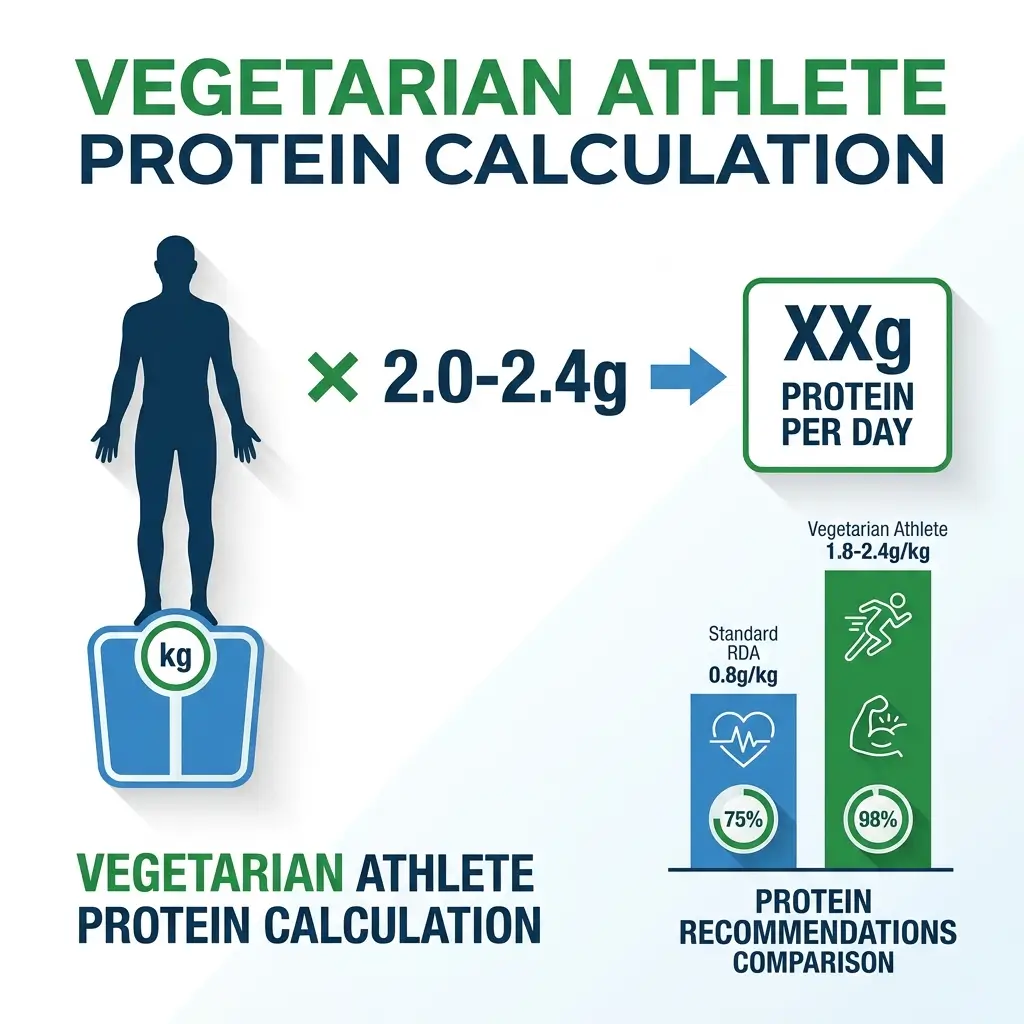
Plant protein digests differently than animal protein. Your body absorbs 98-100% of whey protein but only 75-90% of most plant proteins.
Feel free to check our previous article on How to Increase Protein Absorption: 6 Science-Backed Methods
This happens because of fiber content, antinutrients like phytates, and the structure of plant cell walls. You must eat more total plant protein to deliver the same usable amino acids to your muscles.
The standard recommendation for omnivore athletes is 1.6-2.2 grams of protein per kilogram of body weight daily. For vegetarians, increase this range to 1.8-2.4 grams per kilogram.
For example, a 180-pound man (82 kg) needs approximately 150-195 grams of protein daily. A 140-pound woman (64 kg) needs 115-155 grams.
Calculate your specific target using this formula. You might also want to check our Weight Gain Calculator (opens in new tab).
- Take your body weight in kilograms (weight in pounds divided by 2.2).
- Multiply by 2.0 if you train moderately four times weekly.
- Multiply by 2.4 if you train intensely six times weekly or are in a muscle-building phase.
This accounts for the digestibility difference without requiring complex math at every meal.
The Leucine Threshold Most Vegetarians Miss
Muscle growth requires triggering the mTOR pathway. This cellular mechanism initiates muscle protein synthesis (MPS), the process that repairs and builds muscle tissue after training. mTOR activation requires approximately 3 grams of leucine per meal.
Miss this threshold and you absorb the protein without maximizing growth.
- Animal proteins contain 8-11% leucine by weight.
- Whey protein provides about 11% leucine.
- Most plant proteins contain 6-8% leucine. Soy protein isolate reaches 8%, but whole food sources like lentils contain only 7.4% and wheat gluten (seitan) contains just 6.8%.
You need larger portions of plant foods to hit the 3-gram leucine threshold.
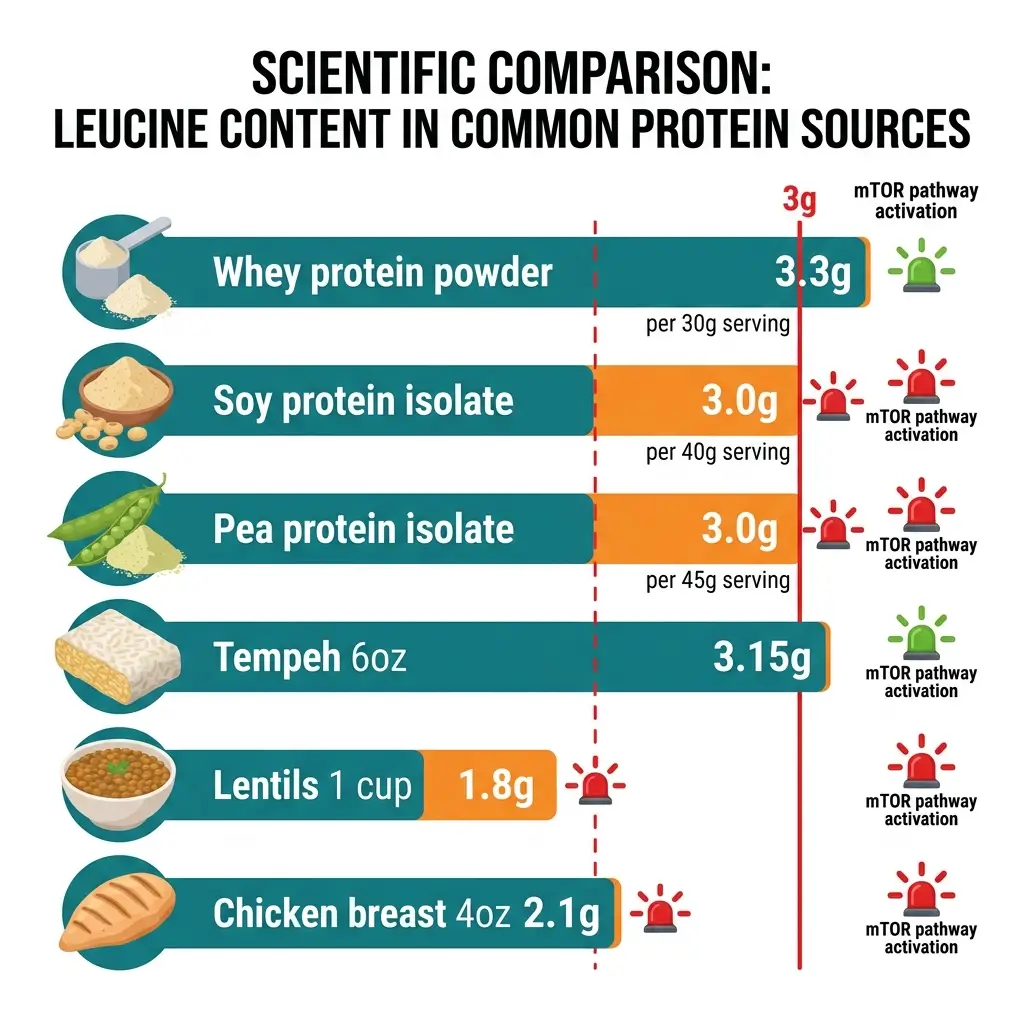
A 30-gram scoop of whey protein delivers 3.3 grams of leucine.
You need 40 grams of soy protein isolate or 45 grams of pea protein isolate to match this.
Whole food servings require even more volume. Four ounces of tempeh provides 2.1 grams of leucine. Six ounces provides 3.15 grams, crossing the threshold.
Complete Proteins Without Obsession
The myth that you must combine plant proteins in single meals persists from outdated 1970s research. Your body maintains a free amino acid pool that lasts 24 hours.
Eating lysine-rich legumes at lunch and methionine-rich grains at dinner provides complete amino acid coverage over the day. You do not need rice and beans in the same bowl.
Focus instead on variety across the week.
Legumes (beans, lentils, peas) are high in lysine but lower in methionine.
Grains and nuts are higher in methionine but lower in lysine.
Soy and quinoa contain complete amino acid profiles comparable to animal proteins. Hemp seeds, chia seeds, and pumpkin seeds add methionine to legume-heavy meals.
The practical approach is simple. Eat legumes or soy at least twice daily. Add grains, nuts, or seeds to most meals. Do not stress about specific combinations. Your liver stores and releases amino acids as needed throughout the day.
The Six Best Muscle-Building Plant Foods
- Seitan contains 25 grams of protein per 100 grams. Made from wheat gluten, it is low in lysine but excellent for methionine. Pair it with legumes or soy sauce (which contains lysine) to balance the amino acid profile. It is the most meat-like texture available for transitioning omnivores.
- Tempeh delivers 19 grams of protein per 100 grams with a complete amino acid profile. The fermentation process reduces oligosaccharides that cause gas, making it easier to digest than whole beans. It also provides probiotics that support gut health, which improves nutrient absorption over time.
- Lentils offer 9 grams of protein per cooked cup plus 18 grams of fiber. Red lentils cook faster and break down into soups. Green lentils hold shape for salads. They are among the best vegan sources of iron and zinc, minerals often deficient in vegetarian diets.
- Pumpkin seeds contain 30 grams of protein per 100 grams and are rich in zinc, magnesium, and iron. They are calorie-dense, making them ideal for bulking phases where you need high calories in small volumes.
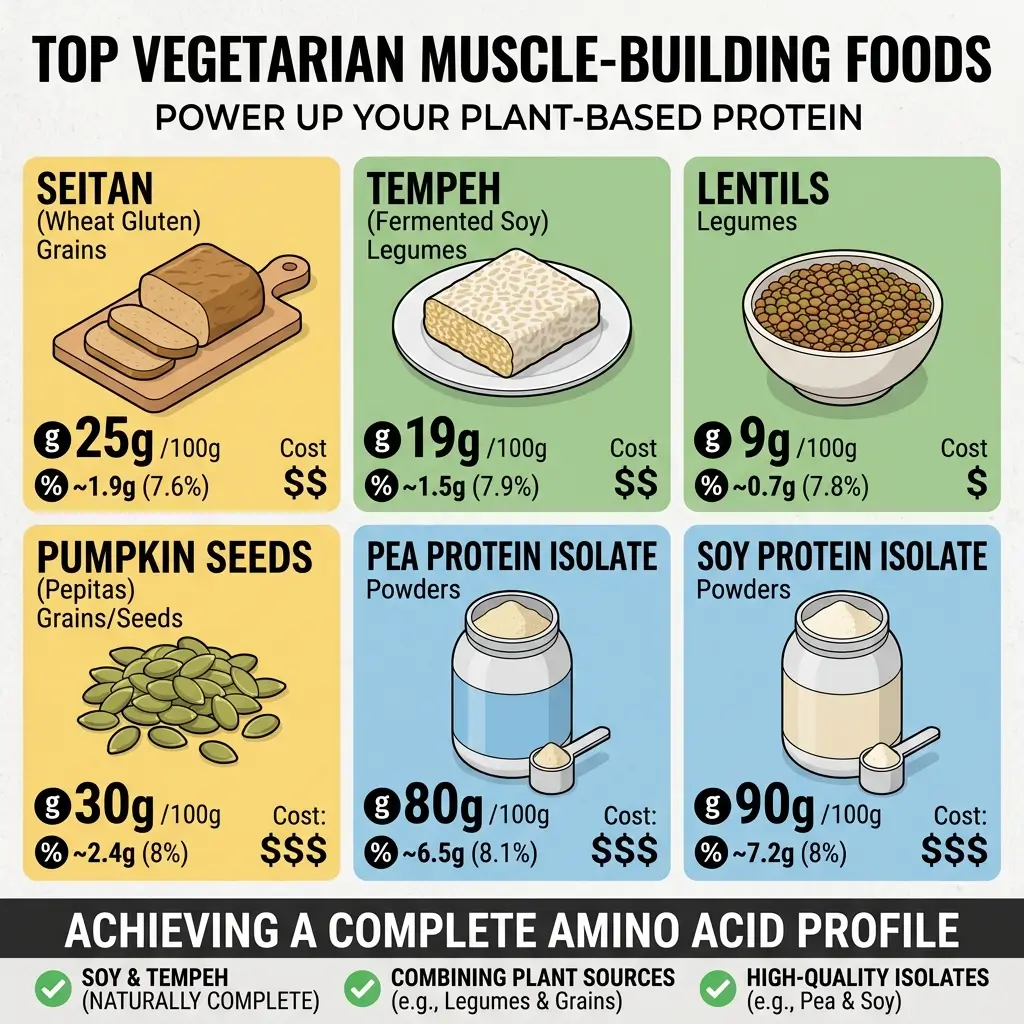
- Pea protein isolate is 80% protein by weight with 8% leucine content. It is hypoallergenic, unlike soy or wheat, and mixes easily into smoothies. It lacks methionine, so rotate it with other sources or add hemp seeds.
- Soy protein isolate is the gold standard for plant-based athletes. It is 90% protein with a complete amino acid profile and PDCAAS score of 1.0, matching whey and eggs. It contains isoflavones, but research shows no negative effects on testosterone levels in men at normal dietary intakes.
Supplements You Cannot Skip
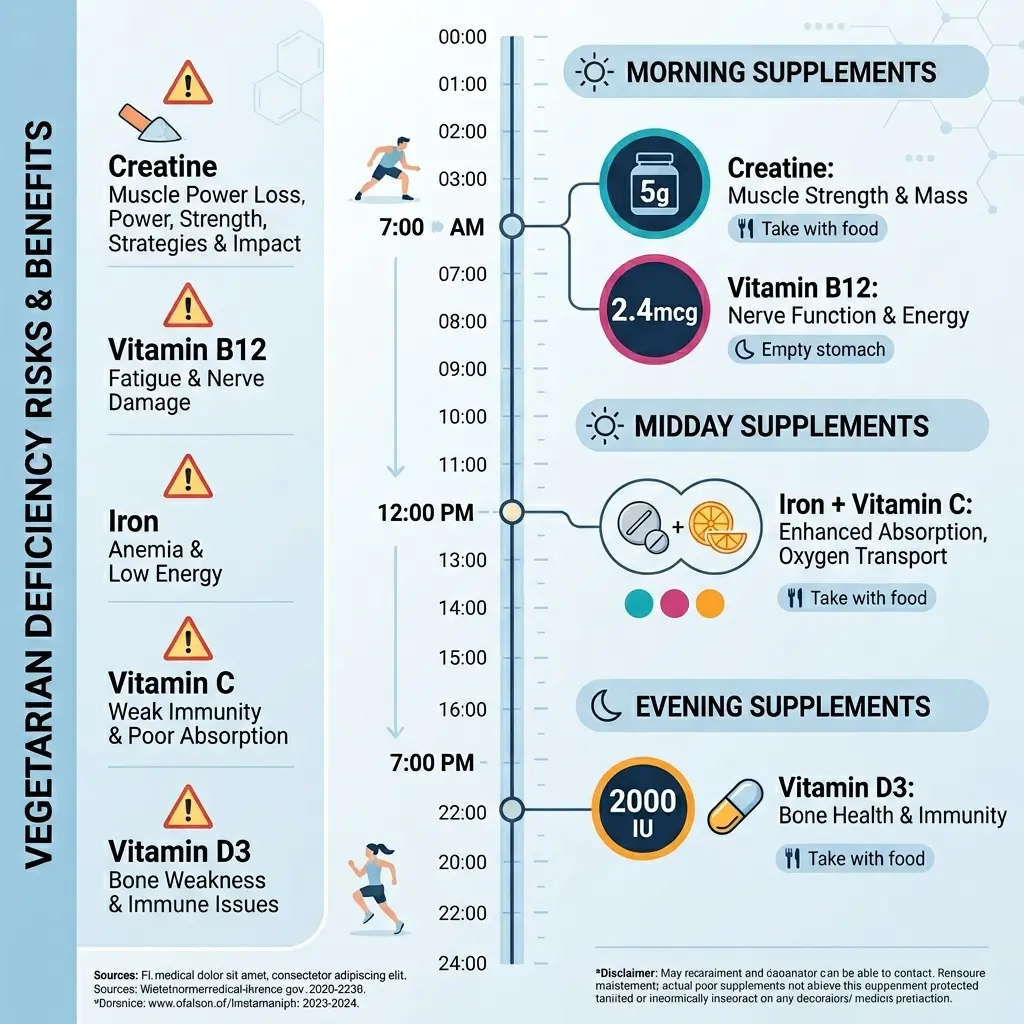
- Creatine monohydrate is non-negotiable for vegetarian athletes. It’s been one of the most studied supplements with proven, undeniable benefits. Omnivores consume 1-2 grams daily through meat, maintaining 60-80% muscle saturation. Vegetarians have 30-50% lower baseline muscle creatine stores. This creates a larger window for improvement through supplementation.
Creatine supplementation increases muscle phosphocreatine stores by 20-40% in vegetarians compared to 10-20% in omnivores. This directly improves strength, power output, and lean mass gains. It also enhances cognitive function, with vegetarians showing greater memory improvements than meat-eaters in clinical trials.
→ Take 5 grams of creatine monohydrate daily. You can load with 20 grams daily for 7 days to saturate stores faster, but this causes temporary water retention and potential GI distress. The standard 5-gram dose achieves full saturation within 28 days without side effects. Take it any time of day with water or juice.
- Vitamin B12 is found naturally only in animal products. Deficiency causes fatigue, weakness, and neurological damage. Take 2.4 micrograms daily minimum, or 1000 micrograms twice weekly. Use methylcobalamin or cyanocobalamin forms. Check serum B12 levels annually.
- Vitamin D3 supports testosterone production and muscle function. Most people are deficient, especially those with limited sun exposure. Take 1000-2000 IU of vegan D3 (lichen-derived) daily, or 5000 IU if deficient based on blood tests.
- Iron deficiency is common in vegetarian athletes, particularly menstruating women. Plant iron (non-heme) absorbs at 2-20% compared to heme iron at 15-35%. Get ferritin levels checked. Supplement only if below 30 ng/mL, as excess iron causes oxidative stress. Take 18-25 mg elemental iron with vitamin C to enhance absorption.
- Zinc supports testosterone and immune function. Found in pumpkin seeds, legumes, and whole grains, but phytates reduce absorption. Soaking, sprouting, and fermenting increases bioavailability. Supplement 15-30 mg if dietary intake is inconsistent.
Vitamin D3 also works alongside calcium, magnesium and vitamin K, covered in our breakdown of the nutrients that support bones, muscles and mobility.
Meal Timing for Maximum Absorption
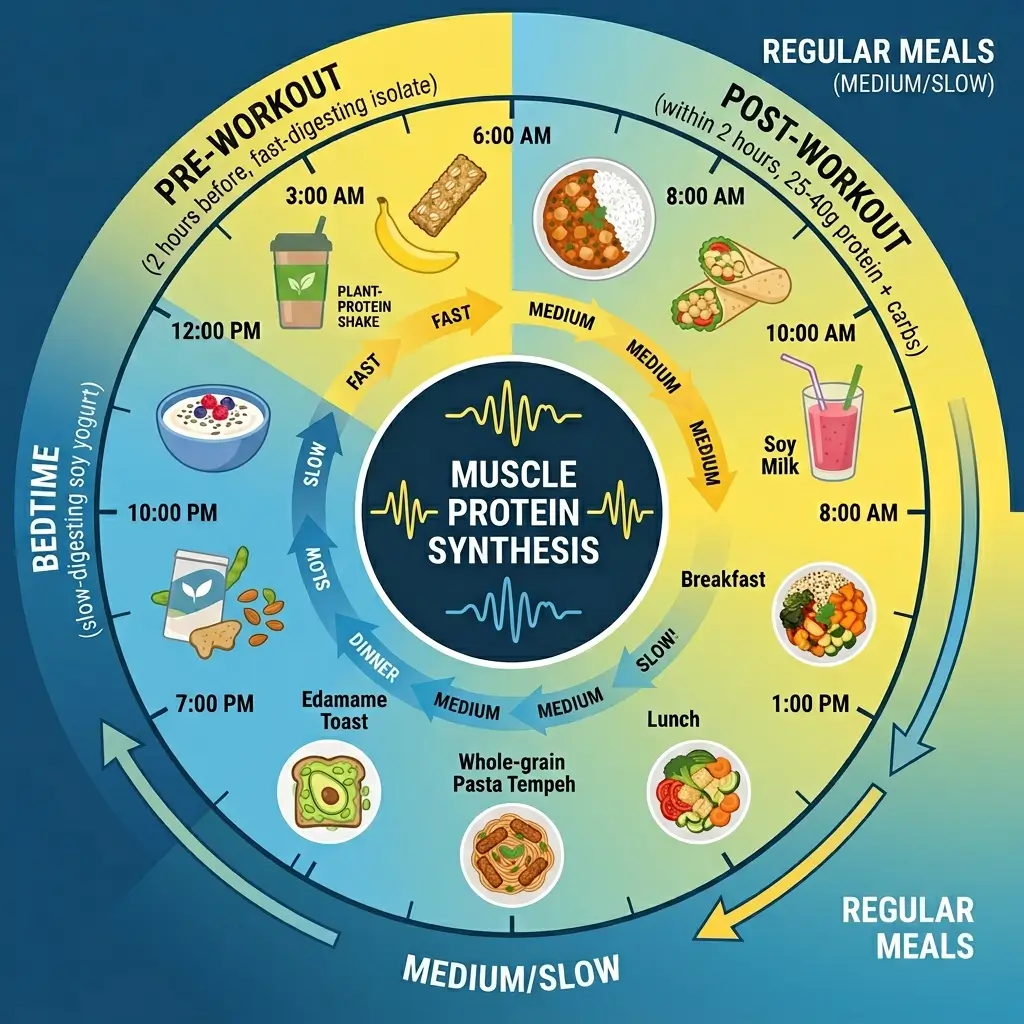
Plant proteins digest slower than animal proteins due to fiber content. This provides sustained amino acid release but can cause problems around workouts when you need rapid absorption.
- Pre-workout (1-2 hours before): Avoid whole food legumes. The fiber and volume cause gastric distress during training. Use fast-digesting protein isolates instead. A smoothie with 30 grams pea or soy protein isolate, banana, and oat milk provides amino acids without GI load.
- Post-workout (within 2 hours): This is your priority window. Consume 25-40 grams of protein with 60-100 grams of carbohydrates. The carbs spike insulin, which drives amino acids into muscle cells. Use soy protein isolate, tempeh, or a pea/rice blend to ensure leucine threshold is met. Add white rice or potatoes for fast carbs.
- Before bed: Casein protein is popular among omnivores for slow overnight release. Plant-based alternatives include soy yogurt with chia seeds or a lentil-based stew. The fiber and complex carbohydrates slow digestion, providing amino acids throughout sleep.
The Fiber Problem and Digestive Adaptation
Switching to high-protein plant foods often causes bloating, gas, and early satiety. Legumes contain oligosaccharides (raffinose, stachyose) that humans cannot digest. Gut bacteria ferment these, producing gas. Fiber adds bulk that fills your stomach faster than calorie-dense animal foods.
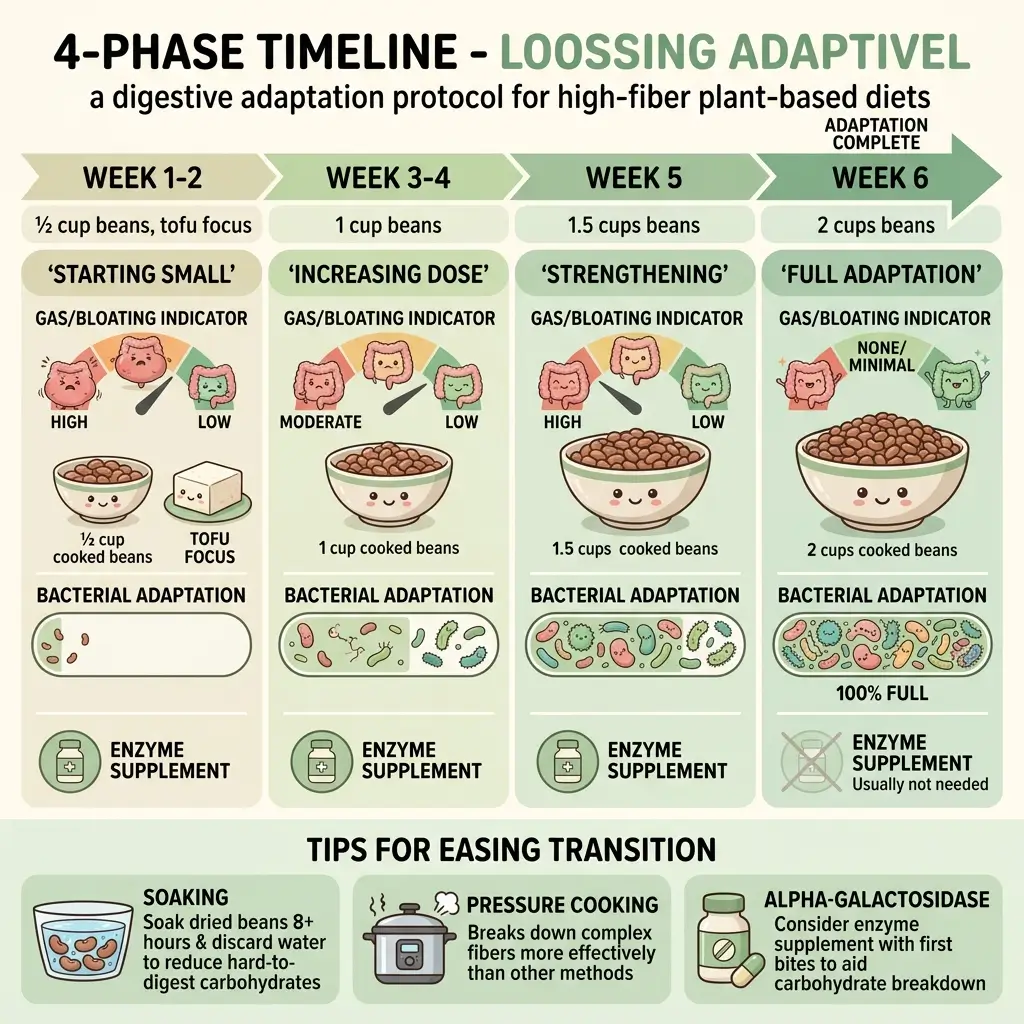
Your gut adapts over 4-6 weeks.
- Bacterial populations shift to handle increased fiber.
- Enzyme production increases.
- Gas production decreases.
But the transition period can sabotage your calorie intake if you feel too bloated to eat enough. Follow this adaptation protocol.
- Week 1-2: Limit beans to ½ cup daily. Use tofu, tempeh, and protein powders for the majority of protein.
- Week 3-4: Increase to 1 cup beans daily, split across two meals.
- Week 5-6: Increase to 1.5-2 cups daily as tolerated. Soak dried beans for 12 hours and cook in a pressure cooker to reduce oligosaccharides by 50-70%.
Use alpha-galactosidase enzyme supplements (Beano or generic) when eating beans during the adaptation phase. These enzymes break down the problematic carbohydrates before they reach your gut bacteria.
Troubleshooting Why You Are Not Gaining
- Problem: You are tracking protein but still not growing. You are likely underestimating by 30% due to digestibility. If your app shows 150 grams but you are eating mostly whole food plants, you are absorbing only 120 grams. Increase your target by 20% or add more protein isolates, which have higher bioavailability.
- Problem: You feel too full to eat your calorie surplus. Plant foods are voluminous. Four hundred calories of chicken occupy less stomach space than 400 calories of lentils. Switch to calorie-dense whole foods. Add 2 tablespoons of tahini to meals (180 calories). Use nut butters in smoothies. Eat dried fruit instead of fresh. Cook with olive oil or coconut oil.
- Problem: You are tired despite eating enough calories. Check iron, B12, and vitamin D levels. These deficiencies develop gradually and mimic overtraining symptoms. Vegetarian athletes are at higher risk for all three.
- Problem: You are gaining fat, not muscle. Your calorie surplus is too large. Aim for 300-500 calories above maintenance daily. That yields 0.5-1 pound of weight gain weekly. Faster gain means fat accumulation. Track your waist circumference. If it increases more than your chest and arms, reduce calories by 10%.
7-Day Vegetarian Muscle-Building Meal Plan
This plan targets 3,000 calories and 160 grams of protein for an 80kg male in a bulking phase. Adjust portions proportionally for your body weight and goals.
Day 1
- Breakfast: Overnight oats with soy protein, chia, banana, almond butter (650 cal, 28g protein)
- Snack: Apple with 2 tbsp peanut butter (300 cal, 8g protein)
- Lunch: Tempeh power bowl with quinoa, edamame, tahini (685 cal, 35g protein)
- Pre-workout: Soy protein shake with oat milk (250 cal, 30g protein)
- Dinner: Lentil bolognese with seitan over whole wheat pasta (780 cal, 42g protein)
- Snack: Soy yogurt with pumpkin seeds (335 cal, 17g protein)
- Daily Total: 3,000 calories, 160g protein
Day 2
- Breakfast: Tofu scramble with spinach, mushrooms, whole grain toast (580 cal, 26g protein)
- Snack: Protein smoothie with pea protein, berries, oats (320 cal, 25g protein)
- Lunch: Chickpea and quinoa salad with hemp seeds (620 cal, 22g protein)
- Pre-workout: Rice cakes with hummus (280 cal, 6g protein)
- Dinner: Seitan stir-fry with broccoli, brown rice, cashews (750 cal, 38g protein)
- Snack: Cottage cheese (if lacto) or soy yogurt (300 cal, 24g protein)
- Daily Total: 2,850 calories, 141g protein (add 1 scoop protein to reach target)
Day 3
- Breakfast: Protein pancakes with soy flour, topped with walnuts (640 cal, 32g protein)
- Snack: Edamame (2 cups) (380 cal, 34g protein)
- Lunch: Black bean and sweet potato tacos with Greek yogurt (650 cal, 24g protein)
- Pre-workout: Banana with soy protein shake (280 cal, 25g protein)
- Dinner: Chickpea tikka masala with rice and naan (780 cal, 22g protein)
- Snack: Casein or soy protein pudding (270 cal, 23g protein)
- Daily Total: 3,000 calories, 160g protein
Days 4-7 follow similar patterns rotating protein sources (tempeh, seitan, lentils, chickpeas, black beans, edamame, tofu) with grains (quinoa, rice, oats, whole wheat pasta) and calorie-dense additions (nuts, seeds, avocado, olive oil).
High-Protein Recipes
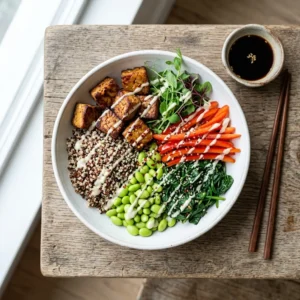
High-Leucine Tempeh Power Bowl with Quinoa and Tahini
Equipment
- 1 Large non-stick skillet (12-inch) Cast iron preferred for searing
- 1 Medium saucepan with lid 2-quart capacity for quinoa
- 1 Microplane or fine grater For ginger and garlic
- 1 Sharp chef’s knife 8-inch blade
- 1 Cutting Board Separate for vegetables vs. tempeh
- 1 Mixing bowls (medium) Stainless steel for marinade
- 1 Tongs For flipping tempeh
- 1 Measuring cups and spoons Dry and liquid measures
- 1 Food scale (digital) 0.1g precision for macros
- 1 Rice cooker (optional) Can substitute for saucepan
Ingredients
- 8 oz Tempeh Original soy, cubed ½-inch
- 1 cup Dry quinoa Rinsed thoroughly
- 2 cups Water or vegetable broth For cooking quinoa
- 2 tbsp Soy sauce or tamari Low-sodium preferred
- 1 tbsp Maple syrup or agave For caramelization
- 1 tsp Rice vinegar Unseasoned
- 1 tbsp Sesame oil For marinade
- 1 tbsp Olive oil or avocado oil For high-heat cooking
- 2 cloves Garlic Minced fine
- 1 tbsp Fresh ginger Grated
- 1 cup Edamame Shelled, frozen, thawed
- 1 large Red bell pepper, Julienne cut
- 2 cups Spinach or kale Chopped, packed
- 2 tbsp Tahini Sesame seed paste
- 1 tbsp Lemon juice Freshly squeezed
- 1 tbsp Nutritional yeast Fortified with B12
- ½ tsp Red pepper flakes Optional
- 1 tbsp Hemp seeds For topping
- ¼ cup Sprouts fresh Broccoli or radish
Instructions
Marination Phase (Optional):
- Whisk soy sauce, maple syrup, rice vinegar, sesame oil, half the garlic, and half the ginger in a medium bowl.
- Cut tempeh into ½-inch cubes. Add to marinade.
- Let stand 15 minutes at room temperature or up to 8 hours refrigerated.
Cooking Phase:
- Rinse quinoa under cold water for 30 seconds.
- Combine with 2 cups water in saucepan.
- Bring to boil, reduce heat to low, cover, and simmer 15 minutes until liquid absorbed.
- Remove from heat, let stand covered 5 minutes, then fluff with fork.
- While quinoa cooks, heat skillet over medium-high heat until water droplets sizzle.
- Add olive oil.
- Add marinated tempeh (reserve marinade).
- Sear 3-4 minutes per side until golden-brown.
- Reduce heat to medium.
- Add remaining garlic and ginger to pan edges, sauté 30 seconds until fragrant.
- Add bell pepper, sauté 2 minutes.
- Add edamame and reserved marinade, cook 2 minutes.
- Fold in spinach, cooking 1 minute until wilted.
- Remove from heat. Drizzle tahini and lemon juice over mixture.
Assembly:
- Divide quinoa between two bowls.
- Top with tempeh-vegetable mixture.
- Sprinkle with nutritional yeast, hemp seeds, and red pepper flakes.
- Garnish with sprouts.
Notes
- Tempeh selection matters. Look for minimal ingredients (soybeans, water, vinegar, culture). Avoid flavored varieties with excess sodium.
- If new to tempeh, start with 4oz portions. Fermentation reduces gas-causing compounds, but high fiber requires adaptation.
- Batch cook quinoa and tempeh. Store cooked quinoa 5 days refrigerated. Store cooked tempeh 3 days. Assemble fresh with raw vegetables.
- To increase leucine to 3.5g+ for heavier athletes, add 1 scoop (15g) pea protein isolate to the tahini dressing with water to thin.
- Vitamin C in bell pepper enhances non-heme iron absorption from tempeh and spinach by 3-6x. Always pair iron-rich plants with vitamin C sources.
- Tempeh contains isoflavones, but research shows no negative effects on testosterone in men at normal serving sizes. Fermentation reduces phytates, improving mineral absorption.
- For gluten-free, substitute tempeh with extra-firm tofu (pressed) and use tamari instead of soy sauce.
- For cutting phases, reduce quinoa to ½ cup and add 2 cups cauliflower rice. For bulking, add 1 tbsp olive oil drizzle and ½ avocado.
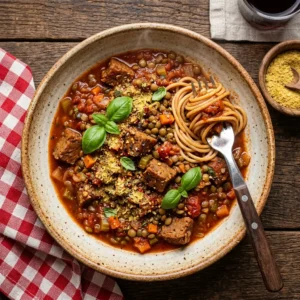
High-Protein Lentil and Seitan Bolognese with Whole Wheat Pasta
Equipment
- 1 Slow cooker (6-quart) Or large Dutch oven
- 1 Large skillet
- 1 Wooden spoon
- 1 chef's knife
- 1 Can opener
- 1 Measuring cups
- 4 Glass meal prep containers (4-cup)
Ingredients
- 8 oz Seitan chopped coarse
- 1 cup Green or brown lentils rinsed
- 28 oz Crushed tomatoes Canned, no salt added
- 1 medium Onion Diced, fine
- 3 cloves Garlic Minced
- 2 medium Carrots Diced
- 2 stalks Celery Diced
- 2 tbsp Tomato paste Concentrated
- 2 tsp Italian seasoning Dried basil, oregano, thyme
- 1 tsp Fennel seeds Optional
- 1 tbsp Soy sauce Umami depth
- 2 cups Vegetable broth Low sodium
- 1 tbsp Olive oil For sautéing
- 12 oz Whole wheat pasta Or legume-based pasta
- ¼ cup Nutritional yeast For cheesy flavor
- 2 tbsp Ground flaxseed Omega-3 addition
Instructions
- Heat olive oil in skillet over medium-high heat.
- Add seitan chunks, searing 3-4 minutes until browned.
- Transfer to slow cooker. In same skillet, sauté onion, carrot, celery 5 minutes until softened.
- Add garlic, tomato paste, Italian seasoning, fennel.
- Cook 1 minute until fragrant.
- Deglaze with ½ cup broth, scraping brown bits.
- Transfer to slow cooker.
- Add lentils, crushed tomatoes, remaining broth, and soy sauce.
- Stir. Cook LOW 6-8 hours or HIGH 3-4 hours until lentils tender.
- Stir in nutritional yeast before serving.
- Serve over cooked pasta, topped with ground flaxseed
Notes
- Store-bought seitan varies in texture. If too soft, sear longer for chewier texture. If making homemade, add 2 tbsp chickpea flour to gluten for better crumb.
- Green/brown lentils hold shape. Red lentils dissolve into sauce. Use green for texture, red for thicker sauce.
- This meal contains 14g fiber. If not adapted to high-fiber diets, start with ½ portion and increase gradually to avoid bloating.
- Lentils are high in lysine but low in methionine. Seitan is high in methionine but low in lysine. Together they provide complete protein coverage equivalent to meat.
- Sauce improves after 24 hours refrigerated as flavors meld. Freezes well up to 3 months. Store pasta separately when meal prepping to prevent mushiness.
- Canned tomatoes and seitan can be high in sodium. Rinse seitan before use and choose no-salt-added tomatoes if monitoring blood pressure.
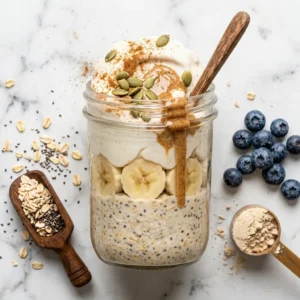
High-Protein Overnight Oats with Soy Yogurt and Chia
Equipment
- 1 Mason jar or container (16oz) With tight-fitting lid
- 1 Measuring cups/spoons
- 1 spoon For stirring
- 1 Refrigerator Essential
Ingredients
- 1/2 cup Rolled oats old-fashioned Not quick oats
- 1 scoop Soy protein isolate 20g protein vanilla or unflavored
- 1 tbsp Chia seeds Whole or ground
- 1 tbsp Ground flaxseed For omega-3
- ¾ cup Soy milk Unsweetened, fortified
- ½ cup Soy yogurt Unsweetened, plain
- 1 medium Banana Sliced
- 1 tbsp Almond butter Or peanut butter
- ½ tsp Cinnamon For Blood sugar regulation
- 1 tbsp Pumpkin seeds Topping
Instructions
- In mason jar, combine oats, protein powder, chia seeds, flaxseed, and cinnamon.
- Add soy milk and soy yogurt.
- Stir vigorously until no protein powder clumps remain.
- Seal jar and shake 10 seconds.
- Refrigerate minimum 4 hours, preferably overnight.
- Before eating, top with sliced banana, almond butter drizzle, and pumpkin seeds.
Notes
- If too thick in morning, add 2-3 tbsp additional soy milk. If too thin, use less milk initially or add 1 more tbsp chia.
- Soy isolate provides complete amino acids including leucine. If using pea protein, add 5g leucine supplement to reach 3g threshold.
- Overnight soaking reduces phytic acid in oats by 30-40%, improving zinc and iron bioavailability.
- Eat 2-3 hours before training. High fiber (16g) may cause GI distress if consumed immediately pre-workout.
- Cinnamon improves insulin sensitivity. Combined with fiber and fat, this meal has low glycemic index despite carbohydrate content.
- Replace banana with berries for lower sugar and antioxidant boost. Add 1 tbsp cacao powder for magnesium.
Putting It All Together
You now understand how to increase muscle mass as a vegetarian.
- You know that you need 1.8-2.4 grams of protein per kilogram of body weight, not the standard 0.8 grams.
- You understand the 3-gram leucine threshold and which foods cross it.
- You have a supplement protocol that addresses the real deficiencies vegetarians face (creatine, B12, iron, zinc).
- You have a 7-day meal plan and three detailed recipes.
The science is clear. Vegetarians can build muscle equivalent to meat-eaters when protein intake matches. The challenge is practical execution.
Plant proteins require higher volume, more careful timing, and attention to digestive adaptation. Most failures come from eating 20% less protein than tracked due to digestibility gaps, or from abandoning the diet during the 4-week fiber adaptation phase.
Start with the calculations. Hit your protein target with 20% buffer. Take creatine daily. Get blood work for B12 and iron.
Follow the digestive adaptation protocol. Use the recipes and meal plan provided. Track your weight and strength weekly. Adjust calories by 10% if weight gain stalls for two weeks.
Building muscle as a vegetarian requires more planning than an omnivore diet. It is not more difficult. It is different. Execute these protocols consistently for 16 weeks and measure your results against any meat-eating training partner.
Citations
- [1] Slater GJ, Dieter BP, Marsh DJ, Helms ER, Shaw G, Iraki J – “Is an energy surplus required to maximize skeletal muscle hypertrophy associated with resistance training” – Frontiers in Nutrition – 2019
- [2] Gorissen SHM, Crombag JJR, Senden JMG, et al. – “Plant Proteins: Assessing Their Nutritional Quality and Effects on Health and Physical Function” – Nutrients – 2020 – https://doi.org/10.3390/nu12123704
- [3] Monteyne AJ, Dunlop MV, Machin DJ, et al. – “Vegan and Omnivorous High Protein Diets Support Comparable Daily Myofibrillar Protein Synthesis Rates and Skeletal Muscle Hypertrophy in Young Adults” – The Journal of Nutrition – 2023 – https://doi.org/10.1016/j.tjnut.2023.05.028
- [4] Reed KE, Camargo J, Hamilton-Reeves J, Kurzer M, Messina M – “Neither soy nor isoflavone intake affects male reproductive hormones: An expanded and updated meta-analysis of clinical studies” – Reproductive Toxicology – 2021 – https://doi.org/10.1016/j.reprotox.2020.12.019
- [5] Kaviani M, Shaw K, Chilibeck PD – “Benefits of Creatine Supplementation for Vegetarians Compared to Omnivorous Athletes: A Systematic Review” – International Journal of Environmental Research and Public Health – 2020 – https://doi.org/10.3390/ijerph17093041
- [6] National Institutes of Health – “Vitamin B12 – Health Professional Fact Sheet” – Office of Dietary Supplements – 2023
- [7] Mayo Clinic – “Mayo Clinic Q and A: How much vitamin D do I need?” – 2017
- [8] ADDRA Labs – “Leucine: The Spark Plug for Endurance Gain” – 2024
- [9] NiHTEK – “A Closer Look at Leucine Content and Muscle Growth” – 2024
- [10] No Meat Athlete – “Protein and the Vegan Athlete: All You Really Need to Know” – 2024
- [11] FitCommit – “Protein in Tempeh: Nutrition Facts and Macros” – 2024
- [12] FitCommit – “Protein in Lentils (Cooked): Nutrition Facts and Macros” – 2024
- [13] Foodstruct – “Pumpkin and Squash Seed Kernels Nutrition” – 2024
- [14] Healthline – “Is Seitan (Vital Wheat Gluten) Healthy?” – 2023
- [15] ScienceDirect – “Nutritional considerations for vegetarian athletes: A narrative review” – Trends in Sport Sciences – 2024