
Daily vitamins: which vitamins does your body need?
Find out which vitamins are needed for daily nutrition, where to get them from food and when dietary supplements may be considered.

Enjoying this article?Add FoodNourish as a preferred source on Google and see our research-backed guides more often in your search results.
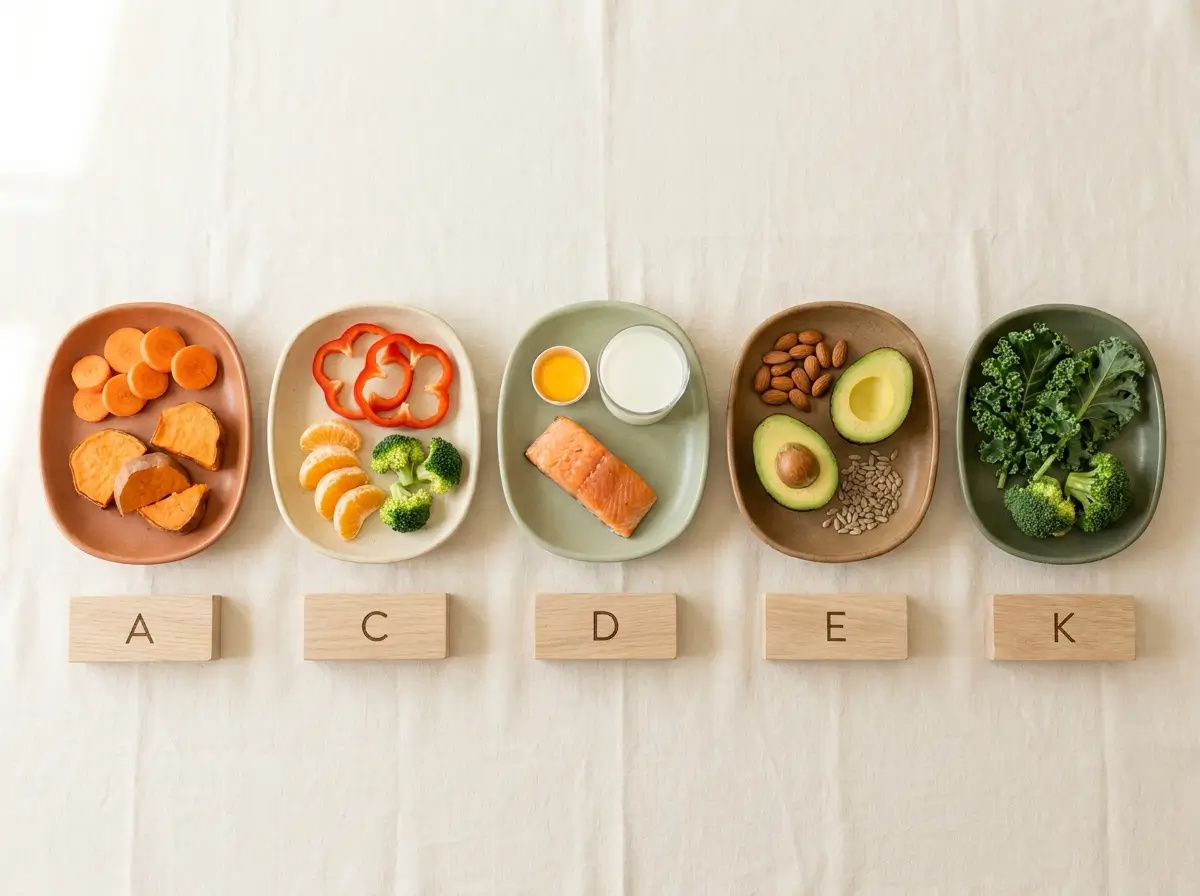
The body needs a range of vitamins every day, although the amount required is relatively small and varies according to age, diet and health. The main vitamins include A, C, D, E and K, along with eight B vitamins. A varied diet can provide most of these nutrients when it includes vegetables and fruit, grains, legumes, dairy products, eggs, fish, meat, nuts and seeds.
Which vitamins does the body need?
- Vitamin A helps maintain normal vision and healthy skin.
- Vitamin C is needed for collagen production and supports normal immune function.
Vitamins D, E and K have different roles in the body:
- vitamin D is involved in calcium metabolism and bone health,
- vitamin E helps protect cells from oxidative damage, while
- vitamin K contributes to normal blood clotting.
B vitamins
The B-vitamin group includes B1, B2, B3, B5, B6, B7, B9 and B12. These vitamins are involved in energy metabolism, nervous system function and the formation of blood cells.
They can be found in foods such as meat, fish, eggs, dairy products, whole grains, legumes, nuts and green vegetables.
Vitamin B12 deserves particular attention. It is found mainly in foods of animal origin, so people who exclude meat, fish, eggs and dairy products from their diet need to consider alternative sources of this vitamin.

Vitamins C and D
Vitamin C comes mainly from plant-based foods. Good sources include sweet peppers, citrus fruits, kiwi, berries, broccoli and other vegetables and fruit.
Vitamin D is different. It can be obtained from food and produced in the skin when it is exposed to sunlight. It is also found in some fortified foods and dietary supplements. The amount of vitamin D needed each day depends on age and the recommendations used in a particular country.

Can all vitamins be obtained from food?

A varied diet can usually provide the vitamins the body needs. However, the need for certain nutrients may change during pregnancy, when following restrictive diets or in some health conditions.
In these situations, a doctor may recommend a specific vitamin or dietary supplement.
When choosing a supplement, it is useful to check the ingredients and the amount of each nutrient rather than looking only at the product name. For example, Amway offers Nutrilite™ vitamins and dietary supplements, which can provide an additional source of selected vitamins and other nutrients.
Do you need to take vitamins every day?
There is no single daily supplement routine that suits everyone. The need to take a particular vitamin regularly depends on diet, age, lifestyle and individual nutritional needs.
Recommended doses should not be exceeded without medical advice, as excessive intake of some vitamins can be harmful.
