
10 Best Supplements for Anxiety, Ranked by Research 2026 New
Study doses, how fast each one works, and who should avoid it, based on clinical trials from 2019 to 2025.
Enjoying this article?Add FoodNourish as a preferred source on Google and see our research-backed guides more often in your search results.
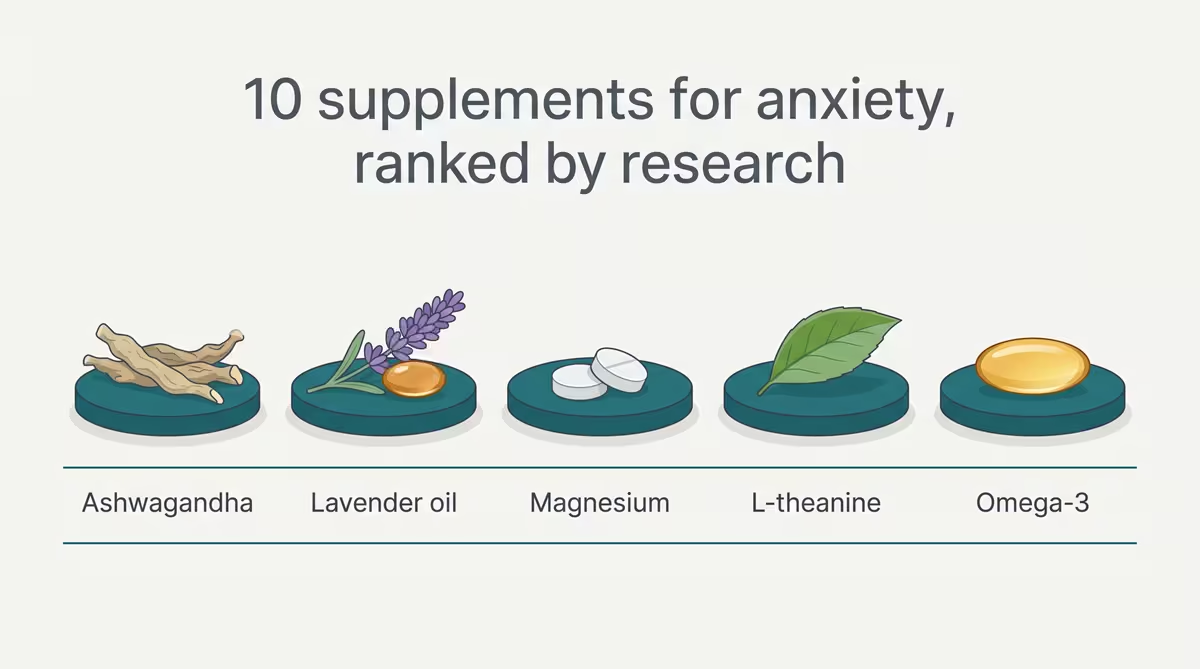
The best supplements for anxiety, based on human trials, are ashwagandha, lavender oil (Silexan), magnesium, L-theanine and omega-3.
Silexan and ashwagandha have the most placebo-controlled data, from trials that compare the supplement with a dummy pill.
Magnesium and L-theanine are the gentlest place to start. Most trials ran 4 to 12 weeks and found modest effects.
None replace therapy or medication. If you take an antidepressant or thyroid medicine, talk to your doctor first.
Key takeaways
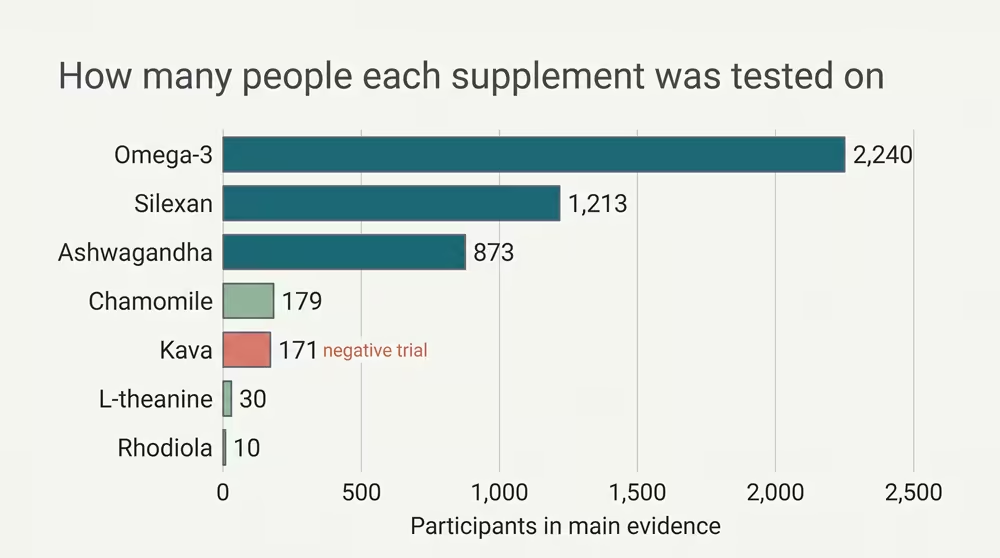
- Silexan (5 trials, 1,213 adults) and ashwagandha (15 trials, 873 adults) have the largest placebo-controlled datasets among natural supplements for anxiety [3][5].
- L-theanine is the only pick with single-dose data. One 200 mg dose raised relaxed brain-wave activity within 3 hours in a lab stress test [21].
- Magnesium has the broadest data for anxiety and sleep together. Five of 8 sleep trials and 5 of 7 anxiety trials reported improvement [6].
- Ashwagandha and kava are both linked to liver injury. Don’t take them together, and don’t take either for long stretches without your doctor [2][17].
- St. John’s wort taken with an antidepressant can raise serotonin-related side effects [16]. Serotonin = a brain chemical that affects mood.
Can supplements help with anxiety?
Yes, a little, and they work best alongside treatment, not in place of it. Anxiety disorders affected 470 million people in 2023, or 5.8% of the world’s population [1].
Only about 1 in 4 people with an anxiety disorder (27.6%) gets any treatment [1].
In the US, about 19% of adults had an anxiety disorder in the past year. Nearly 43% of people diagnosed with one use complementary approaches such as supplements [2].
Most trials in this guide enrolled adults with generalized anxiety disorder (GAD). GAD = persistent, hard-to-control worry about everyday things [1].
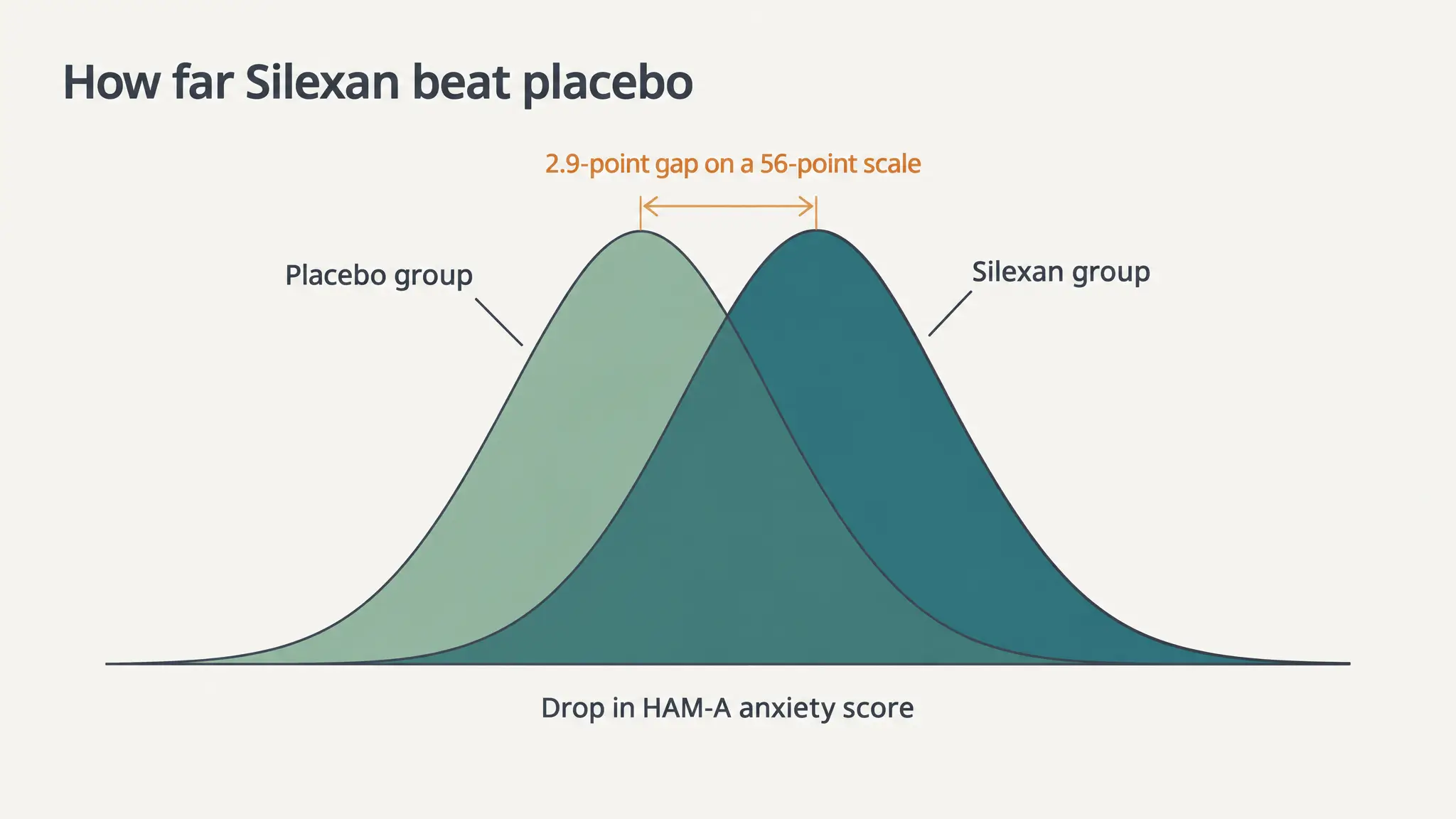
The benefit is small. Silexan, the best-studied pick, beat a placebo (dummy pill) by 2.9 points on the HAM-A, a 56-point anxiety scale doctors use [5].
NCCIH, the US government’s center for complementary health, says the lavender studies are still too limited for definite conclusions [2].
Both statements hold at once, so read every ranking below as “promising,” not “proven.”
The WHO says highly effective treatments for anxiety disorders exist, including talk therapy based on cognitive behavioral therapy [1].
Use supplements for mild symptoms, or as an add-on your doctor knows about. Diet matters too; see our foods that help lower anxiety.
Best Supplements for Anxiety
RCT = randomized controlled trial, where people are randomly assigned to the supplement or a dummy pill.
SSRI = a common class of antidepressant, such as sertraline.
| Supplement | Evidence strength | Dose used in studies | When studies measured benefit | Best for | Main risk |
|---|---|---|---|---|---|
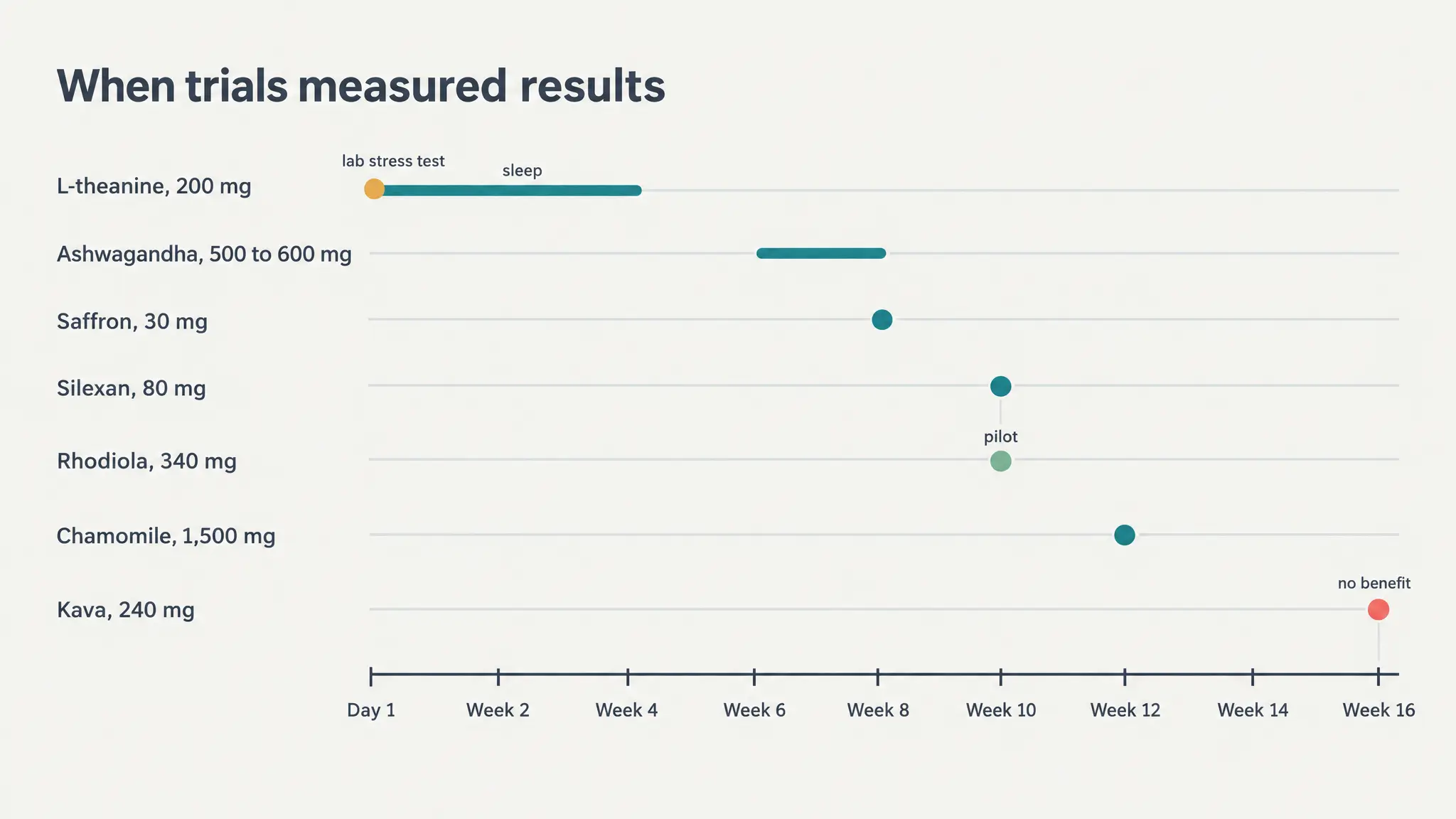
| Ashwagandha | Moderate to strong; 15 RCTs, 873 people [3] | 240 to 1,250 mg extract; 500 to 600 mg beat lower doses [4] | 6 to 8 weeks [4] | Chronic stress | Rare liver injury [17] |
| Silexan | Moderate to strong; 5 RCTs, 1,213 people, all with industry ties [5] | 80 mg once a day [5] | 10 weeks [5] | Constant worry | Side effects matched placebo [5] |
| Magnesium | Moderate; 15 small trials [6] | Varied; stay at or under 350 mg from supplements [6][18] | Varied by trial [6] | Anxiety with poor sleep | Loose stools [6] |
| L-theanine | Low to moderate; small trials [7][21] | 200 to 400 mg [8] | Within 3 hours in a lab test; 4 weeks for sleep [7][21] | Daytime calm | Well tolerated [21] |
| Omega-3 | Moderate, mixed; 19 trials, 2,240 people [9] | 2,000 mg or more a day [9] | Varied by trial [9] | Anxiety with a diagnosed condition | Ask your doctor if you take a blood thinner |
| Saffron | Mixed; matched SSRIs in 4 small trials [10], no anxiety change in one healthy-adult trial [11] | 30 mg extract [11] | 8 weeks [11] | Anxiety with low mood | Stomach upset [11] |
| Chamomile extract | Low to moderate; 1 long trial [12] | 1,500 mg extract [12] | 12 weeks [12] | Long-term mild worry | Headache, dizziness [2] |
| Rhodiola | Low; 10-person pilot [13] | 340 mg [13] | 10 weeks [13] | An experiment only | Dizziness, dry mouth [13] |
| Kava | Low; largest trial negative [14] | 240 mg kavalactones [14] | No benefit at 16 weeks [14] | Occasional use only | Liver damage [2] |
| CBD | Low and conflicting; 15 RCTs [15] | 300 mg [15] | Single dose before a speech, or 2 weeks daily [15] | Public speaking nerves | Tiredness, dizziness, nausea [15] |
How we picked these supplements
This guide draws on 8 systematic reviews and meta-analyses, 7 clinical trials and 6 fact sheets from the WHO and the US National Institutes of Health (NIH). (A meta-analysis = a study that pools the results of many trials).
We ranked each supplement on four things:
- The amount of human evidence, with pooled reviews ranked ahead of single trials.
- How far it beat a placebo.
- Its safety record.
- Whether you can buy it at the dose used in studies.
Safety moved two picks. L-theanine ranks fourth despite thin anxiety data, because trials report it as well tolerated [21].
Kava ranks ninth despite older positive studies, because its largest trial failed and it carries a liver warning [2][14].
We dropped bilberry and ginseng because we found no placebo-controlled human anxiety trials for either. When a manufacturer has ties to the research, we say so in that section.
1. Ashwagandha: best for chronic stress and high cortisol
Ashwagandha for anxiety has the largest body of trial data of any herb, and the results agree. Expect a modest drop in anxiety and stress after about 8 weeks, plus a small risk to your liver.
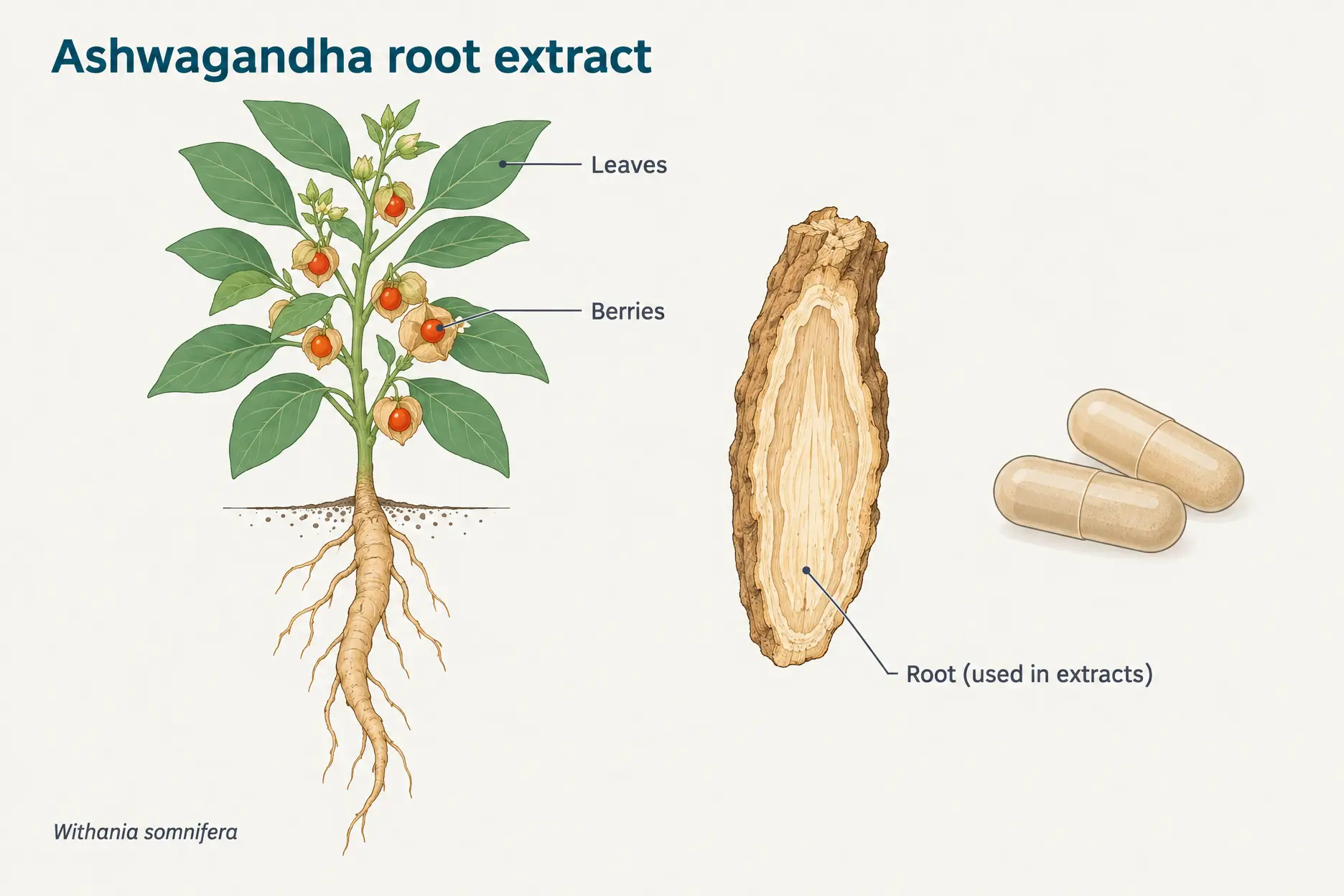
A 2025 meta-analysis of 15 randomized trials (873 adults) found that ashwagandha lowered HAM-A scores, perceived stress and cortisol more than placebo at 8 weeks. It did not improve quality of life. [3]
Cortisol = your main stress hormone.
A joint taskforce of two psychiatry groups (WFSBP and CANMAT) gives ashwagandha only a provisional recommendation for GAD, citing too little data for a stronger one [4].
So why do so many people online say ashwagandha did nothing for them?
Dose is one likely reason. In several studies, 500 to 600 mg a day beat lower doses, so check your label before you judge it [4].
Liver injury cases usually showed up 2 to 12 weeks after people started [17]. That window overlaps the 6 to 8 weeks trials needed to show benefit, so stop and call your doctor if your skin or eyes turn yellow (jaundice) [17].
- Evidence: Moderate to strong. 15 RCTs, 873 people [3].
- Dose used in studies: 240 to 1,250 mg/day of extract; 500 to 600 mg/day beat lower doses [4].
- Time to work: 6 to 8 weeks [4].
- Best for: Chronic stress and stress-related sleeplessness [4].
- Avoid if: You are pregnant or breastfeeding, or you have liver disease or a thyroid condition [4][17].
Our pick:
- Nutricost KSM-66 gives 600 mg per capsule, inside the range that worked best. KSM-66 = a branded root-only extract used in 3 of the trials in NIH’s review [4].
- Goli Ashwagandha Gummies also use KSM-66; check that your daily serving reaches 500 mg.
2. Lavender oil (Silexan): best for constant worry without sedation
Silexan has the most consistent placebo-controlled data on this list. Every trial so far has industry ties, and that is the main reason to stay cautious.
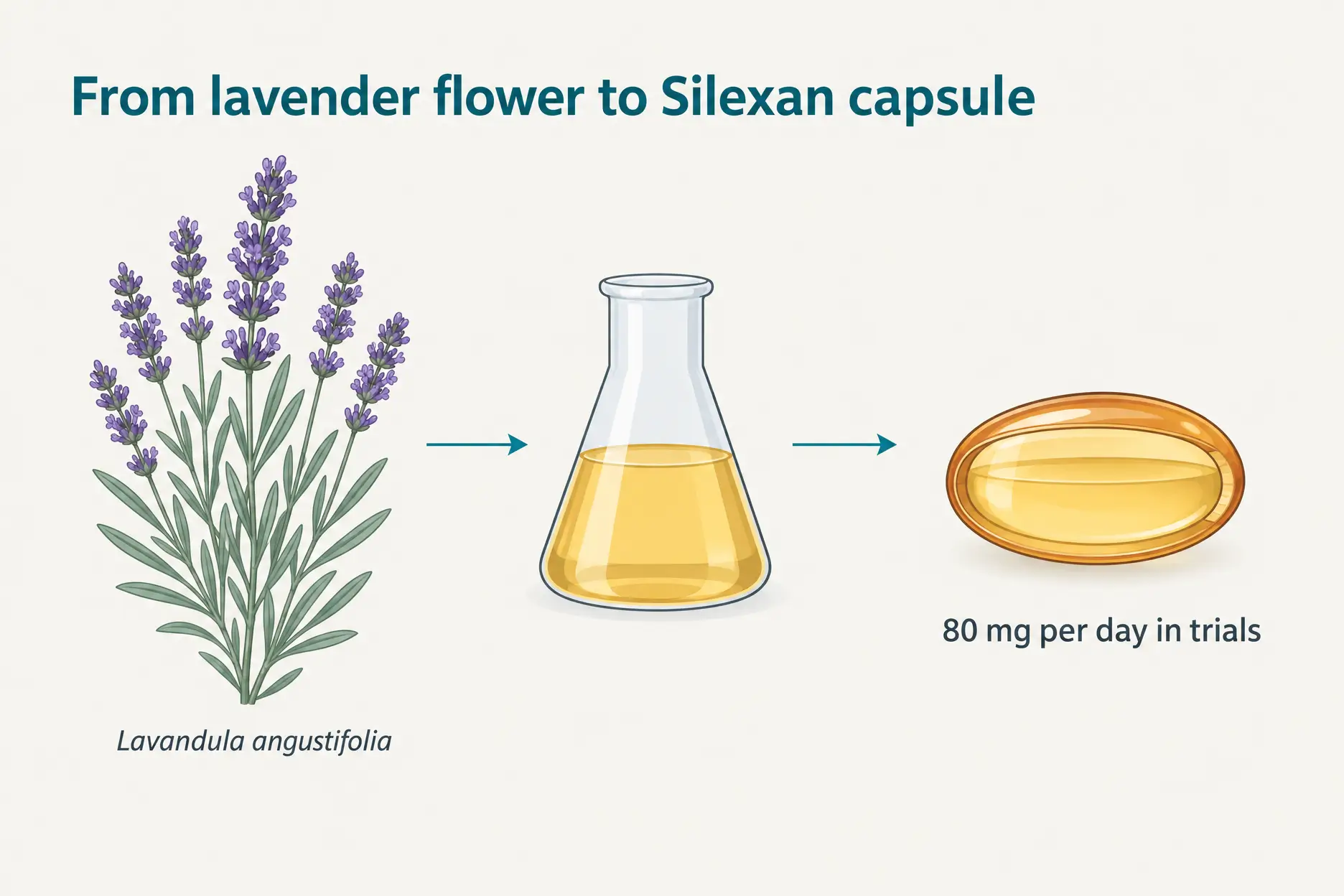
Silexan = a standardized lavender oil capsule sold in the US as Lavela WS 1265 and CalmAid.
Lavender tea and aromatherapy oils are different products. A 2023 meta-analysis pooled 5 placebo-controlled trials in which 1,213 adults took 80 mg a day for 10 weeks [5].
Silexan beat placebo by 2.9 HAM-A points, and it cut both the mental and the physical parts of the score. People on Silexan were 1.34 times as likely as people on placebo to cut their anxiety score in half. Side effects and dropouts matched placebo [5].
Ed. note: One author of the meta-analysis works for Dr. Willmar Schwabe, the company that makes Silexan, and most of the other authors report fees from it [5]. NCCIH calls the lavender evidence too limited for definite conclusions [2]. We still rank Silexan second because all 5 trials point the same way.
- Evidence: Moderate to strong, with industry ties [2][5].
- Dose used in studies: 80 mg once daily [5].
- Time to work: Measured at 10 weeks [5].
- Best for: Constant worry and physical tension [5].
- Avoid if: You are pregnant or breastfeeding, unless your doctor approves it [2].
- Our pick: Compare Lavela WS 1265 and Nature’s Way CalmAid at iHerb. Both contain 80 mg of Silexan per softgel.
3. Magnesium: best for anxiety with poor sleep or a low-magnesium diet
Magnesium is a safe first step, and it helps most when your diet runs low. Your dose and your starting level seem to matter more than the brand.
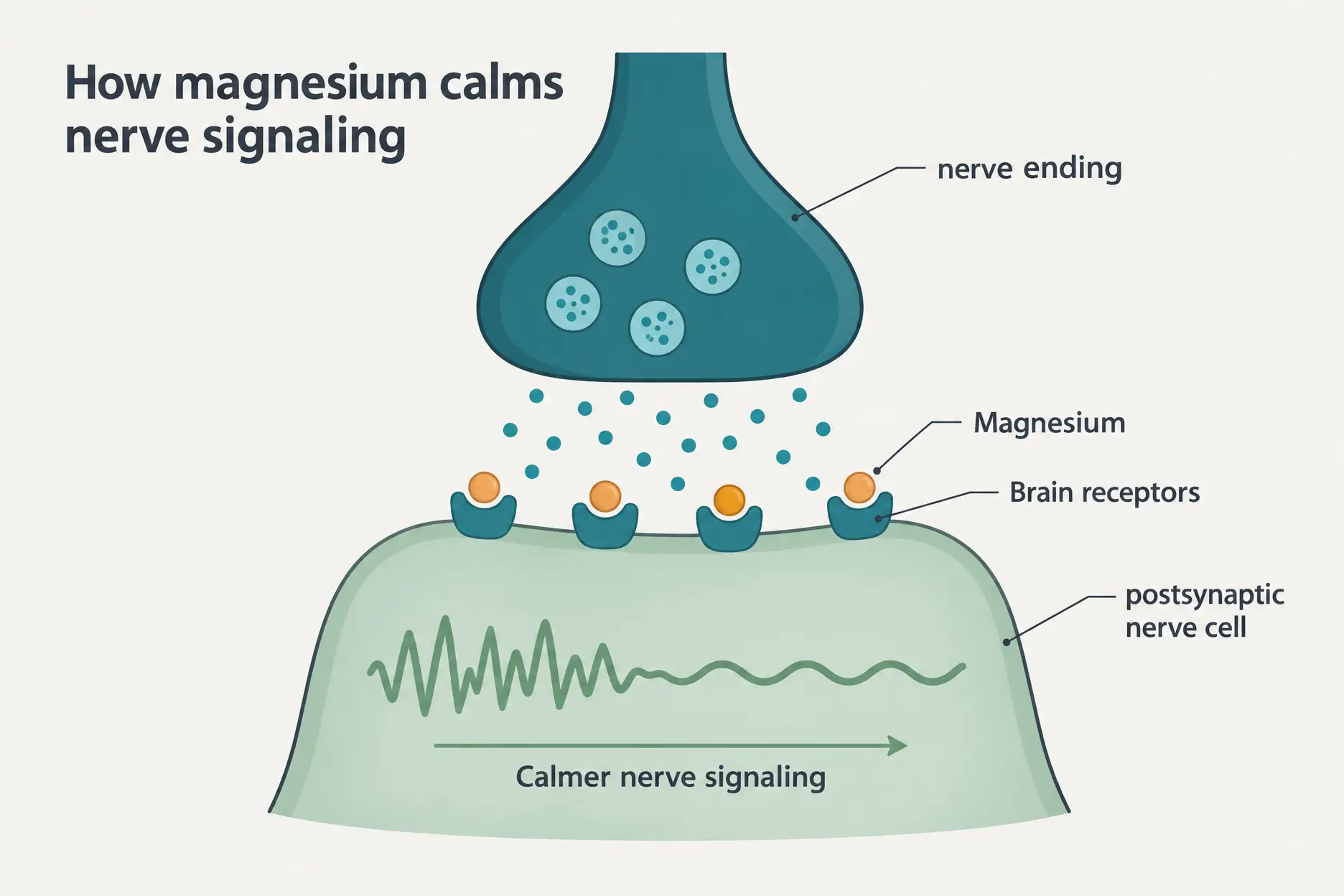
A 2024 systematic review found 15 trials that met its standards. Five of 7 anxiety trials and 5 of 8 sleep trials reported improvement [6].
Both failed anxiety trials studied women with hormone-related symptoms, before their periods or after giving birth [6].
The authors call magnesium likely useful for mild anxiety and insomnia, especially if your levels start low [6]. Low intake is common, since 48% of Americans get less magnesium from food and drinks than they need [18].
Magnesium acts on brain receptors that calm nerve signaling [6].
Related: signs you are low in magnesium
“Isn’t magnesium glycinate for anxiety the best choice?” The trials can’t answer that. Doses, forms and trial lengths varied too much for the review to name a best form [6].
NIH notes that magnesium citrate, chloride and lactate absorb better than magnesium oxide [18].
Pick glycinate if it suits your stomach. The review also found that magnesium may work better when you pair it with vitamin B6 [6].
Related: magnesium forms and absorption
- Evidence: Moderate, from small trials [6].
- Dose used in studies: Varied by trial [6]. Keep supplements at or under 350 mg a day, the NIH upper limit for adults [18].
- Time to work: Varied by trial [6].
- Best for: Anxiety with poor sleep, or a diet low in magnesium [6].
- Avoid if: You have kidney disease. Take magnesium at least 2 hours apart from bisphosphonates, which are bone-loss drugs such as alendronate. Take certain antibiotics at least 2 hours before or 4 to 6 hours after magnesium [18].
- Our pick: Nutricost Magnesium Glycinate gives 210 mg per 3 capsules, under the NIH limit. For a blend of several forms, read our Magnesium Breakthrough review or compare our best magnesium supplements.
4. L-theanine: best for daytime calm without drowsiness
L-theanine is the gentlest supplement here and the quickest to test. Its anxiety data is the thinnest of the top five, and one result surprised us.
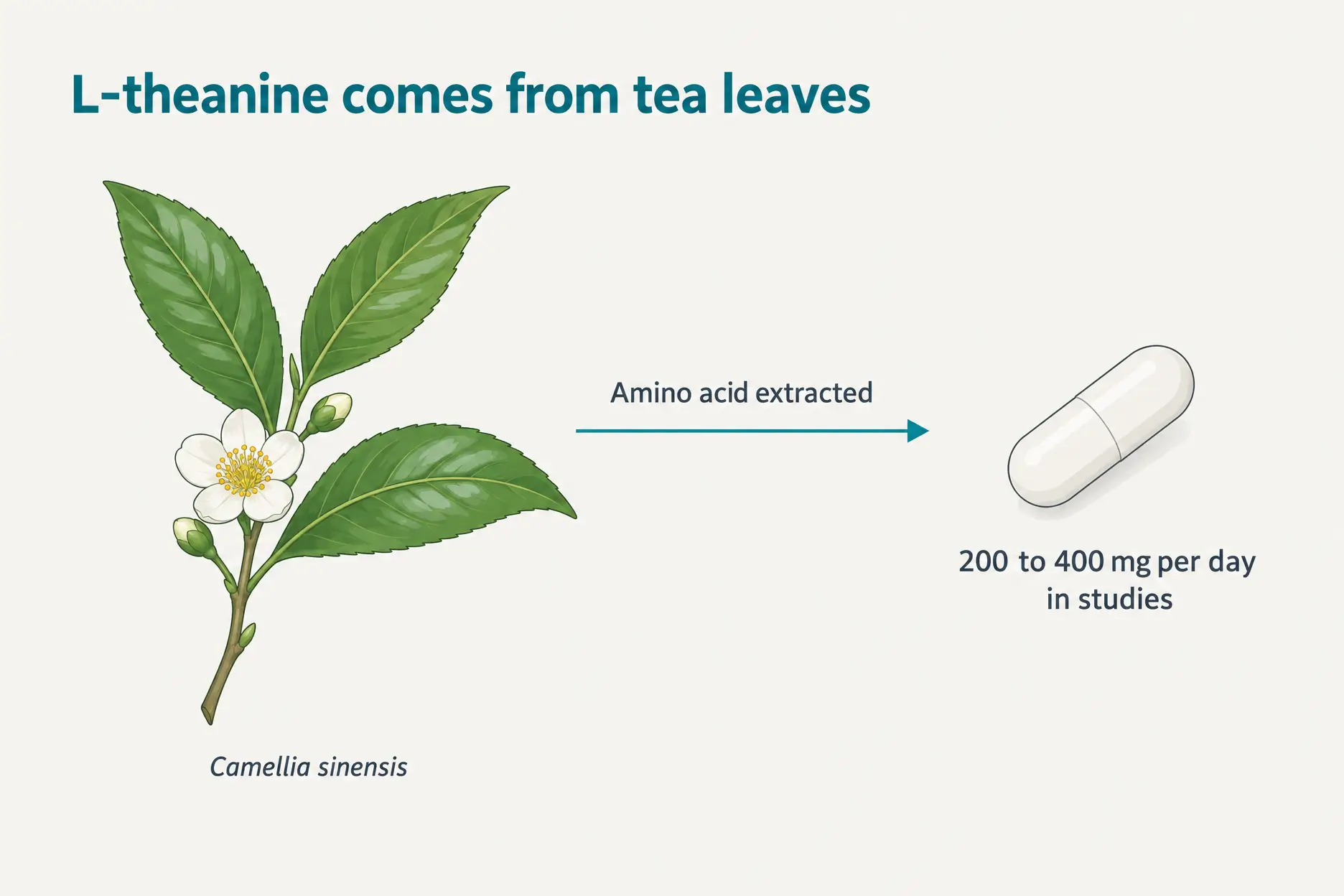
L-theanine = an amino acid found in tea leaves. A 2026 review puts the useful range at 200 to 400 mg a day [8].
In a 2021 lab trial, 16 moderately stressed adults took one 200 mg dose around a math stress test. Their alpha brain waves, a pattern linked to relaxation, rose within 3 hours, and their saliva cortisol fell more than on placebo [21].
Their self-rated anxiety, though, didn’t differ from placebo [21].
The brain-wave readings and cortisol moved; how people felt did not.
The 4-week trial tells you more about daily use. Thirty healthy adults took 200 mg a day. Compared with placebo, they fell asleep faster, woke less and used fewer sleep aids [7].
Based on this data, L-theanine for anxiety works better as a sleep and stress aid than as an anxiety treatment.
- Evidence: Low to moderate [7][8][21].
- Dose used in studies: 200 to 400 mg a day [8].
- Time to work: Within 3 hours in a lab stress test [21]; 4 weeks for sleep [7].
- Best for: Racing thoughts during the day and nerves before an event, when you still need to stay alert.
- Avoid if: You are pregnant or breastfeeding, unless your doctor approves it [2].
- Our pick: Nutricost L-Theanine 200 mg gives the studied dose in one capsule.
5. Omega-3: best for anxiety alongside a medical condition
Omega-3 helps at high doses in people with a diagnosed condition. It did little for people without one.
A 2018 JAMA Network Open meta-analysis pooled 19 trials with 2,240 people [9].
Overall, omega-3 reduced anxiety, but only at 2,000 mg a day or more, and only in groups with a clinical condition [9].
EPA and DHA = the two main omega-3 fats in fish oil. In one subgroup, formulas with less than 60% EPA beat placebo while EPA-heavy formulas did not. The authors warn that two outlier studies may drive that result [9].
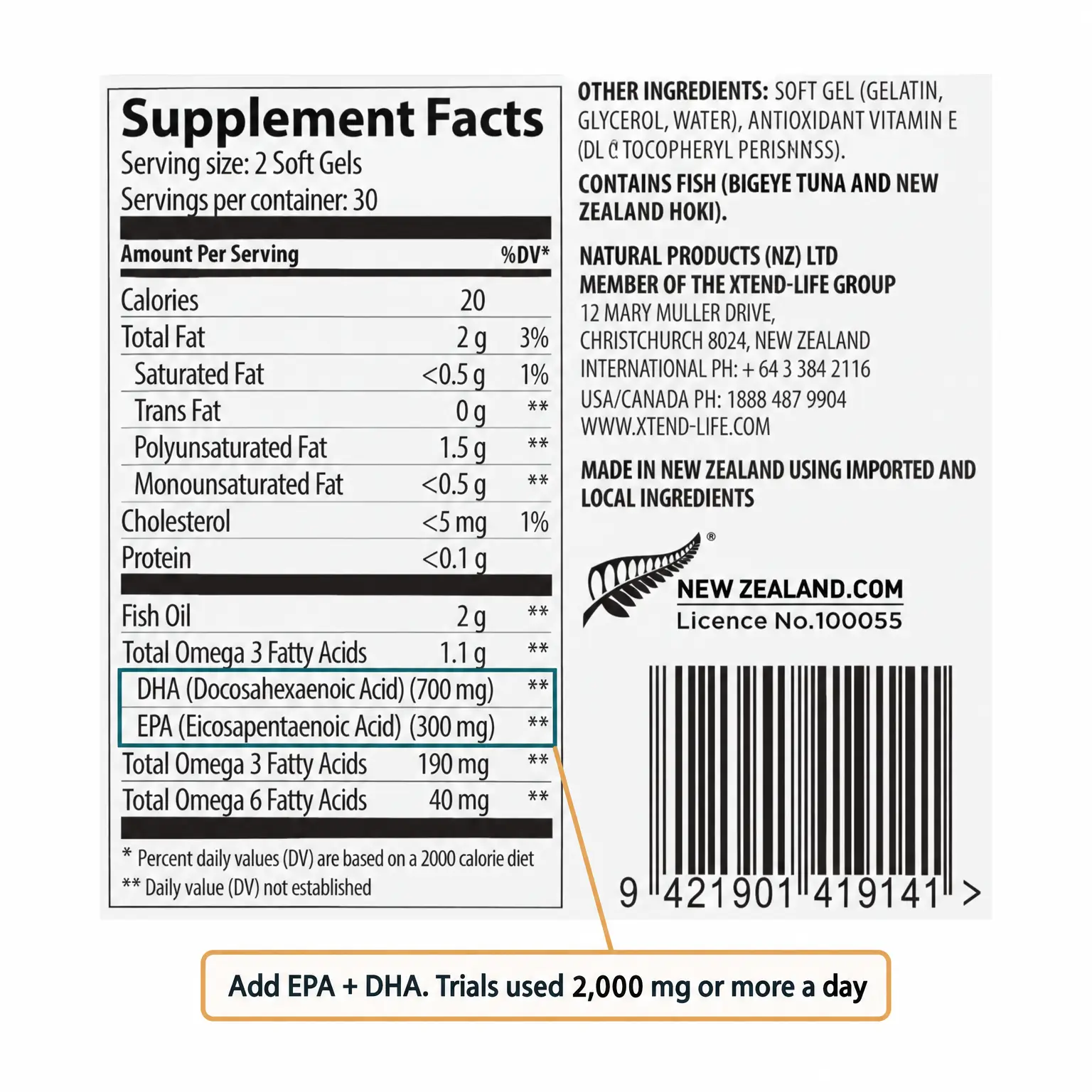
Studies on omega-3 for anxiety counted omega-3 fats, not the total weight of the oil. A 2,000 mg fish oil capsule holds less than 2,000 mg of omega-3, so add the EPA and DHA on your label.
Related: rTG vs ethyl ester fish oil
- Evidence: Moderate, with wide variation between trials [9].
- Dose used in studies: 2,000 mg or more of omega-3 a day [9].
- Time to work: Varied by trial [9].
- Best for: Anxiety alongside heart disease, depression or another diagnosed condition.
- Avoid if: You take a blood thinner, unless your doctor approves it.
- Our pick: Xtend-Life Omega 3 / DHA gives 2,000 mg of fish oil with 700 mg of DHA per serving, so it is DHA-rich. Add the EPA and DHA on the label before you compare it with the 2,000 mg trial dose.
Related: Xtend-Life Omega 3 Fish Oil Reviews
6. Saffron: best for anxiety mixed with low mood
Saffron has good data for mood and mixed data for anxiety itself. Try it only if low mood comes with your anxiety.
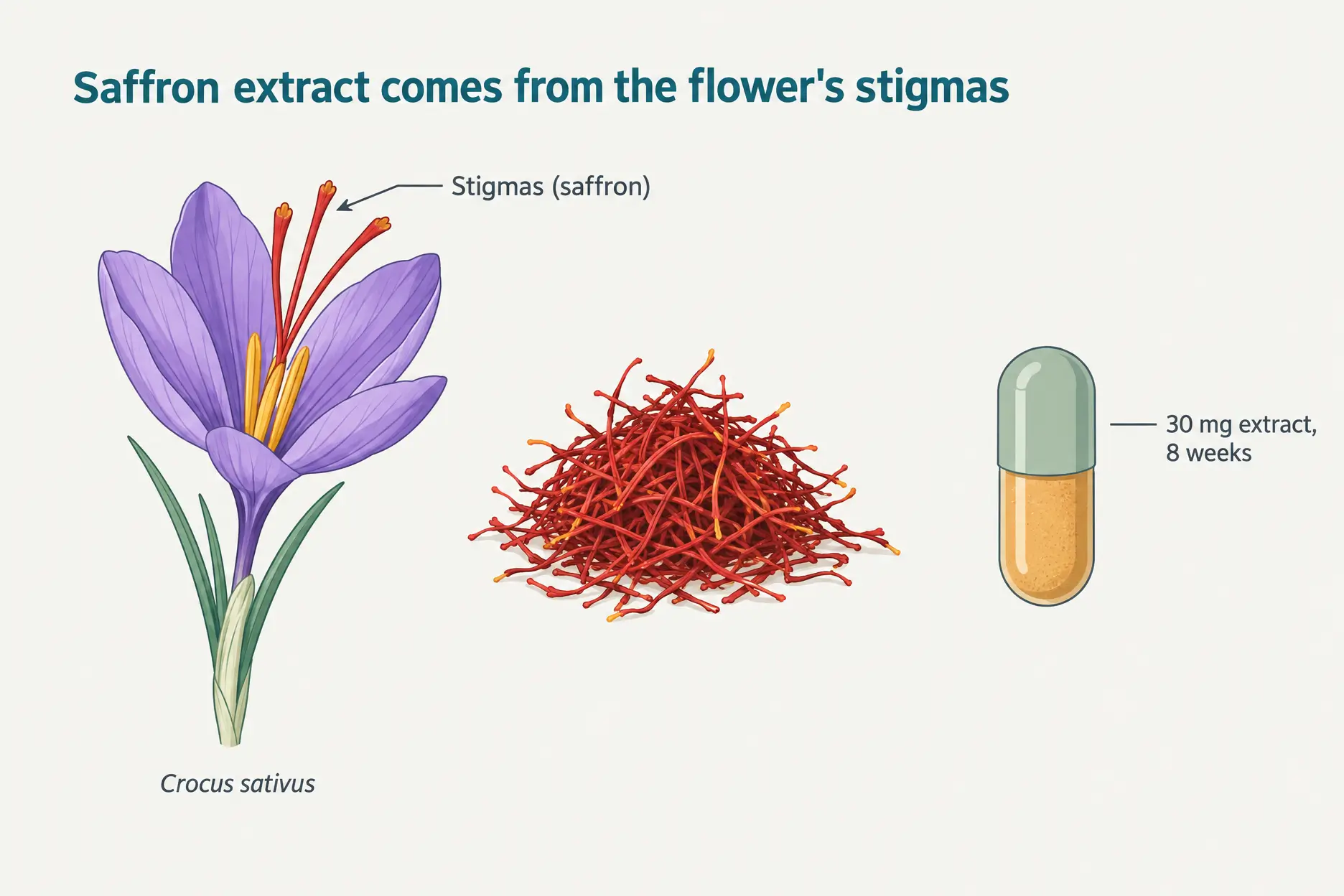
A 2025 meta-analysis found 4 randomized trials that compared saffron with SSRIs for anxiety. Saffron performed about the same as the SSRIs, and the saffron groups had fewer side effects [10].
Four small trials that can’t tell two treatments apart don’t prove the treatments are equal. A 2021 trial in 56 healthy adults with low mood complicates the picture. Eight weeks of 30 mg saffron extract lowered depression scores but didn’t change anxiety scores [11].
- Evidence: Moderate for mood, mixed for anxiety [10][11].
- Dose used in studies: 30 mg a day of extract [11].
- Time to work: 8 weeks [11].
- Best for: Anxiety with low mood.
- Avoid if: You take an antidepressant, unless your prescriber approves it.
- Our pick: Compare Nootropics Depot Safralis Saffron with branded extracts at iHerb. The 2021 trial used Safr’Inside, a different extract, so a 30 mg dose of one brand won’t match another exactly.
7. Chamomile extract: best gentle option for long-term mild GAD
Chamomile extract suits ongoing worry better than sudden anxiety. Its one long trial gives encouraging but inconclusive results.
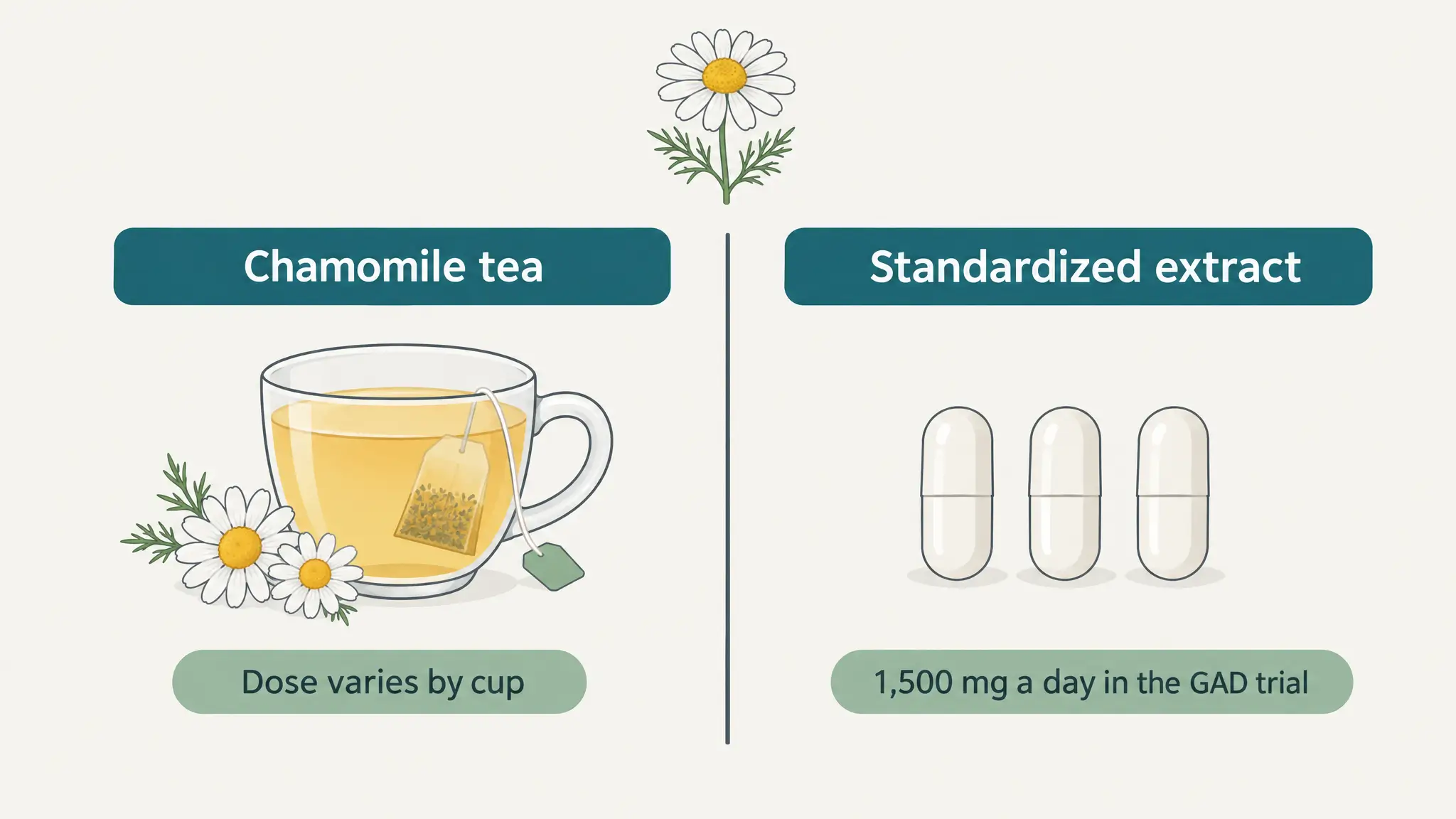
In a 2016 trial, 179 adults with moderate-to-severe GAD took 1,500 mg a day of pharmaceutical-grade chamomile extract for 12 weeks, and 51.9% responded [12].
The researchers then randomly switched half the responders to placebo. Relapse hit 15.2% of people who stayed on chamomile and 25.5% of people on placebo. That gap wasn’t statistically significant, but the chamomile group kept lower GAD symptoms [12].
A 2019 review of 3 trials found no drop in state anxiety, the in-the-moment kind [2].
“Can I just drink chamomile tea instead?” Tea gives you an unmeasured dose, while the trial used a 1,500 mg standardized extract [12]. Drink tea as a bedtime habit, but don’t expect the trial results from it.
- Evidence: Low to moderate [2][12].
- Dose used in studies: 1,500 mg a day of extract, as 500 mg 3 times a day [12].
- Time to work: Response measured at 12 weeks [12].
- Best for: Mild, long-term worry.
- Avoid if: You are pregnant or breastfeeding, unless your doctor approves it [2]. Reported side effects include headache and dizziness [2].
- Our pick: Solaray Chamomile 325 mg is standardized to 2% apigenin, the plant compound brands use to measure chamomile strength. About 4 to 5 capsules a day comes close to the trial dose by weight.
Related: Why Use Chamomile for Depression and Anxiety
8. Rhodiola: an experiment with the weakest anxiety data
Rhodiola belongs on your list only as an experiment. Its one anxiety study was a tiny pilot with no placebo group.
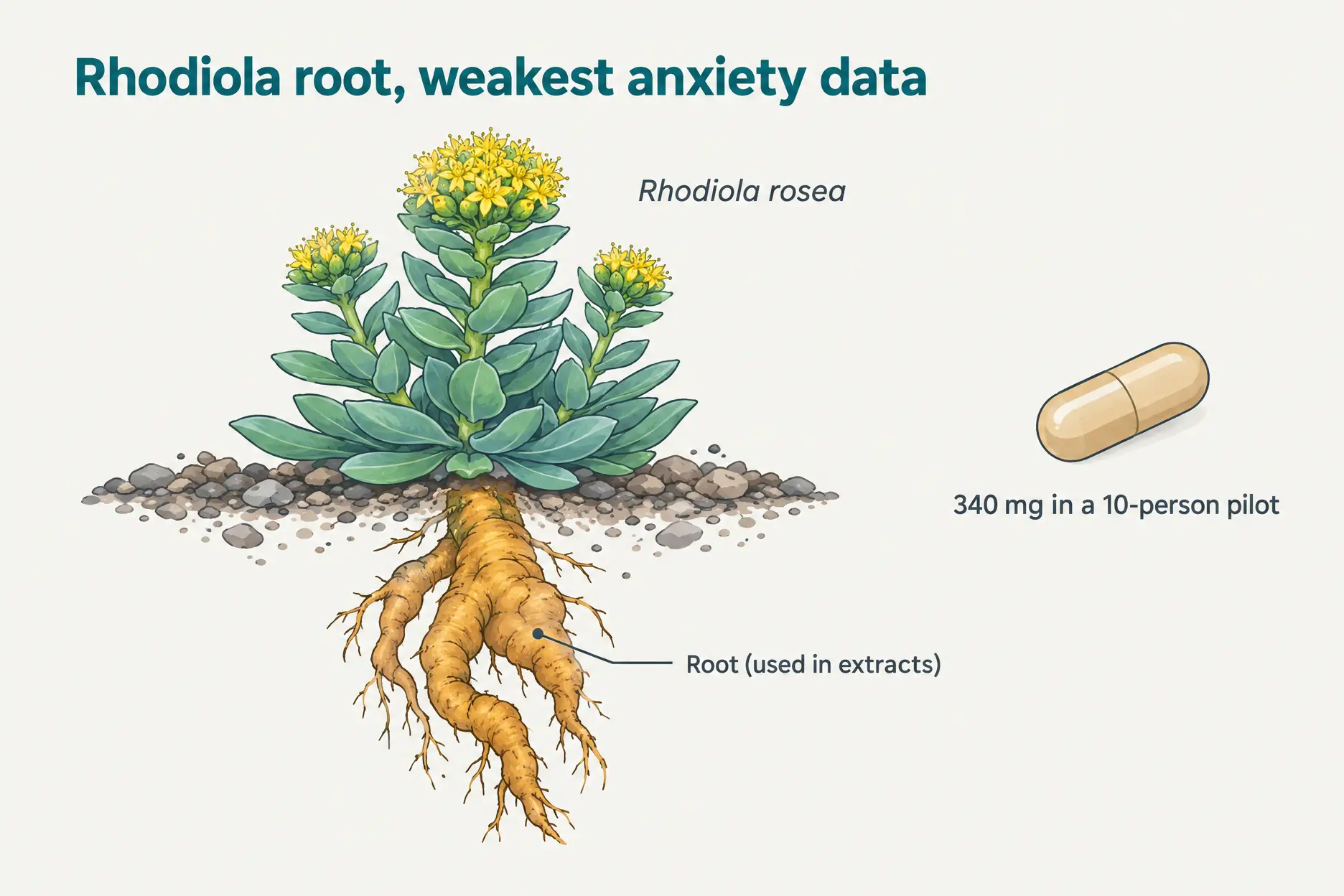
In a 2008 open-label pilot, 10 adults with GAD took 340 mg a day for 10 weeks, and their HAM-A scores dropped [13].
Open-label = everyone knew they were taking the herb. Without a placebo group, you can’t separate the herb’s effect from the effect of expecting to feel better.
- Evidence: Low. One open-label pilot with 10 people [13].
- Dose used in studies: 340 mg a day [13].
- Time to work: Measured at 10 weeks [13].
- Best for: Trying a second-line option after the top five.
- Avoid if: You need data beyond 10 weeks of use; the pilot ran 10 weeks [13]. Reported side effects were dizziness and dry mouth [13].
- Our pick: Nootropics Depot Rhodiola rosea 3% Rosavins comes in 500 mg capsules, above the 340 mg studied dose. Rosavins = the compounds brands use to measure rhodiola strength.
Related: 7 Proven Herbs That Relieve Stress
9. Kava: short-term situational use only
Kava ranks low because its biggest trial failed and its liver risk is real. We don’t recommend it for daily use.
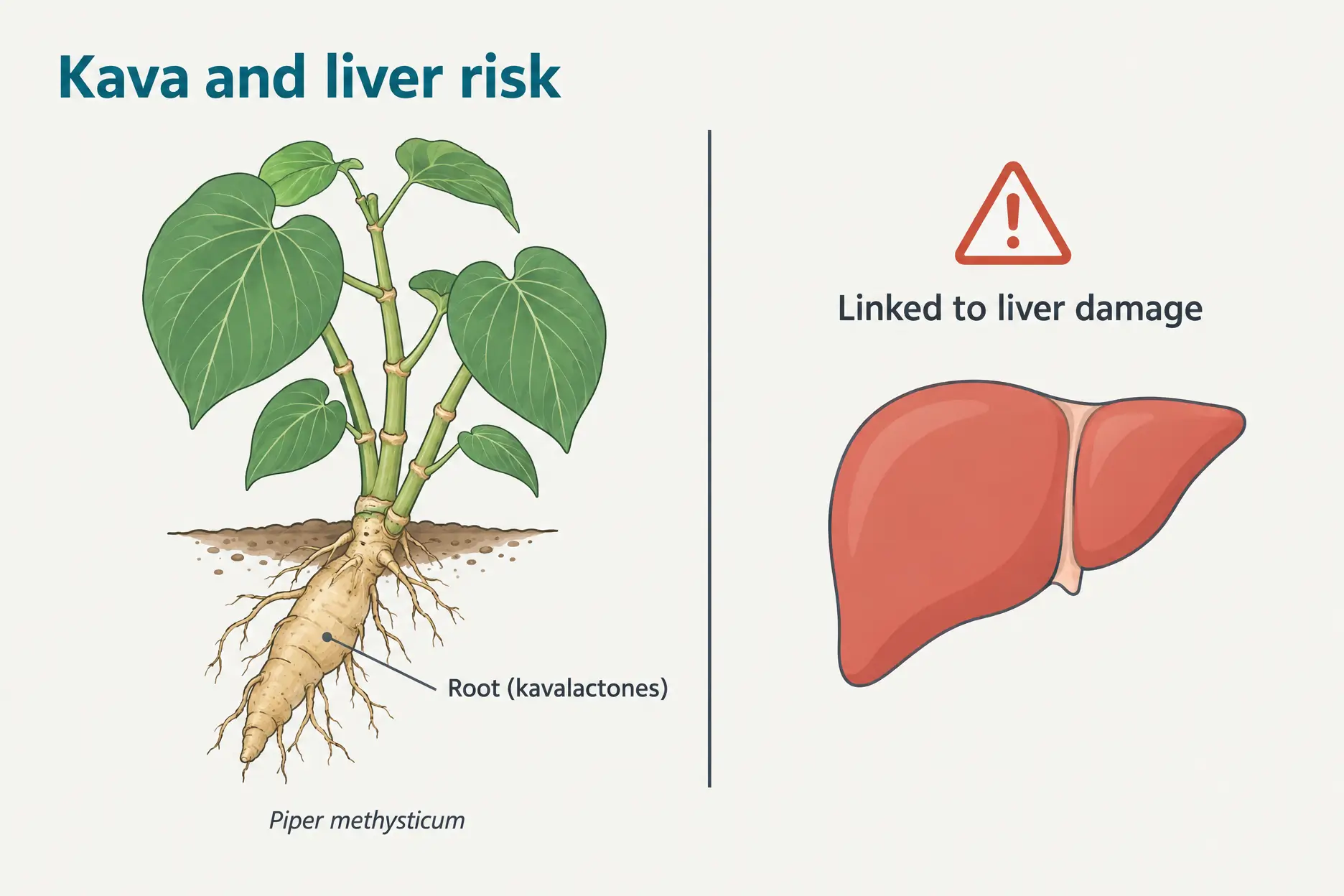
In a 2020 trial, 171 adults with GAD took 240 mg a day of kavalactones, the active compounds in kava root, for 16 weeks.
Kava did no better than placebo. Remission, meaning symptoms low enough to count as recovered, reached 17.4% on kava and 23.8% on placebo. The kava group had more abnormal liver tests, memory problems and shakiness [14].
NCCIH links kava supplements to a risk of severe liver damage, and it says older reviews suggest only a small short-term effect [2].
- Evidence: Low. The largest trial was negative [14].
- Dose used in studies: 240 mg a day of kavalactones [14].
- Time to work: No benefit at 16 weeks [14].
- Best for: Occasional, situational use only.
- Avoid if: You have liver disease or take ashwagandha [2][17].
- Our pick: If you use kava anyway, Nootropics Depot Noble Kava Tablets give 100 mg of kavalactones per tablet. Keep it occasional.
10. CBD: mixed results, mostly for one-off events
CBD has the most contradictory data on this list.
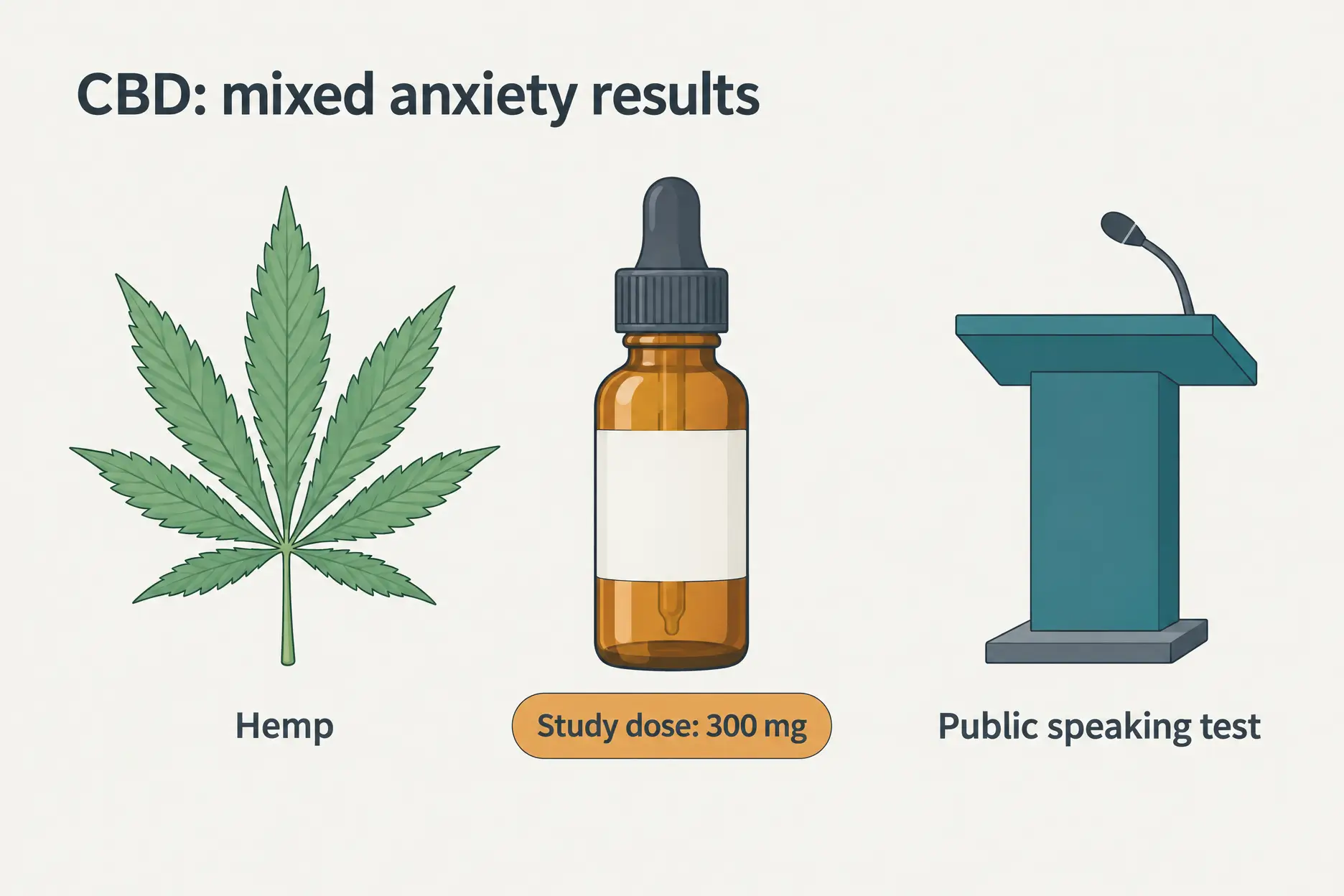
A 2024 review of 15 randomized trials found that a single 300 mg dose cut public-speaking anxiety in 3 studies. Yet 9 of the 15 trials found no benefit from a single dose, and in 2 of them, 600 mg made anxiety worse. In one trial, 300 mg a day for 2 weeks helped where a single dose did not [15].
Ed. note: Check how much CBD one serving of your product contains. The study dose is 300 mg, and in these trials more was not better [15].
- Evidence: Low and conflicting [15].
- Dose used in studies: 300 mg [15].
- Time to work: A single dose before a speech, or 2 weeks of daily use [15].
- Best for: Public speaking and similar one-off events.
- Avoid if: You take prescription drugs your pharmacist hasn’t checked against CBD. Reported side effects include tiredness, drowsiness, dizziness and nausea [15]. Legal status varies by country and state.
- Our pick: Compare third-party tested CBD at iHerb and choose a product with a published certificate of analysis.
Are anxiety supplements safe with medication?
Most trials in this guide reported mild side effects, and Silexan’s matched placebo [5][15].
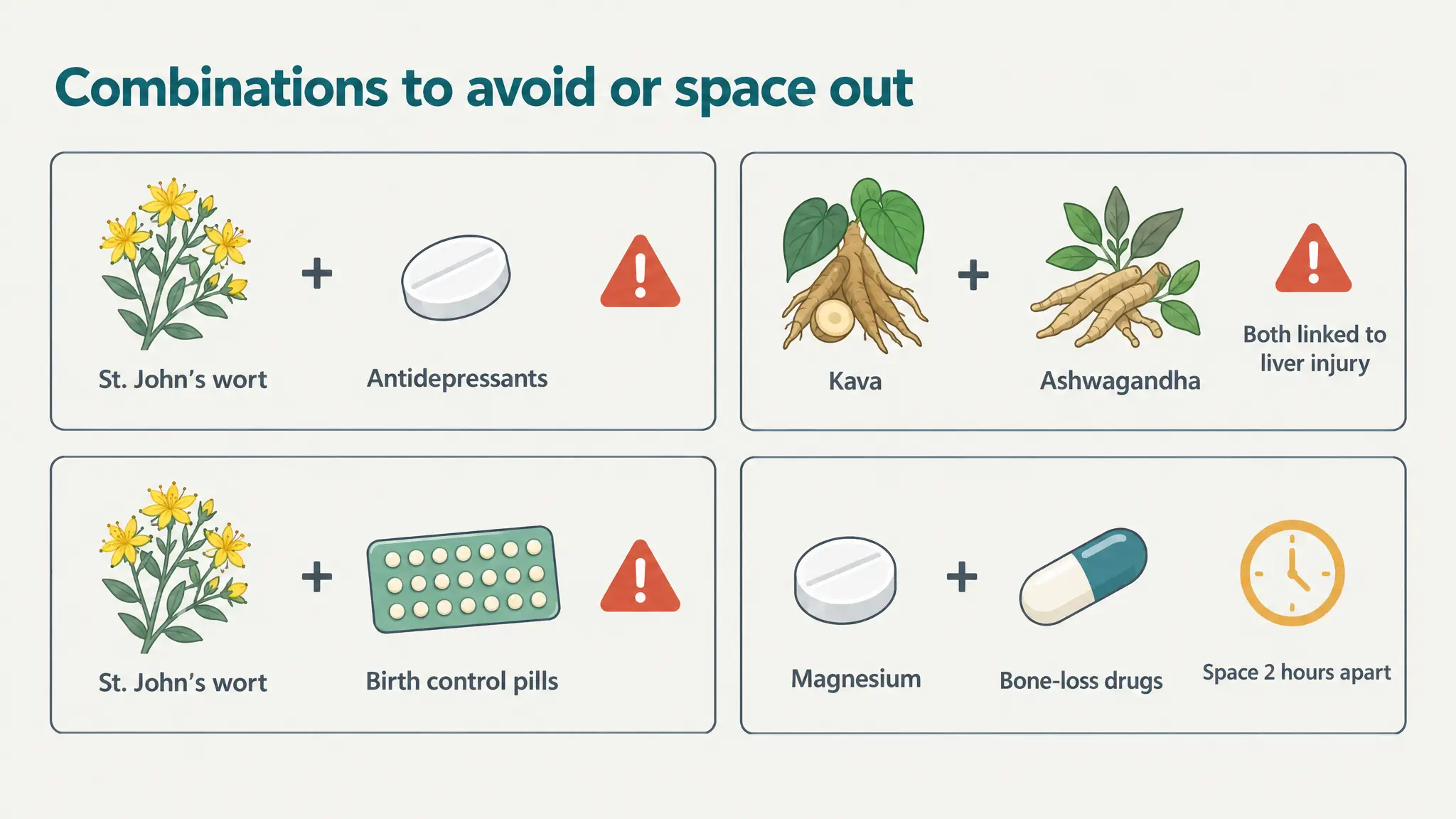
A few supplements carry real interaction or liver warnings. If you take any prescription drug, show this table to your pharmacist before you start.
| Supplement | Do not combine with | Who should avoid |
|---|---|---|
| Ashwagandha | Kava or other liver-linked supplements; thyroid medicine without your doctor [4][17] | Pregnancy, breastfeeding, liver disease, thyroid conditions [4] |
| St. John’s wort | Antidepressants and other serotonin drugs; birth control pills [16] | Anyone on antidepressants or hormonal birth control [16] |
| Kava | Ashwagandha or other liver-linked supplements [2][17] | Anyone with liver disease [2] |
| Magnesium | Bisphosphonates within 2 hours; certain antibiotics, taken 2 hours before or 4 to 6 hours after [18] | People with kidney disease [18] |
| Valerian | No reliable interaction data for anxiety use [2] | Long-term users; long-term safety is unknown [2] |
| Silexan | No interaction data in the meta-analysis summary [5] | Pregnancy, unless your doctor approves [2] |
Bisphosphonates = bone-loss drugs such as alendronate. Serotonin = a brain chemical that affects mood.
Supplements with weak evidence or high risk
| Supplement | Why we skip it |
|---|---|
| St. John’s wort | Studied mainly for depression, and it interacts with antidepressants and birth control [16] |
| Valerian | Not enough evidence to show it helps anxiety [2] |
| Passionflower | Only a small amount of research, with no firm conclusions [2] |
| Bilberry | We found no placebo-controlled human anxiety trials |
| Ginseng | The anxiety evidence comes mostly from animal studies |
Talk to a professional if your anxiety won’t go away or you’re struggling to cope. If you are in immediate distress or thinking about hurting yourself, call, text or chat 988 in the US [2].
Exercise also helps some people; see our martial arts for mental health guide.
Which supplement fits your type of anxiety?
Match the supplement to your main symptom, then give it the full trial length before you judge it.
| Your main symptom | Start with | Why |
|---|---|---|
| Constant worry about many things | Silexan, 80 mg | Beat placebo in 5 trials of GAD and milder anxiety [5] |
| Racing thoughts during the day | L-theanine, 200 mg | One dose raised relaxed brain waves in a stress test [21] |
| Chronic stress | Ashwagandha, 500 to 600 mg | Lowered cortisol and stress scores at 8 weeks [3][4] |
| Anxiety plus poor sleep | Magnesium, up to 350 mg from supplements | Most sleep and anxiety trials improved [6] |
| Anxiety plus low mood | Saffron, 30 mg | Lowered depression scores; anxiety results mixed [10][11] |
| Anxiety with a diagnosed medical condition | Omega-3, 2,000 mg or more | Helped only in clinical groups [9] |
| One stressful event, like a speech | L-theanine first, CBD second | Both have single-dose data [15][21] |
| You take an antidepressant or a benzodiazepine (a sedative anxiety drug such as alprazolam) | Talk to your prescriber first | St. John’s wort and others interact [16] |
The best supplements for anxiety and sleep are magnesium and L-theanine. Magnesium improved sleep in 5 of 8 trials [6].
Four weeks of L-theanine helped people fall asleep faster than placebo did [7].
Vitamin B6 has the newest data among the vitamins for anxiety. In a 2022 trial, 265 young adults completed anxiety measures, and 1 month of high-dose B6 lowered their self-reported anxiety [19].
B6 helps your body make GABA, the brain chemical that slows nerve signaling [19].
High doses taken for long periods can damage nerves, so keep B6 use short and supervised [20].
How to choose a quality anxiety supplement
Supplement labels don’t always match what’s in the bottle. When researchers tested 31 melatonin products, most didn’t contain the amount on the label, and 26% contained serotonin [2]. Use this checklist before you buy:
- A seal from NSF International or USP. These are independent labs that test whether a supplement contains what its label says.
- The studied extract named on the label, such as KSM-66, WS 1265 (Silexan), Safr’Inside or affron, or Suntheanine.
- A dose that matches the trials in this guide.
- No proprietary blends that hide how much of each ingredient you get.
- A certificate of analysis (COA) you can download or request. A COA = a lab report showing what one batch contains.
Don’t rely on the word “standardized” alone. NCCIH notes that it doesn’t guarantee quality [2].
Can you stack anxiety supplements?
Yes, but add one supplement at a time and wait 2 to 4 weeks before you add the next, so you know which one works. Magnesium plus vitamin B6 is the only pairing with trial support for anxiety [6].
No trial has tested magnesium with L-theanine or ashwagandha with magnesium, so treat those pairs as experiments.
Never combine St. John’s wort with an antidepressant [16].
Don’t take kava and ashwagandha together, since both are linked to liver injury [2][17].
Don’t add calming herbs to a benzodiazepine without your
Which anxiety supplement should you start with?
Start with your main symptom.
- If you worry constantly, start with Silexan at 80 mg.
- For chronic stress, take 300 to 600 mg of KSM-66 ashwagandha for up to 3 months.
- If you sleep poorly, try 150 to 300 mg of elemental magnesium.
- For nerves during the day, use 200 mg of L-theanine.
Take one for its full trial length, and tell your doctor before you start if you take any prescription drug.
How we researched this
We searched PubMed and NIH fact sheets for human trials and pooled reviews on each supplement. Then we read the abstracts or full texts and checked every number in this article against its source. We left out claims backed only by animal studies.
References
- World Health Organization – “Anxiety disorders” fact sheet – accessed October 2026
- NCCIH – “Anxiety and Complementary Health Approaches” – September 2024
- BJPsych Open – “Effects of Ashwagandha Supplements on Cortisol, Stress, and Anxiety Levels in Adults: A Systematic Review and Meta-Analysis” – 2025
- NIH Office of Dietary Supplements – “Ashwagandha: Fact Sheet for Health Professionals” – accessed October 2026
- European Archives of Psychiatry and Clinical Neuroscience – “Efficacy of Silexan in patients with anxiety disorders: a meta-analysis of randomized, placebo-controlled trials” – 2023
- Cureus – “Examining the Effects of Supplemental Magnesium on Self-Reported Anxiety and Sleep Quality: A Systematic Review” – April 2024
- Nutrients – “Effects of L-Theanine Administration on Stress-Related Symptoms and Cognitive Functions in Healthy Adults: A Randomized Controlled Trial” – 2019
- Frontiers in Nutrition – “Effects of L-theanine on cognition, mood and sleep” – 2026
- JAMA Network Open – “Association of Use of Omega-3 Polyunsaturated Fatty Acids With Changes in Severity of Anxiety Symptoms” – 2018
- Nutrition Reviews – “Effect of Saffron Versus Selective Serotonin Reuptake Inhibitors (SSRIs) in Treatment of Depression and Anxiety: A Meta-analysis of Randomized Controlled Trials” – March 2025
- Frontiers in Nutrition – “Effects of Saffron Extract Supplementation on Mood, Well-Being, and Response to a Psychosocial Stressor in Healthy Adults” – 2021
- Phytomedicine – “Long-term chamomile (Matricaria chamomilla L.) treatment for generalized anxiety disorder: A randomized clinical trial” – December 2016
- Journal of Alternative and Complementary Medicine – “A pilot study of Rhodiola rosea (Rhodax) for generalized anxiety disorder (GAD)” – March 200
- Australian and New Zealand Journal of Psychiatry – “Kava for generalised anxiety disorder: A 16-week double-blind, randomised, placebo-controlled study” – March 2020
- PubMed Central – “The Impact of Cannabidiol Treatment on Anxiety Disorders: A Systematic Review of Randomized Controlled Clinical Trials” – 2024
- NCCIH – “St. John’s Wort: Usefulness and Safety” – accessed October 2026
- NIH LiverTox – “Ashwagandha” – accessed October 2026
- NIH Office of Dietary Supplements – “Magnesium: Fact Sheet for Health Professionals” – accessed October 2026
- Human Psychopharmacology – “High-dose Vitamin B6 supplementation reduces anxiety and strengthens visual surround suppression” – November 2022
- Nutrients – “The Role of Vitamin B6 in Peripheral Neuropathy: A Systematic Review” – 2023
- Neurology and Therapy – “A Randomized, Triple-Blind, Placebo-Controlled, Crossover Study to Investigate the Efficacy of a Single Dose of AlphaWave L-Theanine on Stress in a Healthy Adult Population” – 2021
