Epicomp by Nootropics Depot Review: I Checked Every Dose Against the Actual Research
What $69.99 buys, which of the 4 actives is underdosed, and who should skip it entirely
Enjoying this article?Add FoodNourish as a preferred source on Google and see our research-backed guides more often in your search results.
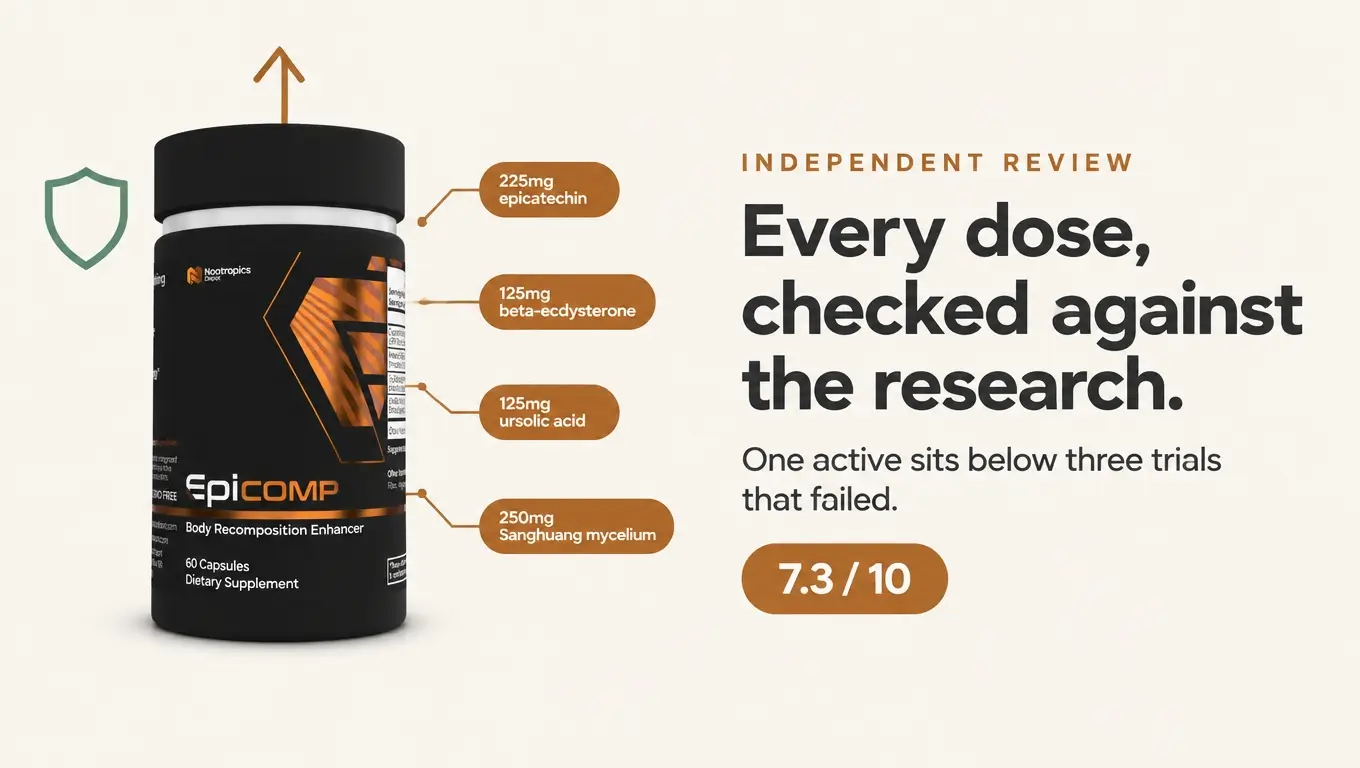
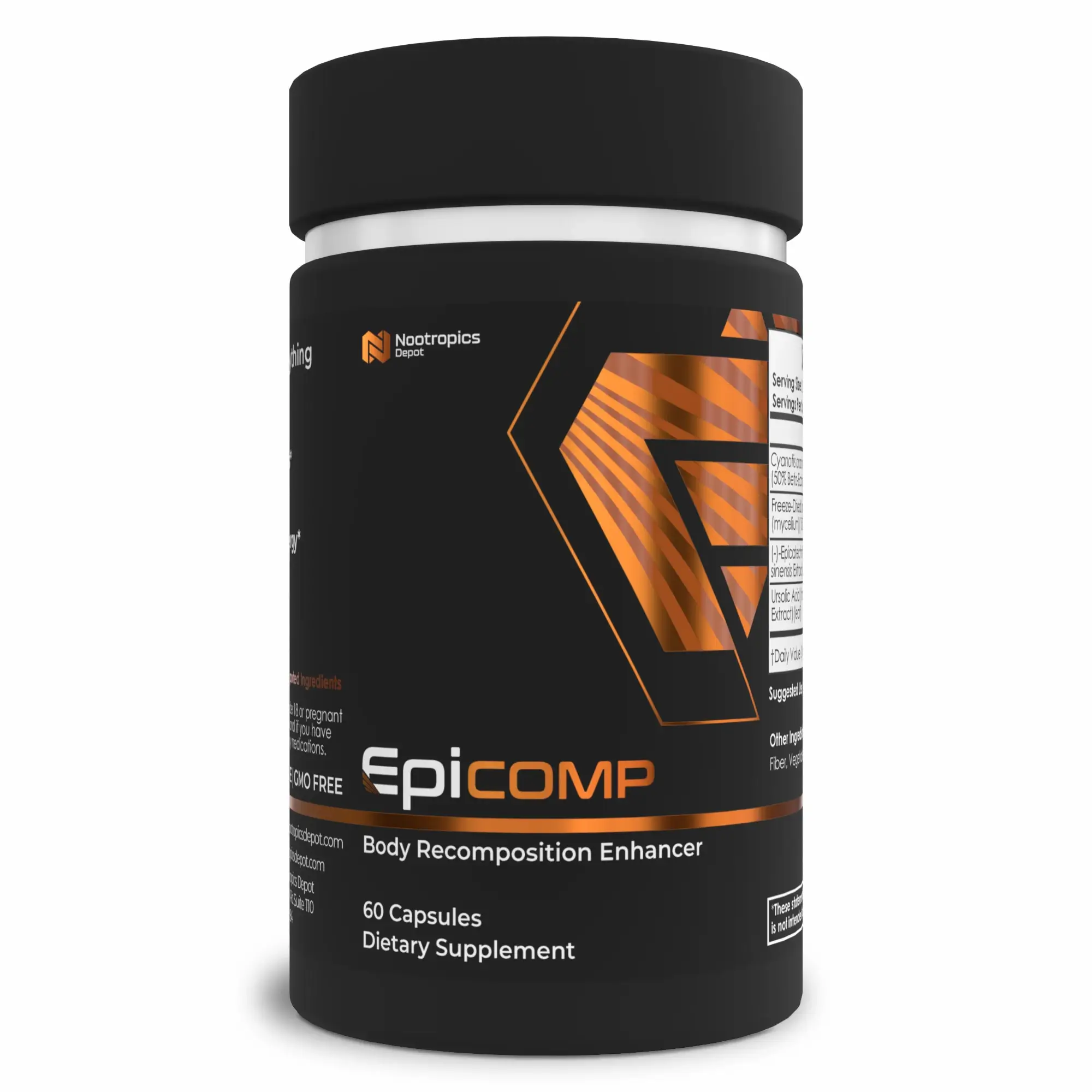
Epicomp by Nootropics Depot is a four-active body recomposition formula at $69.99 for 30 servings. Two capsules give you 225mg (-)-epicatechin, 125mg beta-ecdysterone, 125mg ursolic acid, and 250mg of hispidin-standardized Sanghuangporus sanghuang mycelium. The epicatechin dose and the mushroom are the strong parts, and nobody else sells that mycelium at this standardization. The ursolic acid sits at 125mg while three separate human trials found nothing at 150mg, 400mg, and 450mg. Buy it if you are a trained lifter with fundamentals handled. Skip it if you get drug tested.
What I like
225mg epicatechin, above the studied dose
Novel hispidin-standardized SS-MN4 mycelium
Every dose printed, no proprietary blend
Plant part named on all four extracts
In-house UPLC plus batch test documents
Two capsules, once daily, no cycling
Non-stimulant for most users
Owner and formulator answer publicly
What I don’t
$2.33 per day
Ursolic acid failed at 150, 400 and 450mg
Beta-ecdysterone at half the standalone dose
Only 3.75mg actual hispidin per serving
Hispidin muscle evidence is mouse-only
Zero human data on this finished formula
Ecdysterone on WADA’s 2026 monitoring program
Label timing contradicts brand guidance
Launched days ago, no long-term reports
Your strength has been flat for eight months. Your recovery at 44 feels nothing like it did at 34. You have already burned $40 on turkesterone and another $50 on a test booster hiding behind a proprietary blend, and neither did a thing.
That is the reader I wrote this Epicomp by Nootropics Depot review for. The product launched September 3, 2026, which makes it 11 days old as I write this. No independent review existed when I started, so I cannot hand you 12-week before-and-after numbers. What I can do is harder to fake.
I pulled the full label from both Nootropics Depot pages [1][2], compared every active dose against the best available human trial, calculated cost per milligram against the brand’s own standalones, and read every public Epicomp comment across four r/NootropicsDepot threads.
One active is dosed well. One failed in humans at three different doses and one has no human muscle data at all.
7 things to know before you buy
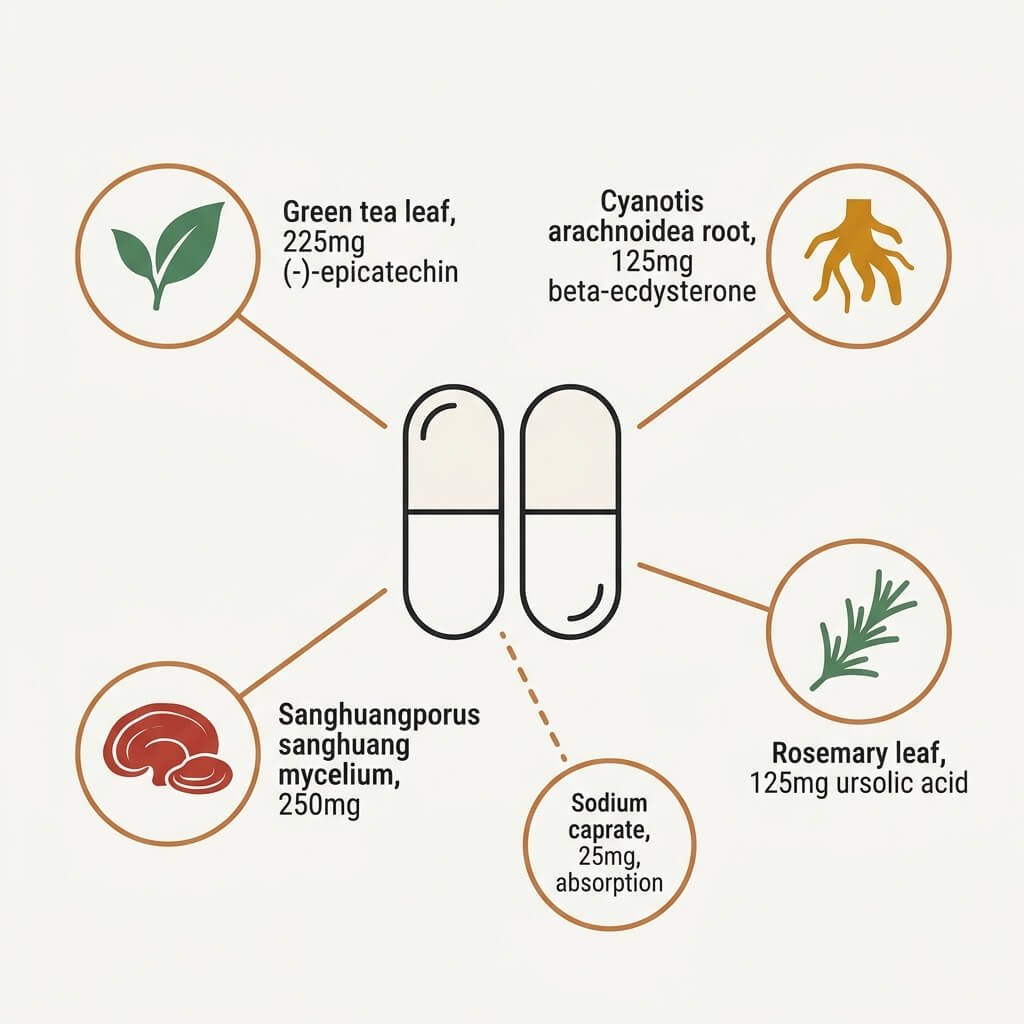
Two capsules deliver 225mg (-)-epicatechin, 125mg beta-ecdysterone, 125mg ursolic acid, and 250mg Sanghuangporus sanghuang mycelium at 1.5% hispidin.
That 1.5% standardization works out to 3.75mg of actual hispidin, a figure the brand never publishes.
The epicatechin pilot study used roughly 150mg daily in six subjects. Epicomp’s 225mg sits 1.5x above it, which I read as well chosen.
Ursolic acid failed to add strength or mass in placebo-controlled trials at 150mg, 400mg, and 450mg. Epicomp carries 125mg.
Ecdysterone sits on WADA’s 2026 Monitoring Program in and out of competition. Tested athletes should avoid this product.
$69.99 for 30 servings works out to $2.33 per day. The 60-serving jar drops that to $2.00, a 14% saving.
Expect marginal gains layered on good training, not a visible transformation across 12 weeks.
What Epicomp is and what problem it claims to solve
Body recomposition = losing fat and gaining muscle at the same time, rather than cycling through separate bulk and cut phases.
Nootropics Depot built Epicomp around a two-direction premise. Myostatin is a protein that caps how much muscle your body allows you to build. Separately, training stress activates MuRF-1 and Atrogin-1, two enzymes that tag muscle protein for breakdown and disposal.
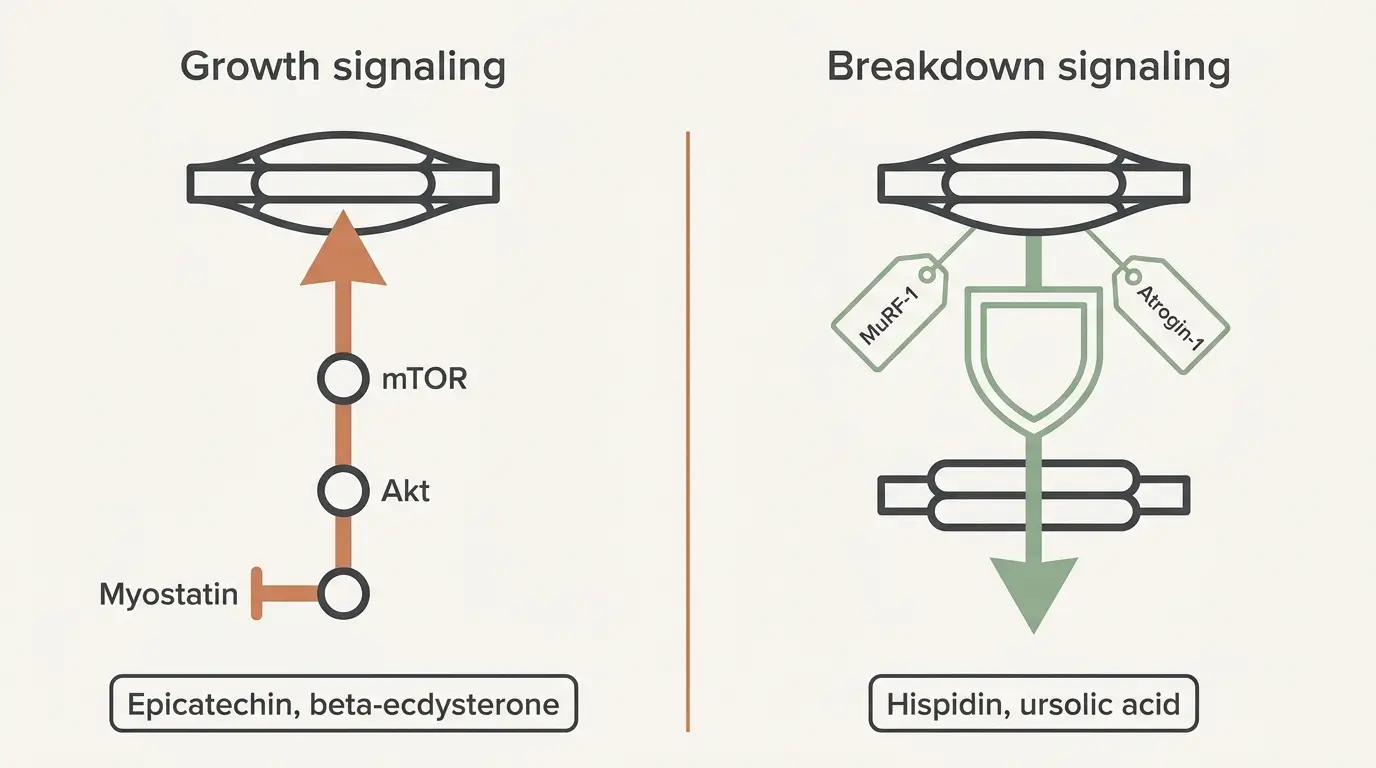
Most muscle products only push on the growth side. Epicomp pushes growth while also trying to blunt breakdown [2].
I like the logic. Growth signaling and protein degradation run on genuinely separate pathways, and a formula addressing both is more thoughtfully built than another 5g of creatine with a $60 sticker on it.
Coherent mechanism logic and demonstrated outcomes are different claims, though. So let’s go to the label.
Epicomp ingredients and doses: the full label
| Active | Source extract and plant part | Standardization | Delivered dose | Job in the formula |
|---|---|---|---|---|
| (-)-Epicatechin | Camellia sinensis leaf, 250mg | 90% | 225mg | Growth signaling, mitochondrial support |
| Beta-ecdysterone | Cyanotis arachnoidea root, 250mg | 50% | 125mg | Receptor-level muscle support |
| Ursolic acid | Rosmarinus officinalis leaf, 250mg | 50% | 125mg | Recovery, anti-atrophy |
| Sanghuangporus sanghuang | Freeze-dried SS-MN4 liquid-culture mycelium | 1.5% hispidin | 250mg mycelium | Muscle preservation, glycogen |
| Sodium caprate | Synthetic | n/a | 25mg | Absorption support |
Two capsules carry roughly 1,025mg of extract material [1]. That is dense for a two-cap serving, and it explains some of the dosing compromises you will see below.
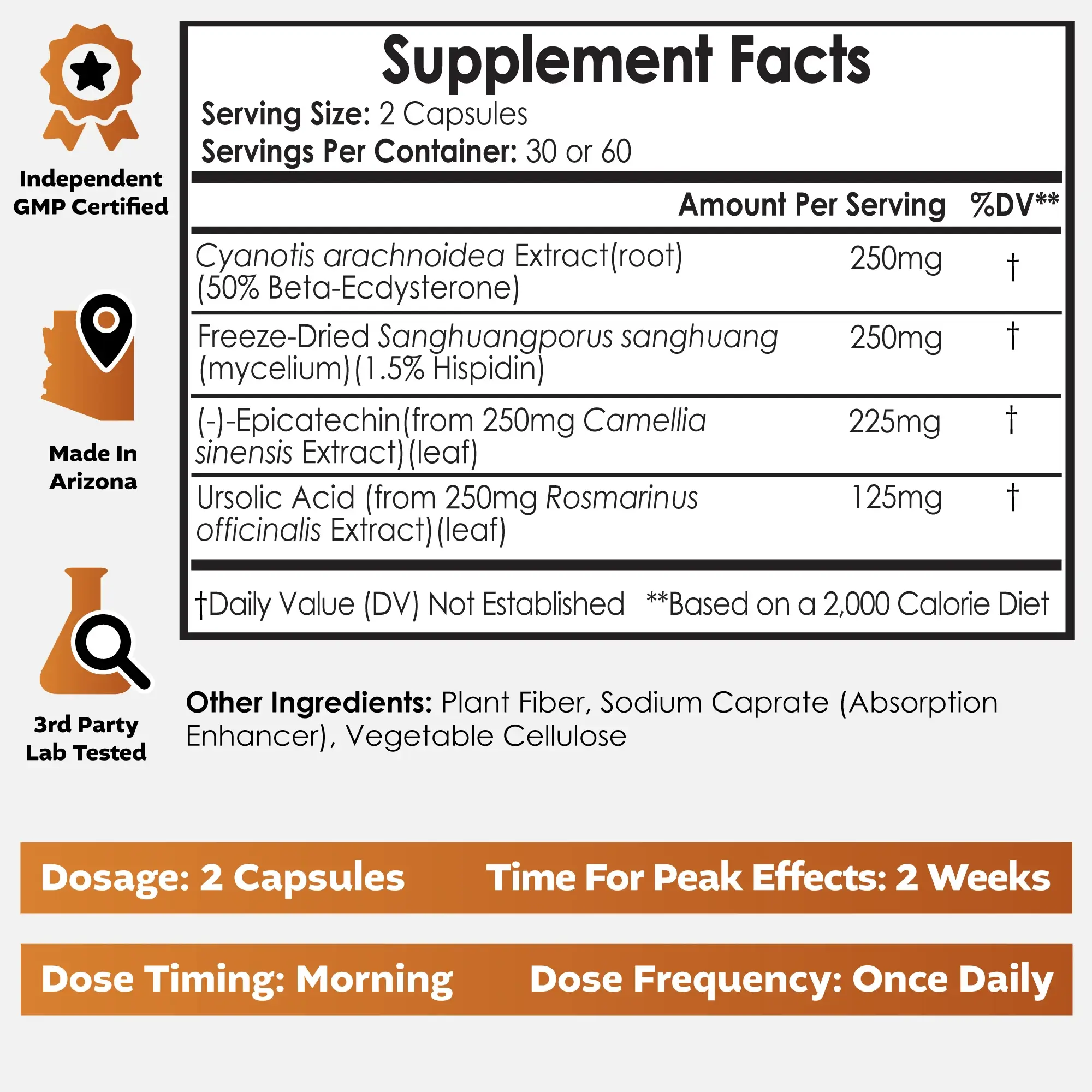
Three things on this label put Epicomp ahead of most of its category. Nootropics Depot names the plant part on every botanical, which most brands skip because “rosemary extract” sounds identical to a customer whether it came from leaf or stem. They print every active dose. And they specify the exact mycelial strain, SS-MN4, instead of hiding behind a genus name.
Now the number Nootropics Depot does not print anywhere. That 250mg of mycelium standardized to 1.5% hispidin delivers 3.75mg of actual hispidin per serving.
Hispidin = a polyphenol pigment found in certain medicinal mushrooms, and it carries the entire preservation half of this formula.
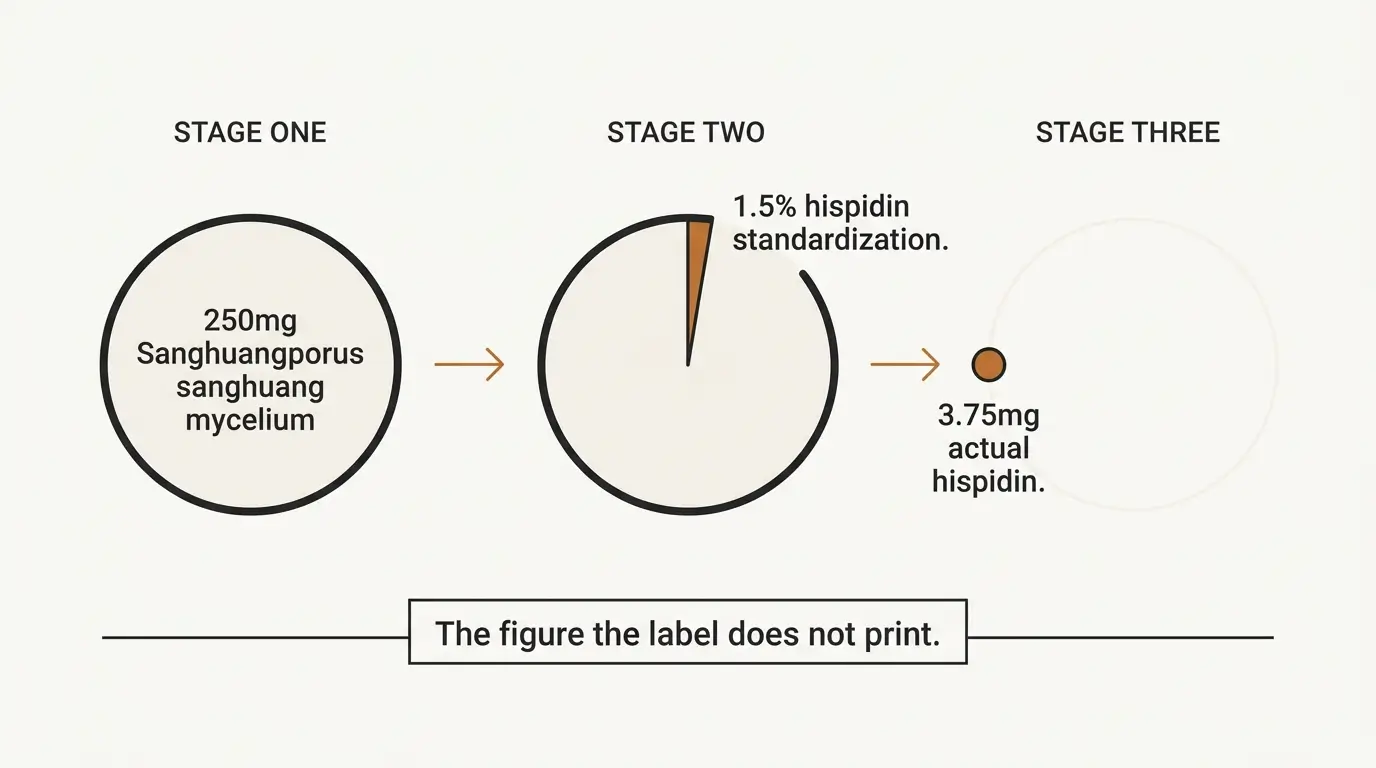
Why does 3.75mg matter? Because when you read the mouse data below, you will want to know what dose produced those glycogen numbers.
Three of these four actives have human data behind them. Only one of the three was dosed here in a way the research supports.
Does each dose match the research?
| Active | Epicomp dose | Human trial dose | Design and sample | Verdict |
|---|---|---|---|---|
| (-)-Epicatechin | 225mg | ~150mg/day, 7 days | Open-label pilot, n=6, no placebo | Exceeds 1.5x |
| (-)-Epicatechin | 225mg | Enriched extract, 12 weeks | Randomized, double-blind, placebo-controlled, adults 60+ | Supported |
| Beta-ecdysterone | 125mg | Multi-arm, 10 weeks | Randomized, n=46. Capsule content ran below label | Below standalone |
| Ursolic acid | 125mg | 150mg, 400mg, 450mg/day | Three placebo-controlled trials | Failed at every dose |
| Hispidin, SS-MN4 | 3.75mg | None published | Mouse disuse-atrophy and fatigue models | Animal only |
Gutierrez-Salmean G, et al. Effects of (-)-epicatechin on molecular modulators of skeletal muscle growth and differentiation. Journal of Nutritional Biochemistry, 2014.
Seo DY, et al. (-)-Epicatechin-enriched extract from Camellia sinensis improves regulation of muscle mass and function. Antioxidants, 2021.
Isenmann E, et al. Ecdysteroids as non-conventional anabolic agent. Archives of Toxicology, 2019.
Lobo PCB, et al. Ursolic acid has no additional effect on muscle strength and mass in active men. Clinical Nutrition, 2021. Cione JGC, et al. Clinical Nutrition ESPEN, 2021.
Li H, et al. Hispidin-enriched Sanghuangporus sanghuang SS-MN4 mycelia. Journal of Cachexia, Sarcopenia and Muscle, 2023.
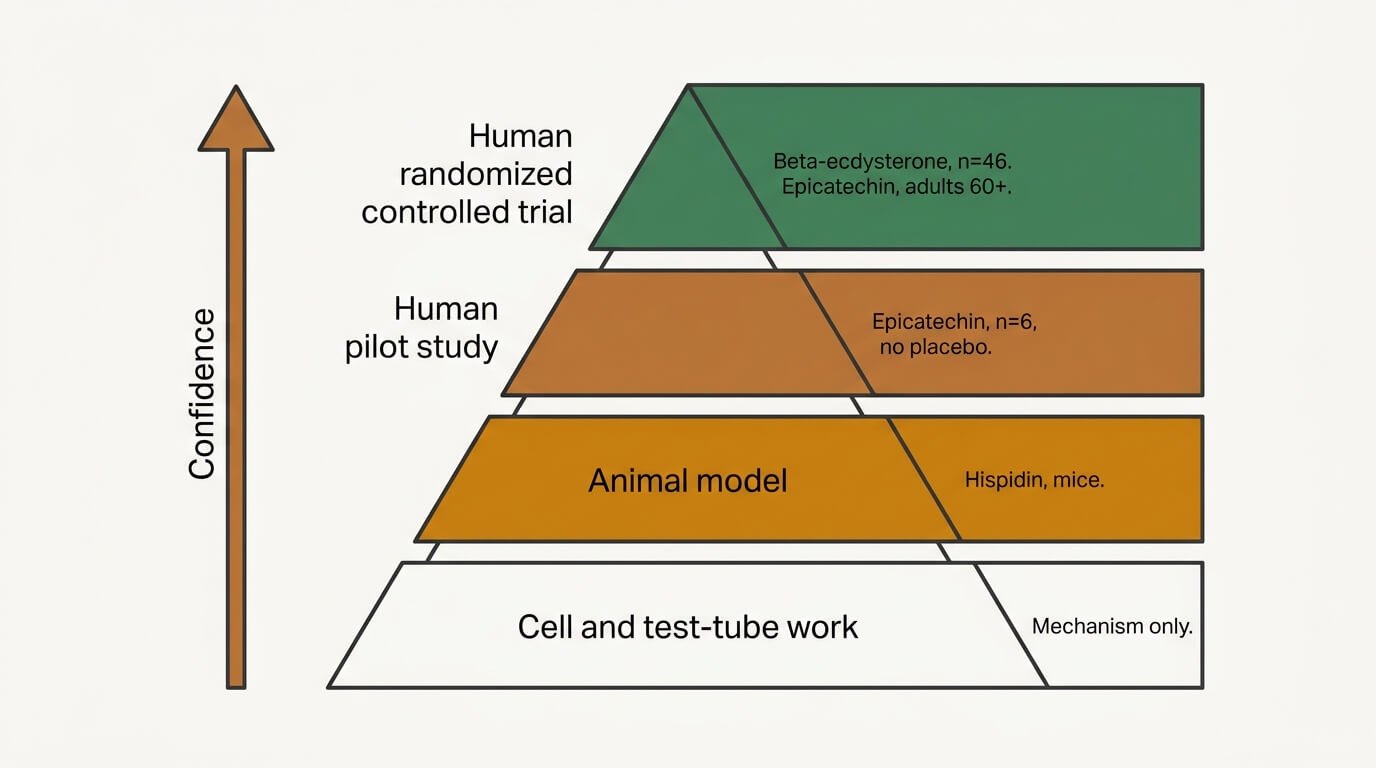
Evidence tiers rank like this. Human randomized controlled trials beat human pilot studies, which beat animal models, which beat test-tube work. Every claim below carries its tier so you can discount it yourself.
Epicatechin
Gutierrez-Salmean and colleagues dosed six middle-aged subjects with 1mg of (-)-epicatechin per kilogram of bodyweight twice daily for seven days, roughly 150mg per day for an average adult. Hand grip strength rose about 7%, follistatin climbed 49.2%, and myostatin dropped 16.6% [3].
Follistatin = a protein that binds and neutralizes myostatin, so a higher follistatin-to-myostatin ratio means less myostatin activity.
Six people. Seven days. No placebo group. Muscle mass was never measured.
Epicomp’s 225mg sits 1.5x above that studied dose, which I read as well chosen rather than padded for marketing. Polyphenol dosing does not scale linearly, and the 500mg to 1,000mg daily totals some competitors use have no human support behind them at all.
Stronger evidence exists than the pilot everyone quotes. Seo and colleagues ran a randomized, double-blind, placebo-controlled trial of a tannase-treated (-)-epicatechin-enriched Camellia sinensis extract in Korean adults aged 60 and over.
Tannase-treated = processed with an enzyme that converts larger tea polyphenols into epicatechin.
The supplemented group prevented grip strength decline and improved isokinetic hamstring strength, meaning strength measured on a machine that holds movement speed constant, with no exercise program attached [4].
Epicomp uses a green tea extract standardized to 90% (-)-epicatechin, the same botanical source.
Here is the counter-evidence no other page about this product mentions.
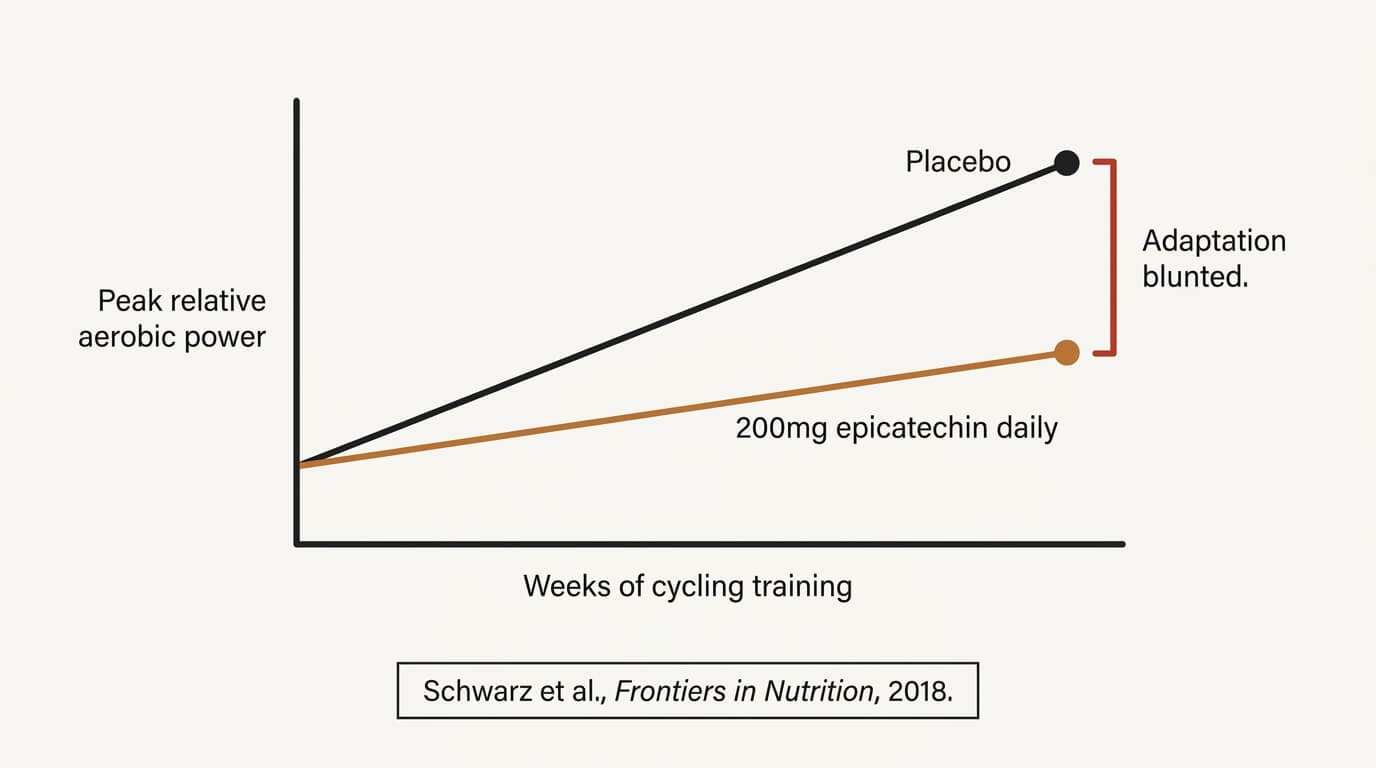
Schwarz and colleagues gave cyclists 200mg of (-)-epicatechin daily across a training block and found it INHIBITED development of peak relative aerobic power and blunted mitochondrial SDH adaptations, while showing no effect on myostatin gene expression [9].
SDH = succinate dehydrogenase, a marker of how well your mitochondria are adapting. If you are in a dedicated endurance block, that single finding should change your decision.
Beta-ecdysterone
Isenmann and colleagues put 46 young men through 10 weeks of resistance training across several ecdysterone dose arms and reported significantly greater muscle mass increases in the supplemented groups [5].
Parr and colleagues traced the mechanism to estrogen receptor beta rather than the androgen receptor, which is why ecdysterone counts as a phytoecdysteroid and not a hormone. [10]
One wrinkle worth knowing. The capsules in that trial were labeled at 100mg ecdysterone each, and analytical testing found actual content ran lower than the label claimed [5].
Nobody can state the true effective dose from the one trial that matters.
Epicomp carries 125mg, half the dose in the Nootropics Depot standalone. The formulator said publicly that capsule space and price drove that decision . Honest answer. Still half. [11]
Ursolic acid
This is the weak link, and I want to be blunt about it.
Lobo and colleagues gave 400mg of ursolic acid daily to physically active men on a high-protein diet across 8 weeks of resistance training, against a 400mg placebo. No additional effect on muscle strength or mass [6].
Cione and colleagues ran 450mg daily over 8 weeks of combined exercise and reached the same null result [7].
A third placebo-controlled trial used 150mg, close to Epicomp’s dose, and also found nothing.
So ursolic acid failed at 150mg, failed at 400mg, and failed at 450mg. Rat mechanism data does not rescue that record, and 125mg sits at the bottom of a range that has already struck out.
Ursolic acid: every studied dose, and Epicomp’s
Bar width is proportional to daily dose in milligrams.
Hispidin
Li and colleagues tested hispidin-rich SS-MN4 extract in 6-week-old male mice across two models, disuse-induced atrophy and exercise fatigue. The extract suppressed MuRF-1 and Atrogin-1, upregulated the muscle fiber genes Myh2 and Myh7, and raised muscle glycogen 55.6% and liver glycogen 34.36% [8].
That 55.6% figure appears all over Nootropics Depot’s marketing [2].
It came from mice. A human anti-fatigue trial on SS-MN4 sits registered with no published results [12].
(Ed. note: I want this mushroom to work. It is the only ingredient here nobody else sells, and the bioreactor process behind it is real engineering rather than label decoration.)
Dose fidelity tells you whether a formula is plausible. It says nothing about what you will feel.
What Epicomp will and will not do
A Reddit user asked the honest question on August 30, 2026. How does this compare to TRT, to steroids, to creatine, and how many extra pounds of muscle across three months [13]?
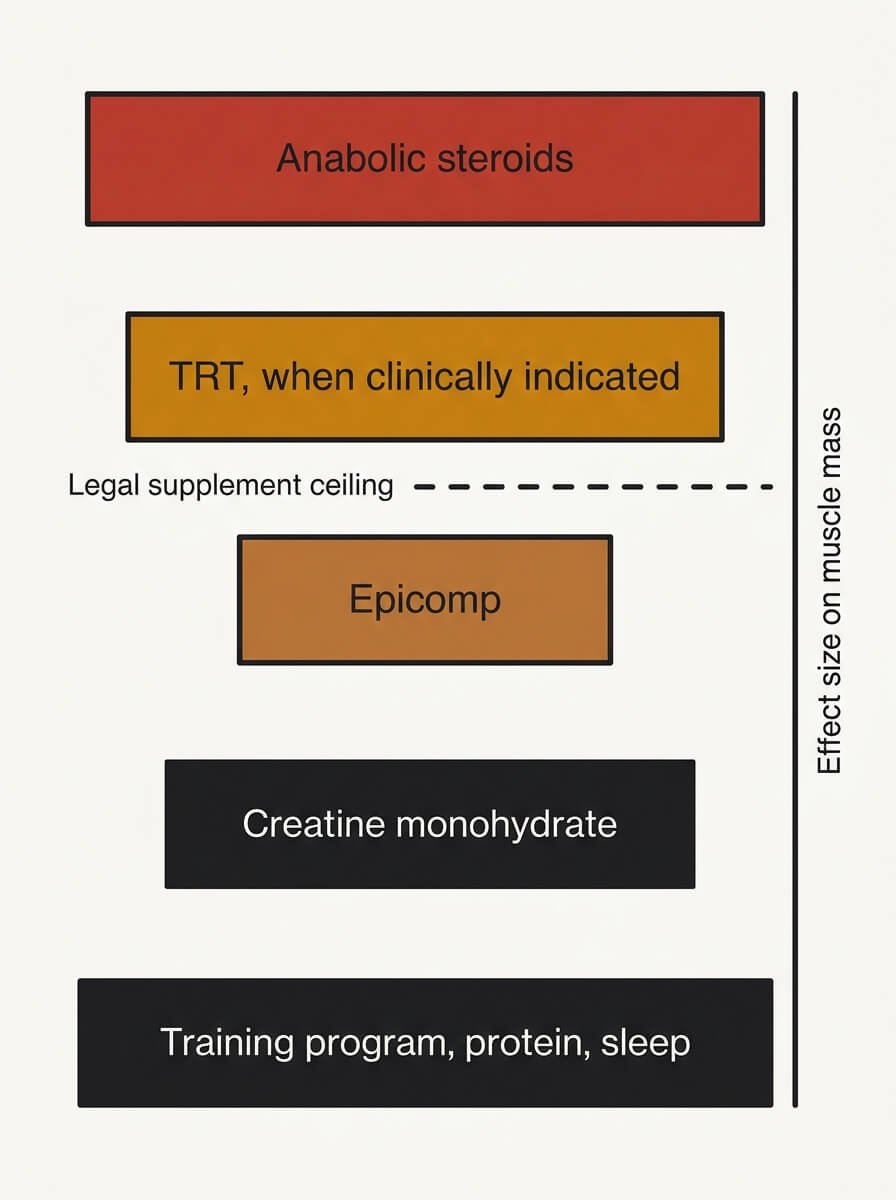
The replies in that thread got it right, and the most upvoted comment estimated effects could land close to unnoticeable [13]. I agree with the direction of that, if not the certainty.
No legal supplement adds pounds of lean mass to a trained lifter in 12 weeks. Ranked by effect size, your training program, protein intake, and sleep sit at the top by a wide margin.
Creatine monohydrate comes next, carrying decades of replicated data at roughly $0.10 per serving. Testosterone replacement therapy, when a physician confirms clinically low levels alongside symptoms, operates on a completely different scale. Anabolic steroids sit further out still.
Epicomp lives below creatine on that ladder. It is a margins product. You buy it to shave friction off recovery once the fundamentals are already handled.
“So what will I actually notice?” Based on the label’s own claims and early user reports, energy and endurance first.
Nootropics Depot claims some acute effects with a peak around three to four weeks [1].
Recomposition, if it happens for you, shows up as a slow divergence between your bodyweight and your waist measurement across two to three months.
Expectation effects on strength performance are real and measurable, so a product you just paid $70 for arrives with a psychological tailwind. Build your testing around that rather than pretending you are immune to it.
Your 30-day Epicomp self-test
Run a two-week baseline before your first capsule. Without a baseline you will not be able to separate the product from normal week-to-week variation.
| Metric | How to measure | Frequency | Your baseline |
|---|---|---|---|
| Volume load | Sets × reps × load, totalled per session | Every session | |
| Rest intervals | Timed between working sets, not estimated | Every session | |
| Session RPE | Rating of perceived exertion, 1 to 10, logged after training | Every session | |
| Morning bodyweight | Same time daily, post-bathroom, pre-food | Daily | |
| Grip strength | Hand dynamometer, best of three per hand. This was the endpoint that moved in both epicatechin trials | Twice weekly |
Grip strength earns its spot because it moved in both the epicatechin pilot and the older-adult trial [3][4].
A dynamometer costs about $35 and gives you the closest available read on the mechanism this formula claims.
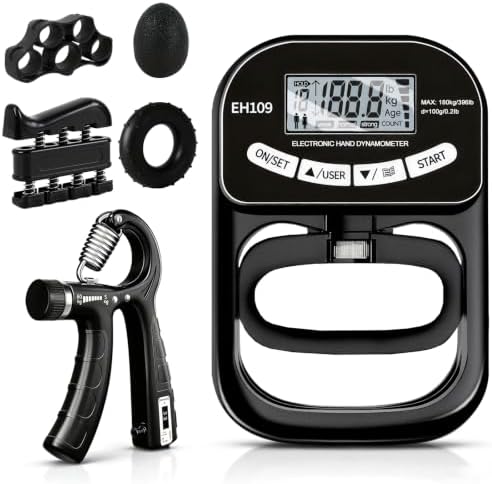
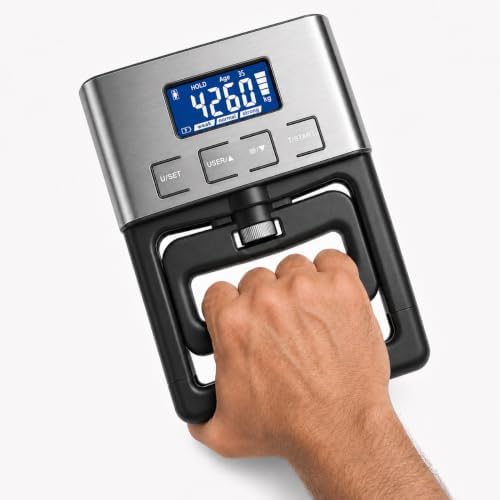

From public early reports, testers described clean non-stimulant alertness and shorter rest intervals during supersets, and one noted marginally harder sleep onset from a 6pm dose [11].
If you train in the evening, dose it in the morning for the first week and watch your sleep before you commit to a schedule.
Your own data is the only data that will settle this for you. Cost, though, you can settle right now.
Is Epicomp worth $69.99? The cost-per-active breakdown
| Route | Cost per day | mg epicatechin per $ | mg beta-ecdysterone per $ | Also included |
|---|---|---|---|---|
| Epicomp, 30 servings, $69.99 | $2.33 | 96mg | 54mg | Ursolic acid, hispidin mycelium, sodium caprate |
| Epicomp, 60 servings, $119.99 | $2.00 | 113mg | 63mg | Same |
| ND standalone epicatechin + standalone beta-ecdysterone | Varies by jar size | Check current pricing | Higher per dollar | Nothing else |
Two conclusions come out of that table. The 60-serving jar cuts your per-serving cost by 14%, which is the easiest saving available on this product and the only version I would order.
And the standalone route gets you more beta-ecdysterone per dollar, since Epicomp runs that active at half strength.
What the standalone route cannot give you is the hispidin mycelium, because Nootropics Depot does not sell it separately. That is the real lock-in, and it deserves naming plainly rather than pretending the blend undercuts its own parts.
A 57-year-old commenter said the price tag alone was holding him back [14]. Fair objection at $2.33 per day for marginal gains. My practical answer is the larger jar at $2.00, stacked with the free shipping threshold.
Price is one objection. Drug testing is the one that can end a season.
Will Epicomp fail a drug test? And is it safe?
No other page about this product covers this, so read carefully.
On safety, Nootropics Depot is accurate that none of these four actives is a hormone [1].
Epicatechin, beta-ecdysterone, and ursolic acid all carry human use history at these dose ranges. Hispidin at this standardization does not.
A Reddit user named the absence of long-term human safety data as his main hesitation [13], and he deserves a straight answer instead of reassurance.
Zero human safety data exists on this specific four-ingredient combination. That is a genuine limitation, not a marketing footnote.
Speak to a clinician first if you take prescription medication, if you are pregnant or nursing, or if you have a liver or hormonal condition.
Assuming you clear those hurdles, the next question is how this fits the shelf you already own.
How to take Epicomp, and the label contradiction worth knowing
The Supplement Facts image says morning. The formulator said in the launch thread that timing is flexible and recommended post-workout on training days, and the brand acknowledged the label image had been copied across incorrectly [11].
My recommendation is take it post-workout on training days, whenever it fits on rest days, with or without food. No cycling. No loading phase.
Two servings per day is fine, per the owner in that same thread [11].
That matters if you currently run standalone epicatechin twice daily and want to switch across without dropping your dose.
On stacking, buy creatine monohydrate first if you do not already own it. Deepest evidence base in this category, fraction of the price.
(Note: Link above takes you to iHerb. Use our iHerb discount code GIX3955 for 10% of your first order or 5% off if you are an existing customer)
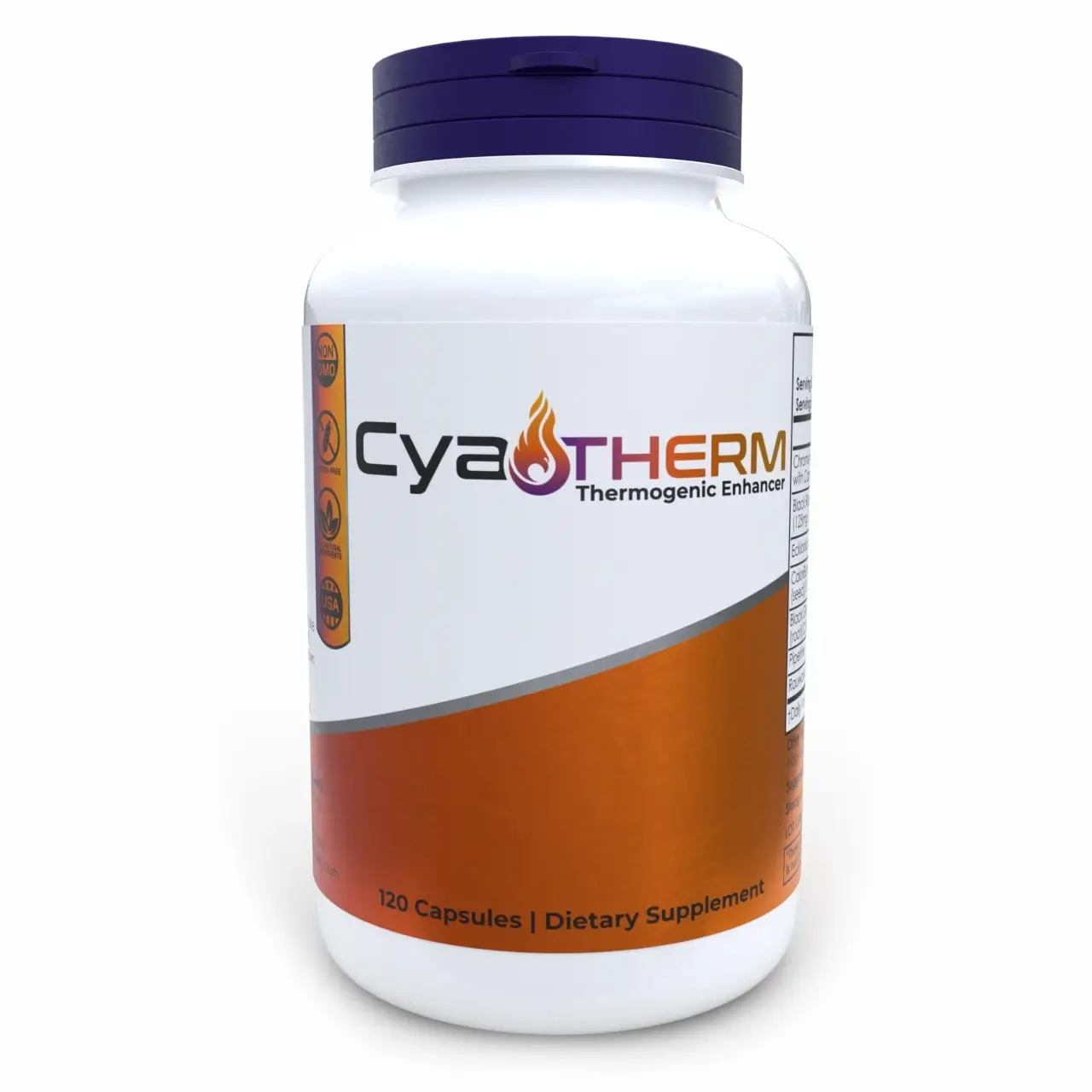
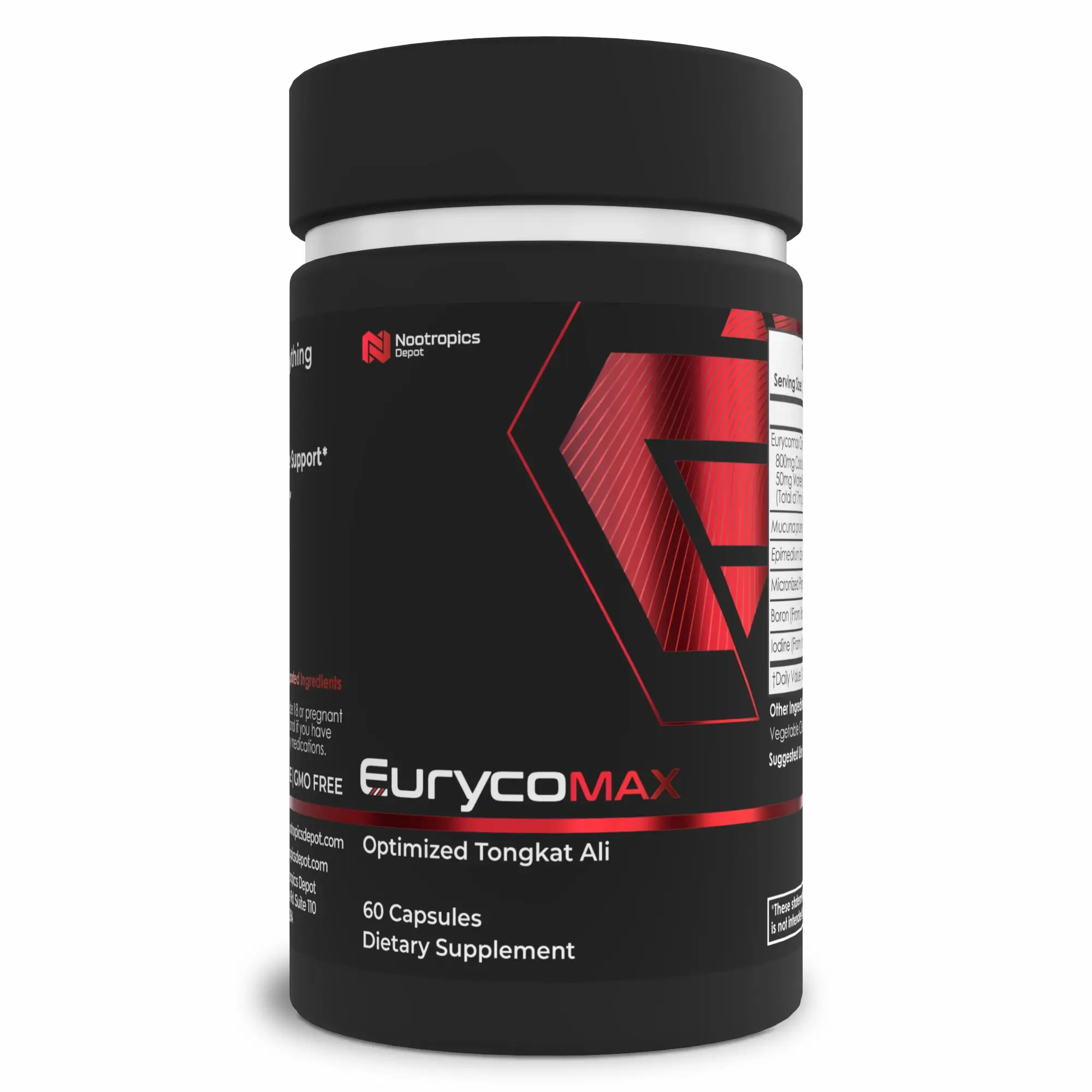
Nootropics Depot designed Cyatherm as the metabolic pairing and Eurycomax for the hormonal lane Epicomp deliberately leaves open [2].
Cyclists and runners, remember the Schwarz finding on blunted aerobic adaptation [9]. Pull Epicomp during any peak endurance block.
Those are my conclusions from the label and the literature. Here is what people actually taking it are saying.
What real users and online forums say about Epicomp
Coverage window runs September 3 to 14, 2026, (11 days) across four threads in r/NootropicsDepot, a subreddit of 43,400 members [11][13][14].
| Sentiment | Volume | Notes |
|---|---|---|
| Positive experiential | Low single digits | Energy, endurance, shorter rest intervals |
| Skeptical on effect size | Several, well upvoted | Concentrated in the physique thread |
| Price objection | Several | Includes one deferred purchase |
| Open questions | Majority of comments | Timing, stacking, safety |
I have used ranges rather than exact counts on purpose, because precise integers across a few dozen comments would imply rigor this sample cannot carry.
On the positive side, one long-time reviewer described compressed rest intervals and better endurance through supersets, and another reported clean alertness without stimulation [11].
The brand owner said switching from standalone epicatechin plus beta-ecdysterone over to Epicomp made energy and endurance noticeably stronger [11]. He owns the company, so weight that accordingly.
Worth noting on the neutral side, that same reviewer felt nothing on day one before reporting effects later. Single-dose verdicts on a formula claiming a three to four week peak are not much use to anyone.
The complaints deserve a fair airing rather than burial. Price came up repeatedly, and at $2.33 per day that is reasonable pushback.
Skepticism about effect size came mostly from experienced users, which I read as a healthy sign about that community rather than a strike against the product.
Two long-term customers flagged the half-dose beta-ecdysterone. A few raised the missing long-term safety data on a new combination. And the site carried launch-day pricing and dosing-label errors, which the brand corrected within hours.
Eleven days of early-adopter reports inside a brand’s own subreddit is the least reliable sentiment data available anywhere. Launch enthusiasm inflates everything. I will revisit this section at 90 days.
Sentiment at day 11 is noise. Structural fit is a question you can answer today.
Who Epicomp is for, and who should skip it
Consider buying it when you are a trained lifter with protein, sleep, and progressive overload already locked in and you want marginal gains on top.
Also when you already buy standalone epicatechin and want the hispidin addition in one jar. Also when you are a hybrid athlete outside an endurance peak who values the glycogen angle.
The strongest case might be the one Nootropics Depot does not market. A Reddit user argued that adults over 60 fighting sarcopenia stand to gain more from this than lifters chasing a 3% edge [14].
Sarcopenia = age-related loss of muscle mass and function, and it accelerates from the forties onward.
Grip strength works as an accessible proxy for tracking it. The anti-atrophy mechanisms here, suppressing MuRF-1 and Atrogin-1 [8], map more directly onto preserving existing muscle than onto building new muscle, and the one properly controlled epicatechin trial ran in adults over 60 [4].
That combination makes the older-adult case more evidence-backed than the bodybuilding pitch, though the hispidin half of it remains mouse-derived.
Consider buying it when
Protein, sleep and progressive overload are already locked in and you want marginal gains on top.
You already buy standalone epicatechin and want the hispidin mycelium in the same jar.
You are a hybrid athlete outside an endurance peak who values the glycogen angle.
You are over 50, training lightly, and working to hold the muscle you already have.
Skip it when
You are under two years into serious training.
Your protein and sleep run inconsistent. $70 of polyphenols cannot outrun that.
You get drug tested by any organisation.
You do not yet own creatine monohydrate.
You are inside a dedicated aerobic-adaptation block.
You need human outcome data on a finished formula before money leaves your account.
Epicomp review verdict: my honest take
| Criterion | Score | Why |
|---|---|---|
| Formulation transparency | 9.5/10 | Every dose, plant part, and strain printed |
| Dose fidelity | 6.5/10 | Epicatechin well chosen at 1.5x the studied dose, ursolic acid below three failed doses |
| Evidence quality | 5.5/10 | Two supportive human trials, three null trials, one mouse study |
| Novelty | 9/10 | SS-MN4 hispidin mycelium is unavailable elsewhere |
| Value at $2.33/day | 6.5/10 | Fair for the actives, expensive for the expected effect |
| Overall | 7.3/10 | Well built, honestly labeled, modest in effect |
Nootropics Depot earned that transparency score. Their in-house UPLC testing and batch certificates of analysis confirm that what the label claims sits in the capsule, and that is more than most competitors in this category bother doing.
UPLC = ultra-performance liquid chromatography, the analytical method that verifies ingredient identity and potency.
That testing verifies label accuracy. It does not verify clinical outcomes, and marketing copy across this whole industry tends to blur those two claims into one.
So the 55.6% glycogen number came from mice. The ursolic acid sits below three doses that already failed in humans. The beta-ecdysterone runs at half strength. And $2.33 per day buys marginal gains layered on good training, not a transformation you will photograph.
Would I buy it? Yes, as the 60-serving jar, run for 90 days with the tracking protocol above, after creatine and protein are already handled. And no, not if I competed in a tested sport.
Compare the 30 and 60 serving pricing on the Epicomp product page.
Every dose, plant part and mycelial strain printed on the label.
Epicatechin well chosen at 1.5x the studied dose. Ursolic acid sits below three doses that already failed.
Two supportive human trials, three null trials, one mouse study, nothing on the finished formula.
The SS-MN4 hispidin mycelium is unavailable from any other brand at this standardization.
Fair for the actives you receive, expensive relative to the effect size you should expect.
Epicomp, frequently asked questions
Does Epicomp actually work for building muscle?
Probably a small effect. The epicatechin and beta-ecdysterone doses have human trial support behind them, but no trial has tested this finished formula. Expect marginal improvements in recovery and endurance layered on good training, not visible mass gains inside 12 weeks.
How much hispidin is in Epicomp?
3.75mg per two-capsule serving, from 250mg of Sanghuangporus sanghuang mycelium standardized to 1.5% hispidin. Nootropics Depot publishes the standardization percentage but never the delivered milligram figure, which matters when you read the mouse data.
Epicomp or buying epicatechin and beta-ecdysterone separately?
Standalones give you more beta-ecdysterone per dollar, since Epicomp runs it at half dose. Epicomp adds ursolic acid, sodium caprate and the hispidin mycelium, which Nootropics Depot does not sell separately. Buy Epicomp for the mushroom.
Will Epicomp show up on a drug test?
Ecdysterone sits on WADA’s 2026 Monitoring Program in and out of competition. It is not currently prohibited, but researchers have formally petitioned for its reclassification as an anabolic agent. Compete in a tested sport and you should avoid this product entirely.
What are Epicomp’s side effects?
No published side effect profile exists for this formula. One early user reported slightly harder sleep onset from an evening dose. None of the four actives is a hormone, and three carry human use history at these dose ranges.
Should I take Epicomp in the morning or after my workout?
Post-workout on training days. The label image says morning, but the formulator stated publicly that timing is flexible and recommended post-workout, and the brand confirmed the label image had been copied across incorrectly.
Can I take two servings of Epicomp per day?
Yes. The owner confirmed two servings daily is fine. That matters if you currently dose standalone epicatechin twice a day and want to switch across without dropping your total, though it doubles your daily cost to roughly $4.66.
Is Epicomp good for people over 50?
Better supported than the bodybuilding use case, actually. The one properly controlled epicatechin trial ran in adults aged 60 and over and improved strength measures without exercise, and the anti-atrophy pathways align with sarcopenia. Pair it with light resistance training.
How I researched this Epicomp review
I reviewed both Nootropics Depot Epicomp pages and the published Supplement Facts panel, four r/NootropicsDepot threads spanning August 30 to September 14, 2026, primary research covering all four actives, the 2026 WADA Prohibited List and Monitoring Program, NCAA banned-class guidance, and current pricing for Epicomp alongside the relevant Nootropics Depot standalones.
For evidence weighting I ranked human randomized controlled trials highest, then human pilot studies, then animal models, then test-tube work. Every citation carries its tier in the text so you can discount claims yourself.
I ran the analysis on September 14, 2026, eleven days after launch.
The limitations are significant and I will not soften them. I have no 30-day or 90-day personal results on this product. I did not independently lab-verify the label.
Citations
- Nootropics Depot – “Epicomp Body Recomposition Blend” – 2026
- Nootropics Depot – “Epicomp, Body Recomposition, Build Lean Muscle” – 2026
- Gutierrez-Salmean G, et al. – “Effects of (-)-epicatechin on molecular modulators of skeletal muscle growth and differentiation” – Journal of Nutritional Biochemistry – 2014
- Seo DY, et al. – “(-)-Epicatechin-enriched extract from Camellia sinensis improves regulation of muscle mass and function: results from a randomized controlled trial” – Antioxidants – 2021
- Isenmann E, et al. – “Ecdysteroids as non-conventional anabolic agent: performance enhancement by ecdysterone supplementation in humans” – Archives of Toxicology – 2019
- Lobo PCB, et al. – “Ursolic acid has no additional effect on muscle strength and mass in active men undergoing a high-protein diet and resistance training: a double-blind and placebo-controlled trial” – Clinical Nutrition – 2021
- Cione JGC, et al. – “No additional effects of ursolic acid supplementation associated with combined exercise program on metabolic syndrome of postmenopausal women” – Clinical Nutrition ESPEN – 2021
- Li H, et al. – “Hispidin-enriched Sanghuangporus sanghuang SS-MN4 mycelia protect against skeletal muscle atrophy and fatigue in mice” – Journal of Cachexia, Sarcopenia and Muscle – 2023
- Schwarz NA, et al. – “(-)-Epicatechin supplementation inhibits aerobic adaptations to cycling exercise in humans” – Frontiers in Nutrition – 2018
- Parr MK, et al. – “Estrogen receptor beta is involved in skeletal muscle hypertrophy induced by the phytoecdysteroid ecdysterone” – Molecular Nutrition and Food Research – 2014 – https://doi.org/10.1002/mnfr.201300806
- r/NootropicsDepot – “SulfoMax and Epicomp are Now Live” – September 3, 2026
- Clinical trials registry – “Sanghuangporus Sanghuang Supplementation to Improve Anti-Fatigue Performance in Healthy Adults” – registered, results pending
- r/NootropicsDepot – “How strong will epicomp be for physique?” – August 30, 2026
- r/NootropicsDepot – “Epicomp, the elderly’s secret weapon against sarcopenia” – September 2026
- Athletics Integrity Unit – “Understand the Prohibited List” – 2026
- USADA – “What’s New on the 2026 WADA Prohibited List?” – 2025