
Best Foods for Lowering Cholesterol: 15 Proven Picks That Actually Drop Your LDL
Real foods, real numbers, and how much each can lower your LDL in weeks, not years.
Enjoying this article?Add FoodNourish as a preferred source on Google and see our research-backed guides more often in your search results.
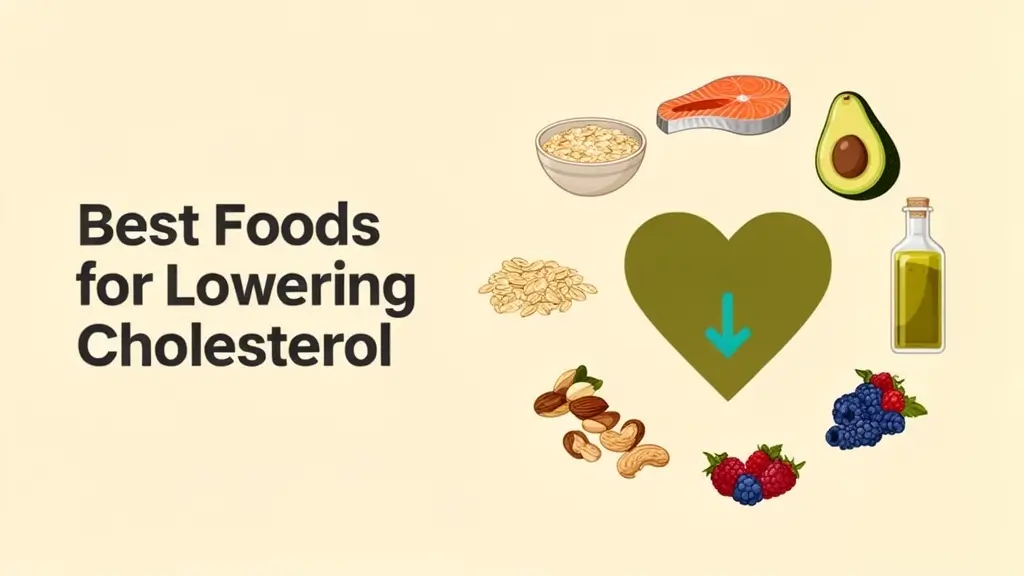
The best foods for lowering cholesterol are oats and barley (beta-glucan cuts LDL by roughly 5 to 7 percent), fatty fish like salmon (omega-3s lower triglycerides), and foods with added plant sterols (up to 15 percent LDL drop at 2 grams a day). None of these work in isolation. Stack them, and the effect adds up fast.
Top picks at a glance
- Oats and barley — best for daily fiber. About 3 grams of beta-glucan per day, roughly one cup of cooked oats.
- Salmon and fatty fish — best for triglycerides. Two servings a week.
- Almonds and walnuts — best snack swap. One small handful a day.
- Plant sterol foods — best single drop. 2 grams a day cuts LDL 8 to 15 percent.
How we picked these foods
I reviewed dietary guidance from Mayo Clinic, Harvard Health, and the American Heart Association, then cross-checked the numbers against clinical research, including the JAMA Portfolio Diet trials by David Jenkins and meta-analyses on oat beta-glucan and plant sterols [1][2][3][4].
Three rules guided every choice.
- The food needed a measurable effect on LDL cholesterol or triglycerides.
- That effect had to hold up in controlled human studies, not animal work or lab dishes.
- And you had to be able to eat it regularly without a special-order shopping trip.
I left out foods with only weak or theoretical support. One limitation worth stating up front is that your results depend on your genetics, your starting diet, and how consistent you stay. The numbers here are averages, not promises.
A high LDL result on your bloodwork is common, and it is not a life sentence. Diet moves the number. For most people, changing what you eat cuts LDL cholesterol by about 10 to 15 percent, and stacking the right foods pushes that higher [1].
Here is the honest ceiling, though. If your LDL is very high or runs in your family, food alone may not get you to target, and your doctor may still recommend medication.
That does not make diet pointless. It makes diet the foundation everything else builds on. Below are 15 foods worth putting on your plate this week, what each one does, and how much it actually helps.
How LDL, HDL, and soluble fiber work
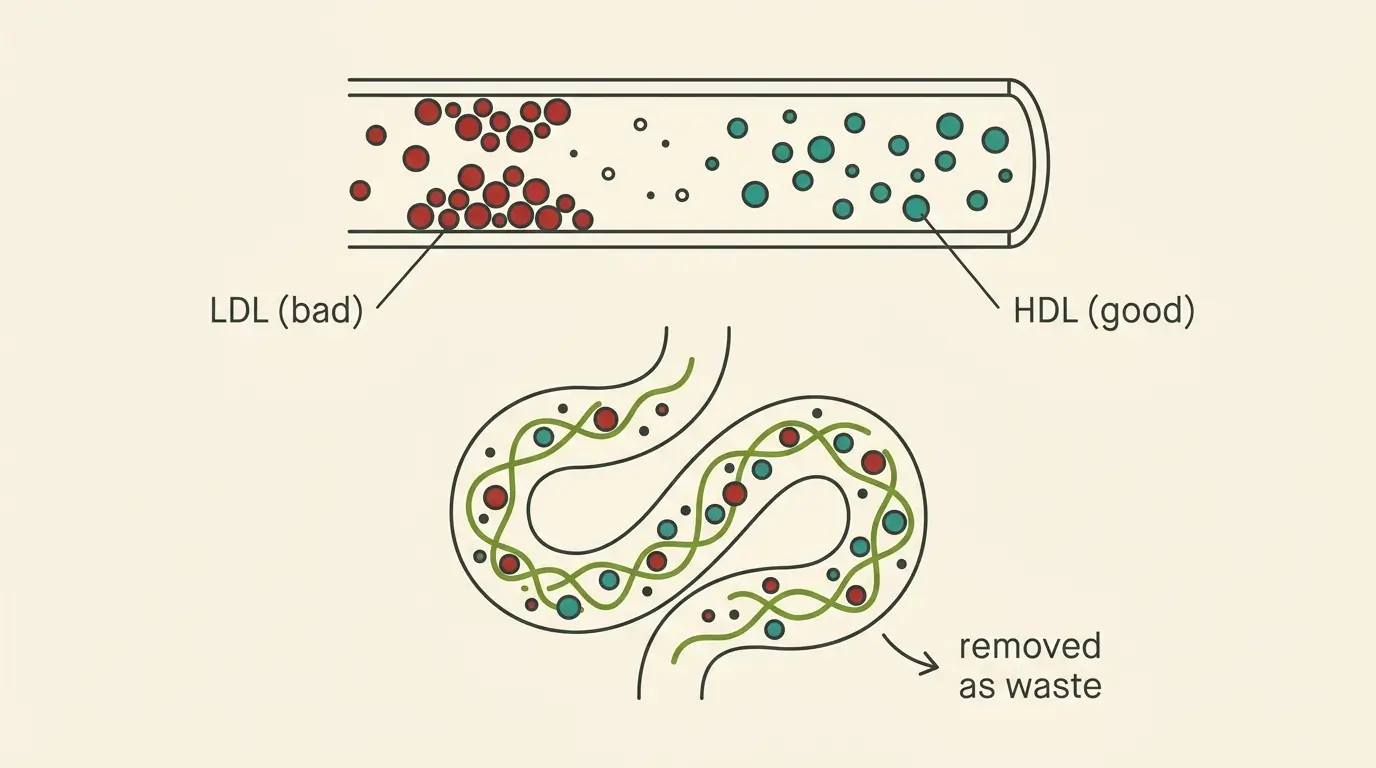
Your body carries cholesterol through your blood on two main vehicles.
- LDL (low-density lipoprotein) is the one your doctor worries about, because extra LDL builds up on artery walls and raises heart attack risk [5].
- HDL (high-density lipoprotein) does the opposite, clearing cholesterol out. Triglycerides are a separate blood fat that also climbs your risk when it runs high.
Soluble fiber is the workhorse behind most cholesterol-lowering foods. It dissolves in water and forms a gel in your gut. That gel binds to cholesterol and to bile acids, which are made from cholesterol, and carries them out as waste [5].
Your liver then pulls cholesterol from your blood to make more bile acids, and your LDL drops. Insoluble fiber does not do this directly, but it fills you up and crowds out worse foods. Most whole plant foods give you a mix of both.
Fiber does the heavy lifting. Healthy fats matter almost as much. Here are the 15 foods.
The 15 best foods for lowering cholesterol
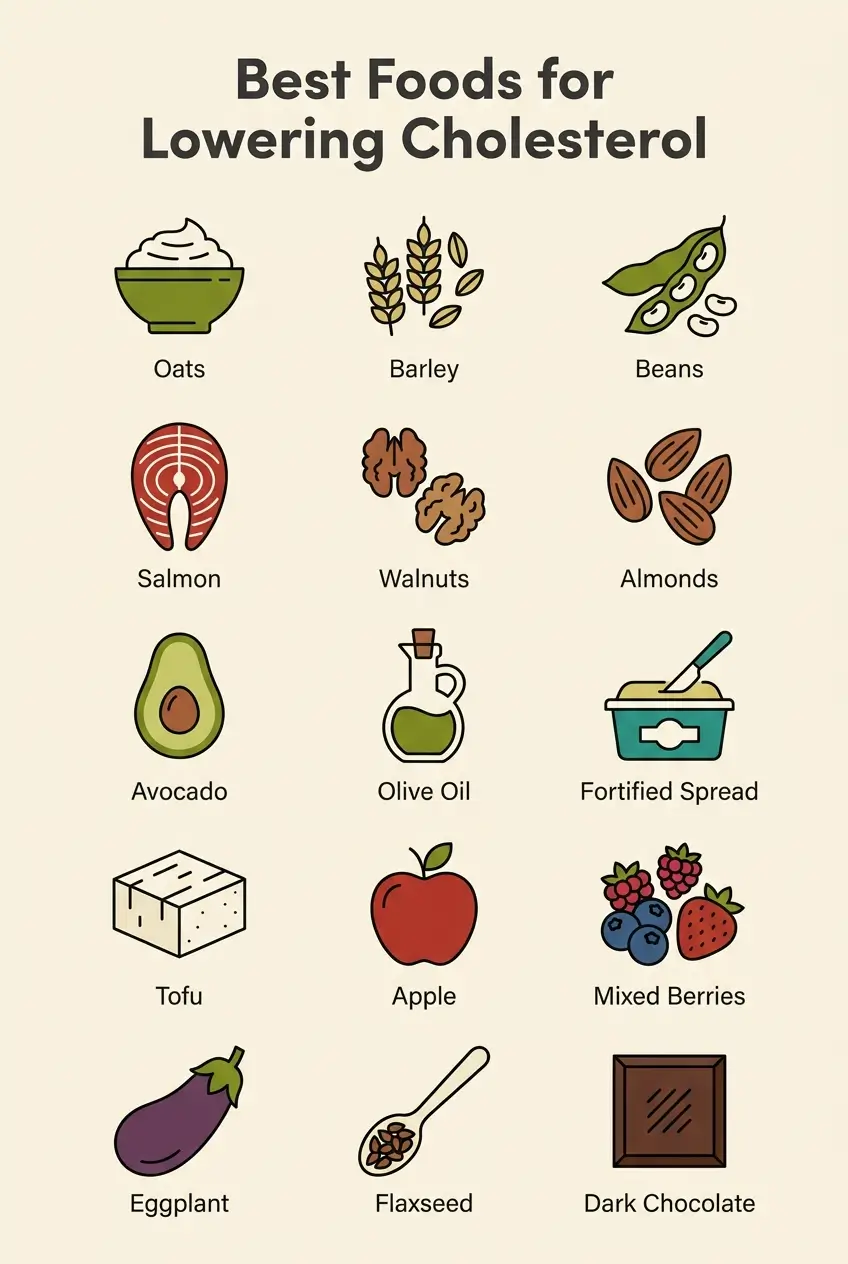
1. Oats and oat bran
Oats are the most studied cholesterol-lowering food, and the reason is a soluble fiber called beta-glucan. A meta-analysis of 58 trials found that eating at least 3 grams of oat beta-glucan a day lowers LDL cholesterol by about 0.25 mmol/L, roughly 5 to 7 percent, without touching your HDL or triglycerides [3].
You get about 3 grams from one cup of cooked oatmeal or a large bowl of oat bran. Start your morning there. Top it with berries or a spoon of ground flax for even more fiber.
2. Barley and whole grains
Barley carries the same beta-glucan as oats and produces a similar LDL drop at 3 grams a day [6].
Beyond barley, swapping refined grains for whole grains helps on its own. White bread, white rice, and regular pasta are low in fiber and easy to overeat. Brown rice, whole-grain bread, quinoa, and bulgur keep the fiber your gut needs to flush cholesterol out.
3. Beans, lentils, and chickpeas
Legumes are cheap, filling, and loaded with soluble fiber and plant protein. A meta-analysis found that eating about one serving (130 grams) of legumes a day lowered LDL cholesterol by roughly 5 percent [7].
They also replace meat on your plate, which cuts saturated fat at the same time. Add lentils to soup, toss chickpeas into a salad, or build a chili around black beans. Skip canned baked beans drowning in sugary sauce.
4. Salmon and fatty fish
Fatty fish is your triglyceride tool. Salmon, mackerel, sardines, herring, and trout are rich in omega-3 fatty acids, which lower triglycerides and may nudge HDL up [8].
Omega-3s do not lower LDL much, so this is not a swap for oats. It is a complement. The American Heart Association recommends at least two servings of fish a week, baked or grilled rather than fried [8].
Canned salmon and sardines count and cost less.
5. Walnuts
Walnuts stand apart from other nuts because they carry plant-based omega-3 fats. A pooled analysis of 26 trials found that eating tree nuts lowered LDL cholesterol and triglycerides, with walnuts among the strongest performers [9].
A small handful a day, about 28 grams, works. They are high in calories, so measure rather than pour.
6. Almonds and other tree nuts
Almonds top the nut list for fiber, with pistachios and pecans close behind [5].
The same pooled analysis showed tree nuts as a group lower LDL when they replace less healthy snacks [9].
“Won’t the fat and calories cancel that out?”
Not if you keep the portion to one handful and use nuts to replace chips or crackers, not on top of them.
7. Avocado
Avocados give you monounsaturated fat plus both types of fiber. A controlled trial found that eating one avocado a day improved LDL quality and modestly lowered LDL cholesterol compared with a lower-fat diet [10].
Slice it onto toast, fold it into a salad, or mash it as a dip with raw vegetables instead of chips.
8. Olive oil
Extra virgin olive oil is the fat that anchors the Mediterranean diet, and it earns the spot. Replacing butter, lard, and other saturated fats with olive oil lowers LDL cholesterol [11].
Use it to saute vegetables, whisk it into dressing, or drizzle it over finished dishes. The extra virgin grade holds more of the protective plant compounds than refined versions.
9. Plant sterol and stanol foods
If you want the biggest single-food drop, this is it. Plant sterols and stanols block your gut from absorbing cholesterol. At 2 grams a day, they lower LDL cholesterol by 8 to 15 percent, depending on the study [4].
You will find them added to certain margarines, fortified orange juice, and some yogurt drinks, because you cannot easily eat 2 grams from whole foods alone. Check the label for “added plant sterols” or “stanols.”
10. Soy foods
Soy earned a big reputation years ago, and later analyses trimmed it down. Eating soy foods like tofu, tempeh, and soy milk lowers LDL cholesterol modestly, on the order of 3 to 4 percent [12].
That is small, but soy protein still beats a burger. Use it to replace red meat and you get a double benefit, the soy effect plus less saturated fat.
11. Apples, pears, and citrus
These fruits carry pectin, a soluble fiber that lowers LDL cholesterol the same way oat beta-glucan does [5].
An apple or pear with the skin on, or an orange, adds a couple of grams of fiber to your day for almost no effort. Whole fruit beats juice here, since juice strips the fiber out.
12. Berries
Berries pack more fiber than most fruit because you eat the seeds. Raspberries and blackberries lead, with strawberries and blueberries close behind [5].
They also bring antioxidants that fight the artery inflammation tied to heart disease. Throw a handful on your morning oats and you hit two foods on this list at once.
13. Eggplant and okra
Eggplant and okra are two of the richest vegetable sources of soluble fiber, and both featured in the Portfolio Diet trials that produced large LDL drops [1].
Roast eggplant into a dip, or add okra to a stew. Low calorie, high fiber, easy to eat often.
14. Flaxseed and chia seeds
Ground flaxseed and chia both deliver soluble fiber and plant omega-3s. A meta-analysis found that flaxseed lowered LDL cholesterol, with whole and ground flax more effective than flax oil [13].
Grind flax so your body can use it, then stir a tablespoon into oatmeal, yogurt, or a smoothie.
15. Dark chocolate, 70 percent or higher
You get one treat on this list, and it has to earn its place. Cocoa flavanols in dark chocolate have been linked to small improvements in LDL cholesterol in short trials [14].
The effect is modest and the calories are real, so keep it to a square or two of chocolate at 70 percent cocoa or above, not a full bar.
LDL reduction by food, at a glance
The numbers below come straight from the studies cited in each section. Effects vary by person and dose.
| Food | Key compound | Serving | Typical effect on LDL |
|---|---|---|---|
| Oats / oat bran | Beta-glucan | ~1 cup cooked (3g beta-glucan) | LDL down ~5 to 7% [3] |
| Barley | Beta-glucan | 3g beta-glucan/day | LDL down ~5 to 7% [6] |
| Legumes | Soluble fiber | ~130g/day | LDL down ~5% [7] |
| Plant sterols | Sterols/stanols | 2g/day | LDL down 8 to 15% [4] |
| Soy foods | Soy protein | ~25g protein/day | LDL down ~3 to 4% [12] |
| Salmon / fatty fish | Omega-3s | 2 servings/week | Lowers triglycerides [8] |
| Cutting saturated fat | — | Under 7% of calories | LDL down 8 to 10% [5] |
Stack these foods for up to 30 percent, the Portfolio Diet
Here is the finding that surprised me most. When David Jenkins and colleagues combined several of these foods into one eating pattern, calling it the Portfolio Diet, LDL cholesterol fell far more than any single food could manage. In a 2011 JAMA trial of free-living people, the portfolio approach cut LDL by about 13 to 14 percent over six months [1].
Under tightly controlled conditions in an earlier trial, it dropped LDL by 29 percent, nearly matching a statin, which hit 30 percent in the same study [2].
The pattern combines four food groups. Viscous soluble fiber from oats, barley, and eggplant contributes roughly 4 percent on its own. Plant sterols add around 5 percent. Nuts contribute about 2 percent, and soy protein another 2 percent [15].
Individually, each looks small. Together, they compound into a number that competes with medication. You do not need all four perfectly every day. Even two or three of them, eaten consistently, put you well ahead of where you started.
That is the case for stacking rather than chasing one miracle food.
Estimate your LDL drop
Select the foods you will actually add this week. The tool stacks the average LDL reduction each one showed in research and gives a combined estimate.
Pick a food above to see your estimate.
Estimates are averages from published research and assume consistent daily intake. Your real result depends on your genetics, starting diet, and baseline levels. This is educational and not medical advice.
Foods to limit or avoid
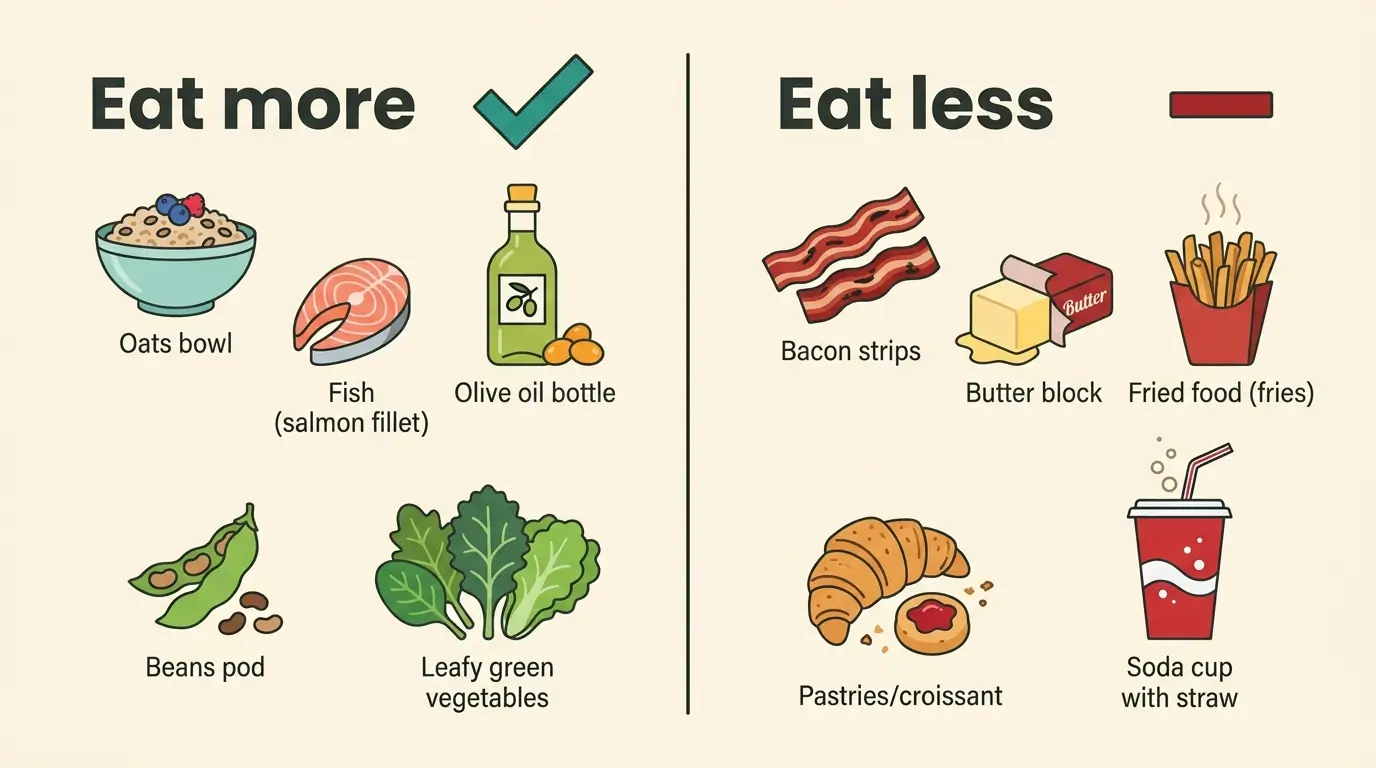
What you cut matters as much as what you add. Saturated fat raises your LDL cholesterol, and dropping it below 7 percent of your daily calories lowers LDL by 8 to 10 percent [5].
The main sources are fatty red meat, butter, full-fat dairy, and tropical oils like coconut and palm. Trans fats are worse and now largely banned in US processed foods, though they can still hide in some imported or older products labeled "partially hydrogenated oil."
Limit these:
- Fatty and processed meats, bacon, sausage, deli meats
- Butter, lard, ghee, full-fat cheese and milk
- Fried and fast food
- Baked goods made with shortening
- Coconut and palm oil
- Refined carbs like white bread and pastries, which crowd out fiber
Best cooking oils and drinks
Your oil choice quietly shapes your LDL every day. Cook with olive oil, canola oil, or avocado oil, all high in unsaturated fat. Keep butter, coconut oil, and lard for rare occasions.
Drinks matter too. Green tea, soy milk, and oat milk carry compounds linked to lower LDL cholesterol, while sugary sodas and cream-based coffee drinks push it the wrong way. Swapping your afternoon sweetened latte for green tea is a small change with a real payoff.
A sample day of cholesterol-lowering eating
This day pulls from the list and hits several soluble fiber and healthy fat targets at once.
- Breakfast: Oatmeal made with oat bran, topped with berries and a tablespoon of ground flaxseed. Green tea.
- Lunch: Lentil and vegetable soup, a slice of whole-grain bread, an apple with the skin on.
- Snack: A small handful of almonds or walnuts.
- Dinner: Baked salmon, roasted eggplant, quinoa, and a side salad dressed with olive oil.
- Treat: One or two squares of 70 percent dark chocolate.
How fast will you see results?
Faster than most people expect. Soluble fiber and nuts can start shifting your numbers within a few weeks, and most people see measurable LDL change in 4 to 12 weeks of consistent eating [5].
Adding exercise and weight loss to the diet brings the fuller effect over 3 to 6 months. The key word is consistent. A week of oatmeal followed by a month off will not show up on your bloodwork.
Ask your doctor for a follow-up lipid panel about three months after you start, so you can see what worked.
When food isn't enough
Diet has limits, and honesty serves you better than hype here. If you have familial hypercholesterolemia, a genetic condition that keeps LDL very high, food alone will not get you to target, and medication is usually necessary [5].
The same is true if your baseline LDL is high enough that even a 15 percent cut leaves you above safe levels. None of that erases the value of these foods.
Diet lowers your risk, improves how well medication works, and benefits the rest of your body regardless. This article is educational and not a substitute for personalized medical advice, so talk with your doctor about where you fall.
Frequently asked questions
Your next step
Pick two or three foods from this list and start this week. Oatmeal with berries at breakfast, a handful of almonds instead of chips, and salmon twice a week is a realistic opening move that hits several targets.
Then book a follow-up lipid panel with your doctor in about three months. The best foods for lowering cholesterol only show up on your bloodwork when you eat them consistently, so start small and keep going.
Citations
- [1] JAMA - "Effect of a Dietary Portfolio of Cholesterol-Lowering Foods Given at 2 Levels of Intensity of Dietary Advice on Serum Lipids in Hyperlipidemia" - 2011
- [2] American Journal of Clinical Nutrition - "Direct comparison of a dietary portfolio of cholesterol-lowering foods with a statin in hypercholesterolemic participants" - 2005
- [3] American Journal of Clinical Nutrition - "Cholesterol-lowering effects of oat β-glucan: a meta-analysis of randomized controlled trials" - 2014
- [4] Lipids in Health and Disease - "Plant sterols/stanols as cholesterol lowering agents: A meta-analysis of randomized controlled trials" - 2008
- [5] Harvard Health / Mayo Clinic - "11 foods that can help lower your cholesterol" and "Cholesterol: Top foods to improve your numbers"
- [6] Frontiers in Nutrition - "The Cholesterol-Lowering Effect of Oats and Oat Beta Glucan" - 2019
- [7] American Journal of Clinical Nutrition / Archives of Internal Medicine - "Non-Soy Legume Consumption Lowers Cholesterol Levels" (Bazzano) - 2011
- [8] American Heart Association - "Cooking to Lower Cholesterol"
- [9] American Journal of Clinical Nutrition - "Nut consumption and blood lipid levels: a pooled analysis of 25 intervention trials" - 2010
- [10] Journal of the American Heart Association - "Effect of a Moderate-Fat Diet With and Without Avocados on Lipoprotein Particle Number, Size and Subclasses" - 2015
- [11] American Heart Association - "Here's the latest on dietary cholesterol and how it fits in with a healthy diet" - 2023
- [12] Journal of Nutrition - "Soy consumption and the risk of coronary heart disease and LDL cholesterol" - 2019
- [13] European Journal of Nutrition / Nutrition & Metabolism - "Effect of flaxseed supplementation on lipid profile: a systematic review and dose-response meta-analysis" - 2021
- [14] European Journal of Clinical Nutrition - "Effects of cocoa products/dark chocolate on serum lipids: a meta-analysis" (Tokede) - 2011
- [15] JAMA - "Effects of a Dietary Portfolio of Cholesterol-Lowering Foods vs Lovastatin on Serum Lipids and C-Reactive Protein" - 2003
