
Berberine and Kidney Stones: What Does the Research Actually Show? New
See what human trials and rat studies prove so you protect your kidneys and avoid supplement mistakes.
Enjoying this article?Add FoodNourish as a preferred source on Google and see our research-backed guides more often in your search results.
A reader with two past calcium oxalate stones recently sent me a photo of a 500 mg berberine bottle sitting beside his prescription potassium citrate.
His doctor suggested berberine for creeping blood sugar, his urologist shrugged, and online forums gave him ten contradictory warnings. If you have ever woken up at 3 a.m. with flank pain, you already question every capsule before you swallow it.
Searching for clear answers on berberine and kidney stones pulls up two extremes, herbal blogs claiming barberry flushes stones away and supplement threads worrying that yellow plant alkaloids clog renal tubules.
Separating marketing noise from real urology requires looking closely at how laboratory rodent models differ from human safety trials, and how calcium oxalate stones behave compared with phosphate stones.
What berberine is and how your kidneys process it
Berberine is a bitter yellow plant compound (chemically classified as an isoquinoline alkaloid) extracted from the roots, rhizomes, and stem bark of European barberry (Berberis vulgaris), goldenseal, Oregon grape, tree turmeric, and Chinese goldthread (Coptis chinensis) [1, 4].
Traditional Chinese and South Asian practitioners used these plants for centuries to treat bacterial diarrhea and urinary tract complaints [1, 4].
Today, adults mostly take purified berberine hydrochloride (berberine HCl) at oral doses of 500 mg two or three times daily to manage blood sugar, cholesterol, and body weight [3, 5].
When you swallow a standard berberine capsule, less than 1% enters your bloodstream intact (bioavailability = the fraction of a swallowed dose that actually reaches your circulation) [6].
Rodent absorption studies measure oral uptake at just 0.36% to 0.68% because microscopic transporter proteins in your intestinal wall, called P-glycoprotein efflux pumps, push berberine straight back into your gut [6].
Gut microbes convert part of that unabsorbed pool into dihydroberberine, which crosses your intestinal wall before turning back into berberine [7].
Your liver then breaks circulating berberine down into metabolites like berberrubine, thalifendine, and demethyleneberberine, and your kidneys filter those byproducts out in your urine [3].
Laboratory and animal studies vs human clinical trials
Nearly every online claim that berberine fights stones traces back to one 2011 paper by Samra Bashir and Anwar Gilani in the European Journal of Pharmacology [1].
In test-tube rat kidney tissue, berberine at concentrations of 50 to 150 mcg/mL blocked lipid peroxidation (oxidative fat damage to cell membranes) by 53.5% to 97.5%, beating the synthetic reference antioxidant butylated hydroxytoluene [1].
Protecting kidney tubule cells from oxidative injury matters in lab models because crystals stick easily to scarred cell surfaces [1].
In live healthy Wistar rats, oral berberine at 5, 10, and 20 mg/kg raised six-hour urine output from 1.07 mL per 100 g of body weight in saline controls to 1.47 mL, 1.79 mL, and 1.91 mL [1].
At 10 mg/kg, rat urinary calcium excretion dropped almost in half from 9.32 micromoles to 4.7 micromoles, similar to the prescription stone diuretic hydrochlorothiazide [1].
Next, the researchers added 0.75% ethylene glycol and 1% ammonium chloride to the rats’ drinking water to force rapid calcium oxalate stone formation [1].
Giving those rats daily 10 mg/kg berberine injections for 21 days cut microscopic kidney crystal deposits from 53.6 per field down to 6.17 per field and kept blood waste marker serum creatinine lower (0.95 mg/dL vs 1.43 mg/dL in untreated stone rats) [1].
A 2010 rat study by the same group found similar tubule protection with 50 mg/kg of crude Berberis vulgaris root bark extract [8].
That 88% drop in rat crystal counts jumped out at me the first time I read the paper, until I checked how the rats got the dose. Those stone-model rats received intraperitoneal injections (shots given directly into the abdominal cavity), which bypass the under 1% oral gut barrier you face when swallowing a capsule [1, 6].
Standard Food and Drug Administration (FDA) body-surface-area math divides a 10 mg/kg rat dose by 6.2, giving a 1.61 mg/kg human equivalent (roughly 121 mg for a 75 kg adult), yet oral pills never deliver injected tissue concentrations.
Human clinical evidence tells a completely different story because zero randomized controlled trials (RCTs) in people have tested berberine on kidney stone recurrence, stone passage, or 24-hour urinary stone panels [10].
Instead, human studies give us solid kidney safety data from blood sugar and gut trials. Across 37 diabetes trials covering 3,048 adults, berberine did not increase serious side effects or harm kidney function [10].
In a double-blind multicenter RCT published in The Lancet Gastroenterology & Hepatology, 1,108 adults took 300 mg of berberine twice daily or placebo for up to two years; researchers recorded zero serious kidney adverse events and zero kidney stone safety signals, with constipation affecting just 1% of the berberine group [2].
| Study model and source | Dose and route | Duration and sample | Measured renal or stone outcome |
|---|---|---|---|
| Wistar rat stone model (Bashir & Gilani, 2011) [1] | 10 mg/kg abdominal injection; 5 to 20 mg/kg oral for urine output | 14 to 21 days in male rats | Reduced ethylene-glycol calcium oxalate (CaOx) crystals (6.17 vs 53.6 per field); raised urine output; lowered urinary calcium [1] |
| Mouse high-uric-acid model (Li et al., 2021) [19] | Oral feeding tube in potassium oxonate mice | Short-term preclinical mouse cohort | Lowered blood uric acid, blood urea nitrogen (BUN), and serum creatinine; blocked uric acid reabsorption [19] |
| Human colon polyp RCT (Chen et al., 2020) [2] | 300 mg oral twice daily (600 mg/day) | Up to 2 years in 1,108 adults (891 analyzed) | Zero serious kidney side effects; no kidney stone signal reported; 1% constipation rate [2] |
| Human kidney transplant RCT (Wu et al., 2005) [9] | 200 mg oral three times daily (600 mg/day) with cyclosporine | 3 months in 104 transplant recipients | No direct liver or kidney lab harm, yet raised pre-dose cyclosporine blood levels by 29.3% via CYP3A4 enzyme blockade [9] |
| Diabetic kidney meta-analysis (Hu et al., 2022) [11] | Varied preclinical doses across 25 animal studies | Systematic review through June 2022 | Improved animal BUN, serum creatinine, and urine protein leakage; authors noted large human trials are still lacking [11] |
Because rodent urine shifts do not guarantee human outcomes, understanding your exact stone mineral determines how you interpret urine chemistry changes.
Calcium oxalate stones vs phosphate stones
Kidney stones split into distinct mineral families, and urinary pH pushes calcium oxalate and phosphate crystals in opposite directions [12]. Treating all stones as identical is one of the fastest ways to misread supplement research.
Calcium oxalate stones
Calcium oxalate stones make up roughly 80% of all kidney stones [13].
Calcium oxalate supersaturation (when urine holds more dissolved salt than fluid can keep in solution, causing crystals to form) stays mostly independent of urinary pH across everyday ranges, although lab crystal-adhesion tests show calcium oxalate monohydrate sticks hardest to kidney cells in very acidic urine around pH 4.0 and least at pH 8.0 [13].
In the 2011 rat study, berberine tackled calcium oxalate buildup by raising urine volume, cutting urinary calcium, blocking tubular fat oxidation, and nudging rat urine pH upward from 5.67 to 6.59 without changing urinary citrate or magnesium [1].
Still, no human study has verified whether oral berberine lowers urinary calcium or oxalate in people who form calcium oxalate stones [10].
Calcium phosphate and struvite stones
Phosphate stones form at the alkaline end of the urinary pH scale [12].
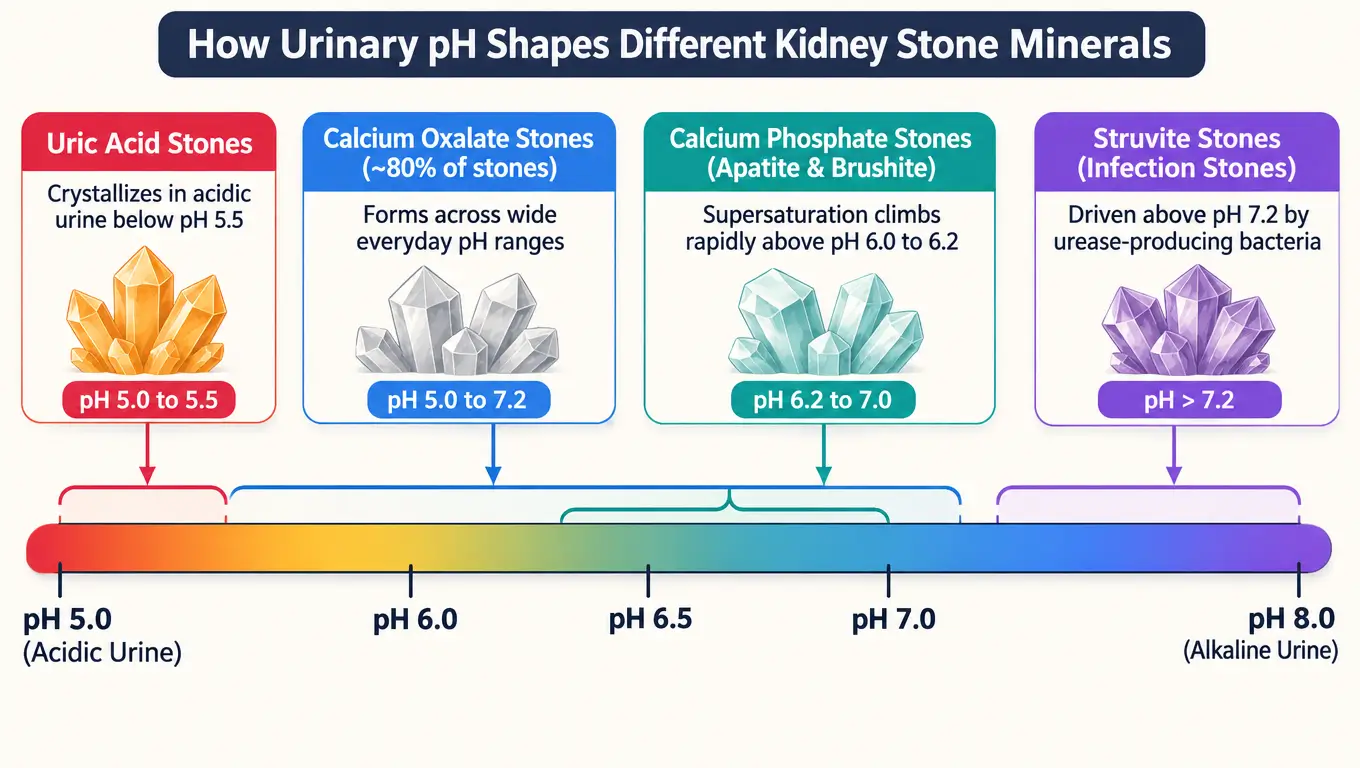
They fall into two separate clinical buckets, metabolic calcium phosphate stones (hydroxyapatite and brushite) and infection-driven struvite (magnesium ammonium phosphate) stones [14, 15].
Calcium phosphate supersaturation climbs steeply once urinary pH rises above 6.0 to 6.2 because phosphate ions shift into monohydrogen phosphate [13, 14].
Clinical tracking shows that calcium oxalate stone formers who convert into calcium phosphate stone formers experience an average urinary pH climb from 6.2 to 6.7 [14].
Struvite stones require alkaline urine above pH 7.2 created when urease-producing bacteria like Proteus mirabilis split urea into ammonia during urinary tract infections [15].
Why does that pH threshold matter for berberine? Zero PubMed studies have tested isolated berberine on calcium phosphate or struvite stones. Even in healthy rats, berberine’s urine-alkalinizing curve was erratic; 5 mg/kg and 10 mg/kg raised urine pH from 5.9 to 6.35 and 6.4, yet doubling the dose to 20 mg/kg eliminated the alkalinizing effect entirely (pH 5.7) [1].
In microbiology dish tests, berberine shows modest antibacterial action against Proteus mirabilis, yet isolated berberine exhibits weak direct urease inhibition compared with related plant alkaloids like epiberberine [16, 25].
Because managing urinary phosphate requires addressing gut mineral absorption and urinary bacteria rather than relying on one alkaloid, commercial supplements aimed at phosphate stones combine multiple targeted ingredients.
For instance, Phosphalat by Pharmacom combines calcium carbonate (which binds phosphates inside the digestive tract to curb absorption), vitamin B3 (nicotinamide, studied in animals for suppressing intestinal NaPi-2b sodium-dependent phosphate transport), berberine extract, and a patented cranberry extract [17, 18].
(Note: Always separate single-ingredient pharmacology from finished-product claims; rodent or test-tube research on berberine or vitamin B3 does not prove that any multi-ingredient commercial supplement prevents, treats, or dissolves phosphate stones in clinical practice.)
Beyond calcium and phosphate minerals, metabolic stone patients also need to watch uric acid.
Uric acid handling and the gut-kidney axis
Belly fat and insulin resistance impair ammonia production in your kidney tubules, leaving your urine chronically acidic (often at or below pH 5.3 to 5.5) [12, 13].
At a urine pH of 5.3 and daily urate output of 800 mg, dissolved urate turns into solid uric acid crystals even if you drink enough water to produce two liters of urine a day [13].
Since many adults with insulin resistance take berberine for glucose control, researchers tested berberine in mice with high uric acid in 2021 [19].
Oral berberine lowered blood uric acid, blood urea nitrogen, and serum creatinine while calming NLRP3 kidney inflammation (an immune protein switch that triggers swelling around crystals) [19].
It worked by blocking URAT1, the kidney transporter protein that pulls uric acid from urine back into blood, reaching half-maximal inhibition (IC50) at a low test-tube concentration of 13.6 micromoles per liter [19].
Watch the catch here; URAT1 blockers lower blood uric acid by pushing extra uric acid out into your urine [19].
If you dump more uric acid into acidic, low-volume urine, uric acid crystals can still form inside your kidneys [13].
Separate chronic kidney disease rat studies also show oral berberine shifts gut bacteria to cut blood levels of the gut-derived kidney toxin p-cresol sulfate, though human stone outcomes remain untested [20].
Even when your urine chemistry starts out balanced, berberine’s everyday digestive side effects and drug interactions pose real risks you have to manage.
Indirect stone triggers and prescription drug interactions
“If human trials show no direct kidney toxicity, could berberine still trigger a stone?” Yes, indirectly, if you ignore persistent diarrhea [3, 14].
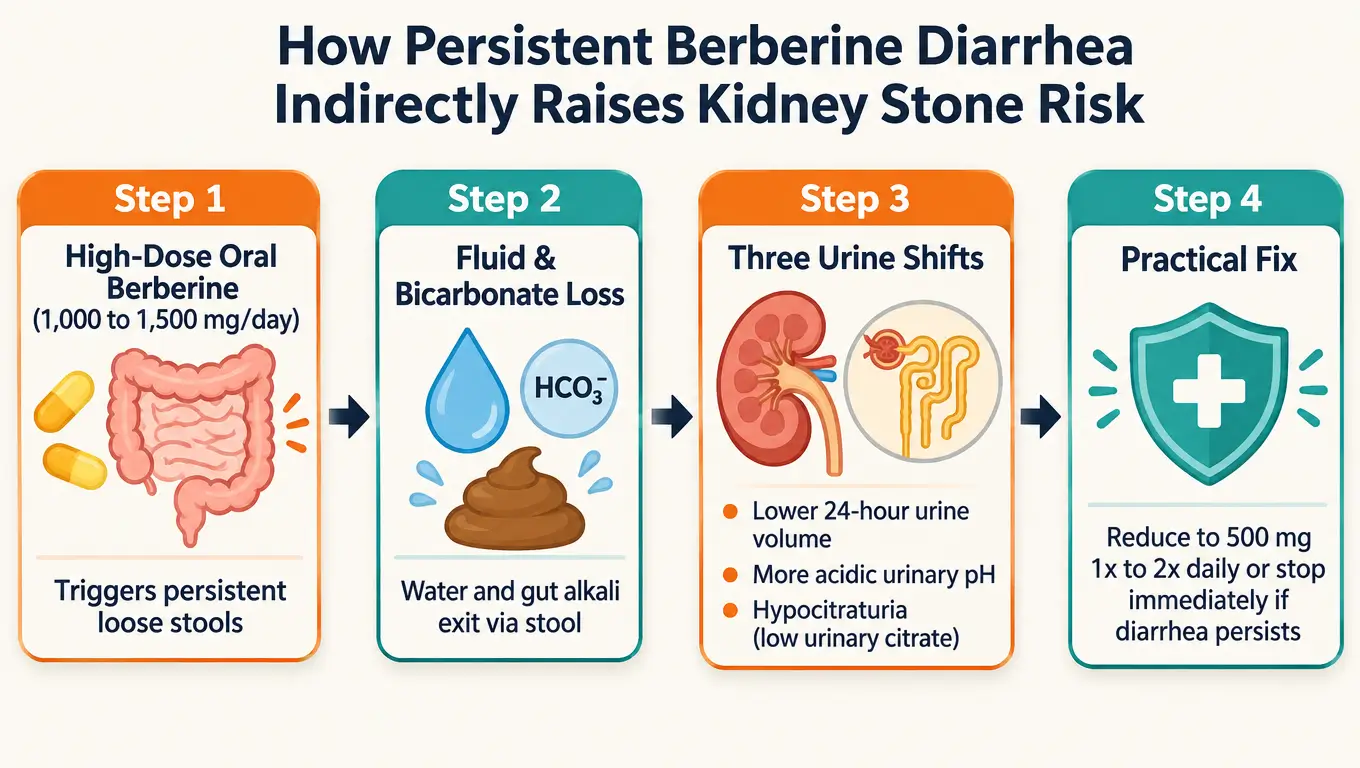
Gastrointestinal upset, including diarrhea, cramping, nausea, and loose stools, is the number one side effect of berberine at standard 1,000 mg to 1,500 mg daily schedules [3, 21].
Chronic loose stools create a classic urology trap [14].
Bowel fluid loss shrinks your 24-hour urine volume, concentrates stone-forming salts, and drains bicarbonate alkali out of your gut [3, 14].
That mild acid shift forces your kidney tubules to hoard citrate, causing hypocitraturia (hypocitraturia = abnormally low urinary citrate, one of your body’s main crystal-blocking buffers) [14].
DO NOT push through weeks of berberine-induced diarrhea hoping your stomach will adapt. Cut your dose back to 500 mg once or twice daily before meals or stop taking it altogether [21].
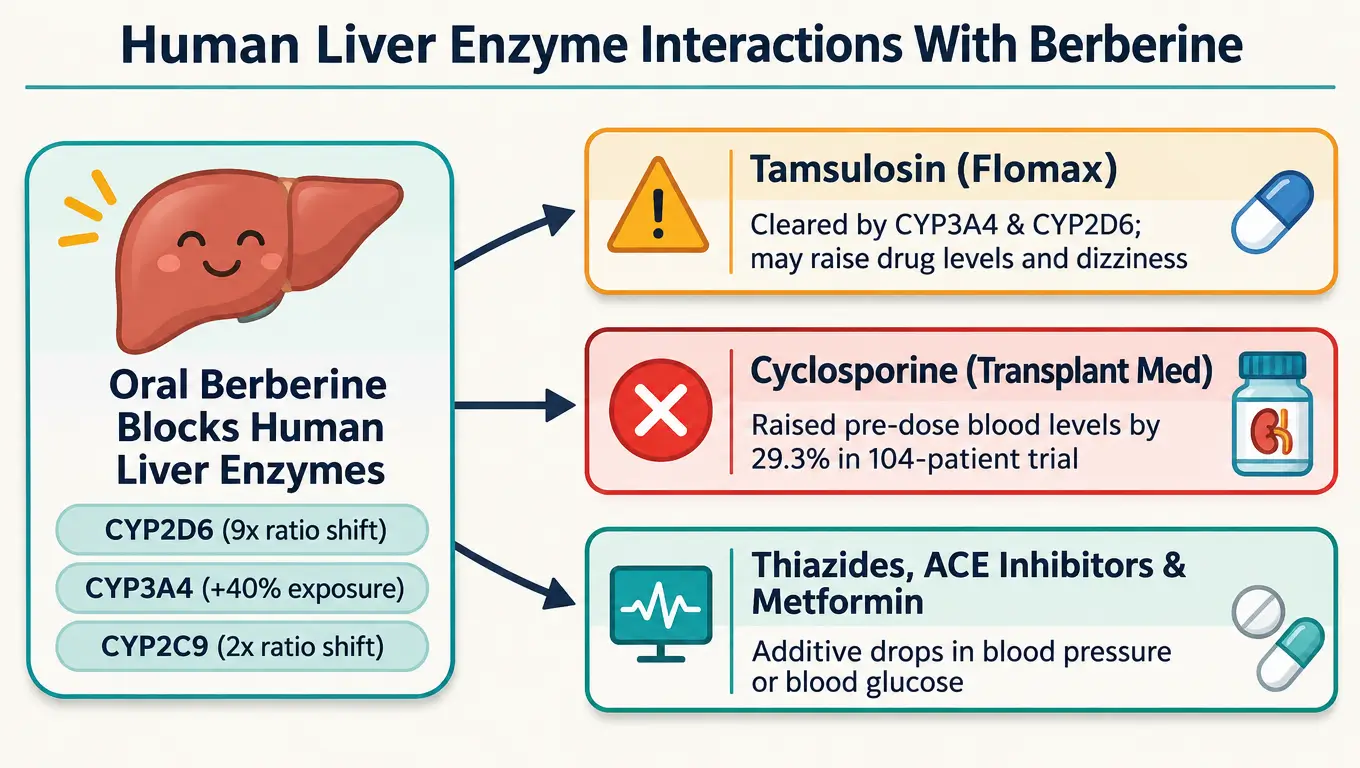
Medication interactions are an even firmer clinical risk because berberine slows down cytochrome P450 (CYP) enzymes, the liver proteins responsible for clearing prescription drugs from your blood [22].
In a randomized crossover study of 17 healthy men taking 300 mg of berberine three times daily for 14 days, Guo and colleagues documented a ninefold jump in the urinary dextromethorphan-to-dextrorphan ratio from strong CYP2D6 enzyme blockade, a twofold drop in CYP2C9 losartan clearance, and a 40% increase in total midazolam exposure from CYP3A4 inhibition [22].
- Tamsulosin (Flomax) prescribed to help pass stones relies heavily on CYP3A4 and CYP2D6 liver clearance, the exact two enzymes berberine slows down [22, 23]. Combining berberine with tamsulosin can spike drug levels and trigger dizziness or sudden blood pressure drops when you stand up [23, 24].
- Cyclosporine in kidney transplant patients rose 29.3% in trough blood level (the lowest drug concentration measured right before the next scheduled dose) and 34.5% in total blood exposure when 52 transplant recipients took 200 mg of berberine three times daily for three months [9]. Never mix berberine with transplant immunosuppressants without specialist monitoring [10].
- Hydrochlorothiazide, angiotensin-converting enzyme (ACE) blood pressure inhibitors like ramipril, and metformin can compound berberine’s effects to cause low blood pressure or low blood sugar, which reduces healthy blood flow to your kidneys [24].
Anyone with advanced chronic kidney disease, patients on dialysis, children, and women who are pregnant or breastfeeding should skip berberine completely [21].
Checking a few basic labs with your doctor removes the guesswork if you have healthy kidneys and still want to try it.
Practical lab monitoring steps before starting berberine
If your kidneys are healthy or in early chronic kidney disease (stages 1 or 2) and your physician clears berberine for metabolic support, track objective numbers rather than symptoms alone [21].
- Pull your past stone pathology report so you know whether your stone was calcium oxalate, calcium phosphate (apatite or brushite), uric acid, or struvite [14].
- Order baseline blood tests before day one and recheck at 8 to 12 weeks, covering serum creatinine, estimated glomerular filtration rate (eGFR, your overall kidney filtering score), serum potassium, and liver enzymes alanine aminotransferase (ALT) and aspartate aminotransferase (AST) [5, 21].
- Keep daily urine output at 2.0 to 2.5 liters unless your nephrologist restricts fluids, and stop berberine immediately if diarrhea starts [3, 13].
- Run a follow-up 24-hour urine test if you form recurrent stones so your urologist can verify your exact urinary pH, citrate, calcium, oxalate, and phosphate supersaturation while on the supplement [14].
Bottom line on berberine and kidney stones; pure berberine HCl has not caused stones in human trials, nor has any human study proven it prevents or dissolves them [2, 10]. Protect your hydration, check your prescription list for CYP3A4 and CYP2D6 conflicts, and let a 24-hour urine test guide your long term routine [14, 22].
Frequently asked questions
Does berberine cause kidney stones in humans?
No. Controlled human trials lasting up to two years have not linked standard oral berberine doses to kidney stone formation or kidney damage. However, if berberine gives you persistent diarrhea and you fail to replace lost water, dehydration lowers urine volume and urinary citrate, which indirectly raises stone risk.
Can berberine dissolve or prevent kidney stones?
No human clinical trial proves that berberine prevents, treats, or dissolves kidney stones. Although a 2011 rat experiment showed injected berberine lowered calcium oxalate crystal deposits in rodent kidneys, zero human studies confirm those results when adults swallow standard oral berberine capsules.
Is berberine high in oxalates?
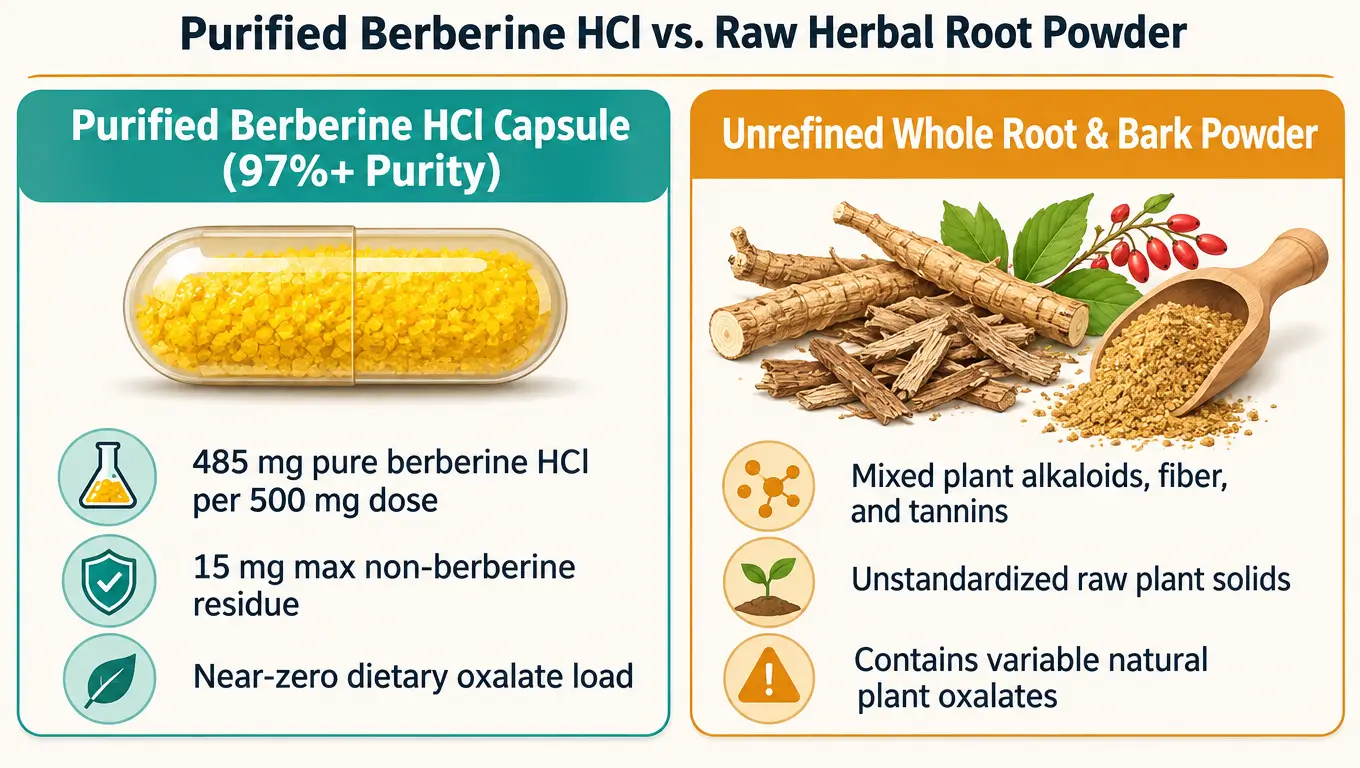
No, purified berberine hydrochloride capsules do not add meaningful dietary oxalates. Standard supplements contain at least 97 percent pure berberine HCl, leaving 15 milligrams or less of non-berberine material per 500 milligram capsule. Stick to purified berberine HCl rather than raw root bark powders if you restrict oxalates.
How do calcium oxalate and phosphate stones differ with berberine?
Calcium oxalate stones form across wide urinary pH levels, whereas calcium phosphate and infection-linked struvite stones crystallize rapidly in alkaline urine above pH 6.2. Moderate berberine doses mildly raised urine pH in rats, yet researchers have never tested oral berberine on human urinary pH or phosphate stones.
Can you take berberine with Flomax or kidney stone prescriptions?
Check with your doctor or pharmacist before combining them. Human clinical studies prove berberine slows down CYP3A4 and CYP2D6 liver enzymes that clear tamsulosin, sold as Flomax. Taking both together can raise medication blood levels and cause dizziness or low blood pressure, particularly alongside blood pressure diuretics.
Who should avoid berberine for kidney safety?
Adults with advanced chronic kidney disease, dialysis patients, kidney transplant recipients taking cyclosporine or tacrolimus, children, and pregnant or breastfeeding women should avoid berberine. Clinical testing in renal transplant patients showed berberine raised cyclosporine blood concentrations by 29.3 percent, creating serious medication toxicity risks.
