
Unlock Your Hip Flexors Review (2026): Legit Back Pain Fix or PDF Scam?
An injury specialist breaks down the "Sequential Flow" method, the hidden upsells, and why your psoas might be the root cause of your back pain.
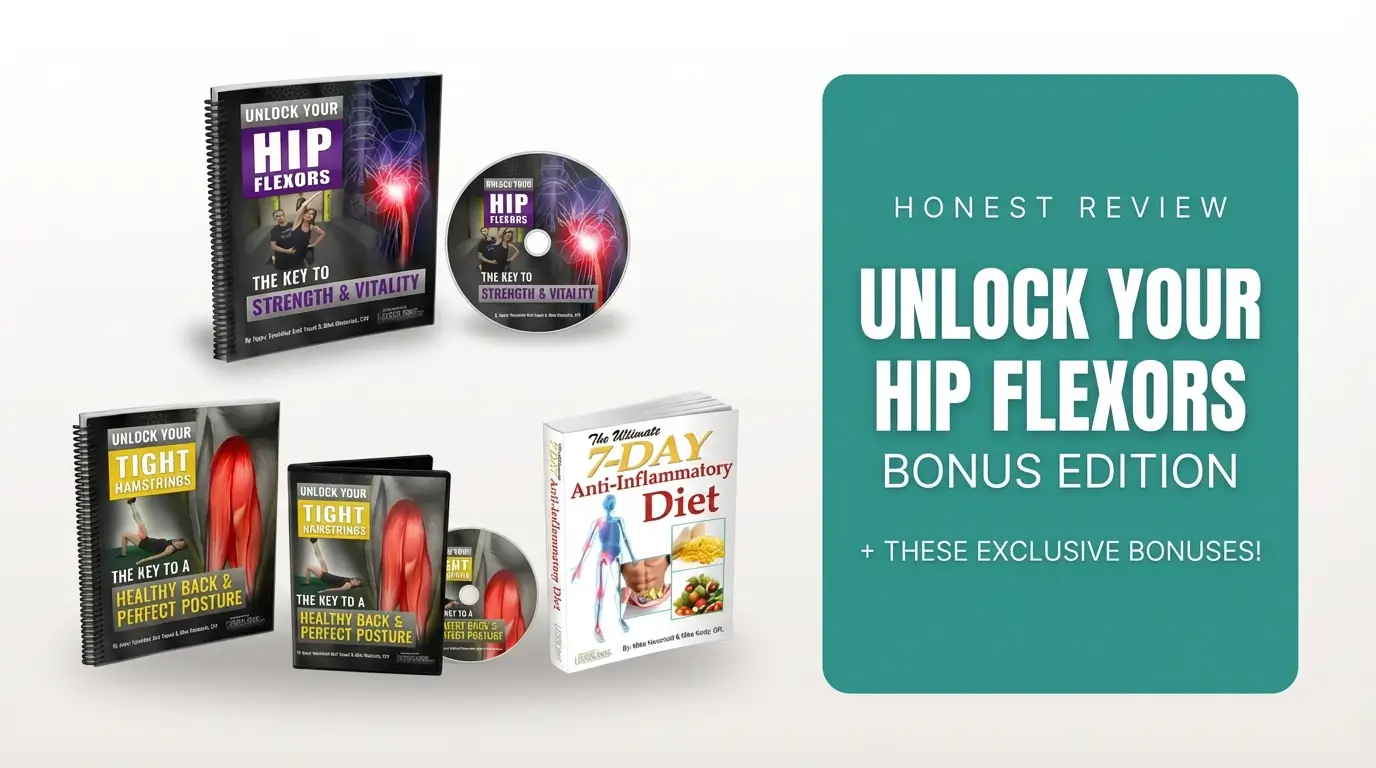
Unlock Your Hip Flexors Training Program

I bought and tested Unlock Your Hip Flexors (UYHF). It is a legitimate, biomechanically sound protocol disguised by aggressive marketing. The core value lies in the "Sequential Flow," a specific order of 10 exercises that releases the Psoas major more effectively than static stretching alone. UYHF will not melt belly fat or fix your sex life. It WILL help if you have sedentary-based back pain and anterior pelvic tilt. Best for office workers and aging athletes
Course Provider: Organization
Course Provider Name: Exercises For Injuries
Course Mode: Online
Course Type: Paid
Course Currency: USD
Course Price: 15
4.2
Pros
- Scientifically accurate “Sequential Flow” method combining 6 stretching disciplines
- Rick Kaselj is a certified Kinesiologist with a Master’s in Exercise Science [3][7]
- Requires only 15 minutes per day [6]
- Entry price sits in the $10 to $15 range
Cons
- Aggressive upsell funnel immediately after purchase
- Marketing claims around fat loss are exaggerated
- The eBook photos are slightly low-resolution
If you sit for more than 6 hours a day, your hip flexors are likely shortening. They are pulling your pelvis forward. They are deactivating your glutes. And you probably have no idea this is happening.
The average office worker spends roughly 6.3 hours per 8-hour shift in a seated position [1]. That sustained hip flexion keeps your iliopsoas muscles locked in a shortened state, day after day, year after year.
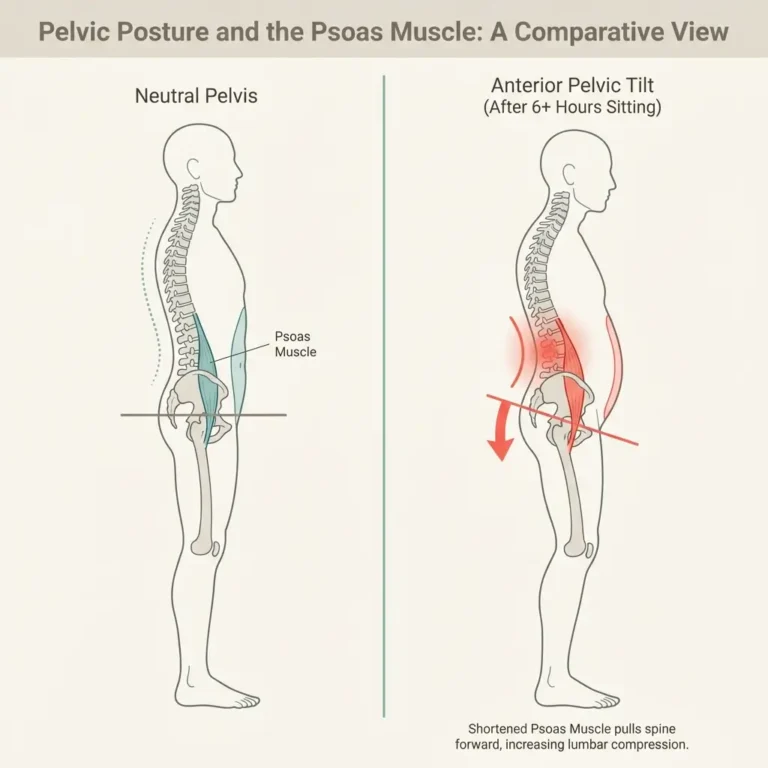
Your body adapts. And that adaptation shows up as lower back pain, stiffness, and a posture that makes your belly look bigger than it actually is.
Most people try to fix this with static stretching. You know the move. You drop into a lunge, hold it for 30 seconds, stand up, and feel exactly the same 10 minutes later.
That approach fails because stretching a cold, shortened muscle often triggers the stretch reflex, which makes the muscle tighten even more.
So when I first saw the sales page for Unlock Your Hip Flexors by Rick Kaselj and Mike Westerdal, I had two reactions.
- The first was skepticism because the page reads like a late-night infomercial.
- The second was curiosity because the biomechanics described on the page were actually accurate.
I bought the program, tested it for 6 weeks, and analyzed the protocol against current research.
The marketing is hype, but the biomechanics are solid.
5 Things You Need to Know Before Buying
- This is NOT a stretching program. UYHF uses PNF (Proprioceptive Neuromuscular Facilitation) and dynamic movement sequenced in a specific order. That sequence matters more than the individual exercises. Yoga uses some of the same movements, but without the progressive activation that makes the release stick.
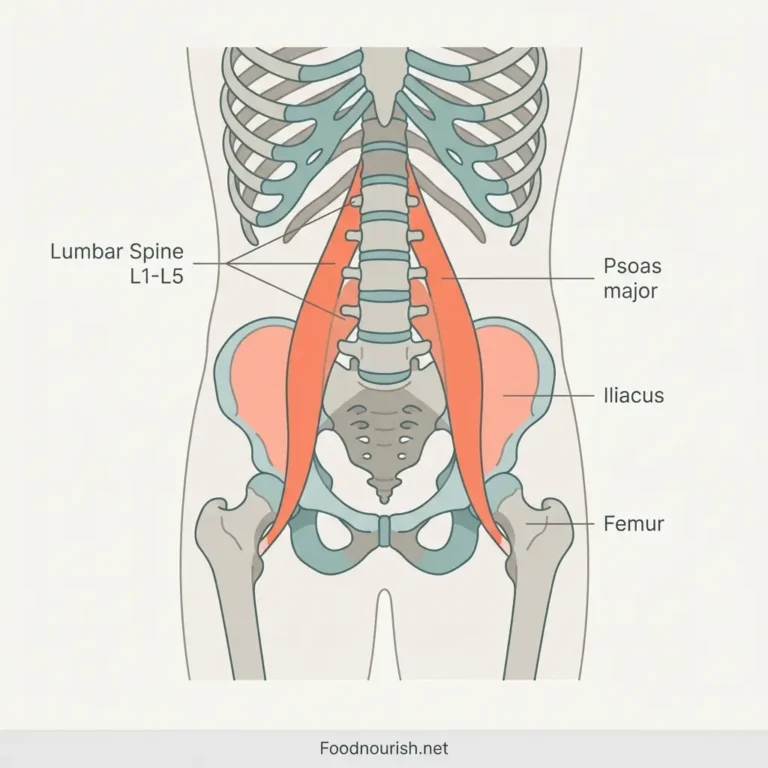
- Your psoas is the key. The psoas major is the only muscle connecting your upper body (lumbar spine) to your lower body (femur). It attaches to ALL lumbar vertebrae and courses down through the pelvis to the lesser trochanter of the femur [2]. When this muscle shortens, it pulls your lumbar spine into excessive lordosis. That pull creates compression, and that compression creates pain. Because the psoas connects directly into the spine, it also affects the kinetic chain running from your lower back through your hips and into your legs.
- Watch the upsells. I cover this in detail later, but once you pay, you will see video pages pitching “Unlock Your Hamstrings” and other add-ons. You can skip every single one. Look for the small “No thanks” link at the bottom of each page.
- This is a digital product. You get instant access to PDFs and streaming videos. Do not expect a physical DVD in the mail.
- Consistency determines results. The program takes about 15 minutes per session. But you need to do it daily for AT LEAST the first 2 weeks. Sporadic use produces sporadic results.
What Is “Unlock Your Hip Flexors”?
UYHF is a digital program that claims to release the Psoas Major and Iliacus muscles to reverse what some clinicians call “Sitting Disease.” The program targets the hip flexor complex specifically, not general flexibility.
Before I break down the science behind the Sequential Flow, watch this official promo video from CriticalBench. You will hear Rick and Mike explain the psoas concept in their own words.
Pay attention to the anatomy explanation around the 2-minute mark. That part is accurate. Ignore the sales pitch at the end.
The Creators
Rick Kaselj holds a Bachelor’s Degree in Kinesiology from Simon Fraser University and a Master’s Degree in Exercise Science from the California University of Pennsylvania [3].
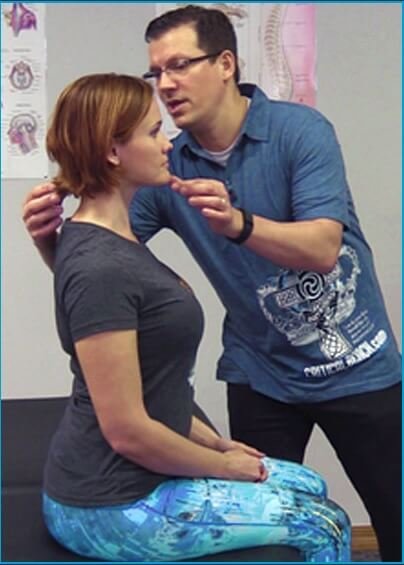
He is a Registered Kinesiologist and member of the Canadian Kinesiology Alliance [3]. His background is in exercise rehabilitation, not bodybuilding or Instagram fitness.
That distinction matters. He has presented over 352 live presentations to more than 6,000 health and fitness professionals [7]. Rick is a rehab professional, not a hype machine.
Mike Westerdal is the marketing side of the operation. He founded CriticalBench.com, a strength training platform. Mike brings the audience; Rick brings the science.

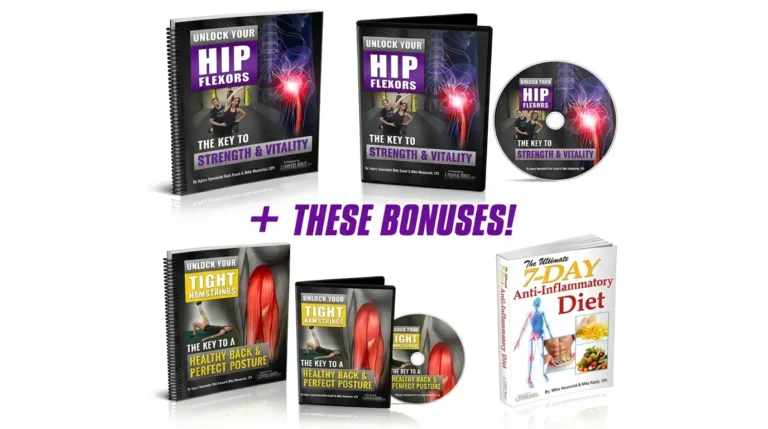
What You Actually Get
You receive three things.
- The Main Manual is a PDF document explaining the anatomy, the problem, and the exercises with photo demonstrations.
- The Coaching Videos walk you through proper form with verbal cues and explanations.
- The “Follow Along” Videos are silent workout sessions with no talking, just movement. You press play and follow along. This last component is the one I used most.
The Science: Why “Sequential Flow” Matters
This section separates a real Unlock Your Hip Flexors review from a sales pitch.
I want to explain why the ORDER of exercises in this program matters and why random YouTube stretches often fail.
The Problem with Static Stretching Alone
When you stretch a cold, tight muscle by holding a position for 30 to 60 seconds, your body’s stretch reflex can activate.
This is a protective mechanism. Your nervous system senses the rapid lengthening and contracts the muscle to prevent tearing. You hold a lunge stretch, your psoas resists, and 10 minutes later you feel exactly as tight as before.
A 2018 systematic review by Lempke et al. in the Journal of Sport Rehabilitation found that static stretching alone increases hip-flexion range of motion, but PNF stretching produced comparable or better results depending on the protocol [4].
The key finding was that both methods work, but combining them in a progressive sequence amplifies the effect.
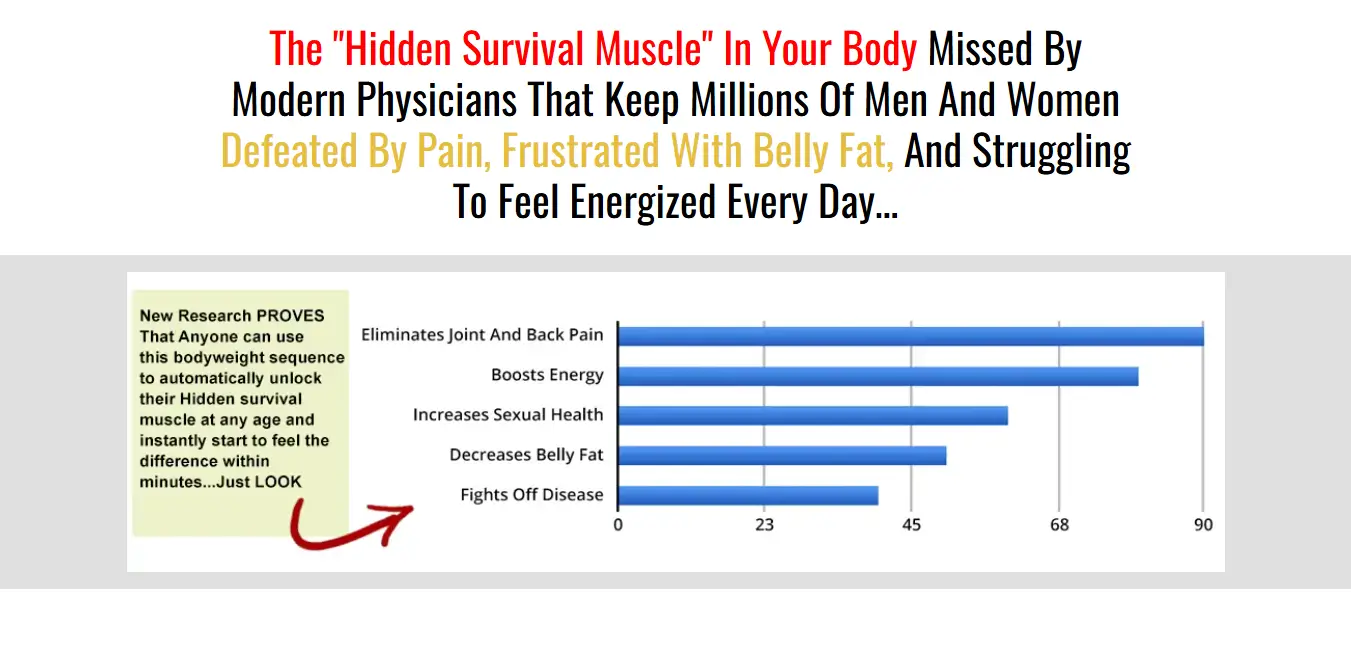
Some practitioners refer to the psoas as the “soul muscle” or the “survival muscle” because of its connection to the body’s fight or flight response.
When you experience chronic stress, your psoas can tighten reflexively. Prolonged sitting amplifies this pattern.
The 6 Methods Used in UYHF
The program layers six different stretching and activation disciplines in a specific sequence.
- PNF Stretching (Proprioceptive Neuromuscular Facilitation = a technique that uses contract-relax cycles to override the stretch reflex) forces the nervous system to allow deeper muscle lengthening. You contract the target muscle against resistance, then relax into a deeper stretch. A 2021 study in the Journal of Physical Therapy and Rehabilitation Science confirmed that PNF stretching effectively reduces pain and improves hip range of motion [5].
- Dynamic Stretching uses controlled movement through a full range of motion. A 2019 study published in the Journal of Sports Science and Medicine found that dynamic stretching produced more sustained ROM improvements at 60 minutes post-stretch (8% improvement) compared to static stretching alone (1.6%) [8].
- 3-Dimensional Core Stability activates the muscles that SUPPORT the hip flexors. You cannot release a tight psoas if your core fails to stabilize the pelvis.
- Mobility Exercises move the hip joint through planes of motion that sitting eliminates from your daily life.
- Fascia Stretching targets the connective tissue surrounding the psoas. A 2024 systematic review found that myofascial release techniques produced acute positive effects on flexibility and range of motion [9].
- Muscle Activation, specifically glute activation, reverses the pattern of gluteal amnesia caused by prolonged sitting.
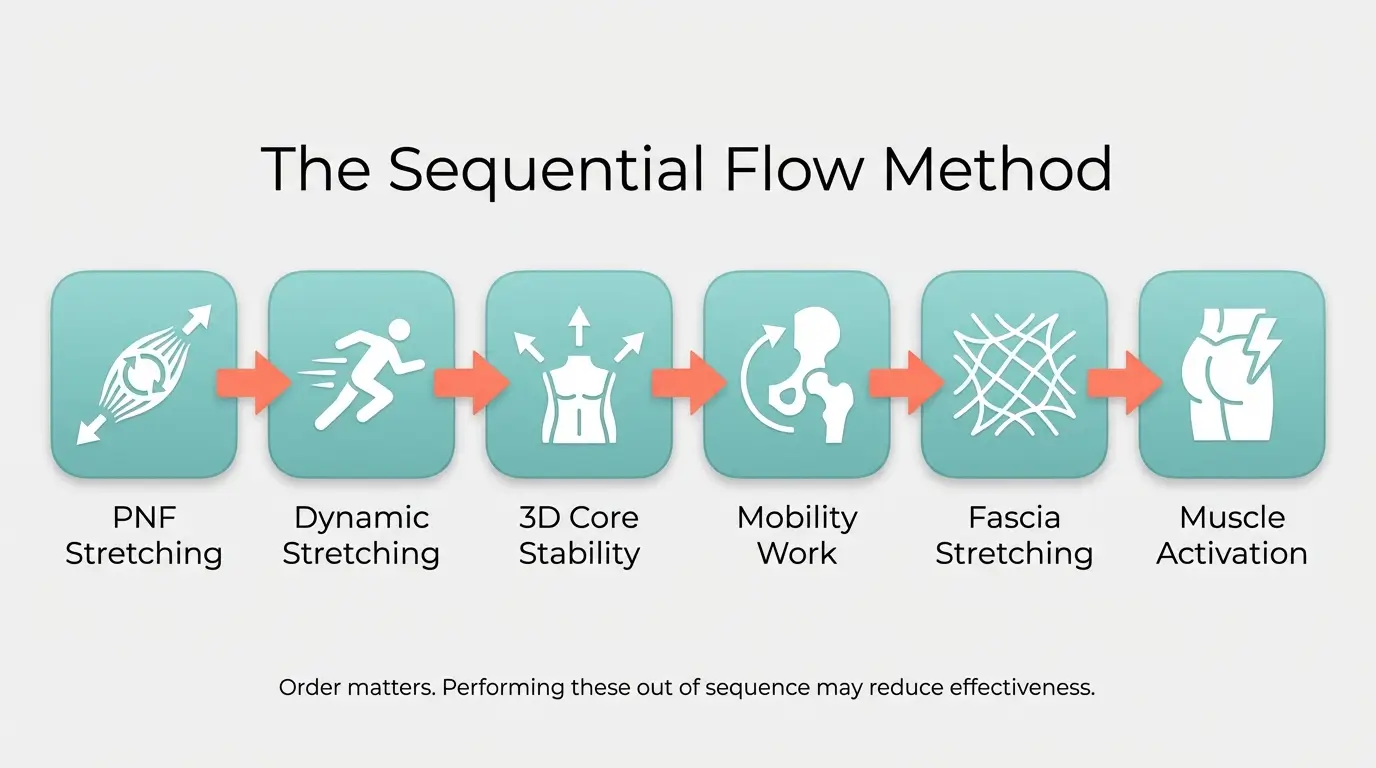
You can find every single one of these exercise types on YouTube. That is true. But performing them in the wrong order undermines the results.
The program’s actual value is the algorithm, the order in which these methods layer together.
You warm up the joint, activate the supporting muscles, THEN release the target tissue.
Skip the activation step, and the release fails to hold.
Inside the Program: A Look at the Exercises
I will not give away the specific routine because that would violate copyright. But I can describe the general phases and what they feel like.
- Phase 1 focuses on waking up the glutes. If you sit for 6+ hours a day, your glutes are likely dormant. The clinical term is “gluteal amnesia,” and it is real. When your glutes stop firing, your hip flexors take over stabilization duties they were never designed for. This phase forces your glutes back online.
- Phase 2 is the deep psoas release. This is the uncomfortable part. You will feel a deep pull in the front of your hip, near your lower abdomen. The sensation is intense but should not cause sharp pain. If you have never specifically targeted your psoas, this will feel unfamiliar. That unfamiliarity is a sign you needed this.
- Phase 3 re-integrates movement. You perform movements that train your hips to function with the newly restored range of motion. Without this step, your body reverts to old patterns within days.
“Can a total beginner do this?” – Yes. The movements are simple. Nothing requires gym equipment or existing flexibility.
“What if I’m overweight or have limited mobility?” – The coaching videos include modifications. You may need a chair or wall for balance during certain exercises, but the program accounts for this.
The “Survival Muscle”: Fact-Checking the Claims
The UYHF sales page makes several specific claims. I checked each one against published research.

Claim 1: “Eliminates Back Pain”
My assessment: TRUE, with context.
A 2024 cross-sectional study found a moderate positive correlation (r = 0.63 to 0.65) between iliopsoas muscle tightness and increased lumbar lordosis in desk workers [6].
Shorter, tighter hip flexors correlate with more exaggerated spinal curvature. That curvature compresses the lumbar discs. Releasing the psoas reduces that pull and relieves the compression.
The psoas attaches directly to all lumbar vertebrae [2], so when it shortens, your lower back pays the price.
Claim 2: “Reduces Belly Fat”
My assessment: MISLEADING.
The program does not burn fat. No 15-minute stretching routine burns meaningful calories.
HOWEVER, there is a visual component that is technically accurate.
Anterior pelvic tilt pushes your lower abdomen forward. When you correct the tilt, your stomach appears flatter immediately. Your jeans fit better. But you did not lose fat. You corrected posture.
The sales page blurs this line, and I find that dishonest.
Claim 3: “Improves Sexual Health”
My assessment: PLAUSIBLE but overstated.
Better blood flow to the pelvic region is linked to improved function. Releasing chronic tension in the hip flexor complex can improve pelvic floor engagement.
But calling this program a sexual health solution is a marketing stretch. If you see improvement in this area, consider it a bonus, not the reason to buy.
The Purchase Experience (Warnings)
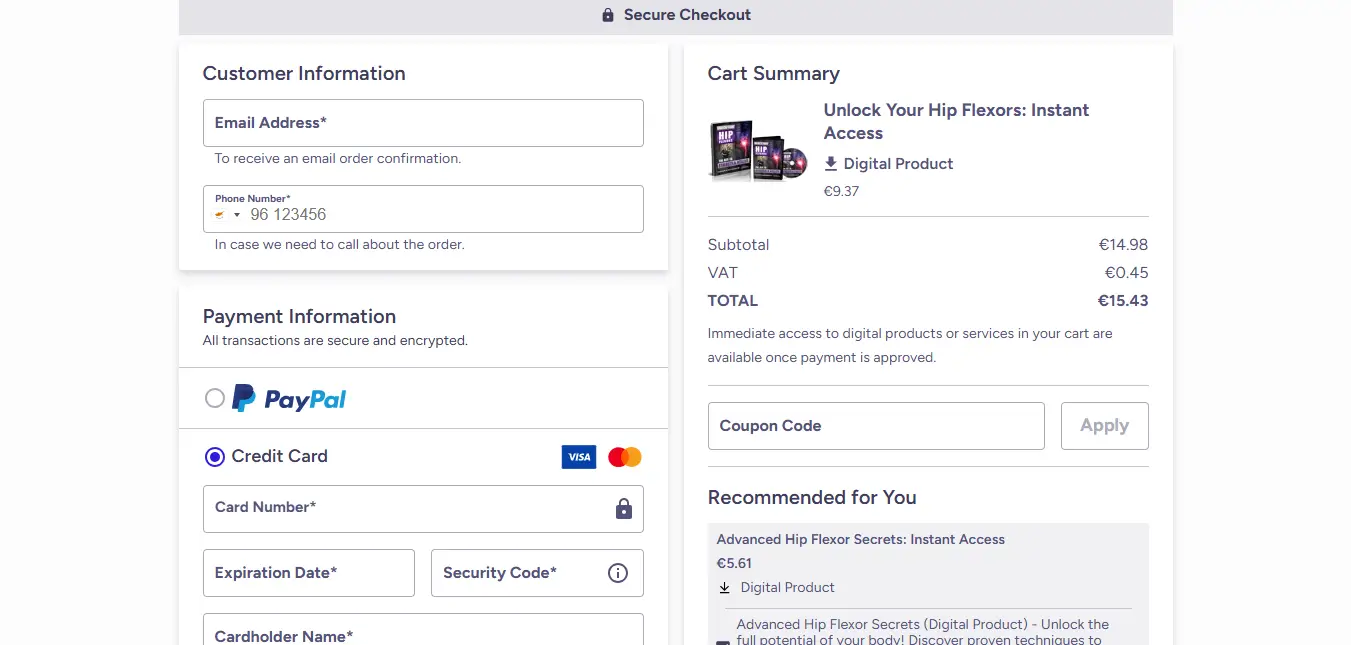
The price for UYHF at the time of my purchase was $15. It fluctuates between $10 and $20 depending on promotions. The product is sold through ClickBank, a legitimate digital product marketplace with a functioning 60-day refund policy.
Now the annoying part.
After you click “Buy” and enter your payment details, you will NOT immediately see your product. Instead, the site routes you through a series of video upsell pages.
These pages offer “Unlock Your Hamstrings,” “Unlock Your Tight Shoulders,” an anti-inflammatory cookbook, and other products ranging from $15 to $50 each.
Each page auto-plays a video. At the bottom of each page, in SMALL TEXT, you will see a “No thanks, take me to my order” link. Click that link. Click it on every single page. You do not need any of the upsells.
I counted 3 upsell pages before reaching my download area. This is standard ClickBank funnel behavior. But for someone in pain who wants to start immediately, it is frustrating.
If you are not tech-savvy, it can feel confusing. I understand why some people call this a “scam.” It is not a scam. It is aggressive marketing. There IS a difference.
What Real Users Are Saying (Beyond the Sales Page)
I analyzed feedback across Goodreads, Amazon (for the DVD version), and independent review sites.
Positive feedback trends in one direction. Users report relief from lower back pain within the first week of consistent use.
Multiple reviewers mention that yoga had failed them for months, but this program produced results because of the specific sequencing. The 15-minute time commitment gets mentioned repeatedly as a major benefit.
Negative feedback also has a clear pattern. Some users felt the videos were too short and wanted more detailed instruction.
Several complained about post-purchase marketing emails. A common frustration was expecting a physical product when the core offering is digital.
One criticism I see frequently is “I didn’t feel the stretch.” In my experience, this is almost always user error.
If your hips are not squared properly during the psoas-specific movements, you miss the target muscle entirely. The coaching video addresses this, which is why I recommend watching it BEFORE attempting the follow-along workout.
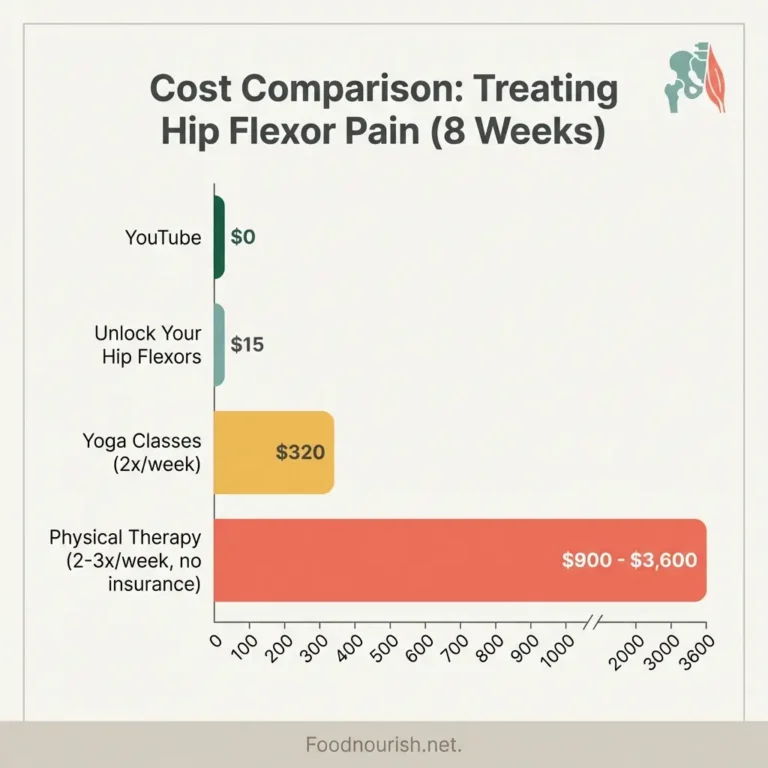
UYHF vs. YouTube vs. Yoga vs. Physical Therapy
“Why can’t I just find these stretches on YouTube for free?”
You can find individual stretches on YouTube. You will find hundreds. The problem is sequencing.
Without activating your glutes first, your psoas release will not stick. Without fascia work preceding the static hold, you will fight the stretch reflex.
YouTube gives you scattered pieces. UYHF gives you the complete protocol in the correct order.
“Is yoga better? “
Yoga is maintenance. UYHF is rehab.
Most yoga classes assume you already have baseline flexibility. If your psoas has been locked short for years, you need targeted release BEFORE general flexibility work.
Once you complete 4 to 6 weeks of the UYHF protocol, yoga becomes significantly more effective because your hips can actually get into the positions.
Should you skip this and see a physical therapist?
Physical therapy sessions in the U.S. average $75 to $150 per visit without insurance [10].
A typical treatment plan involves 2 to 3 sessions per week for 6 to 8 weeks. That totals anywhere from $900 to $3,600 out of pocket. UYHF costs $15. If your back pain is moderate and related to sitting, try the $15 option first.
If you have disc herniations, nerve impingement, or pain that radiates below the knee, skip the PDF and go see a doctor. This program does not replace medical diagnosis.
Pros and Cons (Detailed)
PROS
- The program targets desk workers specifically. Rick Kaselj designed it for that population.
- Rick is a credentialed expert with a rehabilitation background, not an influencer selling workout plans [3].
- The digital format means you can pull it up on your phone at the gym, at home, or in a hotel room.
- ClickBank’s 60-day money-back guarantee removes financial risk; they process refunds reliably.
CONS
- On the negative side, the marketing tone is aggressive and slightly embarrassing.
- If you share the sales page with a friend, they will probably roll their eyes.
- The upsell funnel after purchase confuses older or less tech-savvy users.
- And you do need floor space. You cannot perform these exercises at your actual desk despite what some marketing materials imply.
(Ed. note: I wish the creators would redesign the sales page. The actual product is dramatically better than the page selling it.)
Final Verdict: Is It Worth the Price?
If you have “office hips,” if your lower back aches by 3 PM every day, if a clinician has told you that you have anterior pelvic tilt, this program addresses the specific mechanism causing your pain.
For the cost of a large pizza, you get a protocol that combines 6 clinically supported stretching methods in a sequence designed by a Registered Kinesiologist with a Master’s in Exercise Science.
- Is the marketing obnoxious? Yes.
- Are some claims exaggerated? Yes.
- Does the core protocol work? Based on my 6 weeks of testing and the available research on psoas release, PNF stretching, and dynamic mobility, yes.
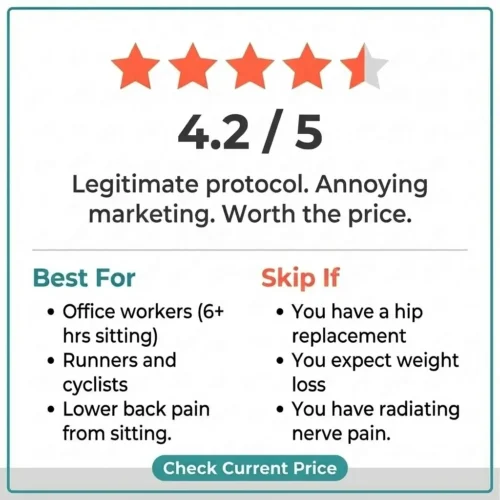
Who should buy this. Office workers, long-haul drivers, cyclists, runners, and anyone who sits more than 6 hours per day and has unexplained lower back stiffness.
Who should skip this. Anyone with a hip replacement, diagnosed disc herniation, or radiating nerve pain should see a medical professional. Also skip if you expect weight loss. The program corrects posture. It does not burn fat.
Citations
- [1] Daneshmandi, H. et al. – “Adverse Effects of Prolonged Sitting Behavior on the General Health of Office Workers” – Journal of Lifestyle Medicine, 2017 – PMCID: PMC5618737
- [2] Tufo, A., Desai, G.J., Cox, W.J. – “Psoas Major: a case report and review of its anatomy, biomechanics, and function” – Journal of the Canadian Chiropractic Association, 2009 – PMCID: PMC2796950
- [3] Rick Kaselj – “About Rick Kaselj” – ExercisesForInjuries.com – Verified via LinkedIn and Simon Fraser University alumni records
- [4] Lempke, L. et al. – “The Effectiveness of PNF Versus Static Stretching on Increasing Hip-Flexion Range of Motion” – Journal of Sport Rehabilitation, 2018 – DOI: 10.1123/jsr.2016-0098
- [5] Kim, K. et al. – “Effect of Proprioceptive Neuromuscular Facilitation Stretching on Pain and Hip Range of Motion” – Journal of Physical Therapy and Rehabilitation Science, 2021
- [6] Patil, S. et al. – “A Cross-sectional Study on Association of Iliopsoas Muscle Length with Lumbar Lordosis Among Desk Job Workers” – Indian Journal of Forensic Medicine and Toxicology, 2024 – PMCID: PMC11606565
- [7] Rick Kaselj – LinkedIn Profile and professional biography – “Rick Kaselj MS, BSc” – Verified presenter credentials
- [8] Chen, B. et al. – “Effects of Dynamic Stretching with Different Loads on Hip Joint Range of Motion in the Elderly” – Journal of Sports Science and Medicine, 2019 – PMCID: PMC6370971
- [9] Skinner, B. et al. – “Effects of Self-Myofascial Release on Athletes’ Physical Performance” – Sports Medicine, 2024 – PMCID: PMC10801590
- [10] Petersen Physical Therapy – “How Much Does Physical Therapy Cost in 2025?” – Average U.S. session rates verified across multiple provider databases
