
Types of Whey Protein Explained: The Science, The Scams, and Top Picks
Concentrate vs. Isolate vs. Hydrolysate: A definitive guide to filtration methods, absorption speeds, and the only brands that pass our quality checks.
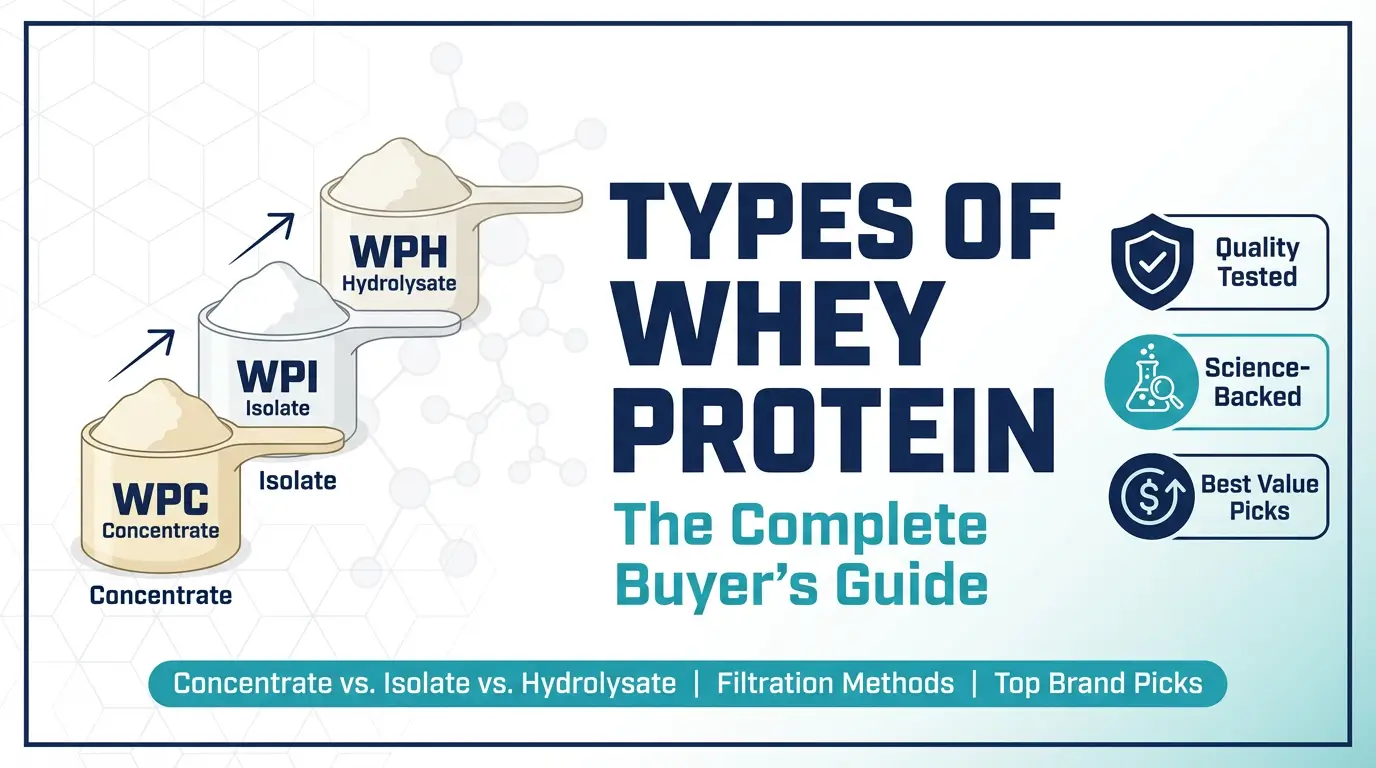
Walk into any supplement store, and you are greeted by a wall of plastic tubs promising “instant muscle.” Most of them are lying to you.
Protein itself is simple. Your body needs amino acids to repair and build muscle tissue. Whey protein delivers those amino acids faster than chicken, eggs, or beef. The science is settled.
The processing, however, is where everything gets complicated. The types of whey protein on the market today range from minimally filtered dairy byproduct to pre-digested peptide formulas designed for elite athletes.
Between those two extremes lies a minefield of misleading labels, nitrogen spiking scams, and marketing jargon designed to separate you from your money.
Your goal after reading this guide is clarity. You will understand exactly what separates Concentrate from Isolate from Hydrolysate. You will know which filtration methods preserve the protein’s bioactive fractions and which ones destroy them. And you will walk away with a short list of brands that actually pass independent quality checks.
Let’s get into it.
From Milk to Muscle
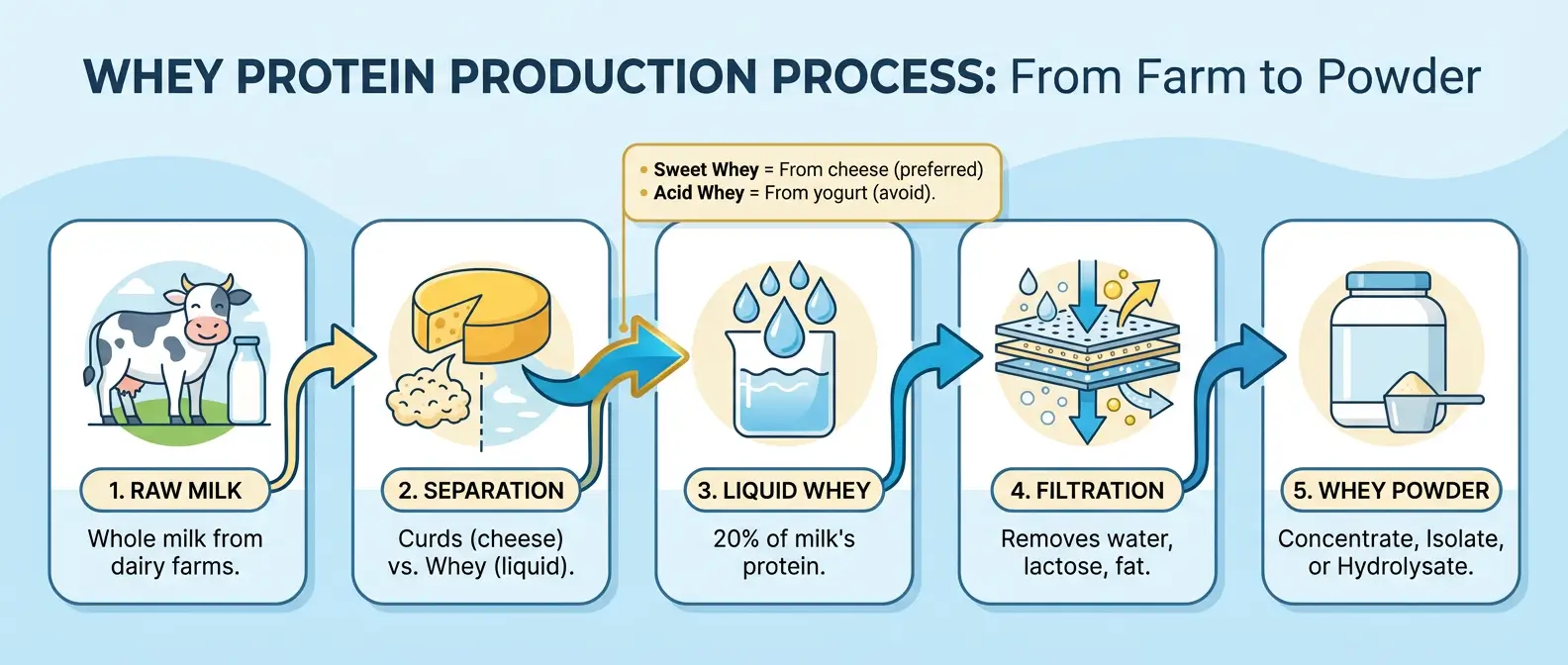
Every whey protein powder starts as liquid. When milk is processed into cheese, two substances separate: curds (the solid protein that becomes cheese) and whey (the liquid left behind).
That liquid whey contains about 20% of milk’s total protein content.
Manufacturers collect this liquid, filter out the water and lactose, and dry it into powder. That powder becomes the base for every whey product on the market.
But not all liquid whey is created equal.
Sweet Whey vs. Acid Whey
Sweet whey comes from cheese production using rennet, an enzyme. This is the standard source for most quality whey protein powders. The pH remains neutral, and the protein structure stays intact.
Acid whey comes from Greek yogurt or cottage cheese production. The acidification process changes the protein’s characteristics and often requires additional bleaching or treatments to neutralize the flavor. If a label doesn’t specify “sweet whey” or the brand can’t tell you where their whey comes from, assume it’s acid whey and move on.
The “Native” Difference
Most whey protein is a byproduct of cheese manufacturing. Native whey takes a different path. It’s extracted directly from skim milk, bypassing the cheese process entirely.
Why does this matter? Native whey has never been exposed to the heat and pH changes of cheese production. The protein arrives at filtration in its most “unstressed” state.
Studies suggest native whey contains higher concentrations of leucine, the amino acid most responsible for triggering muscle protein synthesis [8].
Now that you understand where whey comes from, let’s examine what happens during filtration, because this is where quality diverges dramatically.
Cold-Processed vs. Ion Exchange
“My protein powder says 90% protein on the label. That’s all that matters, right?”
Wrong. Two powders can show identical protein percentages while delivering completely different nutritional profiles. The difference is filtration method.
Method A: Ion Exchange (The “Chemical” Way)
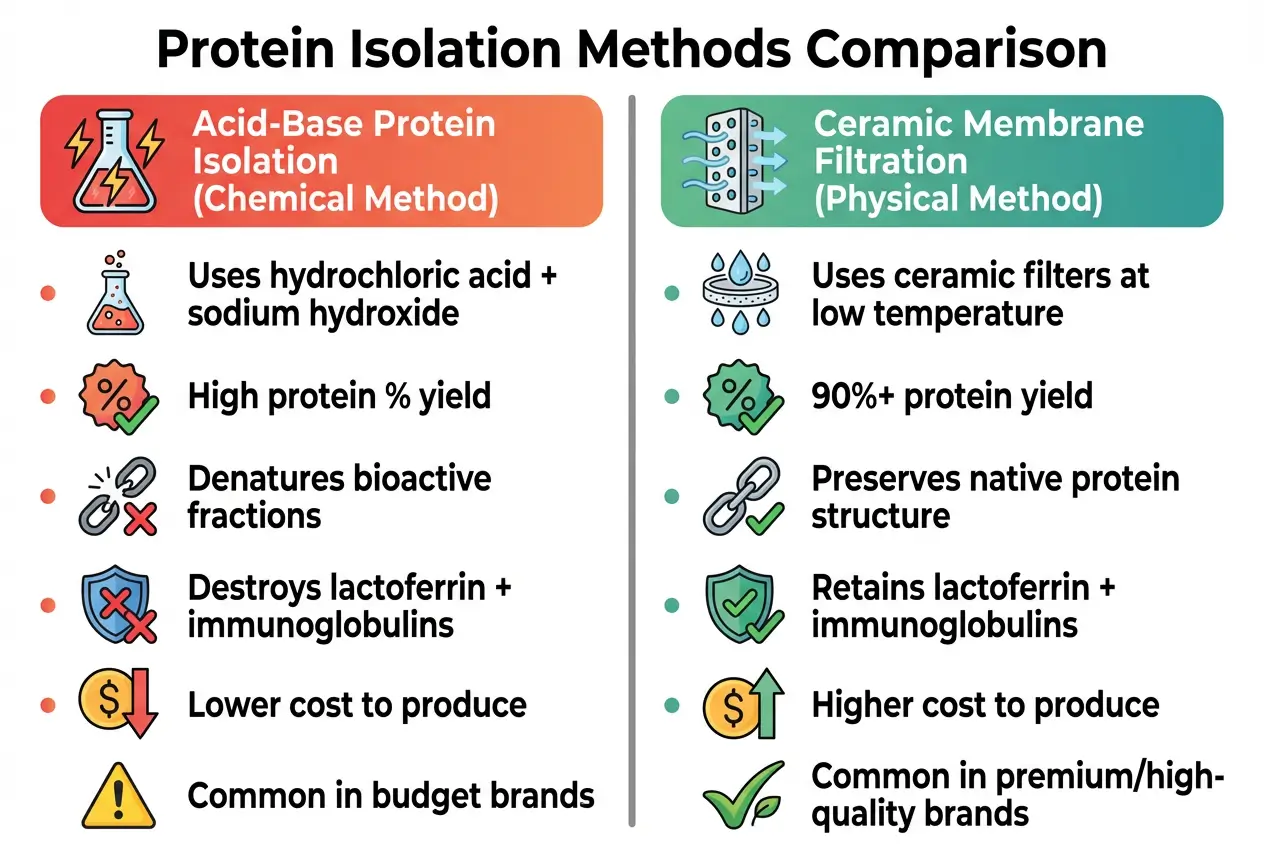
Ion exchange uses hydrochloric acid and sodium hydroxide to separate protein molecules by their electrical charge. This method yields high protein percentages, often 90% or above. It’s also cheap and fast.
The problem is denaturation. Ion exchange destroys the protein’s native structure. The bioactive fractions that support immune function, specifically lactoferrin and immunoglobulins, are stripped away or rendered inactive.
You get a high protein number on the label, but you lose the secondary health benefits that make whey superior to isolated amino acid powders.
Many large budget brands use ion exchange because it’s cost-effective. They don’t advertise this on the front of the label.
Method B: Cross-Flow Micro-filtration (The “Cold” Way)
Cross-flow micro-filtration passes liquid whey through ceramic filters at low temperatures. No chemicals. No heat denaturation. The protein molecules pass through the filter while fat and lactose are separated out.
This method preserves the undenatured protein structure. The immunoglobulins and lactoferrin remain bioactive [2][3].
You get a product that functions like whole food, not a chemical extract.
(Ed. note: If a brand uses cold-processed or cross-flow micro-filtration, they WILL tell you. It’s a selling point. If the label says nothing about filtration method, assume ion exchange.)
Cold-processed whey costs more to produce. That cost transfers to you. But if you’re buying whey protein for health reasons beyond pure muscle building, the filtration method matters as much as the protein type.
Types of Whey Protein
With filtration covered, let’s break down the three main types of whey protein you’ll encounter.
Type 1: Whey Protein Concentrate (WPC)
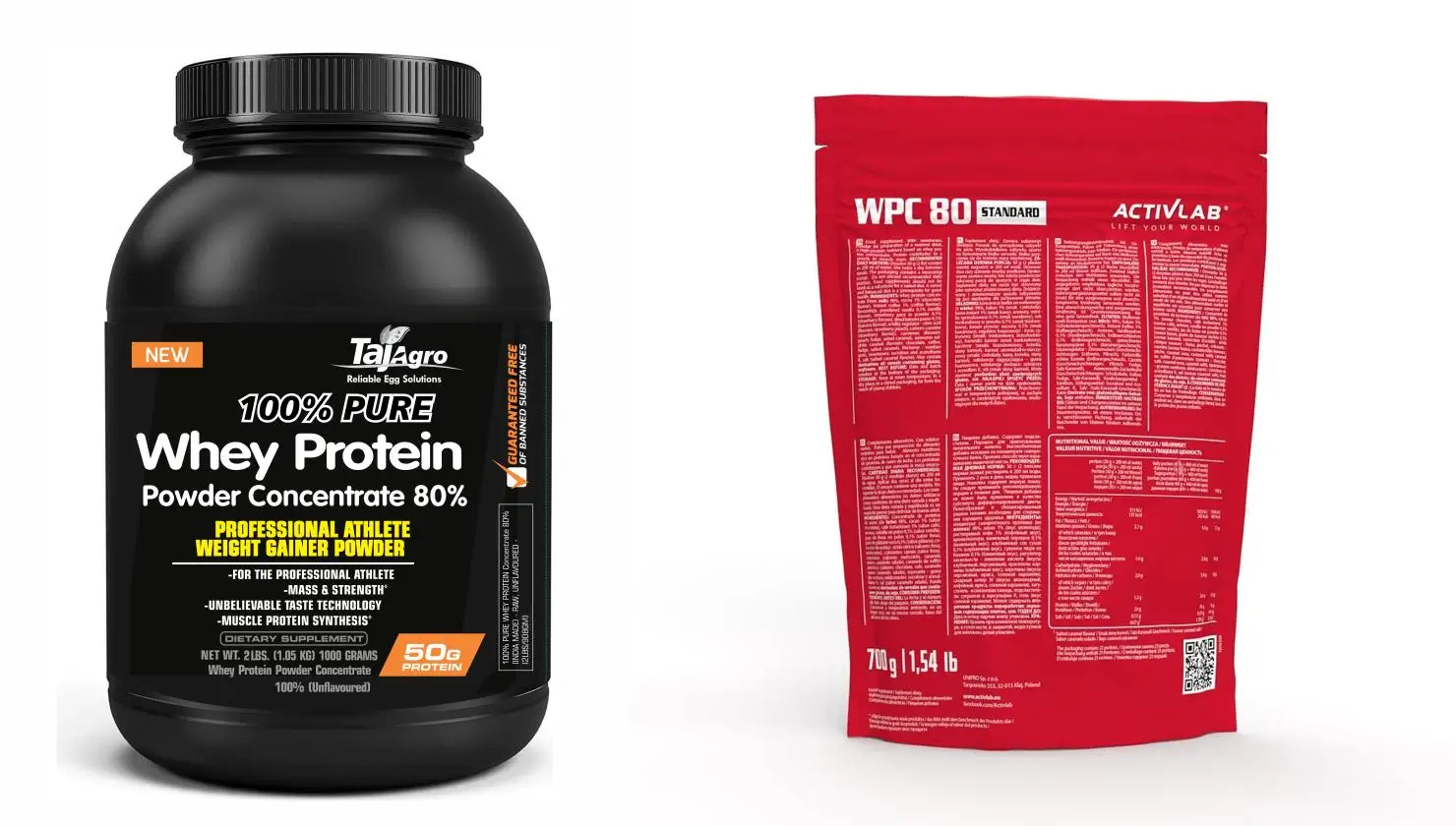
Whey Protein Concentrate is the least processed form of whey powder. Filtration removes most of the water and some lactose, but significant amounts of fat, carbohydrates, and other milk components remain.
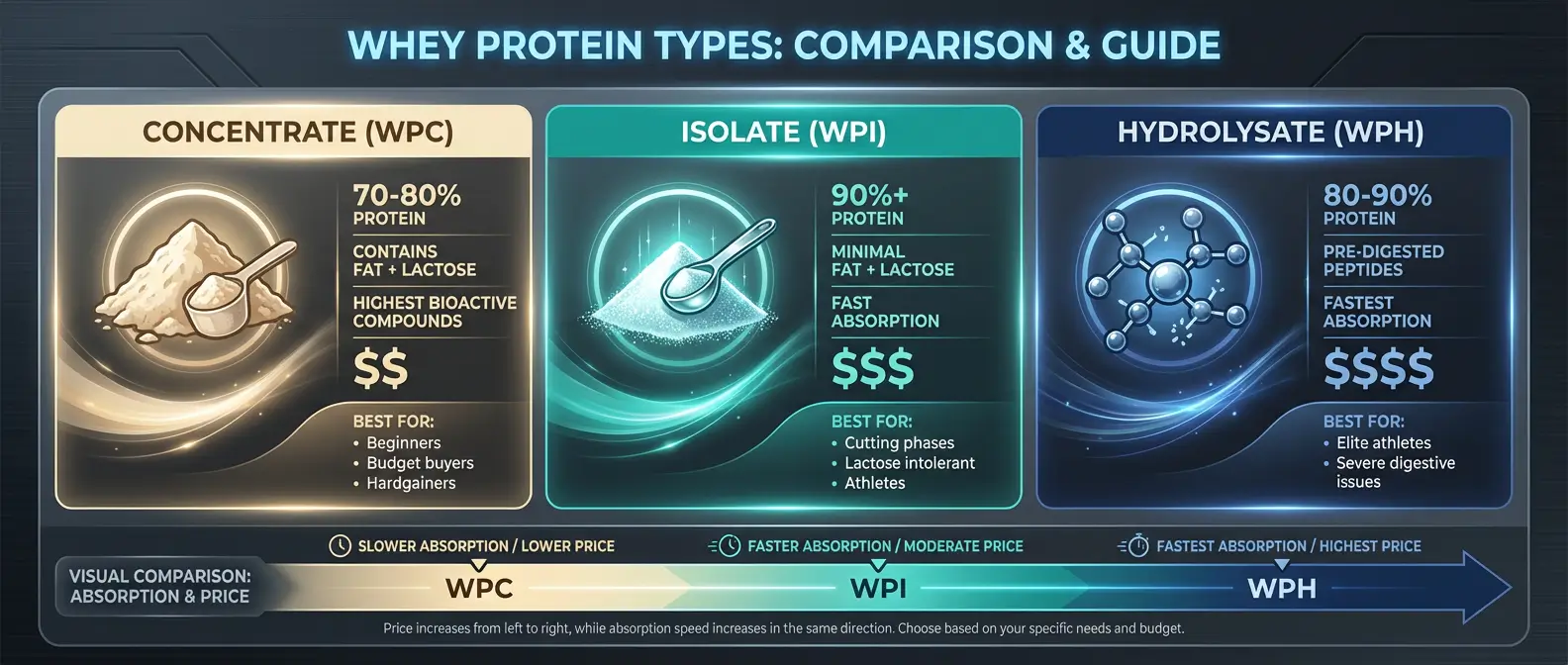
- The Numbers: Standard WPC contains 70-80% protein by weight. The remaining 20-30% consists of fat, lactose, and bioactive compounds.
- The Profile: WPC retains the highest levels of bioactive fractions. Immunoglobulins, lactoferrin, and glycomacropeptides survive the minimal filtration process. For immune support and overall health, WPC delivers more than its more processed counterparts.
- The Trade-off: The trade-off is lactose. If you’re sensitive to dairy, WPC’s residual lactose content (typically 5-8%) may cause digestive discomfort.
- Best For: WPC works well for beginners who need affordable protein, “hardgainers” who benefit from extra calories, and anyone prioritizing whole-food nutrition over pure protein density.
- The Trap: Not all concentrates are equal. WPC-35 contains only 35% protein. WPC-50 contains 50%. These lower-grade concentrates are used in meal replacement shakes and protein bars where cost matters more than quality. Look for WPC-80 on the label. This indicates 80% protein concentration, the standard for quality concentrate products.
Type 2: Whey Protein Isolate (WPI)
Whey Protein Isolate undergoes additional filtration to remove nearly all fat and lactose. The result is a leaner, faster-absorbing powder with protein concentrations of 90% or higher.
- The Numbers: Quality WPI contains 90-95% protein by weight. Lactose content drops below 1%, and fat content approaches zero [4].
- The Profile: WPI absorbs faster than concentrate because there’s less fat to slow digestion. For post-workout recovery, this speed advantage matters. Amino acids reach your bloodstream within 30-60 minutes of consumption [2][4][5][6][7]. The filtration process also removes most lactose, making WPI functionally lactose-free for the majority of users. If dairy typically causes bloating or gas, isolate often solves the problem.
- Best For: WPI serves athletes during cutting phases (when calories are restricted), lactose-intolerant users, and anyone who wants maximum protein per calorie.
- The Trap: “Isolate Blends” are a labeling trick. A product can call itself an “Isolate Blend” while containing 90% concentrate and 10% isolate. Always check the ingredient list. Ingredients are listed by weight, so the first ingredient should be “Whey Protein Isolate,” not “Whey Protein Concentrate.”
Type 3: Whey Protein Hydrolysate (WPH)
Whey Protein Hydrolysate takes isolate one step further. Enzymes break the long protein chains into shorter peptides before the powder is dried. You’re essentially buying pre-digested protein.
- The Numbers: Hydrolysate protein content varies by product, typically 80-90%. The degree of hydrolysis (how much the protein is broken down) also varies. Higher hydrolysis means faster absorption but also more bitter taste.
- The Profile: Hydrolysate hits your bloodstream faster than any other whey type. The short peptide chains require minimal digestion. Absorption begins almost immediately. This rapid absorption causes an insulin spike, which some athletes consider anabolic (muscle-building). The insulin helps shuttle amino acids into muscle cells more efficiently during the post-workout window.
- The Trade-off: The downside is taste. Broken protein chains taste bitter. Most hydrolysate products require heavy flavoring and sweetening to mask this.
- Best For: Hydrolysate works well for elite athletes who train multiple times per day and need rapid nutrient turnover, and for users with severe digestive issues (IBS, Crohn’s) who struggle to process standard whey.
- The Reality Check:
“Is hydrolysate worth 2x the price?”
For most people, no. The absorption speed difference between isolate and hydrolysate is roughly 10-15 minutes. Unless you’re a professional athlete optimizing every variable, this difference is negligible. Your muscles don’t know or care whether amino acids arrived at minute 30 or minute 45.
Hydrolysate is specialized equipment for specialized athletes. Concentrate and isolate serve everyone else.
Type 4 & 5: Clear Whey & Native Whey
The whey market evolves constantly. Two recent innovations deserve attention.
Clear Whey Isolate
Clear whey uses acidification to produce a transparent, juice-like protein drink. The texture is light and refreshing compared to traditional milky shakes. Most clear whey products taste like fruit punch, lemonade, or tropical juice.
The protein quality is identical to standard isolate. The difference is purely aesthetic and textural. If you struggle to consume thick shakes, especially during hot weather, clear whey offers an alternative delivery method.
Native Whey
Native whey bypasses cheese production entirely. Milk is filtered directly into whey protein, and the resulting powder has never been exposed to the heat, acids, or pH changes of cheese manufacturing.
Research suggests native whey contains 10-15% more leucine than cheese-derived whey [8]. Leucine is the primary amino acid responsible for activating muscle protein synthesis. More leucine per gram of protein means more anabolic signaling per serving.
Native whey costs more than standard whey. Whether that cost is justified depends on your goals and budget. For athletes optimizing leucine intake, native whey offers a measurable advantage.
With protein types covered, we need to address the quality control issue that plagues the supplement industry.
The “Amino Spiking” Scam: How to Read the Label
This section may save you hundreds of dollars.
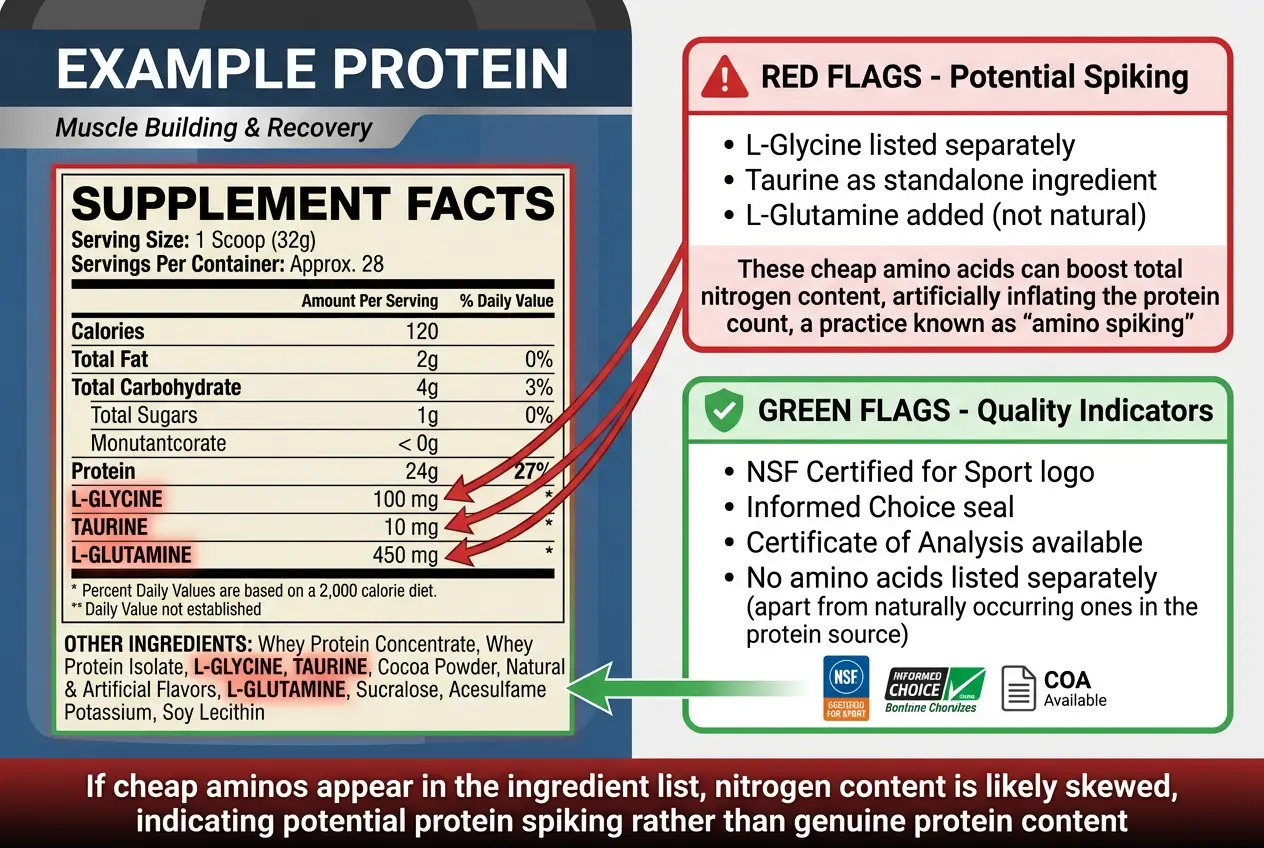
Amino spiking (also called nitrogen spiking) is a fraudulent practice where manufacturers add cheap amino acids to protein powder. These added aminos register as nitrogen during lab testing, artificially inflating the protein count on the label.
How the Scam Works
Protein is measured by nitrogen content. When a lab tests a protein powder, it measures total nitrogen and calculates protein from that number.
The problem is that all amino acids contain nitrogen, not just the ones in complete protein. If a manufacturer adds 10 grams of cheap glycine or taurine to a powder, the lab test registers that as “protein.”
The label might say “25 grams of protein per serving.” Your body might actually receive 18 grams of complete whey protein and 7 grams of filler aminos that don’t support muscle building.
How to Spot It
Check the ingredient list. If you see any of these ingredients listed separately (not as part of the amino acid profile), the product is likely spiked:
- L-Glycine
- L-Taurine
- L-Glutamine (when listed as a separate ingredient, not naturally occurring)
- Creatine Monohydrate (sometimes added to pad nitrogen)
These amino acids occur naturally in whey protein. When they appear as separate ingredients, it means they’ve been added beyond what naturally occurs, a clear sign of spiking.
The Third-Party Solution
How do you know a brand isn’t spiking? Look for third-party testing certification.
- NSF Certified for Sport means an independent lab has verified that the label matches the contents. No spiking. No banned substances. No contaminants.
- Informed Choice certification provides similar verification. Athletes who undergo drug testing require these certifications to protect their careers.
If a protein powder lacks third-party certification, you’re trusting the manufacturer’s honesty. Given the prevalence of spiking, that trust is often misplaced.
Now let’s apply everything we’ve covered to specific product recommendations.
The Only Brands That Pass Our Tests
Every brand below meets three criteria:
- Cold-processed or cross-flow micro-filtration (no ion exchange)
- No amino spiking (verified by third-party testing or transparent lab results)
- Clear labeling with no proprietary blends hiding ingredient amounts
| Brand | Processing Method | Third-Party Seal | Protein Type | Price per lb |
|---|---|---|---|---|
| Transparent Labs | Cross-Flow Micro-filtration | CoA Published | Grass-Fed Isolate | $25-30 |
| Thorne | Cold-Filtered | NSF Certified for Sport | Isolate | $28-32 |
| Legion Whey+ | Cold Micro-filtration | Labdoor Tested | Grass-Fed Isolate | $22-28 |
| Dymatize ISO100 | Cross-Flow Micro-filtration | Informed Choice | Hydrolyzed Isolate | $18-22 |
| ON Gold Standard | Ion Exchange (partial) | Informed Choice | Concentrate/Isolate Blend | $15-20 |
1. The Overall Gold Standard (Quality & Transparency)
Brand: Transparent Labs 100% Grass-Fed Whey Isolate

- Naturally Flavored Clean Protein Powder: Made from naturally-fed, hormone-free whey, free of artificial sweeteners, food…
- 28g of Protein Per Serving: Transparent Labs Whey Protein Isolate is sourced from 100% grass-fed, grass finished America…
- Enhance Recovery, Increase Strength: Transparent Labs 100% Grass-Fed Whey Protein Isolate gives you a highly bioavailabl…

Transparent Labs publishes Certificates of Analysis for every batch. You can verify exactly what’s in your powder before buying. The company uses cross-flow micro-filtration and sources from grass-fed cows [9][10][11].
The formula contains zero artificial sweeteners. Stevia provides the sweetness. No sucralose, no acesulfame potassium, no aspartame.
Protein content hits 28 grams per serving with minimal carbs and fat. The macro profile is clean and predictable.
- Best For: Anyone who can afford quality and wants complete transparency about their protein source.
- Price Range: $50-60 per 2 lb container.
2. The Athlete’s Safe Haven (NSF Certified)
Brand: Thorne Whey Protein Isolate

- Easy-to-Digest Muscle Support: Protein helps maintain healthy muscle mass and supports muscle repair after injury or tra…
- Bioavailable Protein: Thorne’s Whey Protein Isolate delivers 21 g of bioavailable protein and all 9 essential amino acid…
- Vanilla Protein: Thorne’s gluten-free, soy-free whey protein formula has only 100 calories, 3 g sugar, and 0.5 g fat per…
Thorne operates at pharmaceutical-grade standards. Their facility is NSF Certified for Sport, meaning every batch is tested for banned substances, label accuracy, and contamination [8][12][13].
This matters if you compete in tested sports. A single contaminated supplement can end a career. Thorne eliminates that risk.
The protein is cold-filtered and sourced from grass-fed cows. The formula is minimal: whey protein isolate, natural flavors, and stevia. Nothing else.
- Best For: Competitive athletes, drug-tested professionals, and anyone who needs guaranteed purity [14].
- Price Range: $55-65 per 30 servings.
3. The “Natural” Pick (Sustainably Sourced)
Brand: Legion Whey+
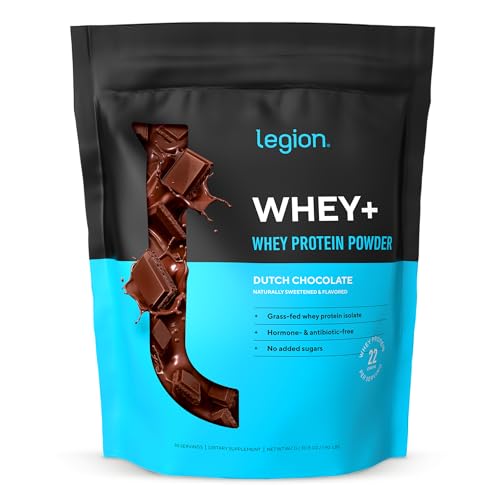
- Get our naturally sweetened and flavored whey isolate protein powder made with hormone-free Truly Grass Fed milk from Ir…
- 22 grams of grass-fed protein per serving with 12 grams of essential amino acids, 5.5 grams of BCAAs, and no lactose or …
- 100% whey protein isolate with no artificial sweeteners, flavors, food dyes, fillers, or other unnecessary junk. While t…
Legion sources whey from small dairy farms in Ireland. Irish dairy operates under strict EU regulations, and the cows graze on grass year-round due to the climate [3][16].
The product is cold micro-filtered and Labdoor tested for purity. Legion publishes the full amino acid profile, so you can verify the leucine content yourself.
Sweetening comes from stevia and erythritol. The ingredient list is short and pronounceable [15].
- Best For: Health-conscious users who want “clean” ingredients and ethical sourcing.
- Price Range: Mid-Premium ($45-55 per 2 lb container)
4. The Best Performance Hydrolysate
Brand: Dymatize ISO100

- OUR BEST-QUALITY PROTEIN: Dymatize ISO100 is our higest-quality protein, and it is designed to support muscle growth thr…
- WITH YOU, WE PUSH WHAT IS POSSIBLE: Just like you push to improve, Dymatize pushes protein to the next level. One of the…
- FOR EVERYONE: This protein powder that is Made in the USA is ideal for everyone. Whether you’re at the beginning of your…
Dymatize uses cross-flow micro-filtration for their isolate-hydrolysate blend. This is notable because most hydrolysates use ion exchange to maximize protein percentage [2][6][7].
The product is Informed Choice certified, meaning third-party verification of label accuracy and purity. Absorption is fast, and digestive tolerance is excellent.
Flavor options are extensive. If you want variety without sacrificing quality, Dymatize delivers.
- Best For: Post-workout recovery speed and easy digestion [2][4][5][7].
- Price Range: Mid-range ($35-45 per 2 lb container)
5. The “Honorable Mention” (Budget/Standard)
Brand: Optimum Nutrition Gold Standard Whey

- 24 g High-Quality Whey Protein per Scoop – 100% of the protein from whey for a fast-absorbing, complete protein source t…
- 5.5 g Naturally-Occurring BCAAs + 11g of naturally occurring EAAs – Delivers essential amino acids including leucine, is…
- Low Sugar, Low Carb, Low Fat — Ideal for Lean Muscle or Cutting Phases – With just ~1 g sugar, ~3 g carbs per serving, a…
Optimum Nutrition uses ion exchange for some of their filtration. This means some denaturing of bioactive fractions.
However, the product is Informed Choice certified. No amino spiking. No contamination. The label matches the contents [3][14][17].
If your primary goal is muscle building and budget is a concern, Gold Standard delivers reliable protein at accessible prices. You sacrifice some bioactive benefits, but you get consistency and value.
- Best For: Availability, price, and consistency.
- Price Range: Budget ($30-40 per 2 lb container)
Frequently Asked Questions
Summary
The types of whey protein break down into three categories:
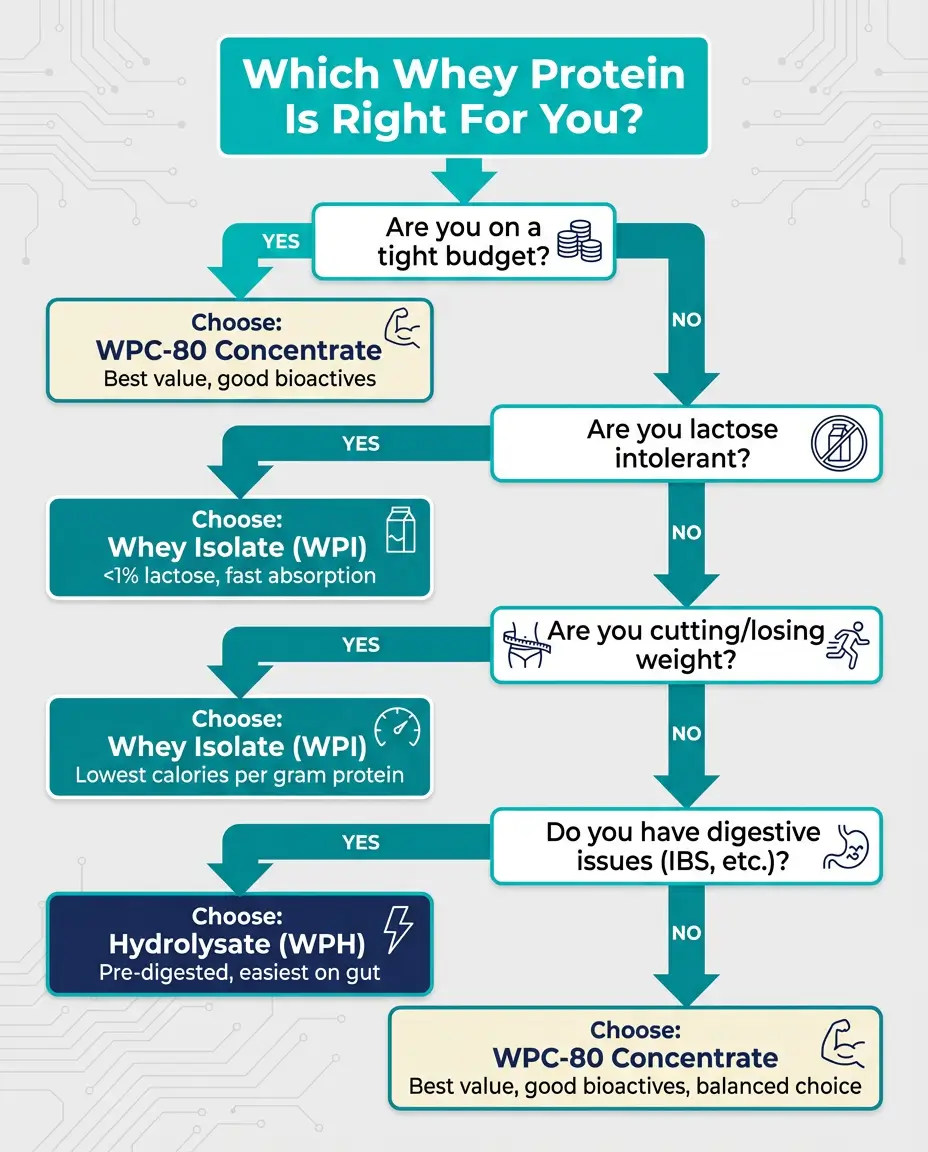
- Concentrate (WPC) provides 70-80% protein with retained bioactive compounds. Best for budget-conscious buyers and those who want whole-food nutrition.
- Isolate (WPI) delivers 90%+ protein with minimal lactose and fat. Best for cutting phases, lactose intolerance, and fast post-workout absorption.
- Hydrolysate (WPH) offers pre-digested peptides for maximum absorption speed. Best for elite athletes and those with digestive conditions.
Beyond type, filtration method determines quality.
- Cold-processed and cross-flow micro-filtration preserve the protein’s native structure. Ion exchange denatures bioactive fractions.
- Third-party testing protects you from amino spiking scams. Look for NSF Certified for Sport or Informed Choice logos.
If you want the best return on investment, buy a cold-processed isolate or concentrate from a brand that publishes its testing results. Check the ingredient list for added amino acids. Verify the filtration method. Ignore the marketing.
Your body needs amino acids. Everything else on the label is either science or salesmanship. Now you know the difference.
References
- [1] Harvard T.H. Chan School of Public Health – “Protein” – 2023
- [2] Hulmi, J.J. et al. – “Effect of protein/essential amino acids and resistance training on skeletal muscle hypertrophy” – Sports Medicine, 2010 – DOI: 10.2165/11531560-000000000-00000
- [3] Smithers, G.W. – “Whey and whey proteins—From ‘gutter-to-gold'” – International Dairy Journal, 2008 – DOI: 10.1016/j.idairyj.2008.03.008
- [4] Devries, M.C. & Phillips, S.M. – “Supplemental protein in support of muscle mass and health” – American Journal of Clinical Nutrition, 2015 – DOI: 10.3945/ajcn.114.084061
- [5] Tang, J.E. et al. – “Ingestion of whey hydrolysate, casein, or soy protein isolate” – Journal of Applied Physiology, 2009 – DOI: 10.1152/japplphysiol.00076.2009
- [6] Stark, M. et al. – “Protein timing and its effects on muscular hypertrophy and strength” – Journal of the International Society of Sports Nutrition, 2012 – DOI: 10.1186/1550-2783-9-54
- [7] Schoenfeld, B.J. & Aragon, A.A. – “How much protein can the body use in a single meal for muscle-building?” – Journal of the International Society of Sports Nutrition, 2018 – DOI: 10.1186/s12970-018-0215-1
- [8] Hamarsland, H. et al. – “Native whey protein with high levels of leucine” – British Journal of Nutrition, 2017 – DOI: 10.1017/S0007114516004414
- [9] Transparent Labs – “Certificate of Analysis Program” – 2024
- [10] Jäger, R. et al. – “International Society of Sports Nutrition Position Stand: Protein and exercise” – Journal of the International Society of Sports Nutrition, 2017 – DOI: 10.1186/s12970-017-0177-8
- [11] Consumer Reports – “Protein Drinks: What You Need to Know” – 2023
- [12] Thorne Research – “NSF Certified for Sport Program” – 2024
- [13] NSF International – “Certified for Sport Program Standards” – 2024
- [14] Informed Sport – “Testing and Certification Process” – 2024
- [15] Legion Athletics – “Whey+ Product Specifications” – 2024
- [16] Bord Bia – “Irish Dairy Sustainability Report” – 2023
- [17] Labdoor – “Protein Supplement Rankings and Testing” – 2024
