
Hidden Sugars That Damage Your Family’s Teeth: A Parent’s Guide to Smarter Food Choices
Learn which "healthy" foods contain hidden sugars, how to spot them on labels, and simple swaps that protect your family's teeth.
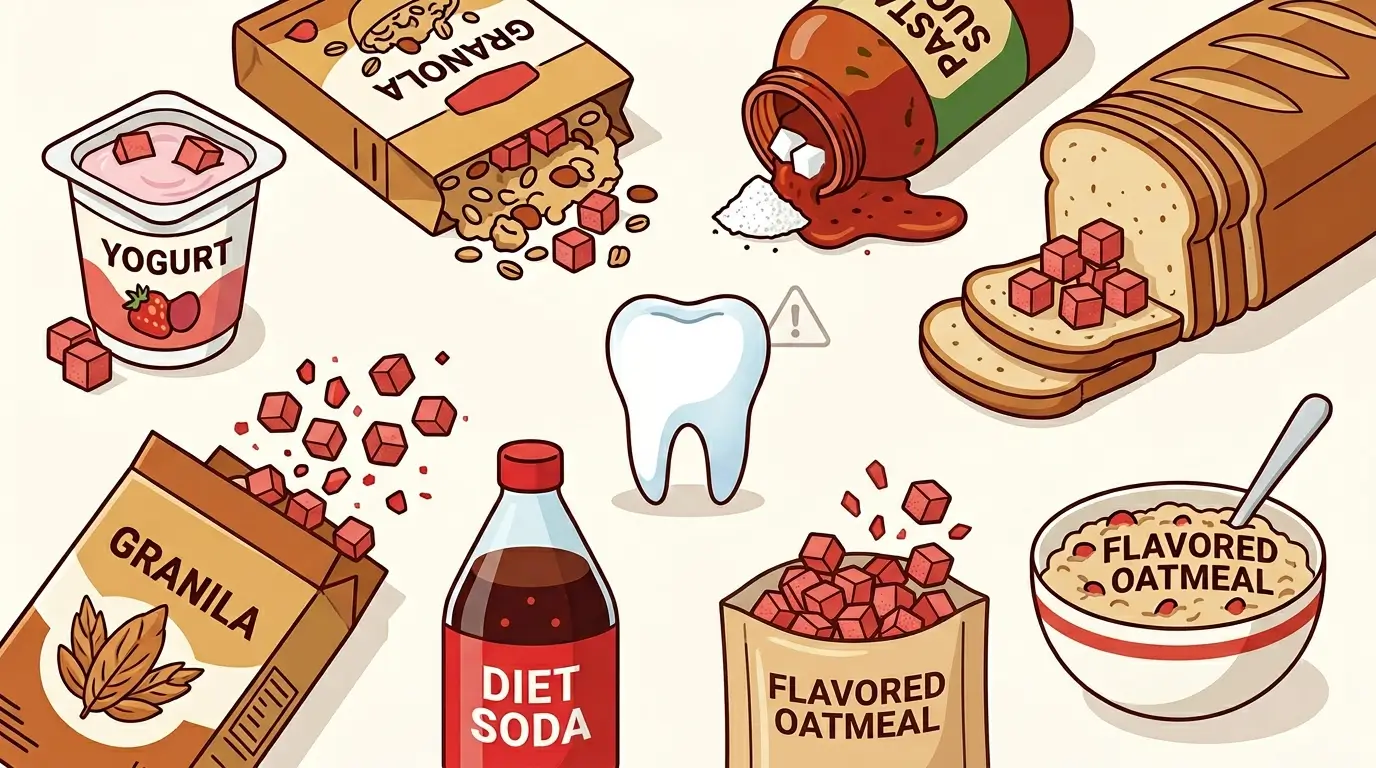
Hidden sugars in everyday foods like flavored yogurt, granola bars, juice boxes, and condiments are a leading driver of tooth decay in families.
These sugars feed bacteria in your mouth, which produce acids that erode enamel and cause cavities. The World Health Organization (WHO) recommends keeping free sugar intake below 25 grams per day [1].
Reading nutrition labels, recognizing sugar aliases, and choosing lower-sugar alternatives are the most effective ways to protect your family’s teeth.
Why “Healthy” Foods Are a Hidden Threat to Your Family’s Teeth
You pack a yogurt cup, a granola bar, and a juice box in your child’s lunch. It feels like a responsible choice. But those three items alone can contain over 50 grams of added sugars, roughly double the daily limit the World Health Organization recommends for a child [1].
This pattern repeats in kitchens across the country. The CDC reports that 52% of children ages 6 to 8 have had a cavity in their primary teeth [2].
That number does not come from candy and soda alone. A significant share of the sugar driving those cavities hides inside foods that parents trust. For families in Pearland and the Houston area, that often includes lunchbox staples, sports drinks, and packaged snacks that seem healthy at first glance.
The problem has a name in behavioral science. The “health halo effect” describes the tendency to assume a food is good for you based on a single positive claim on its packaging. Words like “organic,” “whole grain,” “natural,” and “made with real fruit” lead parents to skip the nutrition label entirely. The sugar content tells a different story.
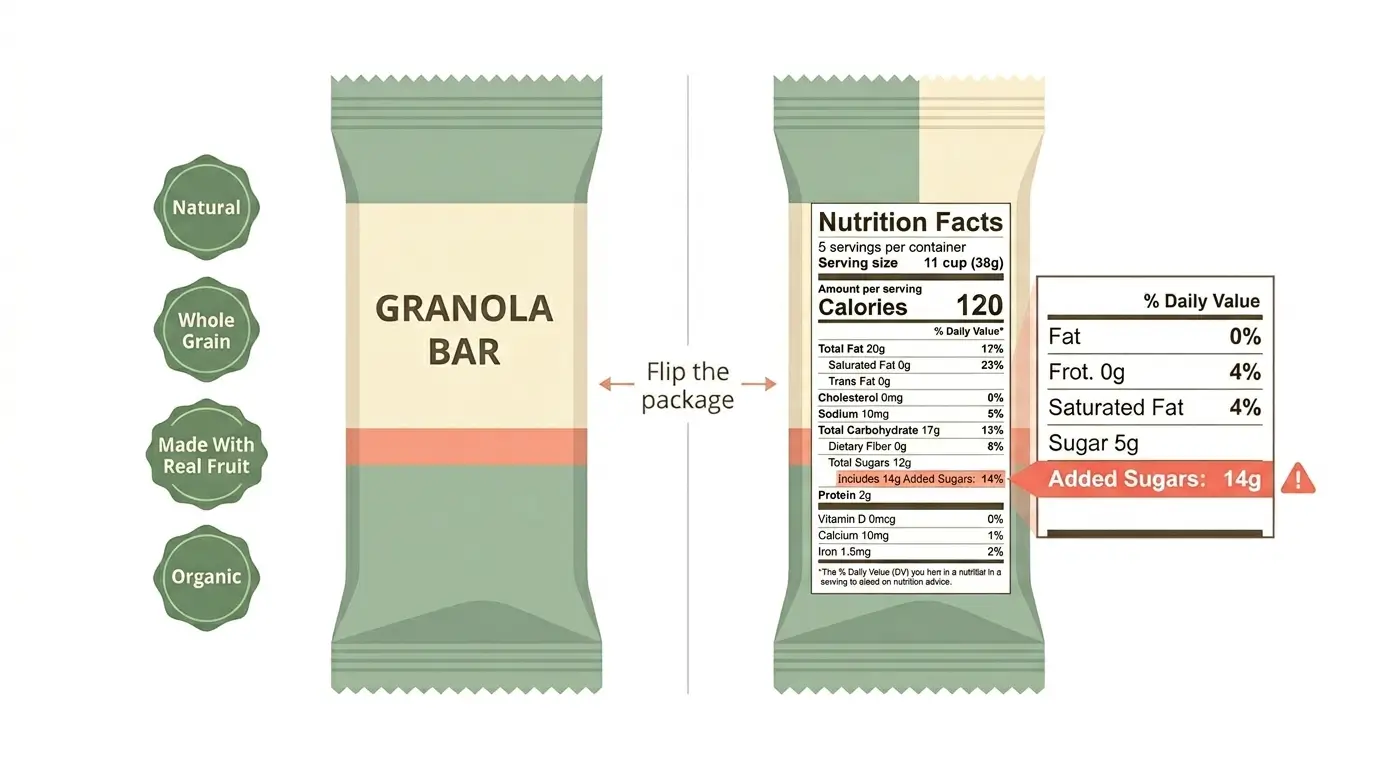
Understanding where hidden sugars that damage teeth actually live in your grocery cart is the first step toward protecting your family’s oral health.
The biology behind sugar and tooth damage is straightforward, and knowing it changes the way you think about snacking.
How Sugar Actually Damages Teeth (The 40-Minute Acid Attack)
Sugar itself does not dissolve your teeth. Bacteria do the damage, and sugar is their fuel.
Your mouth contains hundreds of bacterial species. One of the most harmful, Streptococcus mutans, feeds on sugars and produces lactic acid as a byproduct [3].
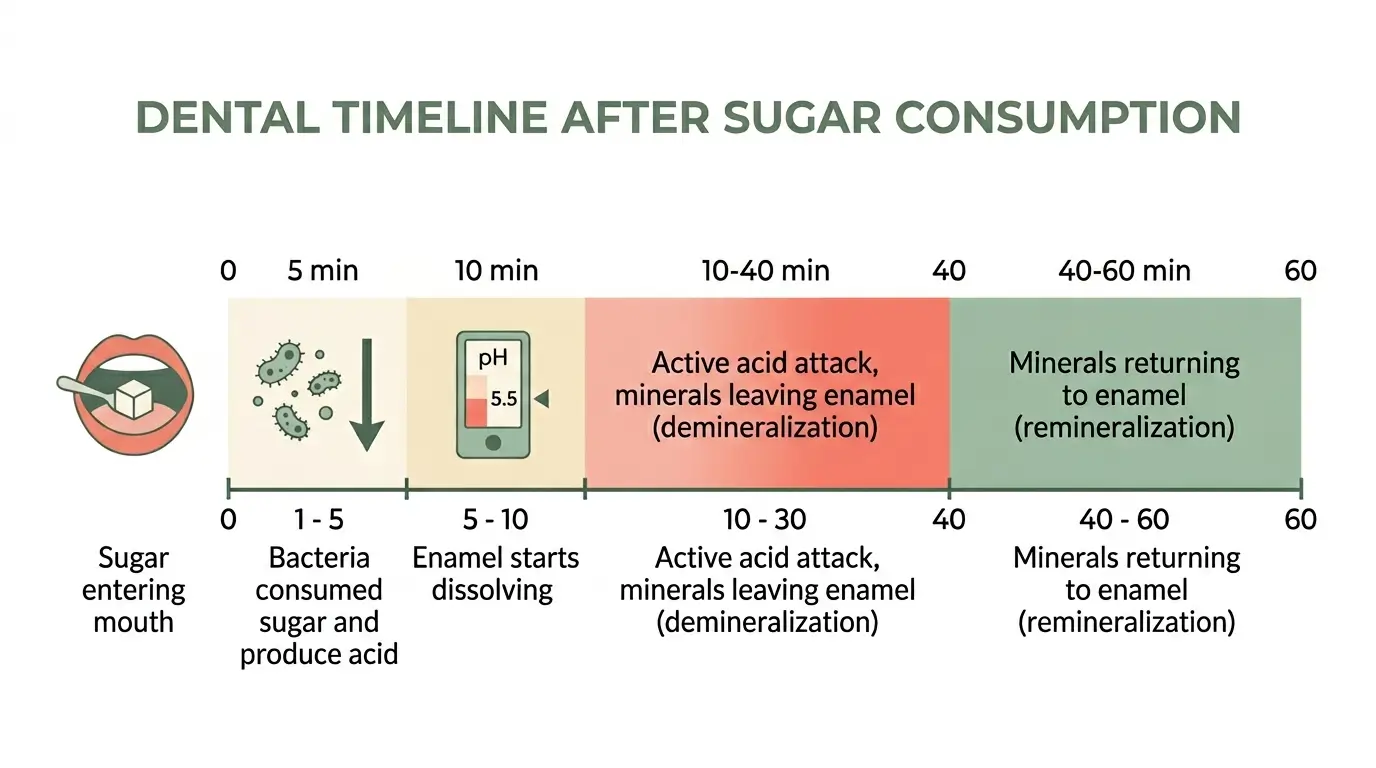
That acid lowers the pH in your mouth below 5.5 (the point at which enamel starts to dissolve), which triggers a process called demineralization. During demineralization, calcium and phosphate minerals leach out of your tooth enamel, weakening its structure.
Each time sugar enters your mouth, this acid attack lasts 20 to 40 minutes [4].
Your saliva gradually neutralizes the acid and begins remineralization, a repair process that restores some of the lost minerals. But this repair cycle needs time. If you or your child snacks on something sugary every hour or two, remineralization never fully catches up. The enamel weakens, tiny pits form, and cavities develop.
This is why the frequency of sugar exposure matters more than the total amount. Five small sugary snacks spread across the day cause more enamel erosion than one dessert eaten after dinner. Your saliva can handle occasional acid spikes. It cannot handle a constant stream.
So which foods are producing those acid spikes without you realizing it?
10 Everyday Foods with Hidden Sugars That Damage Teeth
Many of these will look familiar. That is the problem.
Breakfast Items
- Flavored yogurt. A standard 6-ounce serving of flavored yogurt contains 15 to 20 grams of sugar. Some popular children’s brands hit 23 grams. Plain Greek yogurt, by comparison, contains about 4 grams of naturally occurring lactose per serving. The difference is almost entirely added sugars.
- Breakfast cereal. Certain popular kids’ cereals contain 12 grams of sugar per serving, which is more than a glazed donut from most bakeries [5]. Even cereals marketed as “whole grain” or “heart healthy” can pack 8 to 10 grams per bowl.
- Granola bars. These average 8 to 14 grams of sugar per bar. Sticky ingredients like honey, brown rice syrup, and dried fruit cling to tooth surfaces, extending the acid attack window beyond the usual 40 minutes.
Beverages
- 100% fruit juice. An 8-ounce glass of apple juice contains roughly 24 grams of sugar [6]. The “100% juice” label creates a health halo, but blending fruit removes the fiber that normally slows sugar absorption in the body. In the mouth, the sugar coats teeth the same way soda does.
- Sports drinks. A 12-ounce sports drink contains about 20 grams of sugar [7]. Children and teens often sip these slowly during activities, which extends acid production across hours instead of minutes.
- Flavored milk and plant-based milks. Chocolate milk averages 24 grams of sugar per 8-ounce serving. Some vanilla-flavored oat milks contain 7 to 10 grams of added sugars per cup. Plain milk contains naturally occurring lactose (about 12 grams) but zero added sugars.
Lunch and Snack Items
- Dried fruit and fruit snacks. Drying concentrates the sugar in fruit and creates a sticky texture that adheres to the grooves of teeth. A small box of raisins contains about 25 grams of sugar. Fruit snacks and fruit leathers are essentially candy in different packaging.
- Ketchup and BBQ sauce. Ketchup contains approximately 4 grams of sugar per tablespoon [6]. BBQ sauce can hit 6 to 8 grams per tablespoon. These add up across multiple meals per week. (If you want to cut that sugar down, try making homemade ketchup where you control every ingredient.)
- White bread and crackers. Refined starches break down into simple sugars in your mouth within seconds. Salivary amylase, an enzyme in saliva, begins converting starch to maltose as you chew. Cracker residue sticks between teeth and continues feeding bacteria long after you finish eating.
Perceived Healthy Items
- 10. Smoothie bowls and acai bowls. A medium smoothie bowl from a popular chain can contain 40 to 60 grams of sugar once you add granola, honey drizzle, and fruit toppings. That exceeds the daily added sugar limit for both children and adults in a single meal.
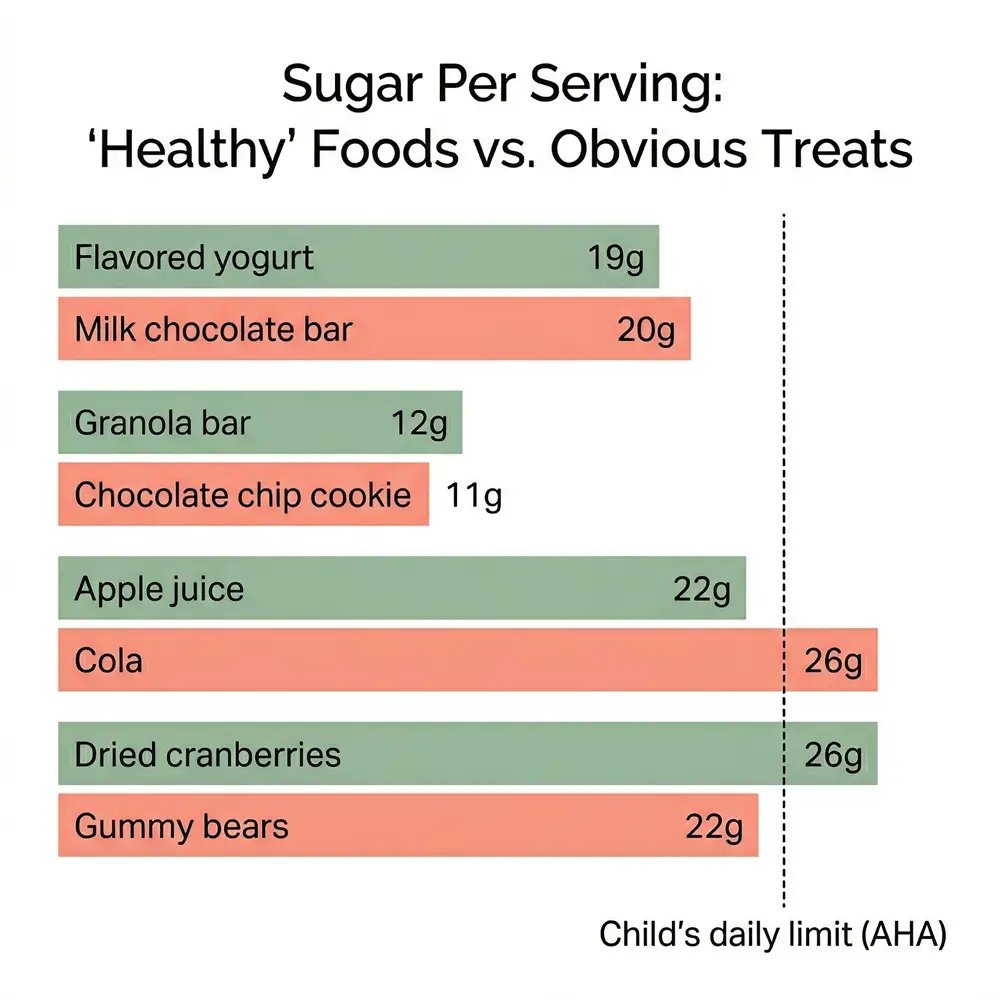
“Wait, is flavored yogurt really as bad as a candy bar?” In terms of sugar content per serving, they are comparable. A standard milk chocolate bar contains about 20 grams of sugar. Many flavored yogurt cups are in that same range.
The table below puts a few of these side by side.
| “Healthy” Food (serving) | Sugar (g) | Obvious Treat (serving) | Sugar (g) |
|---|---|---|---|
| Flavored yogurt (6 oz) | 19 | Milk chocolate bar (1.55 oz) | 20 |
| Granola bar (1 bar) | 12 | Chocolate chip cookie (1 large) | 11 |
| Apple juice box (6.75 oz) | 22 | Cola (8 oz) | 26 |
| Dried cranberries (1/3 cup) | 26 | Gummy bears (1 small bag) | 22 |
Knowing which foods carry hidden sugars is the first half of the equation. The second half is learning how to spot them before they reach your cart.
How to Read Nutrition Labels for Hidden Sugars
The U.S. Food and Drug Administration (FDA) updated the Nutrition Facts label format in 2020 to include a separate “Added Sugars” line beneath “Total Sugars” [8]. This single change makes your job as a parent significantly easier.
- Total Sugars includes both naturally occurring sugars (like lactose in milk or fructose in whole fruit) and added sugars.
- Added Sugars shows only the sugars that manufacturers put into the product during processing. This is the number to watch.
When you flip a package over, find “Added Sugars” and compare it against these benchmarks. The American Heart Association (AHA) recommends no more than 25 grams of added sugars per day for children ages 2 to 18 [9].
For adult women, the limit is 25 grams. For adult men, it is 36 grams.
A single item with 12 grams of added sugars uses up nearly half of a child’s daily budget.
Next, scan the ingredients list. Manufacturers list ingredients in descending order by weight. If any form of sugar appears in the first five ingredients, that product is sugar-heavy. The challenge is recognizing sugar when it goes by a different name.
Common sugar aliases you will find on labels:
Words ending in “-ose” include fructose, glucose, dextrose, maltose, sucrose, and galactose. Syrups include corn syrup, high fructose corn syrup, brown rice syrup, malt syrup, maple syrup, and agave syrup. Other names include cane juice, evaporated cane juice, fruit juice concentrate, honey, molasses, treacle, and turbinado sugar.
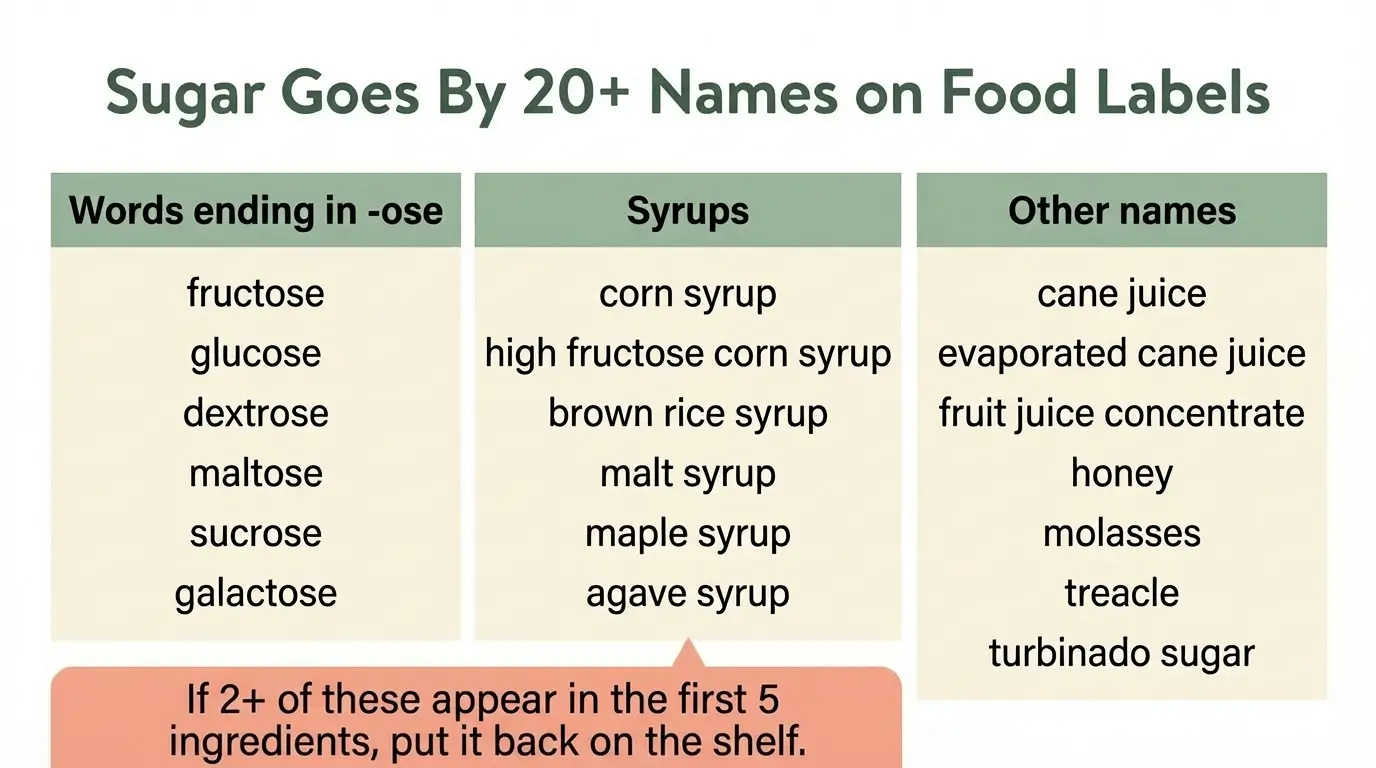
(Ed. note: the iSmile dental blog has cataloged 56 distinct names for sugar on food labels [10]. If a product uses two or more of these in the first five ingredients, the manufacturer may be distributing sugar across multiple names to keep each one lower on the list.)
A practical rule to follow at the store is this. If a product has more than 6 grams of added sugars per serving AND lists a sugar alias in the first five ingredients, look for an alternative.
Reading labels is a powerful defense. But how you time your family’s sugar intake matters almost as much as the amount.
The Sugar Frequency Rule: Why When You Eat Matters More Than How Much
Dental professionals emphasize this point repeatedly, and most parents have never heard it.
Each sugar exposure resets the 20- to 40-minute acid attack cycle in your mouth [4].
- A child who sips apple juice over the course of a two-hour morning creates three or four separate acid attacks.
- A child who drinks the same juice in one sitting at breakfast creates one acid attack.
The total sugar consumed is identical. The damage to enamel is dramatically different.
Consider two families with the same total daily sugar intake of 30 grams.
- Family A spreads it across six mini-snacks throughout the day.
- Family B consumes it across three meals.
- Family A’s teeth spend 3 to 4 hours under acid assault.
- Family B’s teeth spend about 1.5 to 2 hours under acid assault, with recovery windows in between that allow saliva to remineralize enamel.
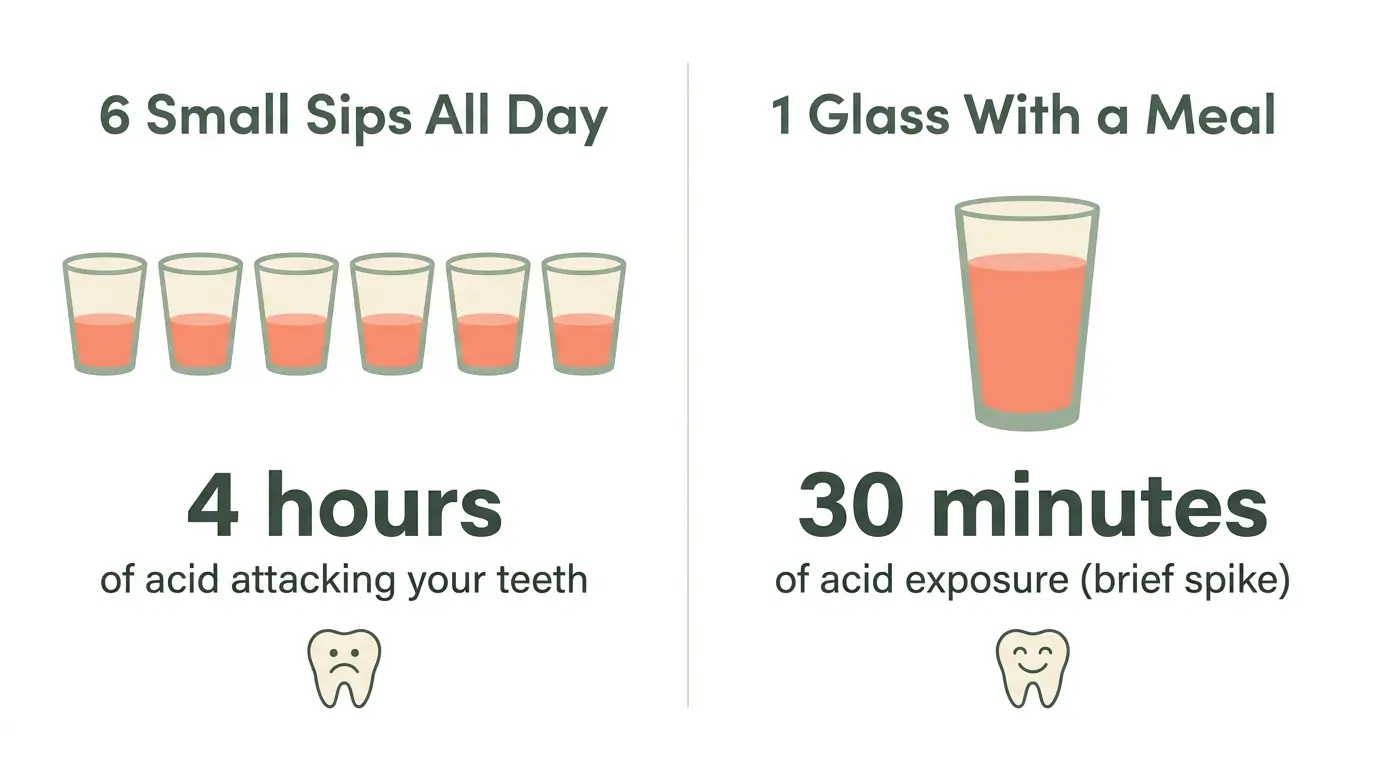
This concept also applies to intermittent fasting and time-restricted eating patterns. Consolidating your eating window gives your mouth extended periods of recovery between acid exposures.
This is exactly the kind of practical advice you can get by maintaining regular checkups with a family dentist in Pearland. If your family sees a dentist locally or anywhere in the Houston area, ask about snacking patterns at your next visit. The frequency conversation often matters more than the food conversation.
The best way to act on this information is to swap high-sugar items for lower-sugar alternatives and keep sugary foods confined to mealtimes.
Smart Swaps That Protect Your Family’s Teeth
You do not need to overhaul your pantry overnight. Targeted swaps at the highest-sugar items make the biggest difference.
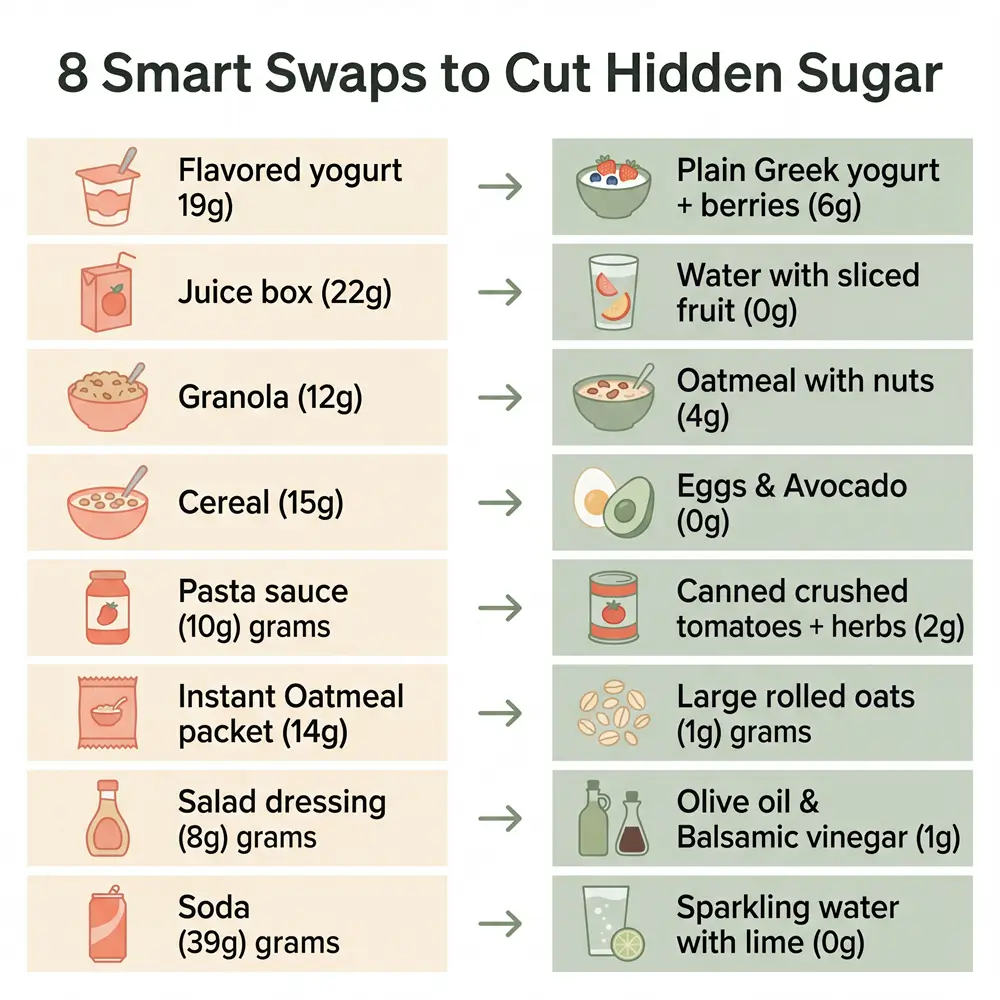
“What about xylitol?” Xylitol is a sugar alcohol that Streptococcus mutans cannot metabolize. This means it does not produce acid in your mouth. Some research indicates xylitol may actively reduce S. mutans populations over time [11]. Sugar-free gum sweetened with xylitol is a practical addition after meals when brushing is not an option.
Swapping foods is a strong move. But a quick audit of what is already in your kitchen can reveal where the biggest risks are hiding right now.
Your Family’s 5-Minute Sugar Audit
No competitor article offers this, so this framework is yours to use today.
- Step 1. Pull five items your family eats daily from your fridge or pantry. Good candidates include yogurt, cereal, bread, condiments, and any packaged snack.
- Step 2. Flip each one and find the “Added Sugars” line on the Nutrition Facts panel.
- Step 3. Flag any item with more than 6 grams of added sugars per serving.
- Step 4. Check the ingredients list for sugar aliases in the first five ingredients. Remember to look for words ending in “-ose,” any form of syrup, and terms like cane juice or fruit juice concentrate.
- Step 5. Pick two flagged items and swap them this week using the suggestions above.
Families across Pearland, Houston, and the rest of Texas can run this audit right now, before the next grocery trip. And if you are unsure about a label, bring it to your next appointment. Practices like Dept of Smiles encourage patients to ask these kinds of nutrition questions during visits because food choices and oral health are directly connected.
Most parents connect sugar with cavities. But sugar affects more than enamel.
Hidden Sugars and Gum Health
Chronic sugar consumption also fuels gum disease. The same plaque that causes cavities irritates gum tissue when it builds up along the gumline. Over time, this chronic irritation triggers gingivitis, which presents as red, swollen gums that bleed during brushing.
Left unchecked, gingivitis can progress to periodontitis, a more severe condition that damages the bone supporting your teeth. The CDC reports that 47.2% of US adults aged 30 and older have some form of periodontal disease [12].
While gum disease has multiple contributing factors, dietary sugar patterns accelerate it by feeding the bacteria that produce inflammatory byproducts.
Nutritional deficiencies compound the problem. Low vitamin C intake, for instance, has been linked to increased gum bleeding and slower gum tissue repair. And vitamin D deficiency is associated with higher rates of periodontal disease because of its role in inflammation regulation and bone health.
Teens and adults in the family are at the highest risk for gum disease, making this a concern that extends well beyond the kids’ lunchbox.
A better diet is one part of the solution. Protective daily habits fill in the gaps.
Protective Habits That Work Alongside a Better Diet
These five evidence-based practices compound the benefits of reducing hidden sugar intake.
- Rinse with water after eating sugary or acidic foods. Water dilutes acids in the mouth and helps wash sugar residue off tooth surfaces. This is especially useful for kids at school who cannot brush after lunch. Staying well hydrated throughout the day also supports saliva production; if you are not drinking enough water, you may already be experiencing subtle signs of dehydration that reduce your mouth’s natural defenses.
- Wait 30 minutes before brushing after acidic or sugary foods. Acid temporarily softens enamel. Brushing immediately can spread that acid and abrade the softened surface [4]. Rinse with water first, then brush later.
- Chew sugar-free gum containing xylitol after meals. Chewing stimulates saliva production, which accelerates the neutralization of acids and supports remineralization [11]. Xylitol adds an antibacterial benefit.
- Drink fluoridated tap water throughout the day. Fluoride integrates into enamel and makes it more resistant to acid attacks. Most US municipal water systems add fluoride at levels recommended by the CDC [13].
- Schedule dental checkups every six months. Professional cleanings remove tartar that brushing alone cannot reach. Your dentist can spot early signs of enamel erosion and demineralization before cavities form. For families in the Pearland and greater Houston area, a family dentistry practice allows parents and children to get checked in the same visit, which simplifies scheduling and keeps the whole family on track.
These habits pair directly with the dietary changes above to create a strong line of defense.
Daily Sugar Limits for Your Family
Clear numbers help you make clear decisions.
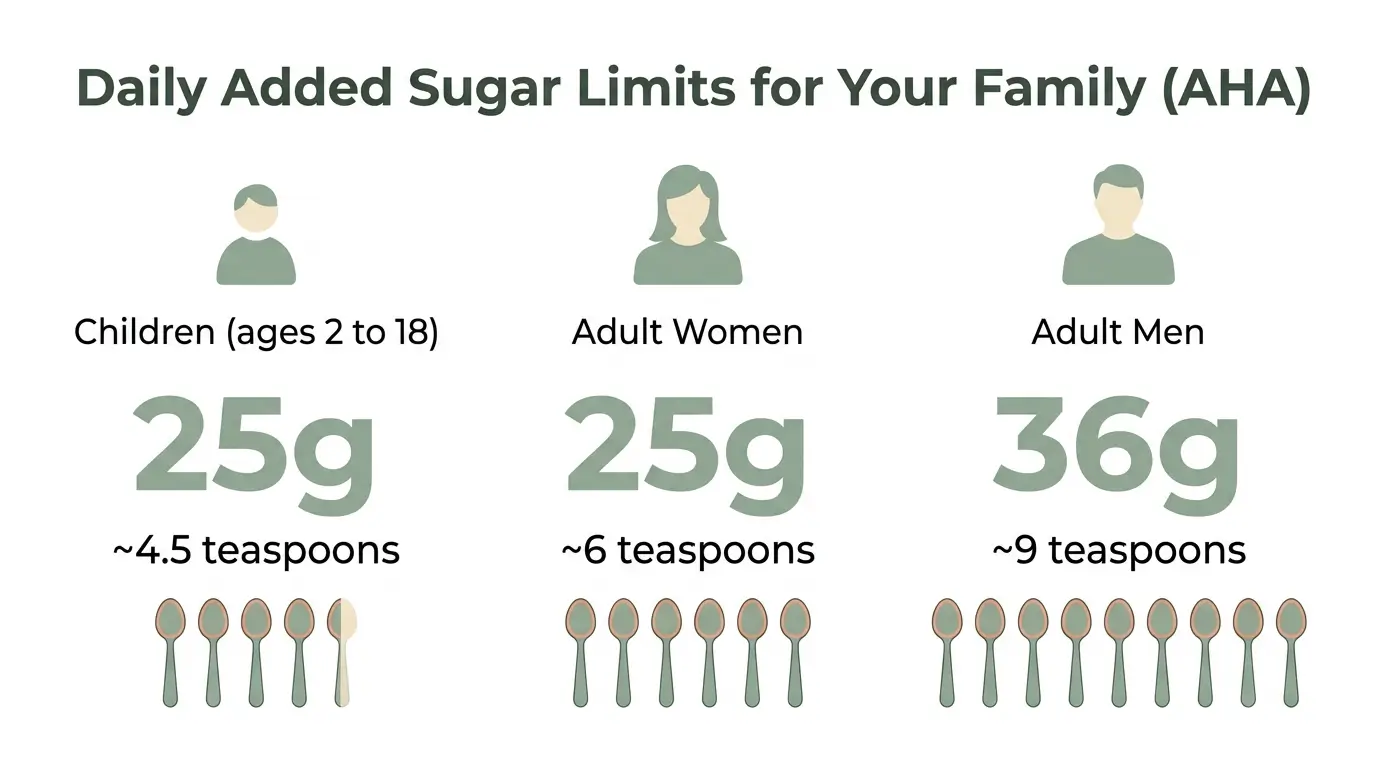
The WHO recommends keeping free sugar intake below 10% of total daily calories, with an ideal target of below 5% [1].
The American Heart Association sets specific gram limits by age and gender [9].
- For a child consuming 1,500 calories per day, the ideal limit falls below 19 grams of added sugar, which equals about 4.5 teaspoons.
- For an adult woman on a 2,000-calorie diet, the AHA recommends no more than 25 grams (6 teaspoons).
- For an adult man, the ceiling is 36 grams (9 teaspoons).
To put that in perspective, one flavored yogurt (19g) can consume a child’s ENTIRE daily sugar budget in a single snack. Add a juice box and a granola bar, and you have exceeded the limit by a factor of three before dinner.
Tracking exact grams every day is not realistic for most families. But knowing these thresholds helps you evaluate individual products quickly.
If a single item accounts for more than 30% of your child’s daily sugar limit, it deserves a closer look and probably a swap.
Citations
- [1] World Health Organization. “Sugars and Dental Caries.” Updated August 2025.
- [2] Centers for Disease Control and Prevention. “Oral Health Surveillance Report: Trends in Dental Caries and Sealants, Tooth Retention, and Edentulism, United States.” CDC Division of Oral Health.
- [3] Loesche, W.J. “Role of Streptococcus mutans in Human Dental Decay.” Microbiological Reviews, 1986.
- [4] Moynihan, P.J. and Kelly, S.A.M. “Effect on Caries of Restricting Sugars Intake.” Journal of Dental Research, 2014.
- [5] Environmental Working Group. “Children’s Cereals: Sugar by the Pound.” EWG Research, 2014.
- [6] USDA FoodData Central. “Food Composition Databases.” U.S. Department of Agriculture.
- [7] University of Iowa Health Care. “Sugar in Sports Drinks.” UI Children’s Hospital.
- [8] U.S. Food and Drug Administration. “How to Understand and Use the Nutrition Facts Label.” FDA, updated 2024.
- [9] American Heart Association. “Added Sugars.” AHA Nutrition Center.
- [10] iSmile NYC. “Hidden Sugars and Your Teeth.” iSmile Blog.
- [11] Janakiram, C. et al. “Xylitol in Preventing Dental Caries: A Systematic Review and Meta-Analyses.” Journal of Natural Science, Biology, and Medicine, 2017.
- [12] Centers for Disease Control and Prevention. “Periodontal Disease.” CDC Oral Health.
- [13] Centers for Disease Control and Prevention. “Community Water Fluoridation.” CDC Division of Oral Health.
