
Foolproof Easy Jambalaya Recipe: Perfect Rice, One Pot, 40 Minutes
Master the Holy Trinity and nail the rice-to-liquid ratio every time with this authentic Creole-style dinner.
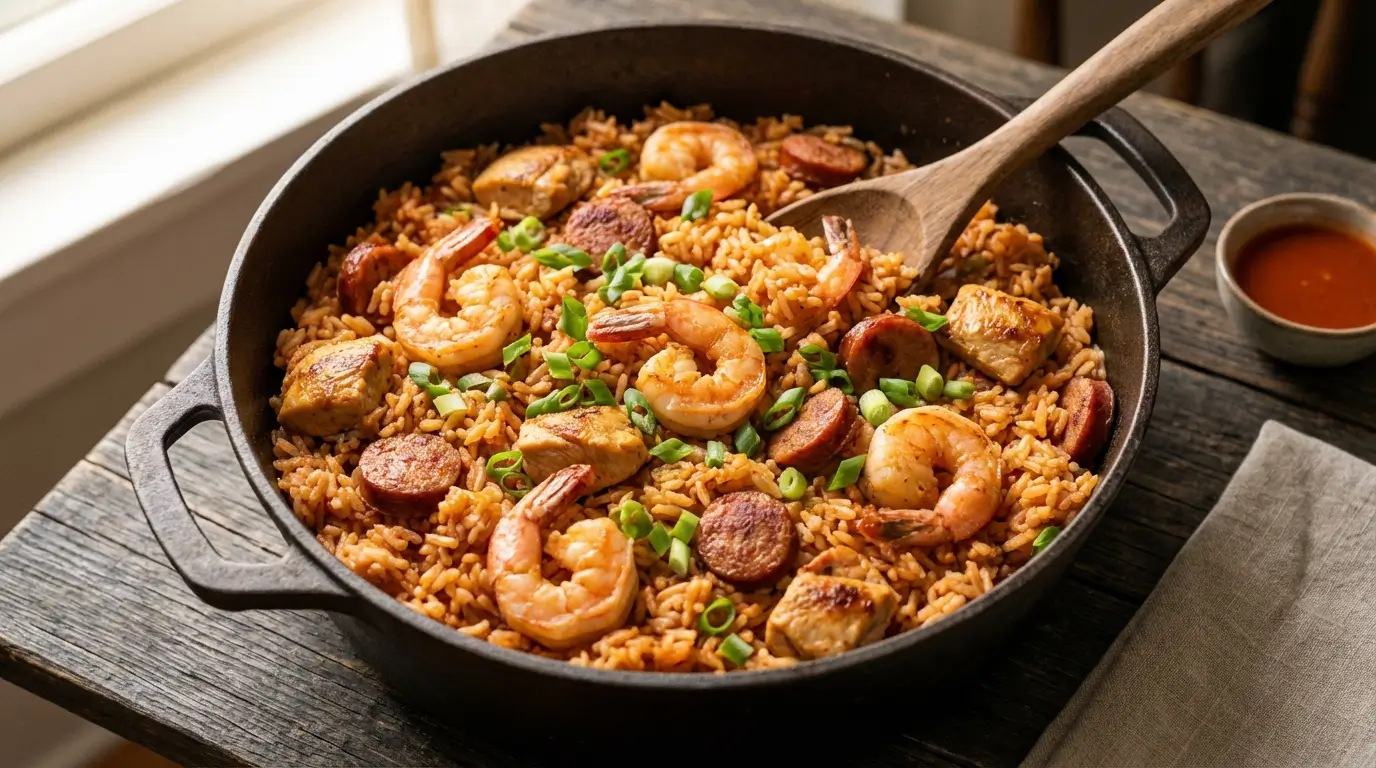
Most “quick” jambalaya recipes produce the same result. Wet, gloppy, overcooked rice that sticks to the spoon in one sad clump. You end up eating rice stew, not jambalaya.
This recipe fixes that with a technique called the “Steam Finish,” and it changes your rice texture completely.
The “Steam Finish” method is pretty straightforward.
- You bring the pot to a boil,
- Drop the heat to low,
- Cover with a tight lid, and DO NOT touch it for 20 minutes.
The trapped steam cooks the rice evenly from top to bottom. When you remove the lid after a 10-minute rest, you get individual, fluffy grains with a slight bite. No mush. No crunch.
Before you start cooking, you should know what kind of jambalaya you are making. Two main styles exist in Louisiana.
- Cajun jambalaya, sometimes called “brown” jambalaya, skips tomatoes entirely and gets its color from deeply browned meat.
- Creole jambalaya, called “red” jambalaya, includes tomatoes, which give the dish its signature reddish hue and a subtle tangy sweetness.
This recipe follows the Creole tradition. Tomatoes keep the chicken moist during cooking and create a richer, more layered sauce around the rice.
The flavor foundation of this dish comes from two sources working together.
- First, the fond. Fond = the sticky, caramelized brown bits left on the bottom of the pot after you sear sausage and chicken. Those bits form through the Maillard reaction, a chemical process where amino acids and sugars react at high heat to create hundreds of new flavor compounds.
- Second, the Holy Trinity. Onions, celery, and green bell pepper form the aromatic base of nearly every Cajun and Creole dish, from gumbo to etouffee. When you saut the Trinity in the rendered sausage fat, it scrapes up that fond and absorbs all of it. Every bite of rice carries that deep, savory backbone.
Now that you understand WHY the recipe works, you are ready to build it.
The 3 Pillars of a Perfect Jambalaya
Three decisions determine whether your jambalaya turns out perfectly or falls apart. Get these right, and the rest is simple.
With your rice chosen, your sausage sliced, and your ratio locked in, you are ready to prep your ingredients.
Ingredients and Substitutions Checklist
No-Fail Creole Easy Jambalaya Recipe
Easy Jambalaya Recipe
Equipment
- 1 Dutch oven or large heavy-bottomed pot 5-quart minimum, for even heat distribution
- 1 Wooden spoon flat-edged works best for scraping fond off the bottom
- 1 chef's knife for chopping the trinity
Ingredients
Proteins
- 1 lb andouille sausage, sliced into 1/4-inch rounds substitute smoked kielbasa + 1/2 tsp smoked paprika
- 1 lb boneless, skinless chicken thighs, cut into 1-inch bite-sized chunks
- 1 lb raw large shrimp (21/25 count), peeled and deveined
The Holy Trinity
- 1 medium white onion, diced small
- 1 medium green bell pepper, diced small
- 2 ribs celery, diced small
The Starch and Liquid
- 1.5 cups long-grain white rice, UNCOOKED, rinsed until water runs clear (do not use instant or brown rice)
- 2.5 cups 2.5 cups low-sodium chicken broth
- 1 can 1 can (14 oz) crushed tomatoes (or diced tomatoes with juices)
Aromatics and Spices
- 4 cloves garlic, minced
- 2 tbsp Cajun/Creole seasoning salt-free if your broth and sausage are salty
- 1 tsp dried thyme
- 1 tsp dried oregano
- 1 piece bay leaf
- 2 tbsp olive oil, divided
Garnish
- 1/4 cup green onions, thinly sliced green parts only
- Hot sauce (Crystal or Tabasco) for serving
Instructions
THE SEAR (Building Flavor)
- Heat 1 tbsp olive oil in your Dutch oven over medium-high heat.
- Add the sliced sausage. Cook for 3-5 minutes until the edges turn brown and crispy. This renders the fat out of the sausage, and that fat becomes your cooking oil for the next steps
- Remove the sausage with a slotted spoon and set it aside. Leave every drop of fat in the pot.
- Add the remaining 1 tbsp olive oil to the hot sausage fat.
- Add the chicken pieces. Season lightly with salt and pepper. Sear for 4-5 minutes until golden brown on the outside. The chicken does not need to be cooked through yet; it will finish during the simmer.
- Remove the chicken and set it aside with the sausage.
- Look at the bottom of your pot. Those dark brown, sticky bits are the fond, and they contain a concentrated load of savory flavor compounds from the Maillard reaction. DO NOT wash them away.
THE AROMATICS (The Trinity)
- Lower the heat to medium. Add the diced onion, bell pepper, and celery. Stir to coat them in the remaining fat. Saute for 5-6 minutes until the onions turn translucent and soft.
- As the vegetables release their moisture, use your wooden spoon to scrape up the fond from the bottom of the pot. Every brown bit dissolves into the vegetables and carries that flavor forward.
- Add the minced garlic, Cajun seasoning, thyme, and oregano. Stir constantly for 1 minute until the mixture becomes fragrant. Blooming spices in hot fat releases fat-soluble flavor compounds that would otherwise stay locked inside the spice particles. This single minute of stirring intensifies the flavor of your entire pot.
THE SIMMER (Rice Technique)
- Pour in the crushed tomatoes and chicken broth. Use your wooden spoon to scrape up any remaining brown bits (fond) stuck to the bottom. This step is called deglazing, and it transfers every bit of caramelized flavor into the cooking liquid.
- Return the cooked sausage and chicken (plus any juices that collected on the plate) to the pot. Those resting juices contain dissolved proteins and gelatin, so do not leave them behind.
- Stir in the uncooked, rinsed rice. Push it down gently to make sure every grain sits submerged in the liquid. Drop in the bay leaf.
- Increase heat to high and bring the mixture to a rolling boil. You will see large, aggressive bubbles breaking the surface. This is your signal.
THE STEAM (The "Don't Peek" Phase)
- The moment the pot hits a full boil, reduce heat to LOW immediately.
- Place a tight-fitting lid on the pot. Set a timer for 20 minutes. DO NOT LIFT THE LID. Every time you lift the lid, you release the trapped steam that cooks the top layer of rice. Even one peek can leave you with a layer of crunchy, undercooked grains on top
- Add the Shrimp. After 20 minutes, quickly lift the lid and lay the raw shrimp on top of the rice mixture. Do not stir them down into the rice. Just place them on the surface. Replace the lid immediately. Cook for another 5 minutes.
- Turn off the heat completely. Leave the pot covered. Let it sit for 10 minutes. During this rest, the rice grains absorb the remaining moisture and firm up. This is the difference between fluffy individual grains and a mushy, wet mess. Walk away from the stove. Set a timer. Trust the process.
FINISH
- Remove the lid and pull out the bay leaf. Use a fork (not a spoon) to gently fluff the rice, mixing the shrimp and meats evenly through the dish. A fork separates grains; a spoon smashes them.
- Top with sliced green onions and serve with hot sauce on the side. Crystal or Tabasco are traditional Louisiana choices.
Notes
- Rice Selection Matters. Do not substitute short-grain (Arborio) rice. It will release too much starch and create a risotto-like texture. Do not use brown rice. It requires significantly more liquid and 45+ minutes of cook time, which overcooks everything else in the pot.
- Watch the Salt. Andouille sausage is very high in sodium. Your chicken broth adds more sodium. Your Cajun seasoning may add even more. Use “No Salt Added” broth and salt-free seasoning, then taste the finished dish before adding any extra salt.
- The “Crunchy Rice” Fix. If you open the pot after the rest and find some rice still has a hard center, add 1/4 cup of hot water. Cover the pot and return it to low heat for 5-7 minutes. The extra steam will finish those grains.
- Why Shrimp Go in Last. Shrimp cook in 3-5 minutes. If you add them at the beginning with the chicken, they spend 30+ minutes in the pot and turn tough and rubbery. Laying them on top in the final 5 minutes gives them gentle, even steam cooking.
- Freezer Storage. This dish freezes well for up to 3 months. Thaw overnight in the fridge. The shrimp texture may become slightly softer after freezing and reheating, but the flavor holds up well.
Now that you have the technique down, what happens when things go sideways? Every common problem has a fix.
Troubleshooting Common Mistakes
“My rice is crunchy.”
Two likely causes. Either you lifted the lid during the simmer (releasing steam), or you did not add enough liquid.
The fix is simple. Add 1/4 cup of hot water to the pot, cover it, and let it steam on low heat for 5-7 minutes. Check again. Repeat if needed.
“My rice is mushy.”
This usually happens for one of two reasons. You stirred the rice too aggressively during or after cooking, which broke the grains and released excess starch. Or you used short-grain rice, which holds too much moisture.
Unfortunately, there is no fix for mushy rice. Serve it as a “Creole rice stew” and adjust your technique next time.
“It’s way too salty.”
This is the most common mistake with jambalaya, and it happens because three salty ingredients stack up at once.
Andouille sausage, regular chicken broth, and Cajun seasoning with salt as the first ingredient can push sodium levels past the point of enjoyment.
Prevention is your only real strategy here. Use low-sodium broth, salt-free seasoning, and hold off on any added salt until you taste the finished dish.
How about saving those leftovers?
Storage and Reheating
- Fridge Life. Store leftovers in an airtight container for 3-4 days. The flavors actually improve on day two as the spices continue to meld with the rice.
- Freezing. Freeze portions in airtight containers or freezer bags for up to 3 months. Thaw overnight in the fridge before reheating. The shrimp texture will soften slightly, but the overall dish reheats well.
- Reheating. Add a splash of water (about 2 tablespoons per serving) before microwaving. That small amount of water creates steam inside the container, which re-hydrates the rice and prevents it from drying out. Cover loosely with a damp paper towel. Heat in 90-second intervals, stirring between each, until hot throughout.
MORE RECIPES
- The Ultimate Homemade Vegetable Bouillon Cube Recipe
- Starbucks Medicine Ball Recipe
- Easy Lemon Ginger Water Recipe For Weight Loss
- How to Make a Natural Lung Detox Recipe to clear lungs in 3 days
- How to Make a Strong Parasite Cleanse Drink Recipe
