
Better Than Store-Bought: The Ultimate Homemade Vegetable Bouillon Cube Recipe
Stop overpaying for salt and fillers. Learn how to turn fridge scraps into a flavor-packed, scoopable umami bomb that lasts for months.
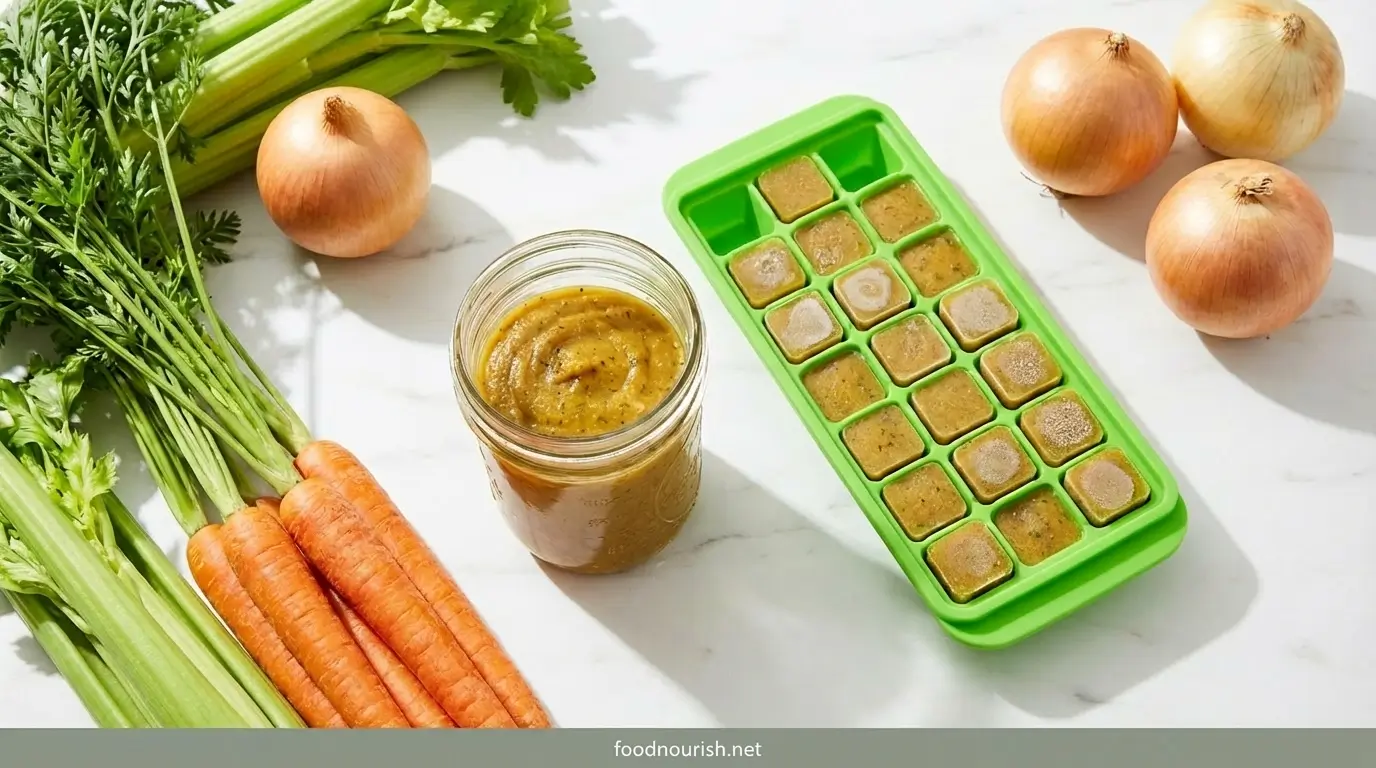
Commercially produced bouillon cubes rely on deception. You buy them for convenience, yet you mostly pay for salt, palm oil, and monosodium glutamate (MSG).
The actual vegetable content in leading brands often sits below 4% [1]. Real flavor comes from whole ingredients, not dehydrated powders or stabilizers.
You can create a superior product at home using a technique called “Bouillon Paste.” This method concentrates flavors through reduction rather than dehydration.
You cook fresh vegetables down to a fraction of their original volume, blend them into a rich paste, and freeze them. The result is an intense, aromatic base that transforms plain water into a complex broth in seconds.
Why This Recipe Beats the Yellow Box
- Flavor Depth – Standard stock cubes taste linear because manufacturers dehydrate the ingredients. You lose the volatile aromatics during that harsh drying process. This recipe uses a “roasted reduction” method. You sauté the vegetables in fat before simmering them. This triggers the Maillard reaction, which browns the sugars in the onions and carrots. That browning creates a savory foundation that dehydrated powders cannot replicate.
- Control – You dictate the sodium level. Most commercial cubes contain up to 1,000mg of sodium per serving [1]. You also eliminate hidden allergens. Many store-bought brands use wheat-based fillers or yeast extracts that trigger sensitivities. This recipe is naturally gluten-free and vegan.
- Zero Waste – This method works as a reset button for your refrigerator. You can use limp celery, soft carrots, or slightly sprouted onions. The reduction process forgives texture imperfections that would ruin a salad. You save money by rescuing produce that would otherwise end up in the compost bin.
The Science of the “Scoopable” Paste
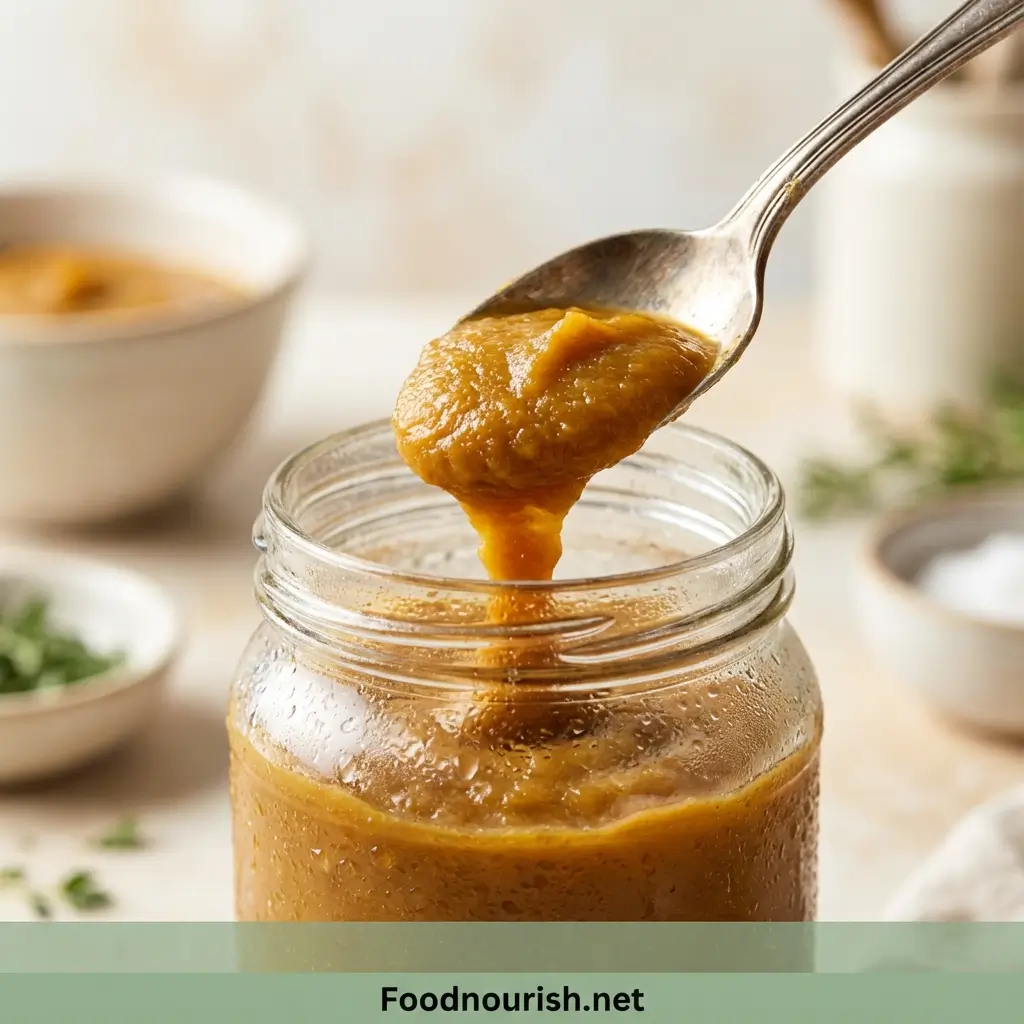
You might worry that a wet paste will freeze into a solid, unmanageable block. Specific culinary physics prevent this.
- Salt as a Preservative – Salt does more than season your food; it inhibits bacterial growth. A high salt concentration creates an environment where spoilage organisms struggle to survive. This extends the shelf life of your paste even before you freeze it.
- The Magic Ratio – Salt lowers the freezing point of water. Pure water freezes at 32°F (0°C). When you saturate the vegetable water with salt and oil, the mixture remains soft even at 0°F (-18°C). A salt concentration of approximately 20% prevents the formation of hard ice crystals [2]. You can store this paste in a glass jar in the freezer and scoop out a tablespoon immediately. No chipping or thawing required.
Homemade Vegetable Bouillon Cubes
Homemade Vegetable Bouillon Cubes
Equipment
- 1 Large frying pan or wide sauté pan with lid Wide surface helps moisture evaporate faster.
- 1 Lid for pan You simmer covered first, then uncovered to reduce.
- 1 Cutting Board Use a stable board with a damp towel underneath.
- 1 Chef’s knife, 8 to 10 inch For fast, even chopping.
- 1 Vegetable peeler For potatoes and carrots.
- 1 Measuring cup spoons or kitchen scale Parsley is measured as 30 g.
- 1 Wooden spoon or silicone spatula For frequent stirring.
- 1 Immersion blender (stick blender) Blend directly in the pan off heat.
- 1 Ice cube tray or small silicone freezer mold Silicone releases cubes easier.
- Parchment paper Opyional (Only needed if freezing in a tray instead of molds).
- 1 Small tray or shallow pan Optional (If using parchment method).
- Freezer-safe container with lid or zip bags Optional (For long-term storage of cubes._
- Permanent marker and labels Optional (Date your batch and note “salty”).
Ingredients
- 2 tbsp Olive oil Use enough to coat the pan.
- 2 medium Onions Finely chopped.
- 2 medium potatoes Cut into small cubes.
- 2 medium zucchini Cut into small cubes.
- 3 medium carrots Cut into small cubes.
- 3 stalks celery Slice thin, include leaves if you have them.
- 4 cloves garlic Chopped
- 2 tsp salt Add to taste, start smaller, you can add more after blending.
- 30 g parsley Finely chopped, stirred in after blending.
Instructions
Prepare your vegetables
- Peel the potatoes and carrots
- Chop the onions fine so they soften fast.
- Dice potatoes, zucchini, and carrots into small, even cubes; aim for 1 cm pieces. This helps everything cook at the same speed.
- Slice celery thin and chop the garlic.
- Chop parsley and set it aside; you add it after blending to keep its flavor fresher.
Cook down into a concentrated base
- Put a large pan on medium heat and add a little olive oil.
- Add the chopped onions.
- Sauté until soft and glossy; stir often so they do not brown.
- Add the diced potatoes. Stir and cook for 5 minutes. This starts building a thicker base for cube texture.
- Add zucchini, carrots, celery, and garlic. Stir well.
- Cover with a lid and simmer for 15 minutes. Stir regularly so nothing sticks and the vegetables cook evenly.
Reduce moisture for better cubes
- Remove the lid. Add salt. Continue simmering uncovered for 10 to 15 minutes. Stir often. You want less water and more concentration so the paste freezes into firm cubes instead of icy ones.
Blend, portion, freeze
- Turn off the heat. Let the pan cool 2 minutes so blending is safer.
- Blend with an immersion blender until smooth. Scrape down the sides as needed.
- Stir in 30 g chopped parsley and mix well.
- Portion the paste into an ice cube tray or silicone mold.
- Freeze until completely solid. Pop cubes out and store in a freezer-safe container or bag. Keep frozen.
Notes
- Dice Size: Keep your dice small. Big chunks leave you with a watery mix and weak cubes. Aim for 1 cm pieces.
- Salt Control: Control salt early, then adjust after blending. Start with less salt, taste, then add more. This paste concentrates flavor.
- Reduction is Key: Do not skip the uncovered simmer. That 10 to 15 minutes drives off water and makes cubes freeze firmer.
- Safety: Cool a bit before blending. Hot steam can splash and burn you. Blend off heat and keep the blender head fully submerged.
- Molds: Use silicone molds if you can. You will release cubes faster and cleaner than rigid plastic trays.
- Storage: Store cubes airtight. Freezer air causes freezer burn and dull flavor. Press air out of bags.
- Usage: How much to use: start with 1 cube for a small pot, then add more only if you need it. You can always add, you cannot remove.
- Herbs: If you want a stronger “broth” taste, add herbs you like during simmering, then blend, for example thyme or rosemary, but keep amounts small so you do not overpower everything.
Ingredients for Maximum Umami (The Secret Sauce)
The recipe card below details a classic base, but you can elevate the savory profile with these optional boosters.
The Base (Mirepoix) You need onions, celery, and carrots. These provide the aromatic triad of Western cooking. Leeks add a sweeter, more complex onion flavor if you have them.
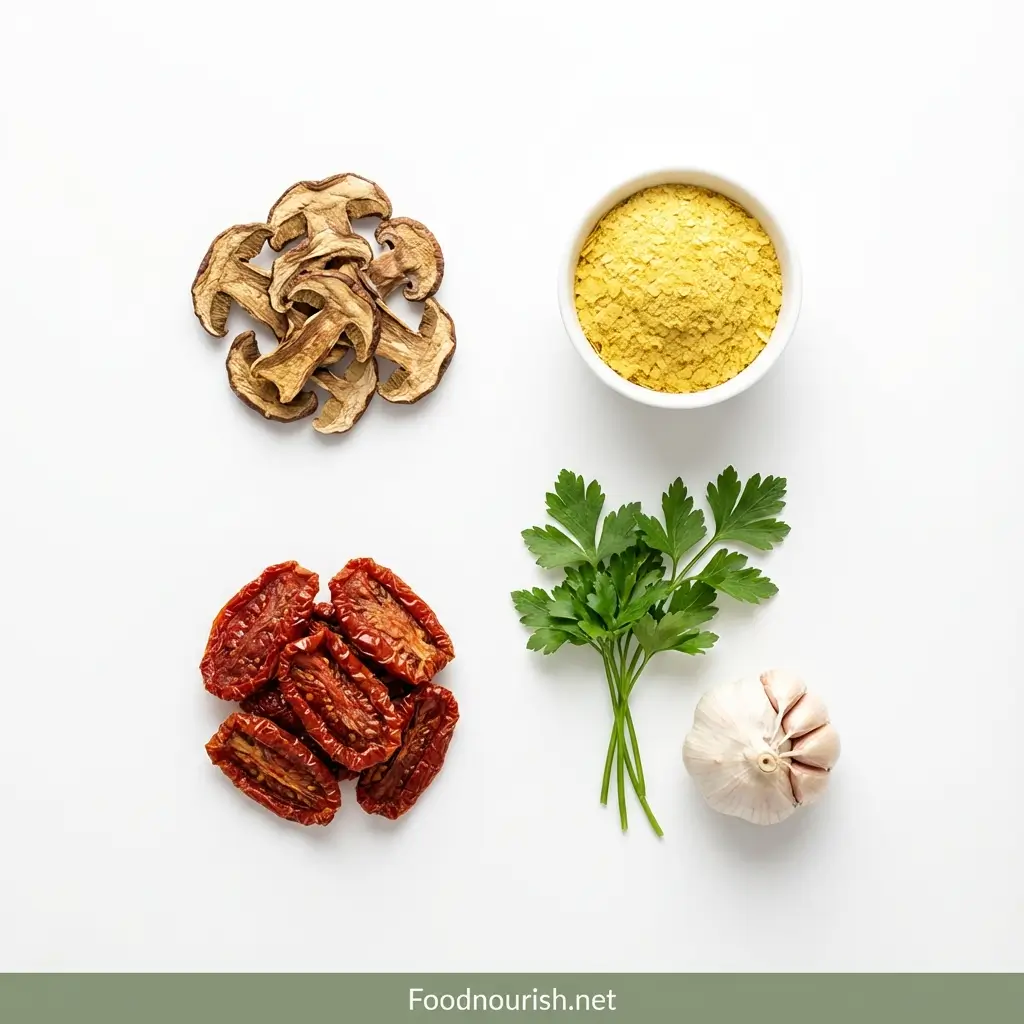
The Umami Boosters Vegetables alone can taste sweet. You need glutamate-rich ingredients to mimic the savory punch of boxed cubes.
- Dried Porcini/Shiitake Mushrooms: These provide deep, earthy notes.
- Sun-dried Tomatoes: Tomatoes naturally contain high levels of glutamates.
- Nutritional Yeast: This adds a savory, cheese-like background note.
- Fresh Herbs: Parsley brings freshness. Lovage acts as a natural flavor enhancer often called the “Maggi herb.”
The Fat You must use fat to carry flavor compounds that are not water-soluble. Olive oil works best for Mediterranean profiles.
Storage Instructions & Shelf Life
- Refrigerator The high salt content allows the paste to survive in the fridge for approximately two weeks. Always use a clean spoon to prevent contamination.
- Freezer (Recommended) Freezing offers the best longevity. The paste retains quality for 6 months or longer. The flavors will remain stable, though you might notice slight ice crystal formation after month four.
- Dehydrator Variation If freezer space is tight, you can spread the paste onto dehydrator sheets. Dry at 135°F (57°C) until brittle, then grind into a powder. This powder is shelf-stable in a cool, dark cupboard.
How to Use Your Homemade Bouillon
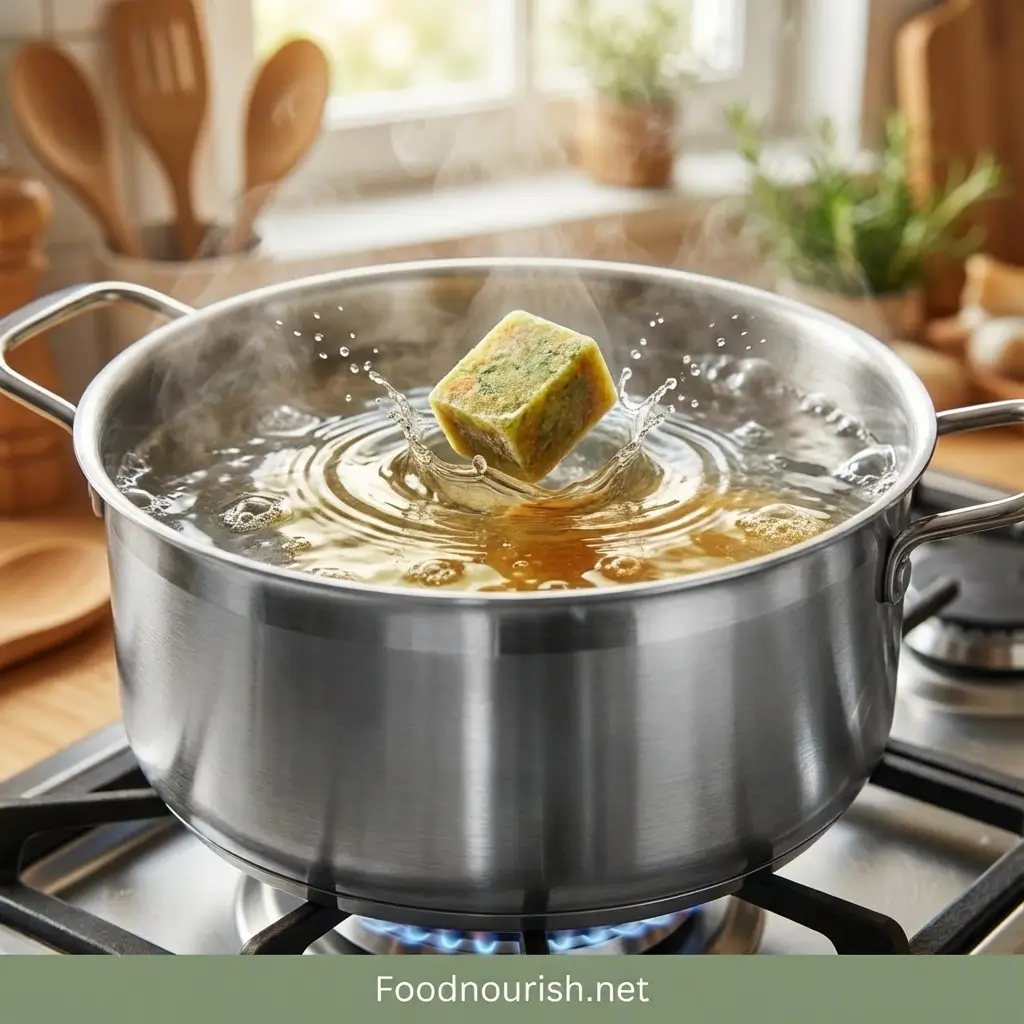
- The Golden Ratio Dissolve one tablespoon of paste (or one cube) into one cup of boiling water. This yields one cup of strong, seasoned stock.
- Direct Application You do not always need to make liquid stock. Stir the paste directly into risotto for instant depth. Massage it into kale for a salad dressing base. Add a cube to the water when cooking rice or quinoa to infuse the grains from the inside out.
- The “Tea” Test Before you commit a whole batch to a soup, make a cup of “broth tea.” Dissolve one teaspoon in hot water and drink it. If it tastes bland, your paste needs more salt. If it tastes aggressive, use less paste in your final dish.
Troubleshooting Common Mistakes
- “It’s too salty!” The paste must taste uncomfortably salty on its own. It acts as a concentrate. You dilute it significantly when cooking. If you reduce the salt too much, you lose the preservation benefits and the flavor punch.
- “It’s icy or watery” You likely did not cook enough water out during the uncovered simmering phase. Return the paste to the pan and cook for another 5-10 minutes. The mixture should look like thick hummus, not soup.
- “It tastes bitter” This usually happens if you burn the garlic or brown the celery leaves too aggressively. Keep the heat moderate and stir frequently.
Frequently Asked Questions (FAQ)
Conclusion
You now possess the blueprint to break free from industrial stock cubes. You save money, reduce kitchen waste, and elevate every soup you simmer. Start a “broth bag” in your freezer today for your scraps.
What secret ingredient do you add to your stock?
