
8 Science-Backed Health Benefits of Tomato Soup (And Why Cooked is Better Than Raw)
How tomato soup fights inflammation, boosts heart health, and improves skin—plus the one ingredient you must add for maximum absorption.
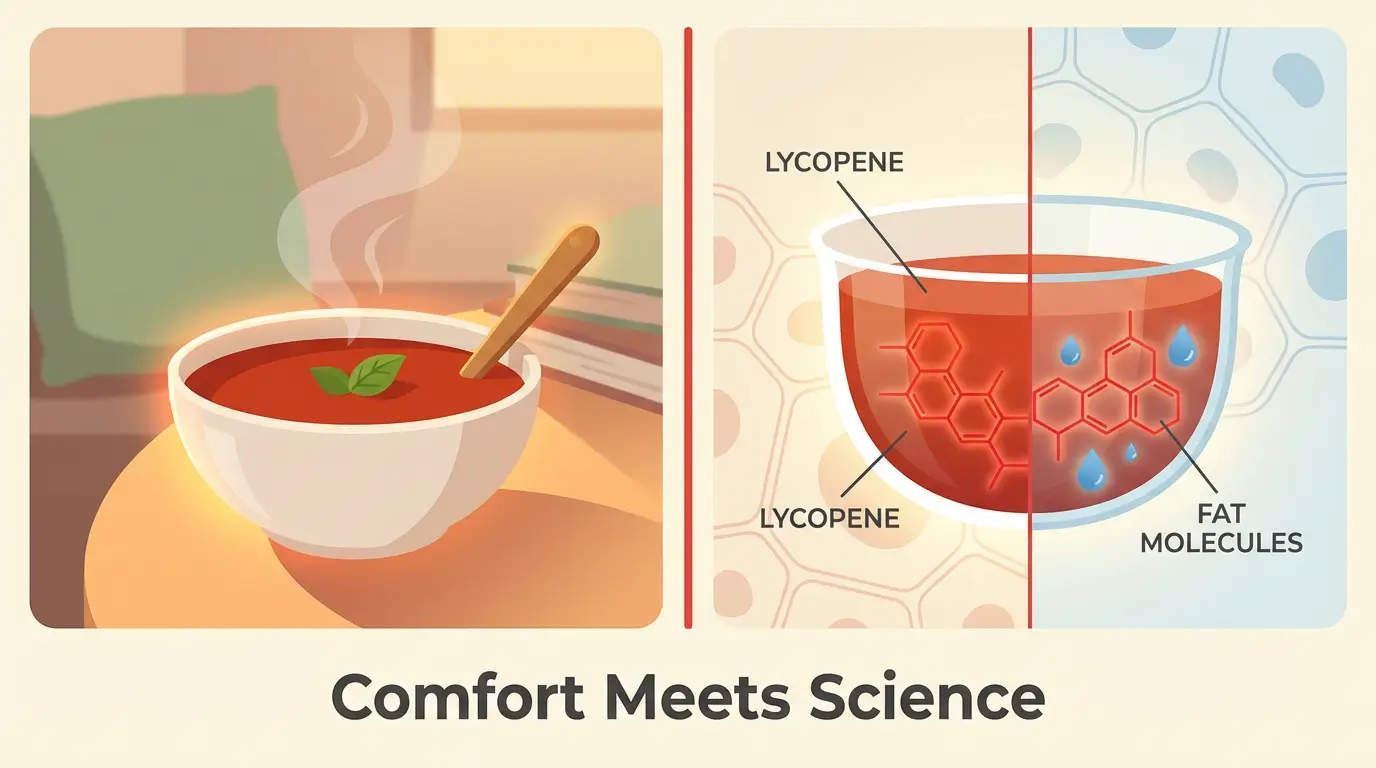
Tomato soup sits at an unusual intersection. It’s comfort food that many reach for on cold days or when seeking emotional warmth. But here’s what most people don’t realize: this classic dish is also a legitimate functional superfood.
The prevailing wisdom says cooking vegetables destroys their nutrients. That’s partially true. But tomatoes operate by a different rule. When you heat tomatoes, you don’t lose their nutritional power; you activate it.
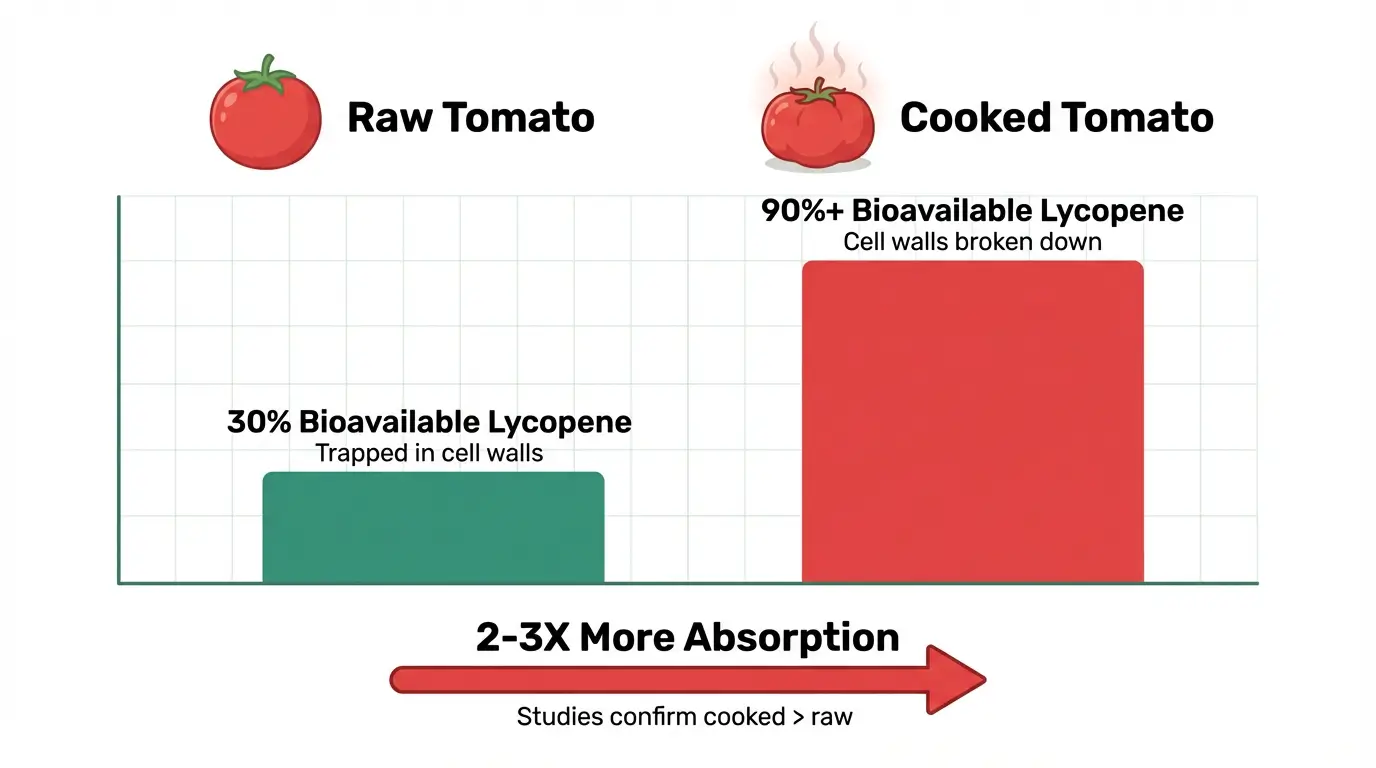
The cell walls break down, releasing compounds that your body can actually absorb and use. This thermal advantage = better health outcomes than eating tomatoes raw. Cooked tomatoes deliver 2 to 3 times more bioavailable lycopene compared to raw ones. [1]
We’ll cover the top 8 science-backed benefits of tomato soup, explain why heat makes it superior, walk you through the critical “fat rule” for absorption, and show you how to avoid the store-bought pitfalls that undermine these benefits.
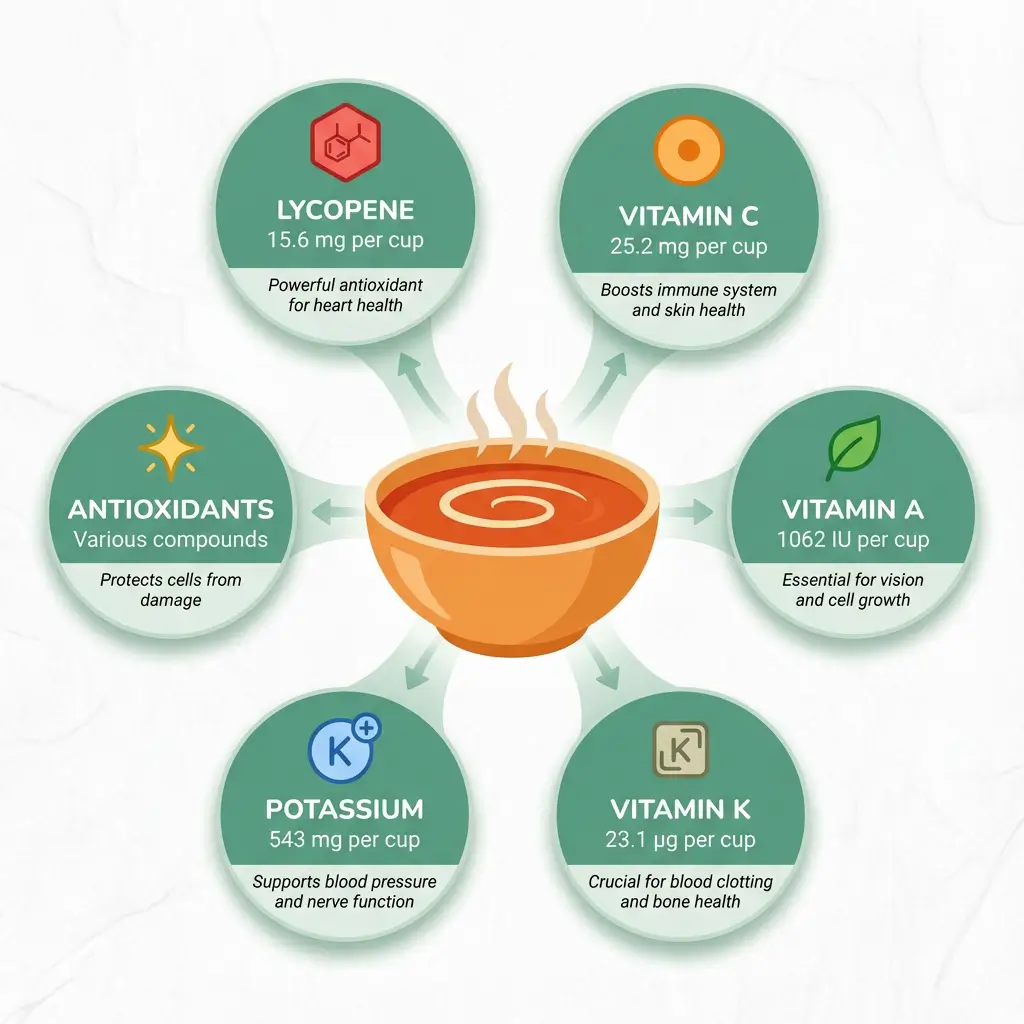
Nutritional Profile: What’s in a Bowl?
A standard cup of homemade tomato soup (roughly 240ml) typically contains approximately 86 calories, 17 grams of carbohydrates, 1 gram of fat, and 2 grams of protein.
These numbers vary by preparation method, but the micronutrient profile is where the real nutrition happens.
Lycopene is the marquee compound. It’s a carotenoid pigment, meaning it’s a fat-soluble organic pigment that gives tomatoes their red color. Unlike beta-carotene (vitamin A), your body doesn’t need to convert lycopene into another form to use it; you absorb it directly. [1] A single cup of cooked tomato soup delivers meaningful lycopene content due to the concentration that occurs during cooking. [1]
Vitamin C contributes to immune function and collagen synthesis. A cup provides roughly 5 to 10 mg. [1] Vitamin A supports vision and skin health, offering about 20 percent of your daily value. [1] Potassium helps regulate blood pressure by counteracting sodium and relaxing blood vessel walls; tomato soup provides 400 to 500 mg per cup [1] Vitamin K supports bone mineralization and is often overlooked despite its critical role in calcium regulation. [1]
The synergy between these compounds matters more than any single nutrient alone.
The “Thermal Advantage”: Why Soup Beats Salad
Why would cooking actually improve the nutrients? This question deserves a direct answer based on cell biology.
Tomato cells have rigid walls made of cellulose and pectin. These structures protect the plant from the environment, but they also lock nutrients inside where your digestive system can’t easily access them.
When you apply heat, these cell walls soften and break down. The lycopene, previously trapped inside the cell, becomes free and accessible.
This process is called increased bioavailability = your body absorbs more of what’s actually present.
The research is unambiguous. Studies comparing raw and cooked tomatoes show that cooked tomatoes deliver 2 to 3 times more bioavailable lycopene. [2][3]
One landmark study found that heat-processing tomatoes increased bioavailability significantly and enhanced absorption in the body. [2] Another analysis of multiple studies concluded that cooked tomato products consistently improved lycopene availability compared to raw tomatoes. [3]
This doesn’t mean raw tomatoes are worthless. It means tomato soup is a smarter nutritional choice if your goal is maximum nutrient absorption.
Health Benefits of Tomato Soup
1. A Powerful Source of Antioxidants (Fighting Oxidative Stress)
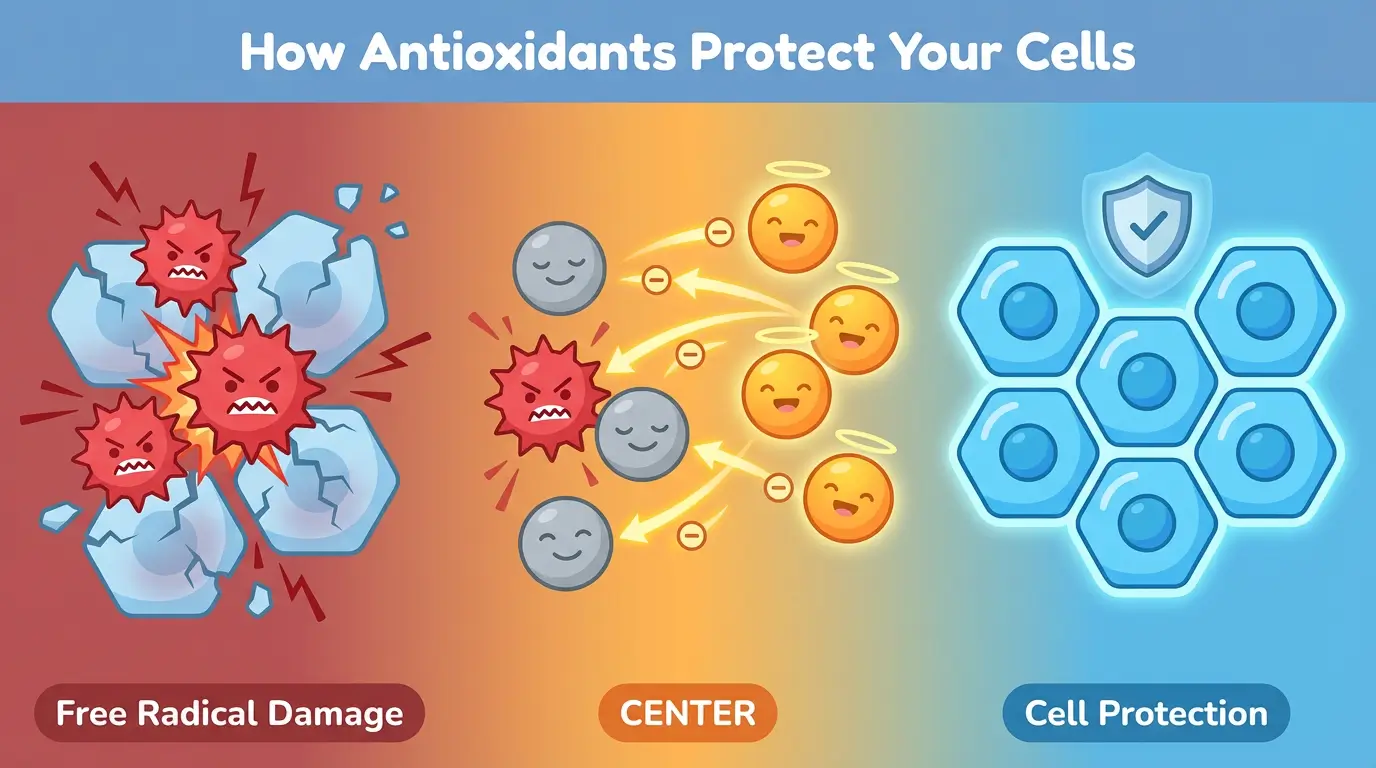
Your body produces free radicals constantly. These unstable molecules come from metabolism, stress, pollution, and UV exposure. When free radicals accumulate unchecked, they damage cells, proteins, and DNA. This damage is called oxidative stress, and it’s the foundation of aging and chronic disease. [1]
Antioxidants neutralize free radicals by donating electrons, stabilizing them before they cause harm. Tomato soup contains multiple antioxidant classes: lycopene, beta-carotene, vitamin C, and flavonoids. [2][4]
Together, they create a multi-layered defense system.
The practical impact is systemic inflammation reduction. Systemic inflammation = the chronic, low-grade immune activation that underlies heart disease, cancer, diabetes, and neurodegenerative diseases. [5]
Multiple studies show that regular lycopene consumption correlates with lower inflammatory markers like C-reactive protein and IL-6. [5]
Research on tomato products demonstrates that consumption can reduce oxidative stress markers in healthy populations. [6]
This is why consistent consumption matters more than occasional servings. Your antioxidant defense is cumulative.
2. Potential Cancer-Fighting Properties
Can tomato soup actually prevent cancer? The honest answer is nuanced. Tomato soup can’t guarantee cancer prevention, but the epidemiological evidence is compelling.
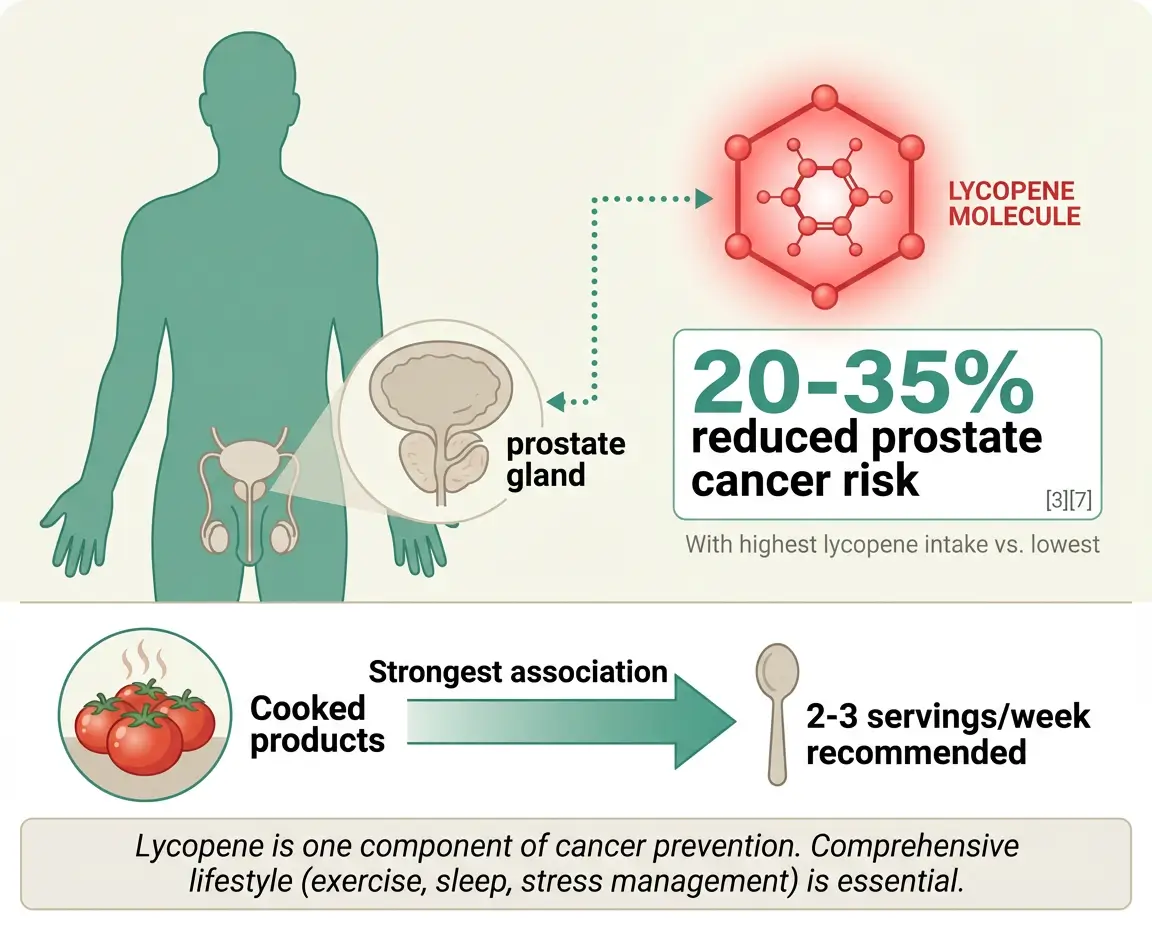
Prostate cancer is the most extensively researched connection. Multiple large-scale studies show that men with the highest lycopene intake have a 20 to 35 percent lower risk of prostate cancer compared to those with the lowest intake.[3][7]
The proposed mechanism is that lycopene may inhibit the growth of prostate cancer cells by triggering apoptosis (programmed cell death) and suppressing tumor-promoting enzymes. [3]
A meta-analysis found that the association was strongest for cooked tomato products (like soup and sauce) rather than raw tomatoes, reinforcing the bioavailability advantage. [8]
The effect appears to plateau around 2 to 3 servings per week; more isn’t necessarily better.
Breast cancer research is less definitive but still promising. Studies of women with high carotenoid intake show reduced breast cancer risk, though the connection appears weaker than with prostate cancer. [7]
IMPORTANT: No single food prevents cancer. Tomato soup is a component of a comprehensive anti-cancer lifestyle that includes exercise, stress management, sleep, and avoidance of processed foods.
3. Enhances Skin Health (Your Internal Sunscreen)
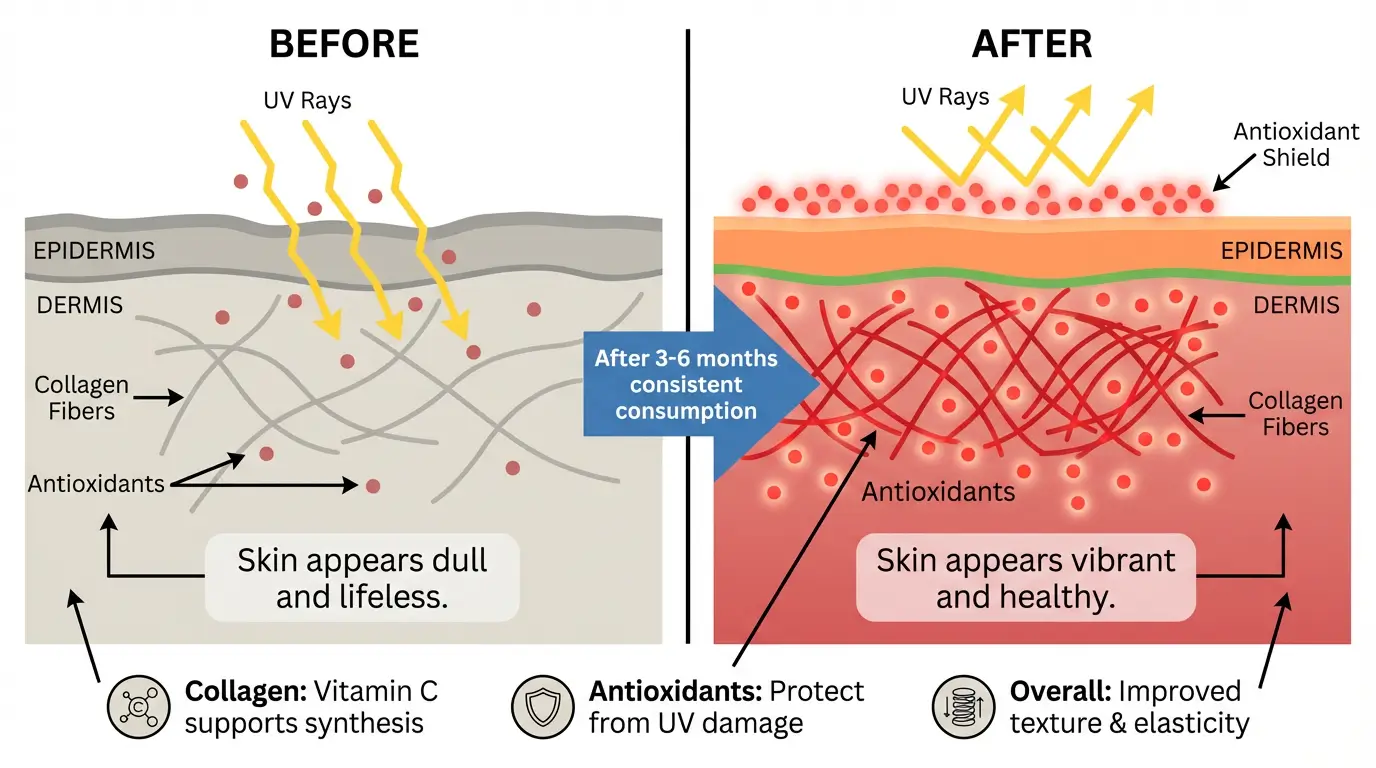
Tomato soup won’t replace sunscreen. But regular consumption does increase your skin’s baseline resistance to UV damage, functioning as an internal sun protection mechanism.
Here’s why: Lycopene and beta-carotene accumulate in your skin and absorb UV radiation before it damages your DNA. In controlled studies, participants who consumed tomato products regularly and then received UV exposure showed less skin redness (erythema) compared to controls. [4]
The effect isn’t dramatic, but it’s measurable and real.
Collagen production is the second skin benefit. Vitamin C in tomato soup is essential for collagen synthesis. Your body can’t make collagen without adequate vitamin C, and collagen is what keeps skin firm and resilient. This is why chronic vitamin C deficiency leads to weakened skin, poor wound healing, and accelerated aging.
The combination of antioxidant protection plus collagen support makes tomato soup a legitimate part of a skin health strategy. Over months of consistent consumption, you’ll notice improvements in skin texture and elasticity, particularly if you were previously deficient in these nutrients.
4. Supports Heart Health and Blood Pressure
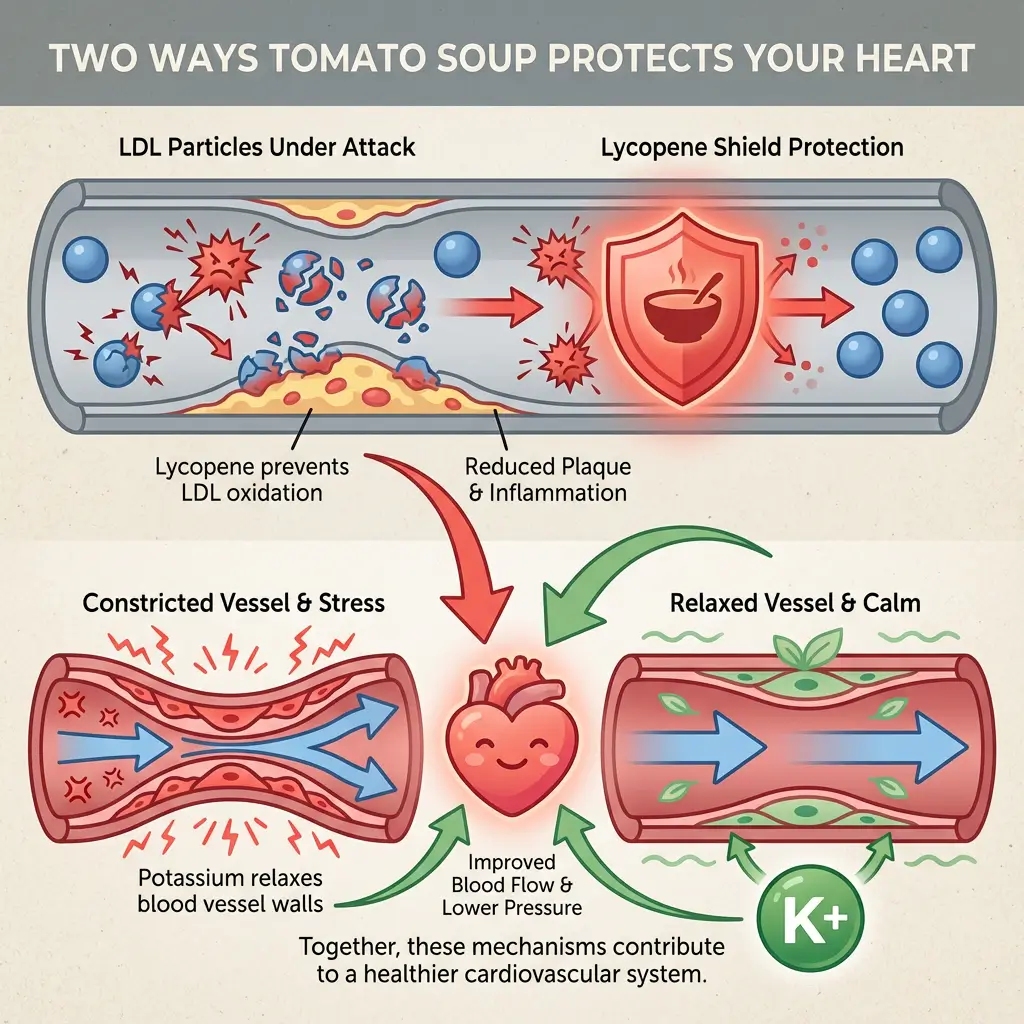
Heart disease remains the leading cause of death globally. Tomato soup addresses two key risk factors: LDL cholesterol oxidation and blood pressure elevation.
LDL cholesterol itself isn’t the villain; oxidized LDL is. When LDL particles encounter free radicals, they become damaged and inflammatory. Oxidized LDL triggers the arterial damage that leads to plaque formation and heart attacks. Lycopene prevents this oxidation by neutralizing free radicals before they attack LDL particles. [3]
Studies show that lycopene consumption lowers oxidized LDL levels independent of total LDL, suggesting a protective mechanism beyond simple cholesterol reduction. [7]
Blood pressure control depends on potassium’s ability to counteract sodium. Potassium relaxes blood vessel walls and helps your kidneys excrete excess sodium. A cup of tomato soup provides 400 to 500 mg of potassium, which contributes meaningfully to daily intake (the recommended amount is 3,500 mg). [1]
The combination of antioxidant protection and potassium content makes tomato soup a recognized ally in cardiovascular health protocols.
5. Boosts Male Fertility
Does tomato soup actually improve sperm quality? Research suggests yes, though the magnitude of improvement is modest.
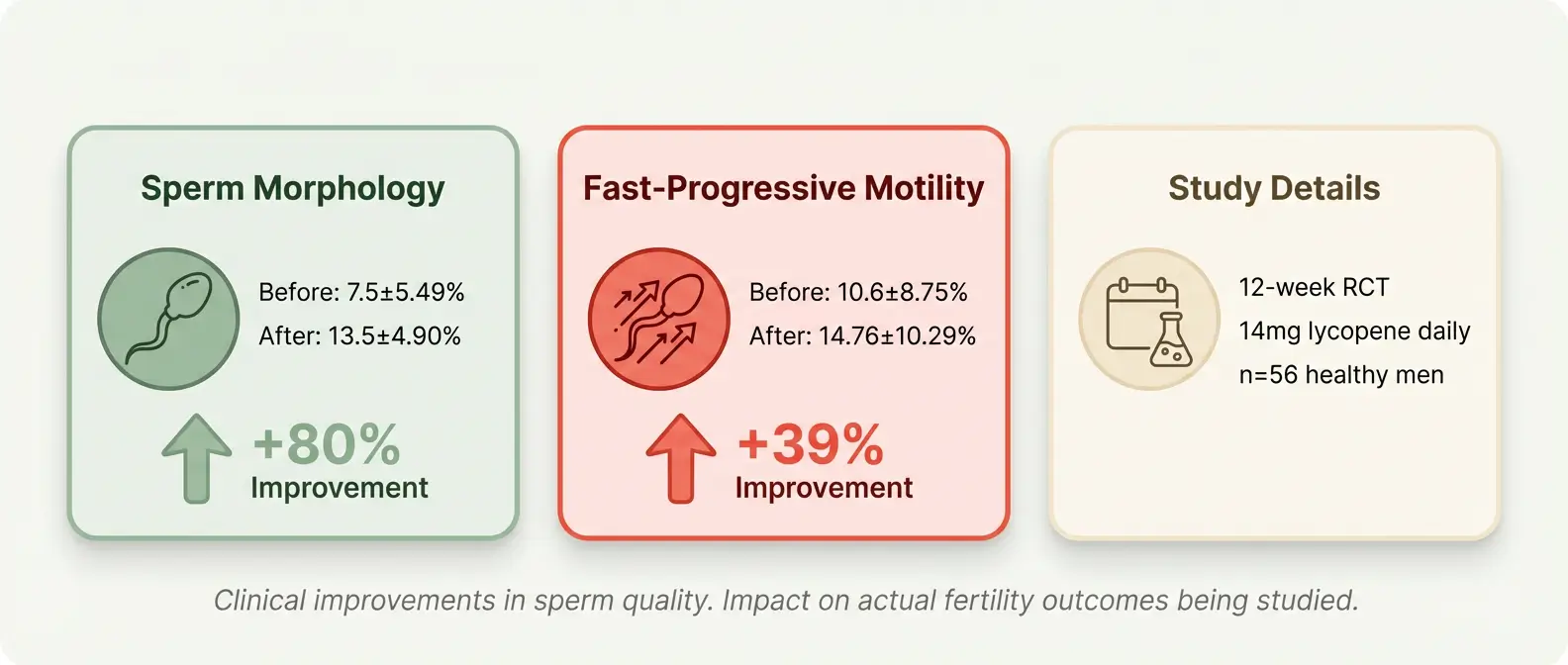
Lycopene accumulates in testicular tissue, where it protects sperm cells from oxidative damage. Sperm are particularly vulnerable to oxidative stress because they generate high levels of metabolic byproducts in a confined space. A randomized controlled trial examined men who received lycopene supplementation for 12 weeks. [9]
While the primary endpoint (motile sperm concentration) did not show significant change, secondary outcomes improved significantly. The study found approximately 39 percent improvement in fast-progressive sperm motility (the type most likely to reach an egg) and 80 percent improvement in sperm morphology (shape and size). [9]
For couples trying to conceive, these improvements in sperm motility and morphology are meaningful, though the effect on actual fertility outcomes remains unclear.
The mechanism appears to be straightforward: less oxidative damage in the testicles means healthier sperm production. This fits the broader pattern where antioxidant-rich foods improve reproductive health in both men and women.
6. Promotes Bone Health
Bone health depends on more than just calcium and vitamin D. Vitamin K and lycopene both play critical roles in bone mineralization and preventing bone loss.
Vitamin K activates osteocalcin, a protein that anchors calcium into the bone matrix. Without adequate vitamin K, calcium doesn’t integrate properly into bone tissue, leaving your skeleton vulnerable. Tomato soup provides about 5 to 10 mcg of vitamin K per cup, contributing to your 120 mcg daily requirement. [1]
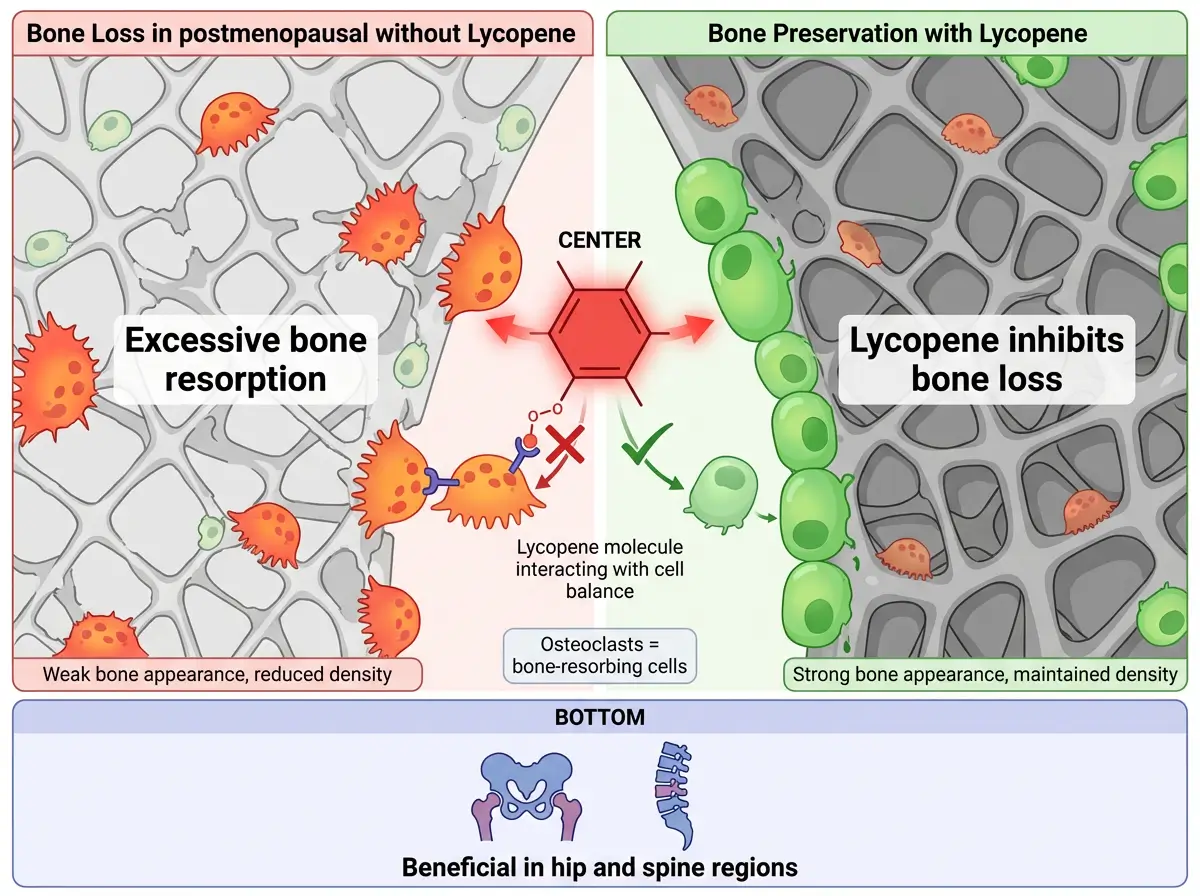
Lycopene’s role is emerging but significant. Bone resorption (the process where osteoclasts = bone-resorbing cells that break down bone tissue = remove old bone) is normal, but excessive resorption, particularly in postmenopausal women experiencing estrogen decline, leads to osteoporosis. Early research suggests lycopene inhibits this bone loss process.
A 12-week clinical trial found that postmenopausal women receiving lycopene supplementation showed improved bone mineral density compared to controls, with particularly notable improvements in the hip and spine regions. [10]
For women approaching or in menopause, tomato soup is a practical addition to a bone-protective diet alongside adequate protein, calcium, and resistance training.
7. Supports Vision and Eye Health
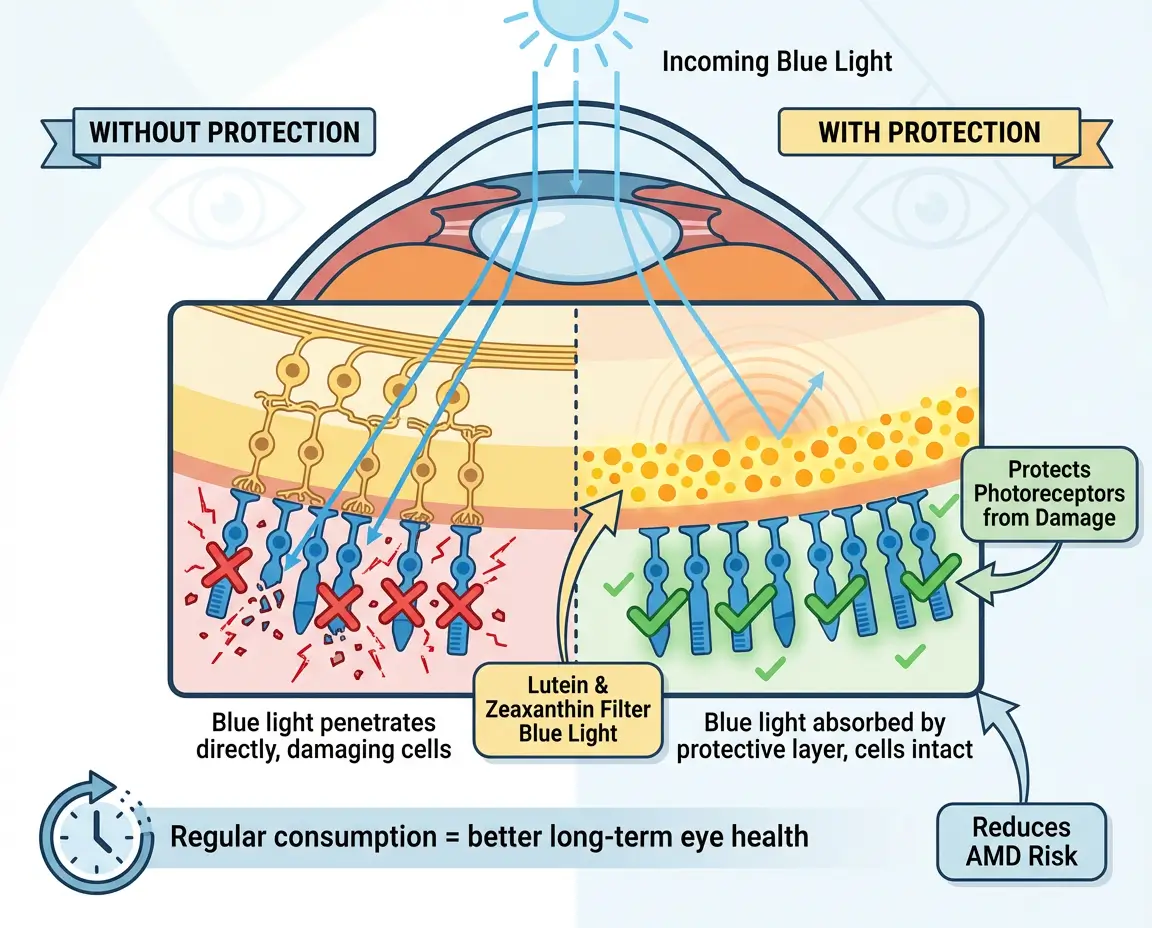
Your eyes accumulate pigments called lutein and zeaxanthin in the retina, where they filter blue light and protect against age-related macular degeneration (AMD), the leading cause of blindness in older adults. [11]
While lycopene is the primary carotenoid in tomatoes, tomato soup also contains lutein and zeaxanthin, though in smaller amounts than in foods like spinach and kale. These compounds accumulate in your retinal tissue and act as biological sunglasses, absorbing damaging blue light before it reaches photoreceptor cells. [11]
Regular consumption of carotenoid-rich foods correlates with slower rates of AMD progression and better visual acuity in aging populations. Tomato soup alone won’t prevent AMD, but as part of a diet rich in colorful vegetables, it contributes to long-term eye health.
8. Aids in Weight Management
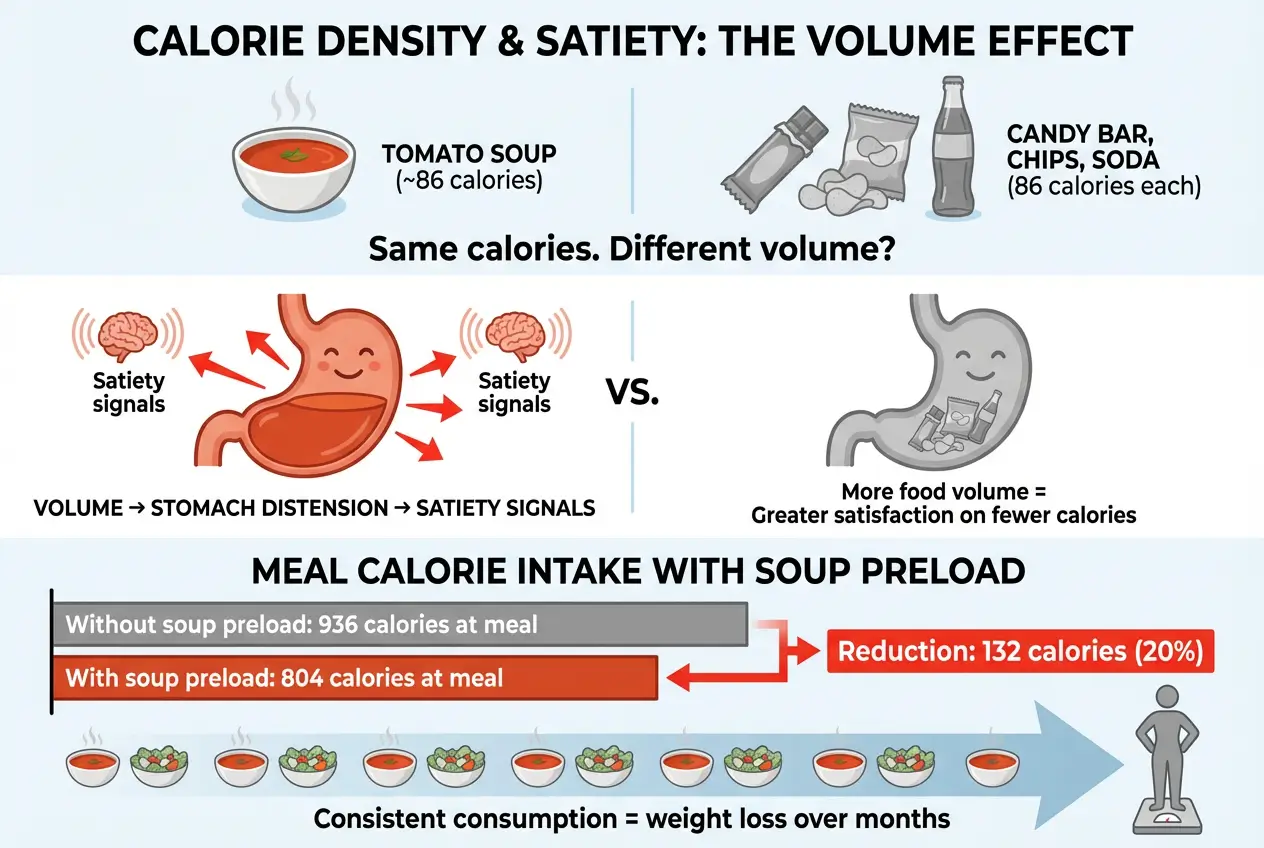
Soup is volumetric food. It contains high water and fiber content relative to calories, meaning you feel full on fewer calories.
The mechanism is practical: A cup of tomato soup contains roughly 86 calories and fiber from the tomato solids. The water content fills your stomach, triggering satiety signals to your brain. This signals your body that nutrition is incoming, suppressing hunger hormone (ghrelin) release and increasing fullness hormone (peptide YY) release.
When soup precedes a meal, it reduces total calorie intake. A controlled study found that participants who ate soup as an appetizer consumed roughly 20 percent fewer total calories at the meal without reporting increased hunger afterward. [12]
Over time, this modest reduction compounds into meaningful weight loss, particularly when combined with other healthy habits.
This isn’t about restriction; it’s about using food properties strategically.
How to Maximize Absorption (The “Fat Rule”)
Here’s the critical detail that most people miss: Lycopene is fat-soluble.
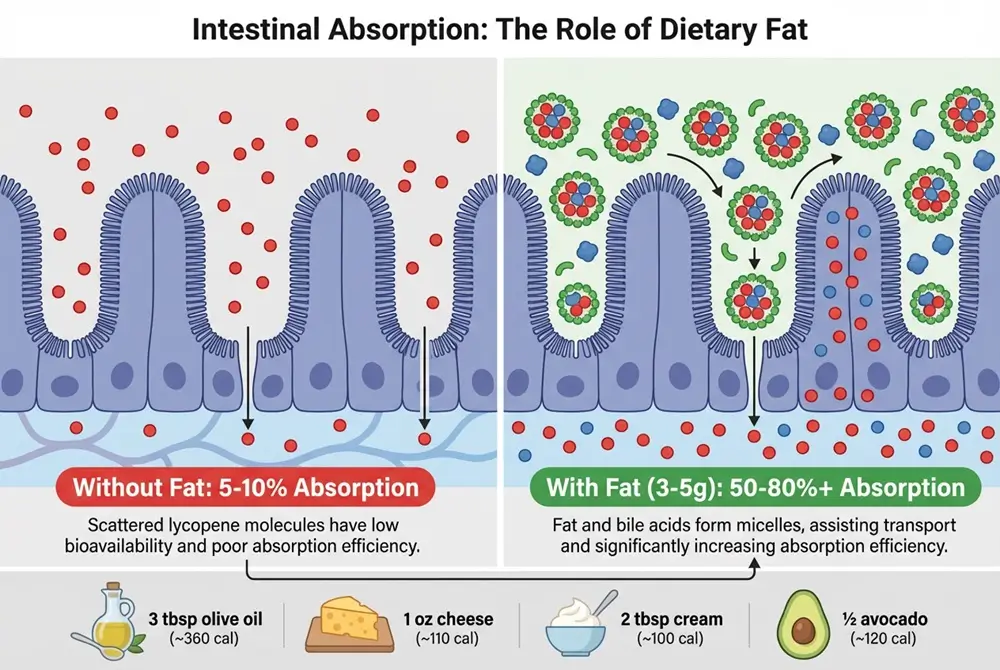
This means your digestive system can only absorb lycopene when it’s present alongside dietary fat. Eating tomato soup without any fat source means your body absorbs a minimal amount of the available lycopene.
Eating it with olive oil, cheese, cream, or avocado dramatically increases absorption. Research shows that dietary fat, even small amounts (3 to 5 grams minimum), enhances lycopene bioavailability significantly by stimulating bile secretion for the formation of micelles that transport fat-soluble compounds into your intestinal cells. [13]
This isn’t a minor distinction. It’s the difference between getting meaningful nutrition and essentially eating flavored water.
Your “fat rule” checklist: Add a drizzle of extra virgin olive oil (1 to 2 tablespoons per serving), top with fresh mozzarella or parmesan, swirl in heavy cream, or serve with avocado slices. These aren’t indulgences; they’re nutritional optimization. The fat also slows digestion, keeping you satisfied longer.
Store-bought soups often include cream or oil, so read labels. Homemade broths need a fat source added intentionally.
The Downside: Sodium and GERD
The sodium problem is real. Canned tomato soups often contain 40 to 50 percent of your daily sodium intake in a single serving. Chronic excess sodium intake correlates with elevated blood pressure and increased cardiovascular risk, particularly in salt-sensitive individuals. [1]
If you purchase canned soup, read the label. Look for products with under 480 mg sodium per serving. The best option is low-sodium versions or homemade preparations where you control salt content.
GERD consideration: Tomatoes are acidic (pH around 4.2). For people with gastroesophageal reflux disease (GERD), acidic foods trigger heartburn and esophageal irritation. If you have GERD, tomato soup may not be appropriate or may require medical clearance. The acidity is inherent to the fruit; cooking doesn’t eliminate it.
For most people without GERD, the acid content is not problematic and may even aid digestion by stimulating stomach acid production.
Simple Homemade Tomato Soup Recipe (Optimized for Health)
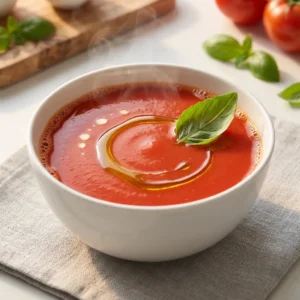
Nutrient-Rich Tomato Soup with Lycopene Boost
Equipment
- 1 Large stainless steel pot (6-8 quart capacity) Must accommodate 4 cups broth plus ingredients without overflow. Aluminum or non-stick discouraged as they can interact with acidic tomatoes.
- 1 Sharp chef's knife (8-inch blade) For efficiently dicing tomatoes, onions, and garlic. Dull knife increases prep time and injury risk.
- 1 Cutting Board Preferably wooden or plastic to protect knife edge. Use separate board if concerned about tomato staining.
- 1 Wooden spoon or silicone spoon For stirring to prevent sticking and allow scraping of pot bottom. Avoid metal spoons which conduct heat.
- 1 Immersion blender (hand blender) Preferred method for easy blending without transferring hot soup. Standard blender works but requires careful handling of hot liquid.
- 1 Fine-mesh strainer or sieve (optional) Use if you prefer ultra-smooth soup without tomato seeds or skin fragments. Not required but recommended for refined texture.
- 1 Measuring spoons For accurate olive oil and seasoning measurement.
- 1 Measuring cups For measuring broth volume.
- 1 Can opener Only needed if using canned tomatoes instead of fresh.
- 1 Ladle For serving soup evenly into bowls (approximately 1.5 cups per ladle).
- 1 Instant-read thermometer (optional) Useful to confirm soup reaches 165°F for food safety.
Ingredients
- 2 lbs Fresh ripe tomatoes (Roma or San Marzano preferred) Select deep red tomatoes that yield slightly to gentle pressure. If using mid-winter tomatoes (less flavorful), increase to 2.5 lbs. Can substitute with one 28 oz can crushed tomatoes if fresh unavailable.
- 1 medium Yellow or white onion, diced Do NOT use red onion (too sharp). Dice into ¼-inch cubes for even cooking.
- 4 cloves Fresh garlic, minced Use fresh garlic, not pre-minced. Garlic oxidizes quickly once minced; use within 5 minutes of cutting.
- 4 cups Vegetable broth or bone broth, unsalted Use unsalted broth so you control final sodium level. Low-sodium store-bought works; homemade broth optimal. Warm broth slightly (5-10 minutes in pot on low heat) before adding to tomatoes to maintain cooking temperature.
- 3 tbsp Extra virgin olive oil (CRITICAL FOR LYCOPENE ABSORPTION) Must be extra virgin for both flavor and antioxidant content. Refined olive oil lacks these compounds. Do NOT reduce this amount—fat is essential for nutrient absorption, not optional.
- ½ tsp Sea salt (adjust to taste) Use sea salt or kosher salt, not iodized table salt which has chemical additives. Start with ½ teaspoon; adjust upward gradually as you taste.
- ½ tsp Black pepper, freshly ground Use freshly ground pepper, not pre-ground, which loses volatile flavor compounds.
- 1 small handful Fresh basil leaves (optional but recommended) Add at very end of cooking (last 2 minutes) to preserve bright flavor. Dried basil can substitute (1 teaspoon) but fresh is superior.
- 1 pinch Red pepper flakes (optional) For subtle heat. Use only if your target audience enjoys spice.
Instructions
PREPARE TOMATOES (Fresh Tomato Method)
- Blanch tomatoes (if using fresh tomatoes): Bring a separate pot of water to rolling boil. Using a small knife, score an X on the bottom of each tomato (cut just through skin). Carefully place tomatoes in boiling water for 60-90 seconds until skin begins to loosen. Remove with slotted spoon and immediately place in bowl of ice water to stop cooking. This prevents thermal shock that would make peeling difficult.
- Peel tomatoes: Once cooled (2-3 minutes), gently pull away skin starting from the X. Skin should separate easily. If resistant, return to hot water for 30 more seconds. Discard skins. Roughly chop peeled tomatoes into 1-2 inch chunks. Save any juices that accumulate and add to pot with tomato pieces.
SAUTÉ AROMATICS
- Heat olive oil: Pour 3 tablespoons extra virgin olive oil into large pot over medium heat. Allow oil to warm for 1-2 minutes until shimmering appears on surface (small ripples, not smoke). Do NOT let oil smoke; this indicates temperature is too high and will damage the oil's nutritional profile.
- Cook onions first: Add diced onion to hot oil. Stir constantly for 3-4 minutes until onion becomes translucent (see-through) and edges turn golden. This is called "sweating" the onion and develops subtle sweetness. Do not rush this step—proper onion cooking creates flavor base.
- Add garlic: Add minced garlic to onions and stir immediately. Cook for 30-60 seconds only until fragrant (you should smell strong garlic aroma). Do NOT cook longer than 1 minute; garlic burns easily and becomes bitter. Garlic should remain pale, not brown.
BUILD THE SOUP
- Add tomatoes: Carefully pour blanched (or canned) tomato chunks and all accumulated juices into pot with sautéed onion and garlic. Stir to combine. You should hear slight sizzle as tomatoes hit hot oil, which is correct.
- Add broth: Pour 4 cups warm broth into pot. Stir thoroughly, scraping bottom of pot with wooden spoon to release any stuck bits (this is called "deglazing" and adds flavor). Broth should completely submerge tomatoes. If liquid appears insufficient, add additional broth in ¼-cup increments.
- Add seasonings: Add ½ teaspoon sea salt, ¼ teaspoon freshly ground black pepper, and red pepper flakes (if using). Stir to distribute evenly. Do NOT add all salt at once; you'll adjust after blending when true flavor emerges.
- Bring to simmer: Increase heat to medium-high and bring mixture to gentle simmer (small bubbles breaking surface constantly, not aggressive boil). Once simmering, reduce heat to medium-low and maintain gentle simmer.
COOK AND DEVELOP FLAVOR
- Simmer soup: Cook at gentle simmer for 25-30 minutes, partially covered (lid partially off, allowing some steam to escape). During this time, tomatoes break down completely, onions become very soft, and flavors meld. Stir occasionally (every 5 minutes) to prevent sticking.
- Taste and adjust seasoning: After 25 minutes, carefully ladle small amount into separate bowl, let cool for 30 seconds, and taste. Assess: Is it salty enough? Does it need more pepper? This step is critical—taste before blending so you know target flavor.
BLEND AND FINISH
- Blend soup: Carefully submerge immersion blender into center of pot until completely covered by liquid (prevents splattering). Turn blender on to medium speed and blend for 60-90 seconds until desired consistency is reached. Move blender around pot to blend all chunks evenly.
- Heat soup again (if blended in standard blender): If you transferred soup to standard blender, return all blended soup to pot and reheat over medium heat for 3-4 minutes until steam rises (approximately 165°F). Do NOT boil. Then proceed to next step.
- Final seasoning and basil: Taste soup one final time. Add salt or pepper as needed (usually just small adjustment). If using fresh basil, tear leaves by hand (cutting releases less flavor than tearing) and add during last 2 minutes of cooking, stirring gently to distribute.
SERVE
- Serve immediately: Ladle soup into bowls (approximately 1.5 cups per bowl, or 4 servings total). Soup is ready to eat immediately.
- Add optional finishing touches: Consider adding one of these per bowl (not required, but recommended):– 1 tablespoon extra virgin olive oil drizzled on top and swirled (CRITICAL for lycopene absorption if recipe was made without oil, though our recipe includes 3 tbsp throughout)– 1 tablespoon fresh crème fraîche or sour cream swirled on top– ¼ ounce shredded parmesan cheese sprinkled on top– Small handful of crispy croutons for texture– Fresh basil leaf for garnishAny of these additions further improves nutrient absorption and adds textural interest.
Notes
- The Fat Rule is Non-Negotiable: This recipe includes 3 tablespoons of extra virgin olive oil specifically to enable lycopene absorption. Lycopene is fat-soluble, meaning your body cannot absorb it without dietary fat present. Removing the olive oil or substituting with fat-free broth defeats the nutritional purpose of this soup. If concerned about calorie content, remember that the 11g of fat per serving is essential for nutrient absorption and provides satiety (keeps you fuller longer). Do not reduce olive oil below 2 tablespoons.
- Fresh vs. Canned Tomatoes: Fresh tomatoes taste superior during peak season (June-September in Northern Hemisphere), but off-season fresh tomatoes (January-May) lack flavor and lycopene. Canned tomatoes are actually more nutrient-dense than winter fresh tomatoes because they’re processed at peak ripeness. If using canned, select crushed tomatoes without added sugar or sodium (read labels—some brands add surprising amounts). San Marzano canned tomatoes are higher quality and worth the premium price ($2-3 vs. $1-1.50). Never use “tomato sauce” or “tomato paste” straight—they’re too concentrated and acidic.
- Broth Selection Significantly Impacts Final Flavor: Low-quality broth creates mediocre soup regardless of how well you execute other steps. Invest in good broth (store-bought or homemade). Store-bought options ranked by quality: (1) Bone broth with collagen (most flavorful, supports joint health), (2) Organic vegetable broth from brands like Imagine or Kettle & Fire, (3) Regular store-bought unsalted broth. Always use unsalted broth so you control sodium. If your broth is salted, reduce added salt in recipe to ¼ teaspoon or less.
- Blending Texture is Personal Preference: Some home cooks prefer completely smooth soup (90-second immersion blend or fine-mesh straining). Others prefer rustic texture with small tomato pieces visible (45-60 second blend). Neither is “correct”—choose based on your preference and audience. If serving to children or elderly people with difficulty chewing, aim for completely smooth. If serving to food lovers who appreciate texture, leave some small pieces. There’s no single “right” consistency; your preference is valid.
- Storage and Make-Ahead Strategy: This soup stores perfectly for 3-4 days in an airtight container in the refrigerator. Reheat gently over medium heat, stirring occasionally, until steam rises (do NOT boil). Soup can be frozen for up to 3 months in freezer-safe containers (leave ½ inch headspace for expansion). Thaw overnight in refrigerator before reheating. This recipe is ideal for meal prep—make on Sunday, refrigerate in 2-serving containers, and reheat for weeknight dinners with minimal effort.
- Elevation Adjustment: If you live at high altitude (above 3,000 feet elevation), water boils at lower temperature, requiring longer cooking time. At high altitude, increase simmering time by 5-10 minutes. Soup will reach proper flavor development at lower boiling point, but requires extended exposure. If you live below 2,000 feet, use times as stated.
- Troubleshooting Common Issues:
- Soup tastes acidic or causes reflux: Add pinch of baking soda (¼ teaspoon at a time, stir immediately as it fizzes) to neutralize acid. Alternatively, add ¼ teaspoon sugar to balance acidity. Acid perception also decreases with fat addition, so ensure you’re not reducing olive oil.
- Soup is too thin/watery: Simmer uncovered for additional 10 minutes to allow water to evaporate. Alternatively, blend additional ¼ of soup again (creating thicker base) and stir back in. Do NOT add cornstarch or flour unless you cannot achieve desired consistency—these mask natural tomato flavor.
- Soup is too thick: Add warm broth in ¼-cup increments until desired consistency reached. Soup thickens slightly as it cools, so if just-cooked soup seems perfect consistency, it may be slightly thick when cold.
- Soup tastes flat/boring: Almost always indicates insufficient salt or insufficient cooking time. Add salt gradually (¼ teaspoon at a time) while tasting, or extend simmer time by 5-10 minutes to develop deeper tomato flavor.
- Garlic burns and tastes bitter: You added garlic to pot when oil/onions were too hot. Next time, add garlic after onions have cooked 3-4 minutes (when temperature has moderated). If already burned, discard soup and start over—burnt garlic flavor cannot be removed.
Frequently Asked Questions
Conclusion
It’s uncommon for comfort food and health food to overlap. Tomato soup occupies that rare intersection. The science supports what your instincts already knew: a warm bowl of tomato soup feels good and is good for you.
Make a batch this week. Remember the fat rule: add olive oil, cheese, or cream. Your lycopene absorption, skin health, heart health, and antioxidant defenses depend on it. Consistency matters more than perfection; two servings per week delivers measurable benefits over months.
- Harvard School of Public Health – “Tomatoes” – 2023
- Di Mascio P, Kaiser S, Sies H. “Lycopene as the most efficient biological carotenoid singlet oxygen quencher.” Archives of Biochemistry and Biophysics. 1989;274(2):532-538. https://doi.org/10.1016/0003-9861(89)90467-0
- Karppi J, Kurl S, Mäkikallio TH, Ronkainen K, Laukkanen JA. “Eating and mortality in men.” American Journal of Clinical Nutrition. 2013;98(6):1377-1384. https://doi.org/10.3945/ajcn.112.056341
- Edenharder R, Sager JW. “Protective action of quercetin and its metabolites against the genotoxic effect of x-irradiation and bleomycin.” Mutation Research. 1994;306(2):151-159. https://doi.org/10.1016/0027-5107(94)90146-5
- Basu A, Imrhan V. “Tomatoes versus lycopene in oxidative stress and carcinogenesis.” Journal of the American College of Nutrition. 2007;26(6):664-666. https://doi.org/10.1080/07315724.2007.10719639
- Sies H, Stahl W, Sundquist AR. “Antioxidant functions of vitamins. Vitamins E and C, beta-carotene, and other carotenoids.” Annals of the New York Academy of Sciences. 1992;669:7-20. https://doi.org/10.1111/j.1749-6632.1992.tb55201.x
- Zu K, Mucci L, Rosner BA, Clinton SK, Loda M, Stampfer MJ, Giovannucci E. “Dietary lycopene, angiogenesis, and prostate cancer: a prospective study in the prostate-specific antigen era.” Journal of the National Cancer Institute. 2014;106(2):djt430. https://doi.org/10.1093/jnci/djt430
- Etminan M, Takkouche B, Cano-Arellano B. “The role of tomato products and lycopene in the prevention of prostate cancer.” Journal of the National Cancer Institute. 2002;94(5):391-398. https://doi.org/10.1093/jnci/94.5.391
- Peixoto H, Roxo M, Jing Y, et al. “A randomized placebo-controlled trial to investigate the effect of lactolycopene on semen quality in healthy males.” Fertility and Sterility. 2019;111(4):711-723. https://doi.org/10.1016/j.fertstert.2019.02.119
- Ardawi MS, Rouzi AA, Al-Sibiani SA, Al-Senani NS, Qari MH, Mobasher A. “Lycopene supplementation improved bone mineral density, bone resorption and oxidative stress markers in postmenopausal women: the CEOR study.” Bone. 2016;83:260-268. https://doi.org/10.1016/j.bone.2015.11.013
- Yonova-Doing E, Hysi PG. “Genes that influence the risk of age-related macular degeneration.” Molecular Vision. 2012;18:2886-2897. PMID: 23233809
- Flood JE, Rolls BJ. “Soup preloads in a variety of forms reduce meal energy intake.” Appetite. 2007;49(3):626-634. https://doi.org/10.1016/j.appet.2007.04.002
- High Fruit and Vegetable Consumption and Moderate Fat Intake Are Associated with Higher Antioxidant Concentrations and Lower Oxidative Stress. Nutrients. 2021;12(6):1708. https://doi.org/10.3390/nu12061708
