
Vata, Pitta & Kapha Foods: How the Foods Compare Across Three Ayurveda Body Types
One of the most eye-opening truths in Ayurveda is this: two healthy people can thrive on completely different diets.
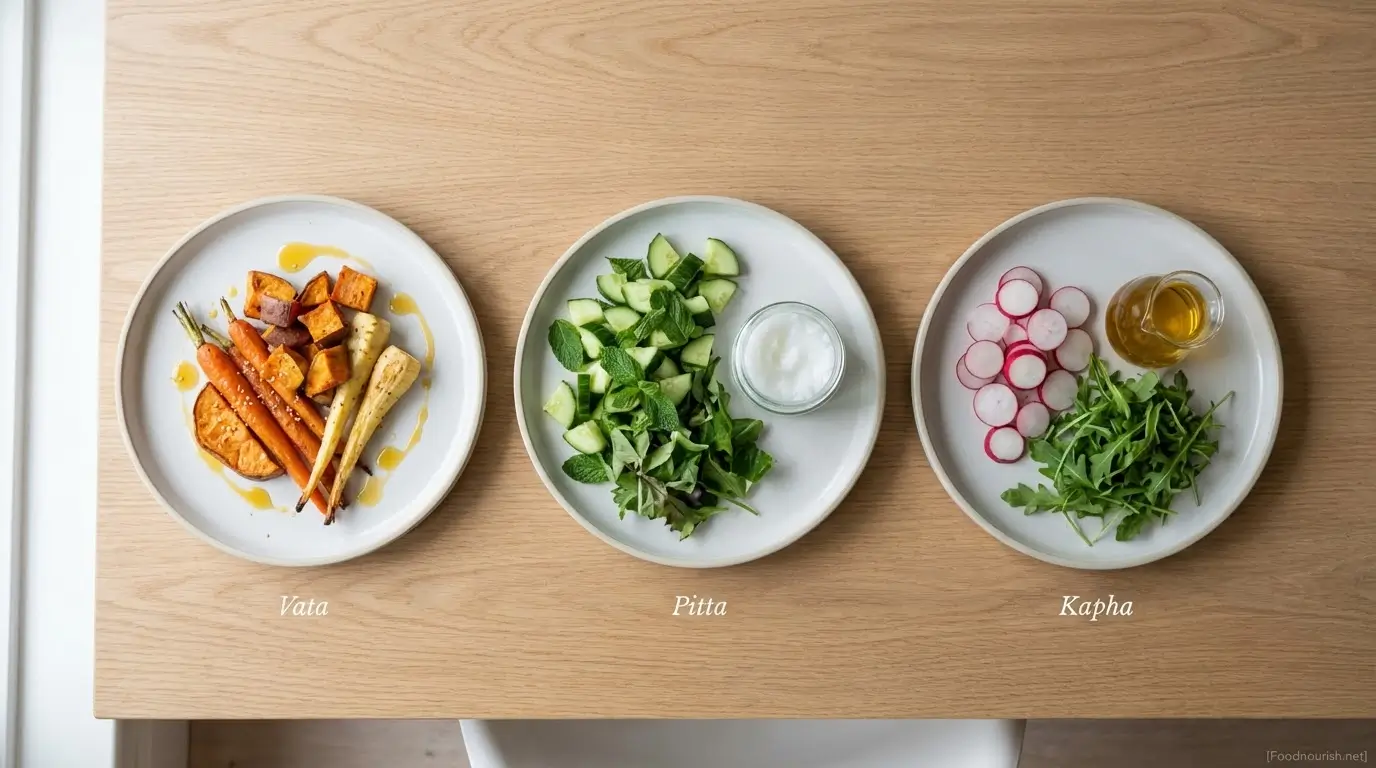
A raw kale salad might energize one person and exhaust another. Spicy chili may invigorate someone while leaving someone else overheated and irritable. The difference? Body type.
In Ayurveda, the three primary body types—Vata, Pitta, and Kapha—each respond best to different foods, even within the same category. Below, we break down Ayurveda foods by body types and each food group to show how dramatically diets can shift depending on your dosha.
(Explore deeper guides to Vata foods, Pitta foods, and Kapha foods in our full articles.)
Vegetables (5 Each)
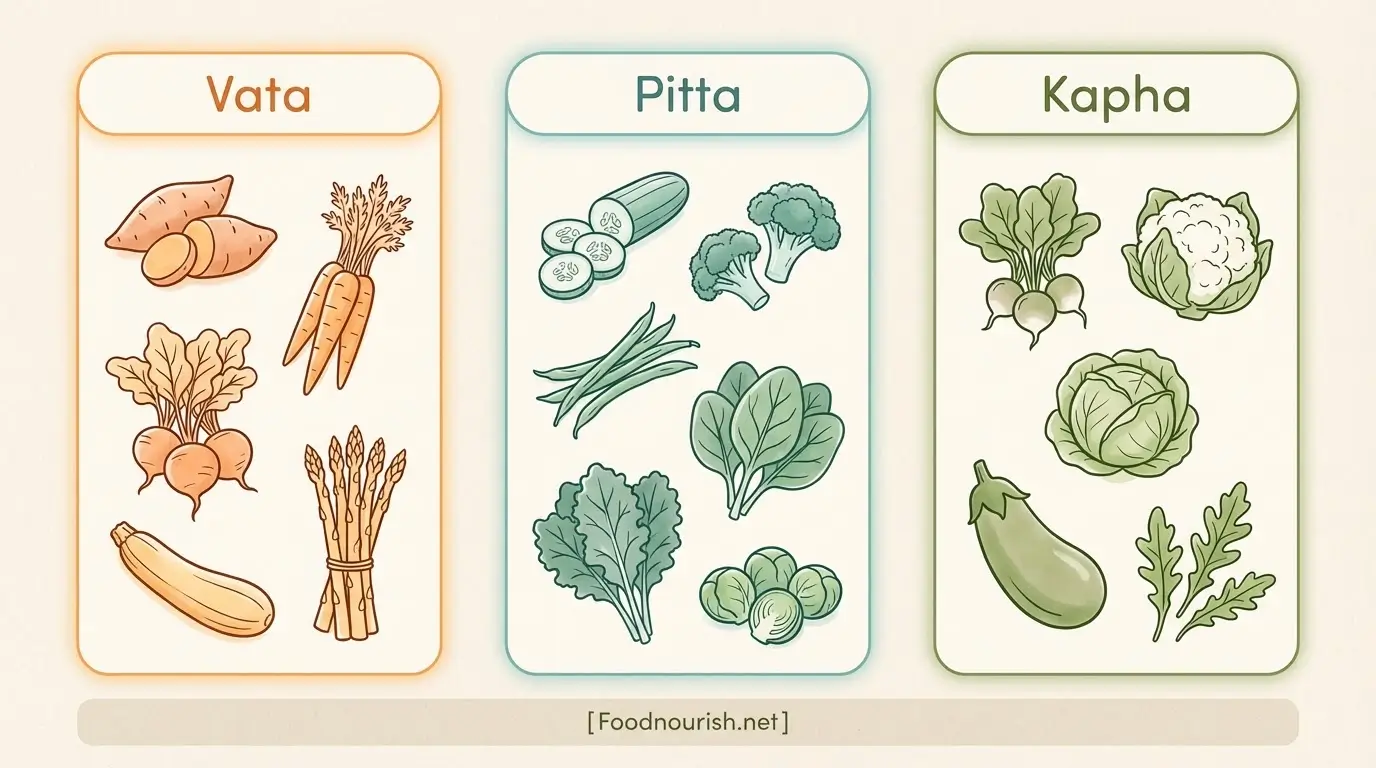
Vegetables are foundational—but which ones matter.
Vata (needs warm, moist, grounding):
- Sweet potatoes
- Carrots
- Beets
- Zucchini
- Asparagus
Vata types benefit from cooked, root-based vegetables that reduce dryness and support stability.
Pitta (needs cooling, calming):
- Cucumber
- Broccoli
- Green beans
- Leafy greens (like kale)
- Brussels sprouts
Pitta does best with cooling, slightly bitter vegetables that calm internal heat.
Kapha (needs light, stimulating):
- Radishes
- Cauliflower
- Cabbage
- Eggplant
- Leafy arugula
Kapha benefits from lighter, drier vegetables that stimulate metabolism and reduce heaviness.
Already, the contrast is clear: Vata leans toward sweet and grounding; Pitta toward cooling greens; Kapha toward pungent and light.
Spices (4 Each)
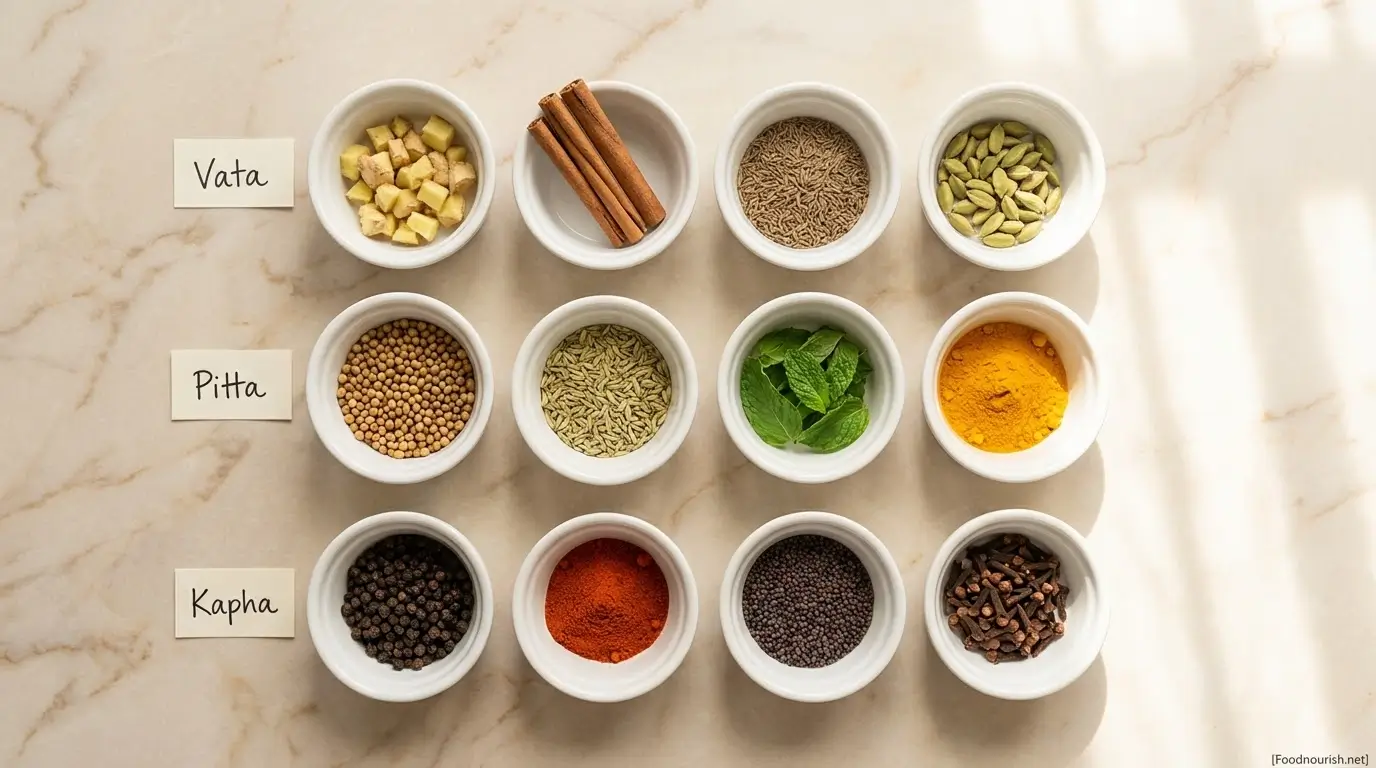
Spices can either balance or aggravate.
Vata:
- Ginger
- Cinnamon
- Cumin
- Cardamom
These warming spices improve digestion and circulation for cold-prone Vata types.
Pitta:
- Coriander
- Fennel
- Mint
- Turmeric (in moderation)
Pitta needs spices that cool rather than inflame.
Kapha:
- Black pepper
- Cayenne
- Mustard seed
- Clove
Kapha thrives on bold, heating spices that stimulate sluggish digestion.
Notice how the intensity increases from Pitta to Kapha – while Vata prefers warmth without sharp heat.
Preferred Oil (1 Each)
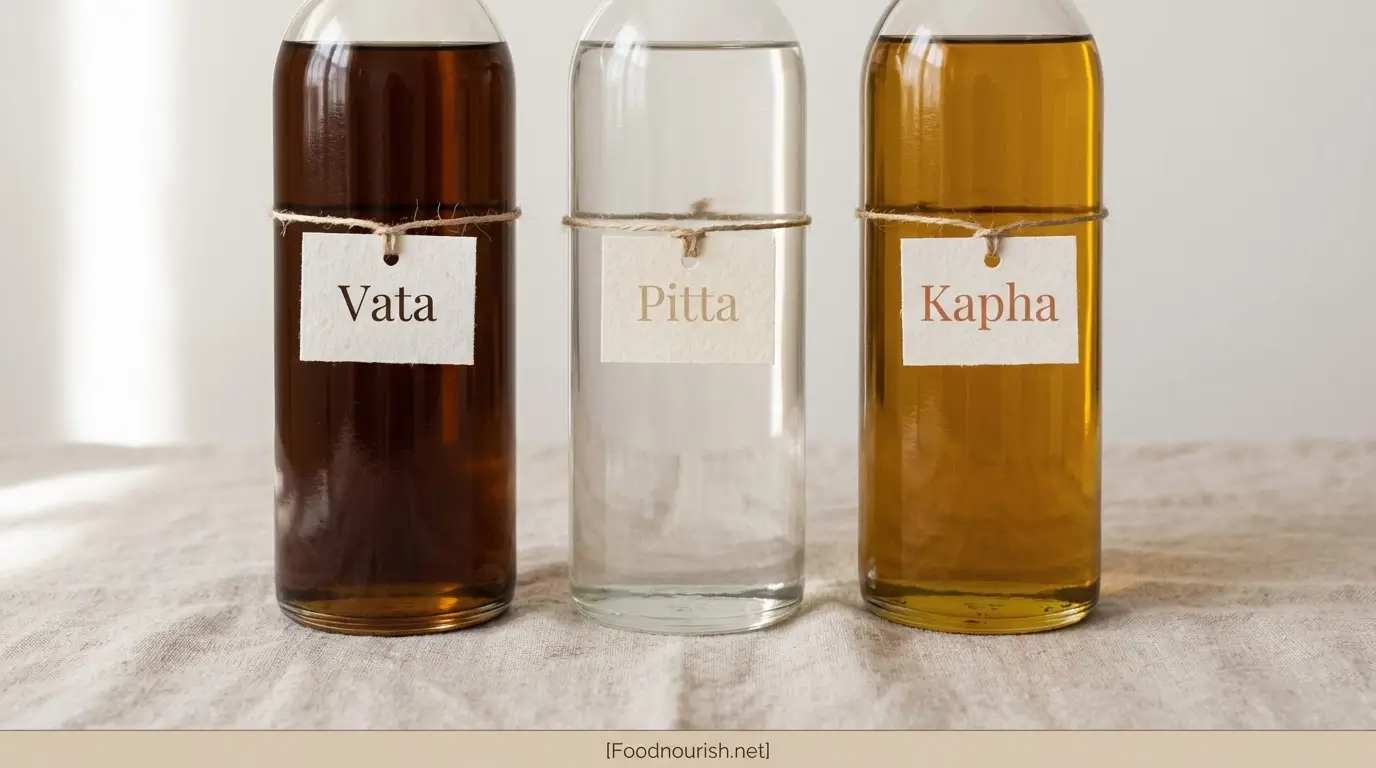
Oils are powerful in Ayurvedic nutrition.
- Vata: Sesame oil → Heavy, warming, and deeply grounding.
- Pitta: Coconut oil → Cooling and soothing to internal heat.
- Kapha: Mustard oil (used lightly) → Stimulating and heating to counter sluggishness.
The oil alone can change how a meal affects the body.
Preferred Meat Type (1 Each)
Not all body types respond the same to protein density.
- Vata: Chicken or turkey → Light but nourishing, especially in soups or stews.
- Pitta: White meat poultry → Less heating than red meat.
- Kapha: Occasional light fish → Easier to digest than heavier meats.
Kapha types often do best limiting meat overall, while Vata may need regular grounding protein.
Grains (4 Each)
Grains are another area where personalization matters.
Vata:
- Oats
- White rice
- Quinoa
- Wheat (if tolerated)
Soft, cooked grains are best.
Pitta:
- Basmati rice
- Barley
- Oats
- Couscous
Cooling, moderately dense grains work well.
Kapha:
- Buckwheat
- Millet
- Barley
- Quinoa
Kapha benefits from lighter, drier grains and smaller portions.
Again, Vata leans soft and moist. Kapha leans light and dry.
Legumes & Beans (4 Each)
Beans can either bloat or balance depending on type and preparation.
Vata:
- Mung beans
- Red lentils
- Tofu
- Urad dal (well-cooked)
These are easier to digest when prepared with warming spices.
Pitta:
- Black beans
- Chickpeas
- Split peas
- Mung beans
Moderate and balanced legumes are ideal.
Kapha:
- Lentils
- Black-eyed peas
- Pinto beans
- Adzuki beans
Drier legumes support Kapha’s need for lightness.
Fruits (4 Each)

Fruit can cool, hydrate, or stimulate.
Vata:
- Ripe bananas
- Mango
- Dates
- Avocado
Sweet, moist fruits nourish dryness.
Pitta:
- Pears
- Melons
- Sweet apples
- Pomegranate
Cooling and hydrating fruits reduce heat.
Kapha:
- Apples
- Berries
Pomegranate
Apricots
Light, slightly astringent fruits prevent heaviness.

The Big Takeaway
Within every category – vegetables, grains, spices, fruits – Ayurveda foods by body types shift dramatically. What is healthy for one type is not healthy for another, even though the foods themselves are normal healthy, unprocessed foods. What calms one person may aggravate another.
That’s the genius of Ayurveda: personalization over trends.
Instead of asking, “Is this food healthy?” the better question becomes: “Is this food healthy for me?”
Explore our detailed guides on Vata foods, Pitta foods, and Kapha foods to tailor your plate to your unique constitution.
Because true nourishment isn’t one-size-fits-all.
