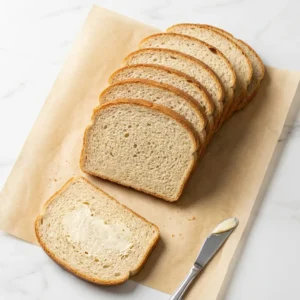
Sourdough Sandwich Bread Recipe
A tender, tight-crumbed sourdough loaf enriched with milk and butter. Perfect for toast, sandwiches, and picky eaters.
Equipment
- 1 Digital Kitchen Scale Mandatory for accuracy
- 1 Loaf Pan, 8.5" x 4.5" or 9" x 4" 1 lb loaf pan. If using 9x5, increase recipe by 20%
- 1 Stand Mixer Optional. Can be kneaded by hand, but mixer yields lighter texture
- 1 Bench Scraper For tension shaping
- 1 Cooling Rack Prevents soggy bottom
Ingredients
Levain (Build 4-6 hours before mixing)
- 35 g Sourdough Starter active, bubbly, fed recently
- 35 g Water room temperature
- 35 g Bread Flour high protein
- 10 g Sugar helps yeast activity and reduces sourness
Main Dough
- 450 g Bread Flour 12-13% protein content is ideal
- 260 g Whole Milk warm (approximately 80F / 26C)
- 30 g Sugar or Honey for tenderness and browning
- 9 g Fine Sea Salt non-iodized
- 50 g Unsalted Butter room temperature, soft
- 115 g All of the Levain, approximately 115g from above
Instructions
The Mix
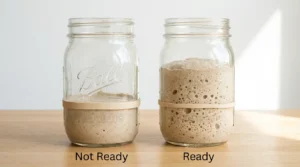
- Check your levain. It should have doubled in size, look bubbly throughout, and pass the float test. Drop a small spoonful into a glass of water. If it floats, the levain is ready. If it sinks, give it another hour.
- In the bowl of a stand mixer, whisk together the warm milk, sugar, and active levain until the starter is mostly dissolved.
- Add the bread flour. Mix on low speed until a shaggy dough forms and no dry flour remains. Stop the mixer.
- Cover the bowl and let the dough rest for 30 minutes. This resting stage is called autolyse. During autolyse, flour absorbs the liquid and enzymes begin breaking down starches. Gluten starts forming passively, which means less mechanical kneading later.
The Strengthen
- Add the salt. Turn the mixer to low-medium speed and knead for 3-5 minutes until the dough gathers around the hook and pulls away from the sides of the bowl.
- With the mixer running on low, add the soft butter one tablespoon at a time. Wait for each piece to absorb before adding the next. The dough will look greasy and broken for a moment. Keep mixing. It will come back together.
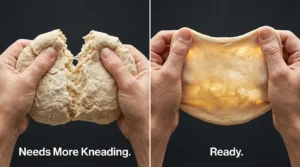
- Once butter is fully incorporated, increase speed slightly and knead for 5-8 minutes more. The dough should be smooth, elastic, and slightly tacky.TIP: Perform the Windowpane Test. Pinch off a small piece of dough, about the size of a golf ball. Gently stretch it between your fingers. If you can pull it thin enough to see light through it without it tearing, your gluten is fully developed [8]. If it rips immediately, knead for another 2-3 minutes and test again. Windowpane = the degree to which your gluten network has organized into strong, extensible sheets.
The Rise
- Transfer the dough to a lightly oiled container or bowl. Cover with a lid, damp towel, or plastic wrap. Place in a warm spot at 75F-78F (24C-26C).
- Perform 2 sets of coil folds during the first 2 hours, one set per hour. To coil fold, wet your hands, reach under the dough, and lift the middle while letting the edges fold underneath. Rotate the bowl 90 degrees and repeat. Each set of folds organizes the gluten structure and redistributes temperature and food for the yeast. Dough strength = how well the gluten holds its shape during and after fermentation.
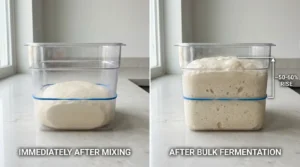
- After the folds, let the dough rise undisturbed until it has increased by roughly 50-60% in volume. The surface should look domed and slightly jiggly when you tap the container. Watch the dough, not the clock. Bulk fermentation can take 4 to 8 hours depending on your ambient temperature and starter strength.
Shape and Proof
- Turn the dough onto a clean, unfloured countertop. Pat it gently into a rectangle, popping any large gas bubbles you see. We WANT a tight crumb for sandwich bread, so do not be afraid to degas. Loosely roll the dough into a log shape. Cover and let it bench rest for 20 minutes. This relaxes the gluten and makes final shaping easier.
- Flatten the rested dough slightly with your hands. Fold the left and right sides in toward the center, like a tri-fold brochure. Now roll the dough up tightly from the top edge toward you, using your thumbs to push down and create surface tension with each roll. Pinch the bottom seam closed. The tighter you roll, the better your oven spring and crumb structure.
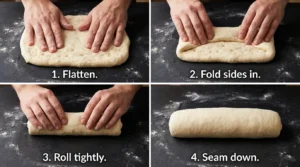
- Place the shaped log seam-side down into a buttered loaf pan
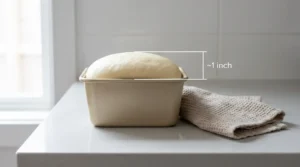
- Cover with a damp towel or reusable shower cap. Let the dough rise at room temperature until the dome crests about 1 inch above the rim of the pan. This takes 2-4 hours at room temperature. If you are using Schedule A or C, cover tightly and place in the refrigerator instead.
Bake
- Preheat your oven to 375F (190C). If baking from the fridge, preheat while the loaf is still cold. There is no need to bring it to room temperature first.
- Place the pan on the center rack. Bake for 35-40 minutes. If the top browns too fast, tent loosely with aluminum foil after 20 minutes.
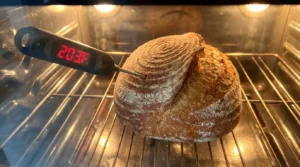
- Check the internal temperature. The bread is done when a probe thermometer inserted into the center reads 200F-205F (93C-96C). Do not guess. An underbaked center will be gummy and dense even after cooling.
- Remove from the oven. Immediately brush the top crust with a thin layer of melted butter. This seals the surface and keeps the crust soft.

- Remove the loaf from the pan immediately and place it on a wire cooling rack. DO NOT SLICE FOR AT LEAST 2 HOURS. I know this is painful. I know the bread smells incredible. But the interior is still cooking. Starch molecules are re-crystallizing and setting up. If you cut too early, you release steam, collapse the crumb, and get a gummy center.
Notes
- Sourness control. For a milder, kid-friendly flavor, bake the loaf right after the room temperature final proof. For more tang and complexity, cold-proof the shaped loaf in the fridge overnight and bake straight from cold the next morning.
- Milk substitutes. Water produces a chewier crumb and harder crust. Oat milk and soy milk work as 1:1 replacements with minimal texture change.
- Pan sizing. This recipe fills an 8.5" x 4.5" pan properly. If using a 9" x 5" pan, multiply all ingredients by 1.2 to fill the larger pan and avoid a flat loaf.
- Seasonal adjustments. In summer, use cold milk (straight from the fridge) to keep dough temperature down during mixing. In winter, warm the milk to 85F to compensate for a cooler kitchen.
- Storage. Keep in a sealed plastic bag at room temperature for up to 4 days. Freeze individual slices for up to 3 months. NEVER store bread in the refrigerator. (I will explain why in the next section.)