live_tv
Livestream Starting Soon
00
Hours
:
00
Minutes
:
00
Seconds
Up next in 10

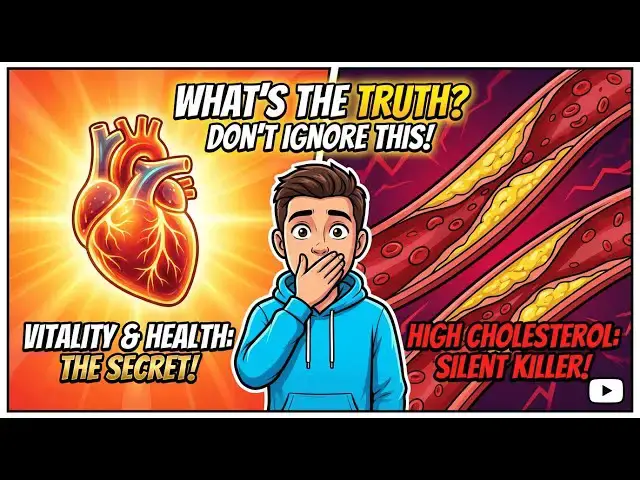
Is high cholesterol a myth? The Truth About Heart Disease They Don't Want You to Know
Dec 28, 2025

In today's episode we're challenging the 50-year-old belief that cholesterol is the primary cause of heart disease.
We reveal why 75% of heart attack victims have "normal" cholesterol levels and why lowering those levels doesn't always save lives.
Discover the buried results of the Minnesota Coronary Experiment and how "Relative Risk" is used to market statins. We explore the real drivers of heart disease, like insulin resistance and inflammation, rather than just "clogged pipes".
Finally, we discuss the markers that truly matter for your health, such as the CAC score.
References:
[1] Foodnourish.net - High Cholesterol & Heart Disease: Myth Or Truth? (The Data They Ignored) - https://foodnourish.net/high-cholesterol-and-heart-disease-myth-or-truth/
--------------------------------------------------------------------------------
➡️ Facebook: https://www.facebook.com/foodnurish
➡️ Instagram: https://www.instagram.com/foodnurish
➡️ X: https://x.com/foodnurish
➡️ TikTok: https://www.tiktok.com/@foodnourish
➡️ Podcast: https://www.spreaker.com/podcast/foodnourish-deep-dives--6602003
--------------------------------------------------------------------------------
Show More Show Less View Video Transcript
0:01
Welcome to another video of Foodnourish
0:03
Deep Dives, the video cast of
0:05
foodnnerish.net, where we explore topics
0:07
like health, food, supplements, and
0:09
alternative approaches to health and
0:11
wellness. You know, today we're diving
0:13
into a really big one, cholesterol. For
0:15
decades, it's been painted as the number
0:17
one villain in heart disease. But what
0:19
if I told you there's a mountain of data
0:21
buried for years that tells a completely
0:23
different story? Let's dig in and see
0:25
what they didn't want us to find. So,
0:27
let's just start with the question that
0:28
kind of breaks the whole thing wide
0:30
open. This one question really throws a
0:32
wrench in about 50 years of medical
0:34
advice. If high cholesterol is the bad
0:37
guy, the direct cause of heart attacks,
0:39
then how is it possible that the vast
0:41
majority of people who have one don't
0:43
even have high cholesterol? Just let
0:45
that number sink in. 75%. We're talking
0:48
three out of every four people. And
0:50
honestly, it gets even weirder. The
0:53
research shows that about half of all
0:55
heart attack patients have LDL levels
0:57
under 100 mg per deciliter. You know,
0:59
the level that your doctor's chart calls
1:01
optimal. It just it doesn't make any
1:03
sense, right? Okay. So, how did we get
1:06
so far down the wrong road? To figure
1:09
that out, we've got to go back in time.
1:11
This whole story really starts with one
1:13
hugely influential and, as we're about
1:15
to see, seriously flawed study that
1:18
basically set the stage for all the
1:20
dietary advice that followed. It all
1:22
kicked off with a guy named Anel Keys
1:24
and his famous seven countries study
1:26
back in 1970. This thing looked like a
1:28
slam dunk. It seemed to prove a very
1:31
simple idea. Eat more saturated fat, get
1:33
more heart disease. Simple. The only
1:35
problem, he had data from 23 countries,
1:38
but he only published the results from
1:39
the seven that actually fit his theory.
1:41
He just sort of left out places like
1:43
France where they were eating tons of
1:45
butter and cheese, but had really low
1:47
rates of heart disease. And just like
1:48
that, fat became public enemy number
1:50
one. And this this just shows you how
1:52
long the truth can stay hidden. At the
1:55
exact same time Keys theory was becoming
1:57
gospel in 1970, another huge
2:00
well-controlled experiment was going on
2:02
that completely contradicted him. But
2:04
look at this timeline. The full
2:06
inconvenient results of that experiment,
2:08
the Minnesota Coronary Experiment, they
2:10
weren't published until 2016. The data
2:12
literally sat in boxes in a basement for
2:15
40 years. And here's the bombshell that
2:18
was in that buried data. Researchers had
2:21
over 9,000 people replace saturated fats
2:23
like butter with corn oil. And hey, it
2:26
worked. Their cholesterol dropped by
2:28
about 14% just like the theory said it
2:31
would. But the people didn't get
2:33
healthier. They died faster. For every
2:36
30 point drop in their cholesterol, the
2:38
risk of death actually went up by 22%.
2:42
It was a total spectacular failure of
2:44
the diet heart hypothesis. So, if the
2:47
science was this shaky right from the
2:49
beginning, how did the
2:50
cholesterollowering drug industry get so
2:52
massive? Well, it has a lot to do with a
2:55
really clever marketing trick using
2:56
statistics to make these drugs look way
2:58
more effective than they actually are.
3:01
This right here is the magic trick.
3:03
You'll always see the big flashy number.
3:06
That's relative risk. The headline
3:08
screams, "This drug reduces heart
3:10
attacks by 36%." And that sounds
3:12
incredible, but the reality is the
3:14
absolute risk. So, let's say in a study,
3:17
3% of people on a placebo have a heart
3:18
attack, and only 2% on the drug do. The
3:21
real benefit is just 1%. But if you take
3:24
that 1% benefit and divide it by the
3:26
original 3% risk, you can claim a 36%
3:29
relative reduction. It's not wrong
3:31
mathematically, but it's for sure
3:33
misleading. Here's another way to look
3:35
at the real world impact. It's called
3:37
the number needed to treat or N&T. It
3:40
basically asks how many people have to
3:42
take this pill every single day for
3:44
years for just one person to actually
3:46
get the promised benefit. Well, for
3:48
statins, if you haven't already had a
3:50
heart attack, that number is somewhere
3:51
between 60 and 217. That means up to 216
3:55
people take the drug, pay for it, deal
3:58
with the side effects, and get
3:59
absolutely no benefit whatsoever. Now,
4:01
let's just put the risks right next to
4:04
the rewards. So on one hand, you've got
4:06
maybe a 1 in 217 chance of avoiding a
4:09
heart attack that wouldn't have killed
4:11
you anyway. But on the other hand, the
4:13
data shows you have about a 1 in 21
4:15
chance of getting muscle damage and a 1
4:17
in 204 chance of developing diabetes
4:20
from the drug itself. When you see it
4:22
laid out like that, the riskreward math
4:24
starts to look well, not so great. Okay,
4:27
before we dive into what the new science
4:28
says actually causes heart disease, I
4:30
just want to take a second to mention
4:32
that if you're on your own wellness
4:33
journey, you should definitely check out
4:35
foodnourish.net/deals.
4:37
We've put together all the best deals on
4:39
supplements and wellness products from
4:40
amazing brands like Perpetual Life, IHB,
4:43
Source Naturals, Neutropics Depot, and
4:45
Bio Optimizers. It's all in one place.
4:48
The link is right down in the
4:49
description. All right. So, if we've
4:50
been blaming the wrong thing for half a
4:52
century, what are the real culprits
4:54
behind heart disease? The modern way of
4:56
thinking about this goes way beyond that
4:58
simple idea of your arteries being like
5:00
clogged pipes. This is the big paradigm
5:03
shift. Atheroscerosis isn't like grease
5:05
building up in your kitchen drain. It's
5:07
an active biological process. It's an
5:10
immune response. It all starts with an
5:12
injury to the super delicate lining of
5:14
your artery. damage that can be caused
5:16
by things like high blood sugar,
5:17
smoking, or even chronic stress. Once
5:20
that injury happens, your body, being
5:22
amazing, sends in a repair crew to patch
5:24
things up. And this is the absolute best
5:27
analogy for understanding cholesterol's
5:29
true role. Cholesterol is part of that
5:31
repair crew. It shows up at the scene of
5:34
the injury to help fix the damaged
5:36
artery wall. So, blaming cholesterol for
5:38
the plaque buildup is like walking up to
5:40
a house fire, seeing a bunch of
5:41
firefighters, and blaming them for
5:43
starting it. They're a response to the
5:45
problem, not the cause of it. So, what's
5:47
actually starting the fire? What's
5:49
causing that initial injury that kicks
5:51
off this whole chain reaction? Well,
5:53
according to the research we're looking
5:54
at, these are the main villains. Insulin
5:57
resistance mostly from high sugar diets.
6:00
Those small dense LDL particles that can
6:02
get damaged or oxidized, low-grade
6:05
chronic inflammation throughout the
6:07
body, and an overabundance of
6:08
inflammatory omega-6 seed oils. Yeah,
6:11
the exact same kind they used in that
6:13
Minnesota experiment. So, where do
6:15
statins fit in all this? Well, they work
6:17
by blocking a very specific pathway in
6:19
your body, the one that makes
6:20
cholesterol, and that works. It lowers
6:22
the number. The problem is that same
6:24
pathway makes a bunch of other really
6:26
important stuff, especially a molecule
6:28
called CoQ10. You can think of CoQ10
6:31
like the spark plug for your cells. It's
6:32
absolutely vital for creating energy,
6:34
especially in high demand organs like
6:36
your heart, muscles, and brain. So, when
6:38
you block that pathway and deplete your
6:40
CoQ10, what do you get? Well, you get
6:42
the most common statin side effects:
6:43
muscle pain, fatigue, and brain fog.
6:46
Okay. So, if watching our total
6:48
cholesterol isn't the answer, what
6:50
should we be looking at? Let's give you
6:52
a whole new toolkit, a set of modern
6:54
tests that give you a much, much more
6:56
accurate picture of your actual risk.
6:58
Let's run through this new toolkit.
7:00
Instead of just total cholesterol, you
7:02
should look at your triglyceride to HDL
7:03
ratio. It's a fantastic marker for
7:05
insulin resistance. You want to check
7:07
your HSCP, which measures hidden
7:09
inflammation in your body. You can
7:11
measure your AOB, which literally counts
7:13
the number of potentially troublemaking
7:15
particles. You should track your HBA1C,
7:17
which shows your average blood sugar
7:19
over the last few months. But really,
7:21
the game changer is the CAC score. It's
7:23
a quick scan that actually looks inside
7:25
your arteries and measures the amount of
7:26
plaque. It doesn't measure a risk
7:28
factor. It measures the actual disease
7:30
itself. The whole point of this is to
7:32
empower you to take back control. So,
7:34
don't just nod and accept a
7:35
prescription. Go into your next doctor's
7:37
appointment armed with these questions.
7:39
Ask for the real numbers. What's my
7:41
absolute risk reduction? What's the N&T
7:43
for someone like me? And then ask for
7:45
the tests that matter. Can we get a CAC
7:47
score to see if there's even a problem
7:48
to begin with? Can we test for
7:50
inflammation and blood sugar issues? And
7:52
that really leaves us with this final
7:53
big question to think about. For so
7:55
long, the entire focus has been on
7:57
lowering a number on a lab report, often
7:59
using powerful drugs with some pretty
8:01
serious side effects. But maybe, just
8:03
maybe, our focus should have been on
8:05
addressing the root causes all along.
8:07
The inflammation, the metabolic
8:08
problems, the lifestyle stuff that's
8:10
actually starting the fire in the first
8:12
place. If you want to dive even deeper
8:13
into the studies and sources we talked
8:15
about today, make sure you check out the
8:17
resource article. We've linked it for
8:18
you in the description below. If you got
8:20
some value out of this deep dive, do me
8:21
a favor and hit that like button. It
8:22
really helps us grow the channel so we
8:24
can keep making these. And of course,
8:25
make sure you subscribe so you never
8:26
miss another deep dive. Thanks so much
8:28
for watching.
#Health
#Heart & Hypertension
#Nutrition